Families may feel shocked by a pulmonary edema autopsy report. Learn when it explains death, when it is secondary, and what to ask next.
pulmonary edema autopsy report language usually means excess fluid was found in the lungs, but it does not automatically prove the exact cause of death. In an autopsy, pulmonary edema and lung congestion are common autopsy findings that must be interpreted with the person’s medical history, circumstances of death, microscopic slides, toxicology, and heart findings. Sometimes the finding points strongly toward heart failure or another major process; other times it reflects a terminal event that occurred as the body was dying.
For families, this wording can feel unsettling because it sounds both technical and serious. A report may list “pulmonary edema and congestion” without explaining whether it was the main reason the person died or a secondary change. That uncertainty can leave loved ones wondering whether something was missed, whether treatment could have helped, or whether the report is incomplete. Clear explanation can make the words less frightening and help the family ask focused questions.
Pulmonary Edema Autopsy Report Meaning In Plain Language
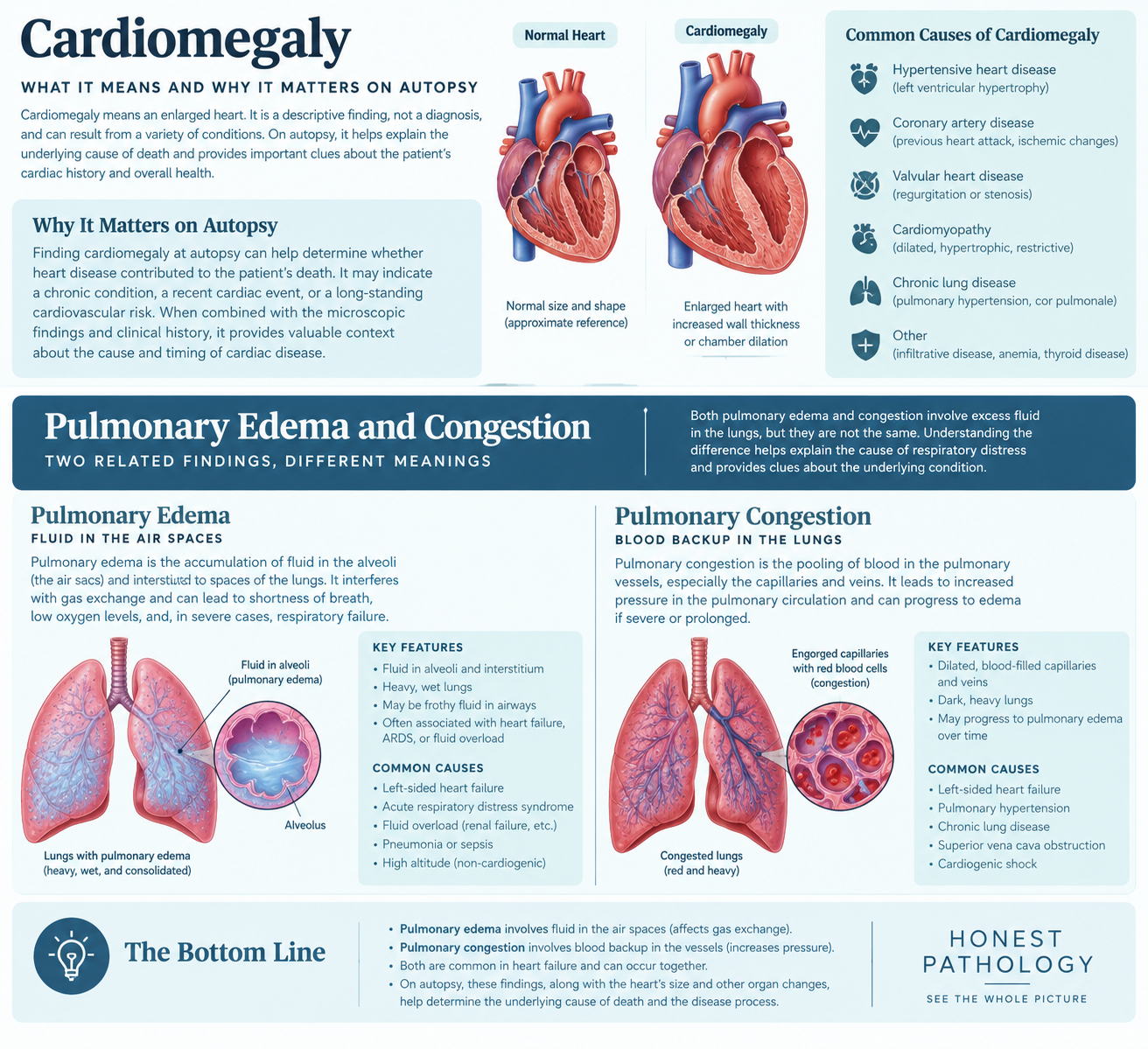
A pulmonary edema autopsy report describes a pathologist’s observation that the lungs were heavier, wetter, or more congested than expected. “Edema” means fluid accumulation, and in the lungs that fluid often collects in the delicate air-exchange areas called alveolar spaces. “Congestion” means the blood vessels in the lungs contained more blood than usual. Together, pulmonary edema and lung congestion are often described in the same line of an autopsy report because they can occur together during severe illness, cardiac strain, or the final moments of life.
A helpful analogy is a sponge. Healthy lungs are light and springy, allowing air to move across thin membranes into the blood. When pulmonary edema is present, the sponge has taken on extra water, making air exchange harder. In life, severe fluid accumulation can cause shortness of breath, low oxygen levels, frothy fluid in the airways, or respiratory distress, but an autopsy finding alone cannot always show exactly when symptoms began.
Pathologists evaluate these autopsy findings at several levels. During the gross examination, the lungs may appear heavy, wet, dark red, or foamy when cut. Under the microscope, fluid may be seen within alveolar spaces, sometimes with red blood cells, inflammatory cells, or other clues. A pulmonary edema autopsy report therefore records a real physical finding, but the meaning depends on the pattern, severity, and surrounding evidence.
Why Autopsy Reports Show Pulmonary Edema And Congestion
Pulmonary edema can develop for several reasons, and the autopsy report usually needs clinical context before assigning a cause of death. One common pathway is heart failure, especially when the left side of the heart cannot pump blood forward effectively. Pressure backs up into the lung vessels, producing lung congestion and fluid accumulation. In that setting, the heart may be enlarged, scarred from prior heart attacks, thickened from high blood pressure, or affected by valve disease.
Pulmonary edema may also occur with severe infections, kidney failure, drug intoxication, neurologic injury, trauma, drowning, allergic reactions, or complications of medical treatment. Some of these conditions directly injure the lung barrier, allowing fluid to leak into alveolar spaces. Others overload the circulation with fluid or raise pressure inside lung blood vessels. These different mechanisms can produce similar-looking autopsy findings, which is why one phrase in a report rarely tells the whole story.
There is another reason families often see this phrase: Pulmonary edema and lung congestion can appear as part of the dying process itself. When circulation slows, oxygen falls, and the heart struggles, blood and fluid may pool in the lungs near the end of life. In that situation, the finding may represent a terminal event rather than the underlying disease that started the fatal process. This distinction is central when reading a pulmonary edema autopsy report and deciding whether it identifies the cause of death or supports another diagnosis.
When A Pulmonary Edema Autopsy Report Points To Cause Of Death
A pulmonary edema autopsy report is more likely to support the cause of death when the edema is severe and matches other findings. For example, marked lung congestion, very heavy lungs, frothy fluid in the airways, and microscopic fluid in many alveolar spaces may fit with fatal heart failure. If the heart also shows severe coronary artery disease, an acute heart attack, major valve disease, or marked enlargement, the case becomes more coherent. In that setting, pulmonary edema is not just a background observation; it may be the final pathway through which heart disease caused death.
The phrase can also matter when death followed a known respiratory or toxicologic event. Certain drug overdoses, especially opioid intoxication, may be associated with pulmonary edema, depressed breathing, and low oxygen levels. Some neurologic catastrophes can trigger sudden fluid accumulation in the lungs, sometimes called neurogenic pulmonary edema. In these cases, the cause of death may not be “pulmonary edema” alone, but the edema can be an important supporting finding that shows how the fatal process affected the body.
Still, a pulmonary edema autopsy report should be read with caution when it appears by itself. Mild to moderate pulmonary edema and lung congestion are very common autopsy findings, especially after prolonged resuscitation, hospitalization, fluid therapy, or the agonal period before death. A pathologist often weighs whether the finding is disproportionate, whether it explains symptoms, and whether another disease better explains the death. The most reliable conclusion comes from the whole case, not from a single descriptive line.
When Pulmonary Edema Is A Secondary Or Terminal Finding
Pulmonary edema can be secondary when another condition clearly caused death and the lung changes occurred late. For example, a person may die from a massive brain hemorrhage, overwhelming infection, ruptured aneurysm, advanced cancer, or major trauma, with pulmonary edema developing near the end. In such cases, the pulmonary edema autopsy report may document a real finding without making it the primary cause of death. This is similar to smoke appearing after a fire has already started; the smoke matters, but it may not be the ignition source.
A terminal event is a final physiologic change that happens as the body is failing. Low oxygen, weak circulation, irregular heart rhythm, and poor vessel tone can all contribute to fluid accumulation in the lungs. These changes may leave visible autopsy findings even when the original problem was elsewhere. For that reason, “pulmonary edema and congestion” may appear in reports for many different deaths, including deaths that were sudden, expected, natural, accidental, or medically complex.
Families may understandably wonder whether secondary pulmonary edema means the person drowned in fluid or suffered greatly. The autopsy alone often cannot answer that emotional question with certainty. Severe pulmonary edema can cause distress in life, but terminal fluid accumulation may occur when consciousness is already impaired by low oxygen, medications, coma, or the underlying condition. The medical record, witness accounts, emergency response notes, and autopsy findings together provide the best picture of what likely happened.
What Families Can Do Next With This Autopsy Finding
The next step is to look at where the phrase appears in the report. If “pulmonary edema and congestion” is listed under final diagnoses, it may carry more weight than if it appears only in the microscopic description. If it appears in the cause of death statement, the pathologist considered it central or contributory. If it appears as a descriptive finding while another disease is named as the cause of death, it may be secondary.
Families can also compare the lung findings with the heart section, toxicology results, and circumstances of death. Heart failure, coronary artery disease, cardiomyopathy, arrhythmia risk, and valve disease may make pulmonary edema more meaningful. Toxicology may clarify whether medication, alcohol, or drugs contributed. A general resource such as What Is a Pathology Report? can help families understand how medical findings are organized, although an autopsy report has its own specialized structure.
When the wording remains unclear, a second review may help. An independent pathologist can review the autopsy report, microscopic slides if available, photographs if appropriate, medical records, and death certificate language. This type of review is not about assigning blame; it is about determining whether the autopsy findings support the stated cause of death. Families considering that step may find When Should You Get a Second Pathology Opinion? useful, especially when the report language and family’s understanding do not match.
Questions To Ask The Medical Examiner, Coroner, Or Pathologist
- Was pulmonary edema considered the main cause of death, a contributing condition, or a secondary finding?
- How severe were the pulmonary edema and lung congestion compared with what is commonly seen after death?
- Did the heart show evidence of heart failure, coronary artery disease, valve disease, or a recent heart attack?
- Did microscopic examination show fluid in the alveolar spaces, inflammation, aspiration, hemorrhage, or infection?
- Could resuscitation, IV fluids, hospitalization, or the terminal event have contributed to the lung findings?
- Were toxicology results available, and did they change the interpretation of the pulmonary edema autopsy report?
- Does the death certificate wording match the full autopsy findings and medical history?
These questions are specific enough to move the conversation beyond general reassurance. A family does not need to master pathology terminology before asking for clarification. The goal is to understand whether the lung findings explain death or whether they are part of a broader final pathway.
Copies of the final autopsy report, death certificate, hospital records, emergency medical services notes, and toxicology report can be helpful for review. A guide such as Understanding Your Pathology Report: How to Read It with Confidence may also help families separate descriptive findings from diagnostic conclusions. If a second review is requested, How to Get a Second Opinion on Your Pathology Diagnosis explains the practical steps for gathering records and asking focused questions.
Frequently Asked Questions
Does pulmonary edema on an autopsy report mean the person drowned?
No. A pulmonary edema autopsy report means fluid was found in the lungs, but that is not the same as drowning. Drowning has additional investigative, scene, airway, and sometimes microscopic considerations. Pulmonary edema can occur from heart failure, overdose, infection, neurologic injury, or a terminal event. The full report and circumstances are needed before making that distinction.
Can pulmonary edema be the cause of death?
Yes, pulmonary edema can be part of the cause of death when it is severe and supported by other findings. Fatal heart failure is a common example, especially when lung congestion and major heart disease are both present. In many death certificates, the underlying disease is listed rather than pulmonary edema alone. The wording depends on what started the fatal chain of events.
What does pulmonary edema and congestion mean after death?
After death, pulmonary edema and lung congestion mean the lungs contained excess fluid and blood. These autopsy findings may reflect disease during life or changes that occurred during the final dying process. Microscopic review may show fluid in the alveolar spaces, but that still needs interpretation. The finding is meaningful, but it is not always specific.
Is lung congestion a sign of heart failure?
Lung congestion can be a sign of heart failure, especially when the left side of the heart could not move blood forward efficiently. A pulmonary edema autopsy report that also describes an enlarged heart, coronary artery disease, or damaged heart muscle may support that interpretation. However, lung congestion can also occur in many other settings. The heart examination is essential for context.
Should a family request a second review of a pulmonary edema autopsy report?
A second review may be helpful when the pulmonary edema autopsy report does not seem to match the medical history, symptoms, or circumstances of death. It may also help when the death certificate uses wording that feels unclear or incomplete. A reviewer can assess the autopsy findings, clinical records, toxicology, and microscopic slides when available. The purpose is clarification, not confrontation.
Autopsy language can feel cold at a time when families need humanity and answers. Pulmonary edema and congestion are real findings, but their meaning depends on the whole case. Honest Pathology consultations can help families understand whether the report’s wording supports the stated cause of death or points to questions worth asking.
References:
National Cancer Institute — Autopsy Definition
National Cancer Institute — Pathologist Definition
NCBI Bookshelf — Medical Reference Library