Families may feel shaken by an atherosclerotic cardiovascular disease autopsy. Learn what findings support it and what to ask next.
Atherosclerotic cardiovascular disease autopsy means the autopsy found evidence that plaque-related disease of the heart and blood vessels likely contributed to death or was a major medical condition. This conclusion is usually based on several physical findings, not a single word or assumption. Pathologists look at the coronary arteries, heart muscle, aorta, valves, and other organs to decide whether the findings fit a natural death from cardiovascular disease.
For families, this wording can feel sudden, especially when a loved one did not carry a clear diagnosis of heart disease during life. The phrase may sound technical, cold, or final at a time when the family is still trying to understand what happened. An autopsy report is often less like a simple answer and more like a map of evidence. Clarity comes from seeing how the pieces fit together.
This explanation focuses on the findings that support an atherosclerotic cardiovascular disease autopsy conclusion and how families can read those findings with more confidence.
Atherosclerotic Cardiovascular Disease Autopsy — What It Actually Means
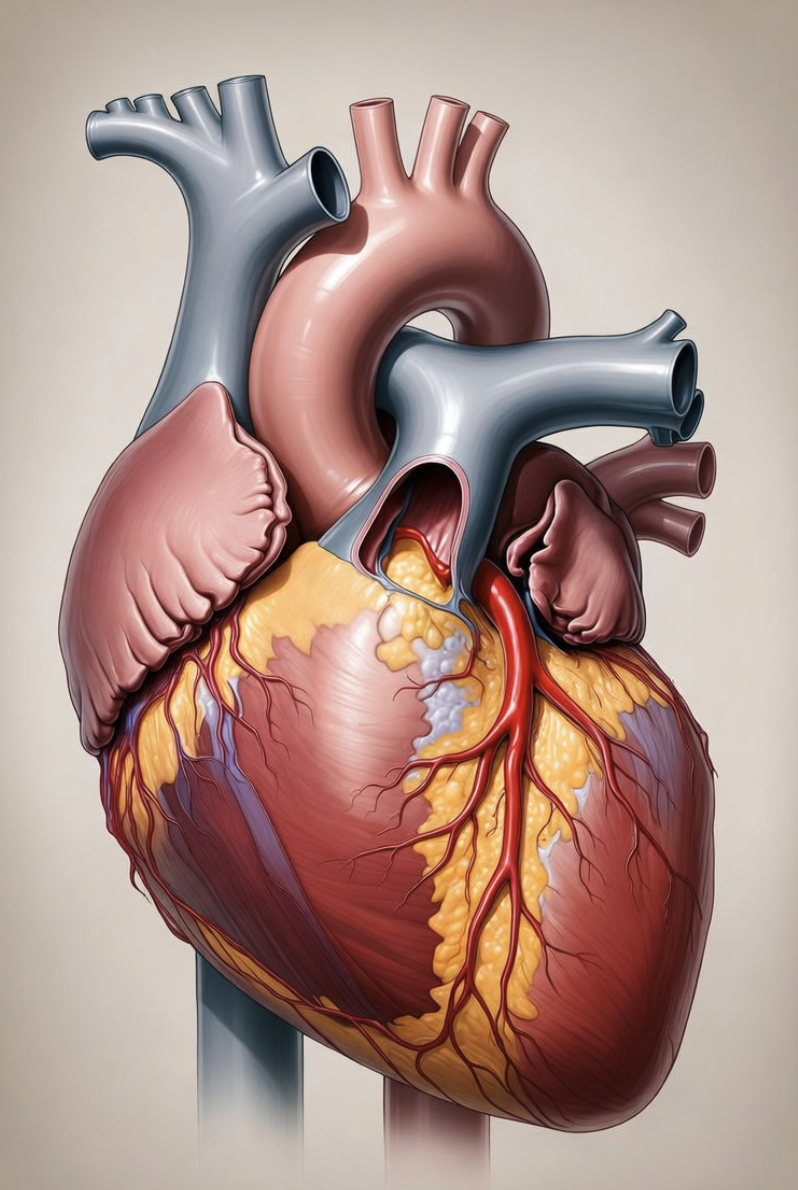
An atherosclerotic cardiovascular disease autopsy conclusion means that hardened, narrowed, or plaque-filled arteries were found during the postmortem examination. The most important arteries are usually the coronary arteries, which supply blood to the heart muscle. When those arteries are narrowed by coronary plaque, the heart may not receive enough oxygen, especially during stress, exertion, rhythm changes, or sudden plaque disruption. In plain language, the heart’s fuel lines may have become narrowed, blocked, or unstable.
A useful analogy is a plumbing system with mineral buildup inside the pipes. Water may still pass through for years, but the pipe has less reserve capacity and may fail when demand rises. In the heart, coronary artery disease can remain silent until a sudden event occurs. That is why some people die from severe coronary artery disease even if they never reported chest pain or had a known heart attack.
Pathologists do not diagnose this condition by guesswork. The autopsy findings usually include visible narrowing of one or more coronary arteries, firm yellow-white plaques, calcification, scarring in the heart muscle, or signs of a recent myocardial infarction. The report may describe percentages such as 70%, 80%, or 90% stenosis, meaning how much of the artery opening was narrowed. Families who are unfamiliar with report language may find it helpful to review general report structure in What Is a Pathology Report? before reading the autopsy details.
What Findings Support This Diagnosis In An Autopsy Report
The strongest support for an atherosclerotic cardiovascular disease autopsy conclusion often comes from the coronary arteries. The report may list the left anterior descending artery, right coronary artery, left circumflex artery, or left main coronary artery. Severe coronary plaque in these vessels can reduce blood flow to large areas of heart muscle. A finding such as “75% narrowing of the left anterior descending coronary artery” is more concerning than mild scattered plaque.
Autopsy findings may also include aortic atherosclerosis, which means plaque buildup in the aorta, the large artery leaving the heart. Aortic atherosclerosis by itself does not always prove the cause of death, but it supports a broader pattern of vascular disease. The aorta may show raised yellow plaques, ulcerated plaques, calcified plaques, or clot attached to an abnormal surface. When the coronary arteries and aorta both show significant disease, the conclusion becomes more coherent.
The heart muscle itself is another major source of evidence. A recent myocardial infarction may appear as a pale, soft, hemorrhagic, or damaged area depending on timing. An older myocardial infarction may appear as a firm gray-white scar. Pathologists also look for plaque rupture and coronary thrombosis, because plaque rupture can trigger sudden clot formation inside a coronary artery. Coronary thrombosis is a particularly strong finding when present because it can directly block blood flow and cause sudden death.
How Serious Is An Atherosclerotic Cardiovascular Disease Autopsy Finding?
An atherosclerotic cardiovascular disease autopsy finding can range from an incidental age-related condition to the main cause of death. Mild plaque is common in older adults and may be noted without being the reason someone died. Severe narrowing, especially in multiple coronary arteries, is much more significant. The seriousness depends on the degree of narrowing, the number of involved vessels, the presence of myocardial infarction, and whether another cause of death was found.
In many cases, an atherosclerotic cardiovascular disease autopsy conclusion is strongest when the coronary arteries show severe coronary artery disease and no better explanation for death is identified. For example, marked coronary plaque in several vessels, an enlarged heart, and old scarring from myocardial infarction may support death due to chronic ischemic heart disease. If plaque rupture or coronary thrombosis is identified, the case may point toward an acute cardiac event. If the report says there was no coronary thrombosis, that does not automatically rule out a fatal rhythm disturbance caused by severe coronary artery disease.
Families often ask whether a person can die suddenly from heart disease without a large visible heart attack. The answer is yes. Severe coronary artery disease can cause a lethal arrhythmia, which is an abnormal heart rhythm, before a myocardial infarction has enough time to become obvious under the microscope. This is one reason an atherosclerotic cardiovascular disease autopsy conclusion may be made even when the heart muscle does not show a dramatic fresh infarct. The pathologist weighs the artery disease, heart size, microscopic findings, medical history, toxicology, and circumstances of death together.
Why Autopsy Reports Sometimes Sound Uncertain
Autopsy reports often use careful language because death investigation relies on patterns of evidence. A report may say “consistent with,” “due to,” “contributory,” or “significant condition.” These phrases have different meanings. “Due to atherosclerotic cardiovascular disease” is usually stronger than “atherosclerotic cardiovascular disease was present.”
Some deaths leave unmistakable findings, such as a ruptured aneurysm or massive pulmonary embolism. Other deaths, including sudden cardiac deaths, may leave fewer dramatic changes. Severe coronary plaque may explain the death even if no single artery is completely blocked at the time of examination. In these cases, the diagnosis depends on whether the autopsy findings support the most likely medical explanation.
Microscopic examination can add important detail. The pathologist may sample heart muscle from several regions to look for early injury, old scarring, inflammation, or another disease process. Microscopy may confirm old myocardial infarction, show early ischemic changes, or reveal that another diagnosis is present. A family reading the report can use Understanding Your Pathology Report: How to Read It with Confidence to make sense of sections such as gross description, microscopic description, and final diagnosis.
What Happens Next For Families After This Finding
After an atherosclerotic cardiovascular disease autopsy diagnosis, families may need practical and medical follow-up. The practical side includes obtaining the final autopsy report, death certificate, toxicology report if performed, and any hospital or emergency records. The medical side may include discussing family history with a primary care clinician or cardiologist. Coronary artery disease is common, but early or severe disease can sometimes suggest shared risk factors among relatives.
Relatives do not usually need panic testing because one loved one had coronary plaque. However, a family history of sudden death, early heart attack, very high cholesterol, or multiple affected relatives may justify more careful screening. A clinician may consider cholesterol testing, blood pressure evaluation, diabetes screening, smoking history, and lifestyle risk assessment. These steps are about prevention, not blame.
Some families also consider a review of the autopsy report. A second pathology opinion may be helpful if the wording is unclear, the findings seem inconsistent, the death was unexpected at a young age, or another possible cause was raised. The goal is not to challenge every report automatically, but to make sure the evidence and conclusion match. Guidance on this process is available in When Should You Get a Second Pathology Opinion? and How to Get a Second Opinion on Your Pathology Diagnosis.
Questions To Ask The Medical Examiner Or Pathologist
- What specific autopsy findings support the diagnosis of atherosclerotic cardiovascular disease?
- How severe was the coronary artery disease in each major coronary artery?
- Was there any evidence of plaque rupture or coronary thrombosis?
- Did the heart muscle show a recent or old myocardial infarction?
- Was aortic atherosclerosis present, and how severe was it?
- Were toxicology, microscopic heart sections, or other tests performed?
- Did the pathologist consider any other possible causes of death?
These questions help families separate a general finding from a cause-of-death conclusion. A report may list several conditions, but not every condition contributed equally to death. Asking which findings carried the most weight can make the final opinion easier to understand.
A pathology consultation can also help translate technical autopsy language into plain English. This review typically looks at the final diagnosis, gross description, microscopic description, toxicology results if available, and clinical history. For grieving families, the value is often clarity rather than confrontation.
Frequently Asked Questions
What does atherosclerotic cardiovascular disease mean on an autopsy?
Atherosclerotic cardiovascular disease means plaque buildup was found in arteries related to the heart and circulation. In an autopsy, this often refers to coronary artery disease involving the arteries that supply the heart muscle. The finding may be mild, moderate, or severe depending on how narrowed the arteries were. The full meaning depends on the rest of the autopsy findings and the stated cause of death.
Can atherosclerotic cardiovascular disease autopsy findings explain sudden death?
Yes, atherosclerotic cardiovascular disease autopsy findings can explain sudden death when the coronary arteries are severely narrowed or unstable. A person may die from a fatal heart rhythm before a large myocardial infarction becomes visible. Plaque rupture or coronary thrombosis makes the connection stronger when present. The pathologist also considers other possible causes before reaching a final opinion.
Does no heart attack mean the autopsy conclusion is wrong?
No, the absence of a visible heart attack does not automatically make the conclusion wrong. Severe coronary artery disease can cause sudden arrhythmia without leaving a large completed myocardial infarction. Early ischemic injury may be subtle or not yet visible, depending on how quickly death occurred. The diagnosis should still be supported by the pattern of autopsy findings.
Is atherosclerotic cardiovascular disease autopsy evidence hereditary?
An atherosclerotic cardiovascular disease autopsy does not prove a hereditary condition by itself. Many cases relate to age, cholesterol, blood pressure, diabetes, smoking, and other common risk factors. However, severe disease at a young age or a family pattern of early heart disease may justify medical screening for relatives. A primary care clinician or cardiologist can help decide what testing is appropriate.
Can a family request a second review of an autopsy report?
Yes, families can request a second review in many situations, although access to slides, blocks, photographs, and records depends on the institution and jurisdiction. A review may be useful when the cause of death is unexpected, unclear, or emotionally difficult to reconcile with known history. The reviewer typically examines the wording of the report and any available tissue slides or supporting records. A second opinion can clarify whether the conclusions match the documented autopsy findings.
An autopsy report can feel like the final word, but understanding the evidence behind it can bring a measure of peace. When the phrase atherosclerotic cardiovascular disease autopsy appears, the most helpful next step is to connect the conclusion to the actual artery, heart muscle, and microscopic findings. Honest Pathology consultations can help families understand the report language and prepare thoughtful questions for the medical examiner, pathologist, or treating clinician.
References:
National Cancer Institute — Autopsy Definition
MedlinePlus — Coronary Artery Disease
NCBI Bookshelf — Medical Reference Texts