Seeing aspiration pneumonia autopsy can feel devastating. Learn how it may connect to death and what families can ask next.
Aspiration pneumonia autopsy means the pathologist found evidence that material entered the lungs and caused inflammation, infection, or impaired breathing near the time of death. This finding can be directly related to the cause of death, or it may be one part of a larger medical chain involving stroke, dementia, seizure, overdose, surgery, cancer, or severe weakness. In an autopsy report, the wording matters because aspiration can be an immediate cause, a contributing condition, or a terminal event.
Families often receive this phrase at a painful moment, when grief is already mixed with confusion. The word “aspiration” may sound as if someone choked suddenly, was neglected, or could have been saved if another choice had been made. Sometimes those concerns deserve careful review, but many aspiration deaths occur because a seriously ill body loses the normal protective reflexes that keep food, saliva, vomit, or stomach fluid out of the airway.
A clear explanation can reduce fear without minimizing the loss. An autopsy is not just a list of organs; it is a reconstruction of what happened in the body. For families trying to understand a final illness, the goal is to connect the medical findings to a believable sequence.
Aspiration Pneumonia Autopsy — What It Actually Means
An Aspiration Pneumonia Autopsy finding usually means that foreign material, most often food particles, saliva, vomited fluid, or gastric contents, entered the airways and triggered lung injury. The lungs are built like a branching tree, with the windpipe dividing into smaller air tubes and then into delicate air sacs where oxygen enters the blood. When material goes down the wrong path, those tiny air spaces can become inflamed, infected, blocked, or flooded with fluid.
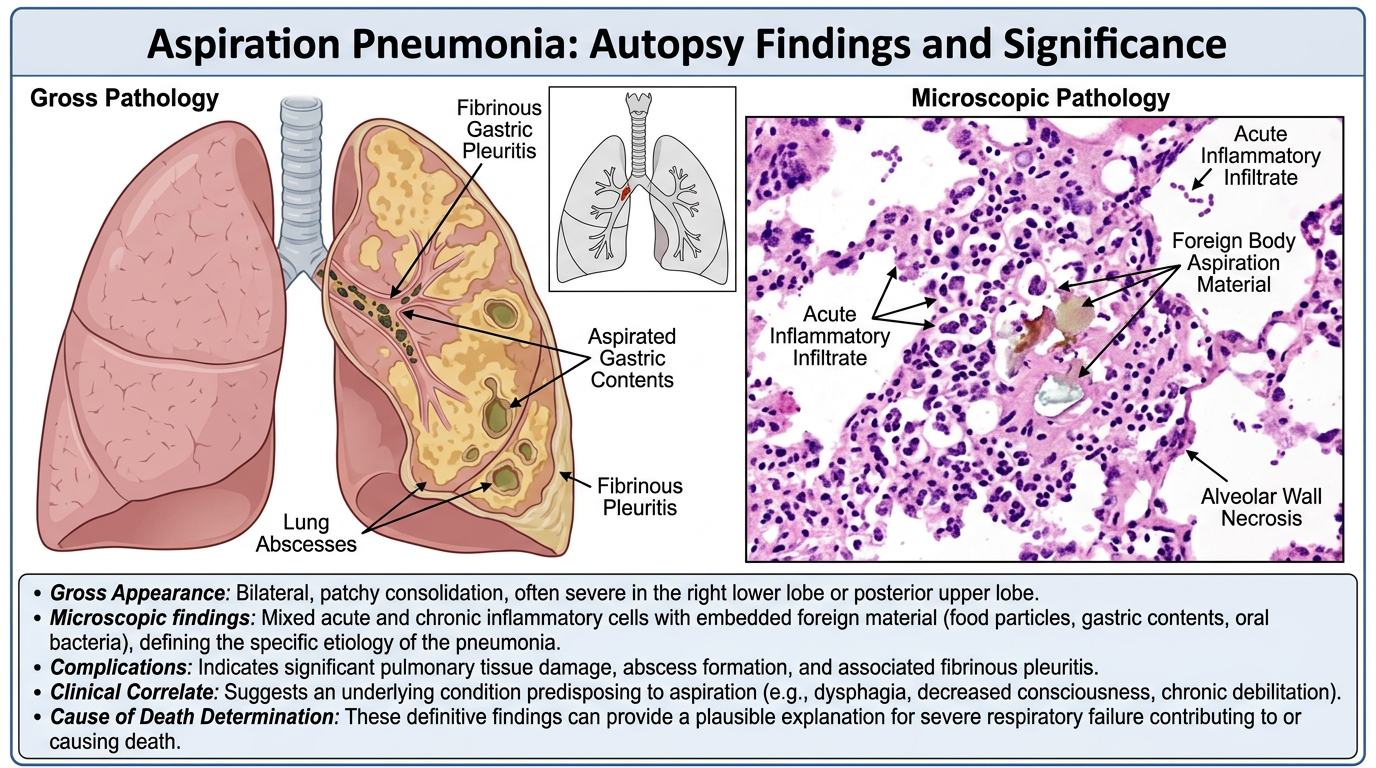
Pathologists often describe lung findings such as heavy lungs, congestion, pus-like fluid, food particles, or inflamed airways. The microscopic examination may show acute inflammation, bacteria, foreign material, or injured air spaces. A useful analogy is a clean air filter suddenly coated with wet debris: The filter may still exist, but it cannot exchange air properly. In the body, that failure can lower oxygen levels, strain the heart, and contribute to collapse.
In an autopsy report, aspiration pneumonia is not always written the same way. It may appear under final diagnoses, lung description, microscopic diagnoses, or the death certificate summary. Some reports use related phrases such as aspiration pneumonitis, foreign material in airways, bronchopneumonia, or acute pneumonia. Families who are unfamiliar with report structure may benefit from background on what a pathology report is, because autopsy reports use a similar medical logic but apply it to the whole body after death.
Why An Autopsy Report Shows This Finding
An autopsy report shows aspiration when the pathologist sees evidence that material entered the respiratory tract and caused a reaction in the lungs. This can happen before death during vomiting, impaired swallowing, loss of consciousness, severe weakness, seizures, neurologic disease, intoxication, or prolonged bedbound illness. It can also occur around the time of death when protective airway reflexes fail. The distinction between a meaningful antemortem event and a final agonal event depends on the pattern and severity of the lung findings.
The body normally has safeguards that prevent aspiration: coughing, gagging, swallowing coordination, alertness, and the ability to sit upright or clear secretions. When these safeguards fail, gastric contents or oral secretions can enter the airway. If enough material blocks airflow, airway obstruction can cause sudden distress. If smaller amounts reach deeper lung tissue, inflammation and infection can develop over hours to days.
The microscopic examination helps place the finding in time. Fresh aspirated material with little inflammation may suggest a very recent or terminal event, while dense neutrophilic inflammation and damaged air spaces suggest pneumonia that had time to develop. Pathologists also look for background disease, such as heart failure, chronic lung disease, stroke, cancer, malnutrition, or infection elsewhere in the body. These associated findings help determine whether aspiration pneumonia was the main cause of death or a complication of another serious condition.
How Aspiration Pneumonia Autopsy Findings Connect To Cause Of Death
Aspiration pneumonia autopsy findings connect to cause of death by showing how breathing and oxygen exchange failed. In some cases, aspiration pneumonia is the immediate cause: Material entered the lungs, pneumonia developed, oxygen levels fell, and the person died from respiratory failure or sepsis. In other cases, the aspiration is part of a chain, such as advanced dementia causing swallowing difficulty, which leads to aspiration pneumonia, which leads to death. The death certificate may list that chain in order, from the immediate mechanism backward to the underlying disease.
The phrase aspiration pneumonia autopsy does not automatically prove one single scenario. A small amount of aspirated material seen only near the upper airway may be less significant than widespread pneumonia throughout both lungs. Severe lung findings, such as heavy consolidated lungs, extensive pus in the airways, and inflammation on microscopic examination, support a stronger role in death. By contrast, a person dying from a massive heart attack or brain hemorrhage may aspirate during the final collapse, making aspiration a secondary or terminal event.
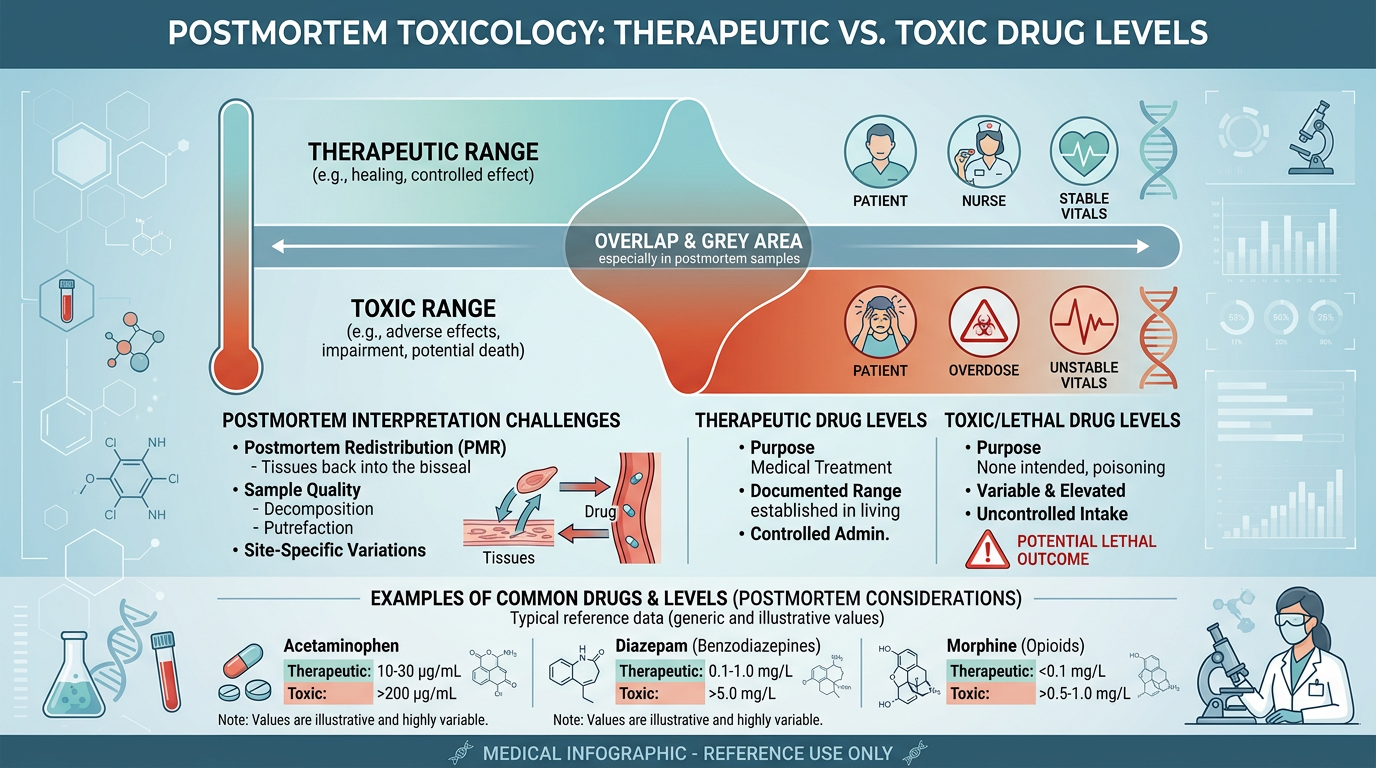
The word terminal event can be confusing and painful. It does not mean the finding is fake or irrelevant; it means it occurred during the body’s final decline rather than being the disease that started the fatal sequence. For example, a person with advanced neurologic disease may aspirate because swallowing and alertness were failing, while a person who vomited during a seizure may aspirate because consciousness was lost. The autopsy must combine organ findings, medical history, circumstances of death, toxicology when available, and the pattern of gastric contents or food material in the airways.
What Families Can Expect From Further Review
After an aspiration pneumonia autopsy result, the next step is usually careful review of the final diagnoses, cause-of-death statement, clinical history, and any pending studies. Toxicology, microbiology cultures, hospital records, emergency medical service notes, and imaging may add context. A completed autopsy report may take weeks because microscopic slides, special stains, and ancillary testing require time. Families should not assume that a preliminary impression is the final medical explanation.
When the report is complete, the pathologist or medical examiner may explain whether aspiration pneumonia was primary, contributory, or incidental. A primary role means the aspiration-related lung disease was central to death. A contributory role means it worsened an already dangerous illness but may not have been the only fatal factor. An incidental or agonal role means aspiration occurred near death but did not substantially alter the outcome.
Families sometimes ask whether aspiration means choking. The answer depends on the evidence. Choking usually implies acute airway obstruction by a bolus or object, while aspiration pneumonia often means material entered smaller airways and caused inflammation or infection. Both can involve food or stomach fluid, but they are not identical. Understanding that difference can prevent an autopsy report from being read as more certain, or more accusatory, than the pathology supports.
When A Second Review May Help
A second review may help when the cause of death wording feels unclear, the timeline does not match the family’s observations, or the report uses terms that seem contradictory. For example, a report may list aspiration pneumonia as the immediate cause while also documenting advanced Alzheimer disease, metastatic cancer, intoxication, or severe heart disease. Those conditions may not compete with each other; they may form the chain that explains why aspiration occurred. Still, families deserve an explanation that makes medical and human sense.
A review often focuses on the final diagnosis page, gross descriptions, microscopic examination, toxicology results, and medical records. If slides are available, another pathologist may assess the severity, distribution, and timing of the lung findings. The reviewer may also ask whether gastric contents were seen deep in the lungs, whether inflammation was acute or established, and whether other organs show a more convincing fatal process. For families considering this option, guidance on when to get a second pathology opinion may be useful.
A second opinion does not always change the conclusion, but it can clarify the language. Sometimes the most helpful outcome is not a new diagnosis, but a clearer explanation of how the pieces fit together. If the family is pursuing legal, insurance, or medical quality concerns, the review may need to be formal and based on complete records. Practical steps are outlined in how to get a second opinion on a pathology diagnosis, and the same principles can apply to autopsy material when records and slides are available.
Questions To Ask The Pathologist Or Medical Examiner
- Was aspiration pneumonia listed as the immediate cause of death, a contributing condition, or an incidental finding?
- Did the lung findings show established pneumonia, or did they look more like a recent terminal event?
- Were food particles, oral secretions, or gastric contents identified in the small airways or only in larger air passages?
- Was there evidence of airway obstruction, choking, or a blocked windpipe?
- What underlying condition likely made aspiration possible, such as stroke, dementia, seizure, intoxication, weakness, or severe illness?
- Did the microscopic examination support infection, chemical injury, or both?
- Are any toxicology, culture, hospital record, or slide review results still pending?
These questions are specific because aspiration-related deaths can be medically subtle. A family may hear one phrase and imagine one event, while the report may actually describe a sequence that unfolded over hours, days, or during the final minutes of life. Clear answers help separate what the pathology proves from what remains uncertain.
Reading an autopsy document can feel very different from reading a routine biopsy result. The language is technical, the stakes feel final, and the emotional weight is heavy. A structured approach to understanding a pathology report can help families slow down, identify the key sections, and prepare better questions.
Frequently Asked Questions
Does aspiration pneumonia mean my loved one choked to death?
Not necessarily. Aspiration pneumonia means material entered the lungs and caused injury or infection, while choking usually means a sudden airway obstruction blocked breathing. An aspiration pneumonia autopsy finding may support choking only if the report describes a large obstructing object or material blocking the airway. The pathologist’s wording and the distribution of the lung changes are critical.
Can aspiration pneumonia be the cause of death?
Yes, aspiration pneumonia can be the cause of death when it leads to respiratory failure, low oxygen levels, sepsis, or overwhelming lung inflammation. An aspiration pneumonia autopsy diagnosis is strongest when both lungs show significant pneumonia and the clinical history fits. It may also be listed as a consequence of another disease, such as dementia, stroke, or severe frailty. The final death certificate often shows that chain.
What does terminal aspiration mean on an autopsy report?
Terminal aspiration means aspiration occurred near the end of life, often during the final collapse or loss of protective reflexes. A terminal event can be real but may not be the disease that caused the person to die. Pathologists use the amount of aspirated material, inflammation, and other organ findings to decide how much weight to give it. This distinction can be emotionally difficult, but it helps prevent overinterpreting a final physiologic event.
How does a pathologist know aspiration happened before death?
The pathologist looks for inflammation, foreign material, bacteria, tissue injury, and the location of material within the lungs. Established inflammation on microscopic examination supports aspiration before death because the body had time to react. Fresh material without much reaction may be more recent or terminal. The medical history and circumstances around death also matter.
Should a family request a second opinion after aspiration pneumonia autopsy findings?
A second opinion can be helpful if the autopsy report is unclear, the family has concerns about the timeline, or the listed cause of death does not seem to match what happened. Another pathologist may review the report, slides, medical records, and toxicology results. A second review may confirm the original conclusion or clarify whether aspiration was primary, contributory, or a terminal event. It can also help families prepare informed questions for the medical examiner, coroner, or treating physicians.
An aspiration pneumonia autopsy result can feel frightening, but it is often a clue in a larger medical story rather than a simple accusation or single moment. The most useful next step is a careful, calm review of the wording, the lung findings, and the underlying illness. Honest Pathology consultations can help families understand whether the report supports aspiration as the main cause of death, a complication, or a final event.
References:
National Cancer Institute — Pathology Reports Fact Sheet
National Cancer Institute — Definition of Autopsy
MedlinePlus — Aspiration Pneumonia