Confused by a death investigation report? Postmortem toxicology levels can be hard to interpret. Learn what to ask next.
Postmortem toxicology levels help show which drugs, medicines, alcohol, or chemicals were present after death, but they do not always prove poisoning by themselves. These results are interpreted alongside the autopsy findings, medical history, scene investigation, prescription records, and timing of death. A number that looks frightening on a report may have a very different meaning once the full medical and forensic context is considered.
For families, an autopsy toxicology report can feel cold and overwhelming, especially when it uses words such as therapeutic, toxic, lethal, detected, or elevated. Grief often makes every number feel like an accusation or a final answer. In reality, toxicology is one part of a larger investigation, more like one witness in a courtroom than the entire verdict.
Clear explanations can reduce confusion without minimizing the seriousness of the loss. Pathologists and toxicologists often focus on patterns, not isolated numbers, because the same drug level may mean different things in different people.
Postmortem Toxicology Levels — What They Actually Mean
Postmortem toxicology levels are measured amounts of drugs, medications, alcohol, or chemical substances found in samples collected after death. These samples may include blood, urine, vitreous fluid from the eye, liver tissue, stomach contents, or other fluids and tissues. The autopsy toxicology report may list a blood drug concentration as a number, often with units such as ng/mL, mcg/mL, or mg/L. That number is then compared with published information, clinical experience, and the circumstances of the death.
A helpful analogy is a weather report after a storm. A rain gauge can show how much rain fell, but it cannot explain by itself whether flooding occurred because of blocked drains, river overflow, or poor ground conditions. In the same way, postmortem toxicology levels show what was present, but they do not automatically explain the cause of death. Therapeutic drug levels, toxic drug levels, and lethal ranges are guides, not automatic labels.
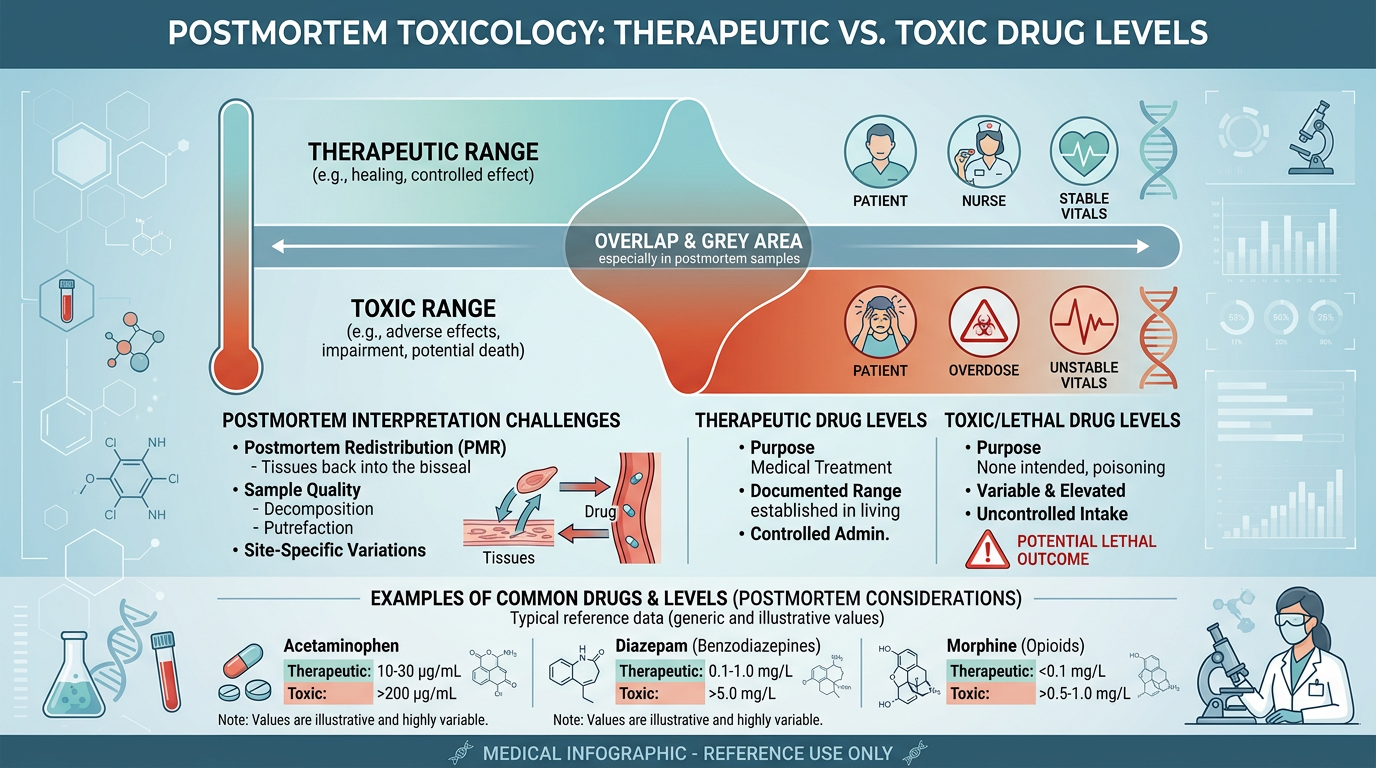
Therapeutic drug levels usually refer to concentrations seen in living patients taking a medication as prescribed. Toxic drug levels usually refer to concentrations associated with harmful effects, overdose, or fatal outcomes in reported cases. The challenge is that a person’s tolerance, organ function, drug combinations, and timing of death can all change the meaning of the number. Families reading an autopsy report may also benefit from general background on report language in What Is a Pathology Report?, since the structure and wording can feel unfamiliar.
Why A Report May Show Therapeutic Or Toxic Drug Levels
An autopsy toxicology report may show therapeutic drug levels when a person was taking prescribed medication, received treatment before death, or had a drug in the body from ordinary use. Medications for pain, anxiety, depression, seizures, heart disease, sleep, or infection may appear in the report even when they did not cause the death. A drug reference range may be listed beside the result, but that range often comes from living patients. For that reason, a therapeutic label after death must be interpreted carefully.
Toxic drug levels may appear when a drug was taken in excess, when several sedating drugs acted together, when alcohol was also present, or when the body could not clear a medication normally. Kidney disease, liver disease, dehydration, age, and interactions between drugs can all raise risk. A blood drug concentration may look modest for one person but dangerous for another person with low tolerance or severe illness. This is why the cause of death is rarely based on one number alone.
Postmortem redistribution is another major reason results can be difficult to interpret. After death, some drugs move from organs and tissues back into the blood, especially from the lungs, liver, stomach, or heart area. Postmortem redistribution can make central blood levels, such as heart blood, higher than peripheral blood levels, such as femoral blood. The toxicologist may also consider specimen type, storage conditions, decomposition, and the time between death and sample collection.
How Serious Are Postmortem Toxicology Levels?
Postmortem toxicology levels can be very serious, but seriousness depends on the whole case rather than the presence of a single drug. A medication found at therapeutic drug levels may simply confirm that a person was taking a prescribed treatment. A medication found at toxic drug levels may suggest overdose, impaired breathing, impaired consciousness, dangerous heart rhythm, or a contributing role in death. Even then, the pathologist must decide whether the toxicology result explains the death, contributed to it, or was unrelated.
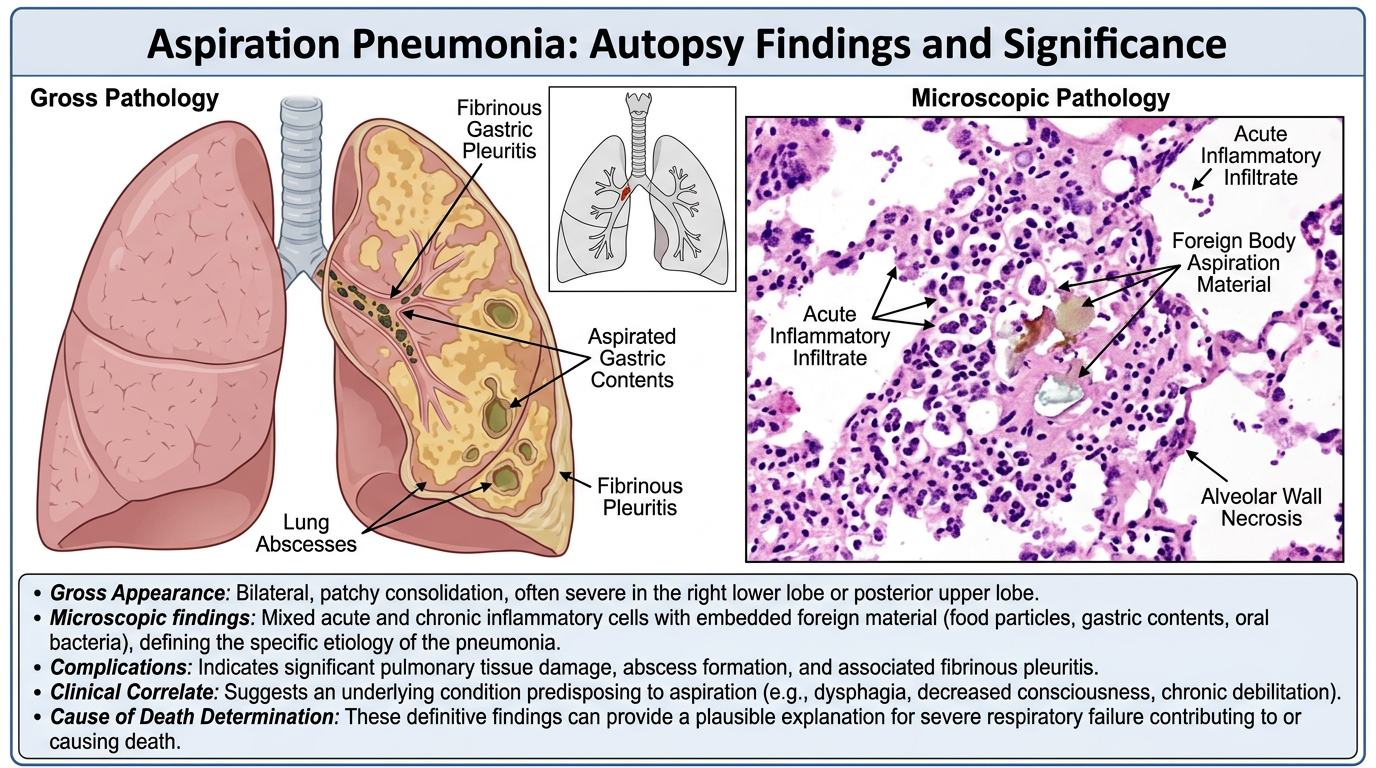
Some situations are more concerning than others. Multiple central nervous system depressants, such as opioids, benzodiazepines, alcohol, or sleep medications, can be dangerous together even if each individual blood drug concentration is not extremely high. Stimulants, antidepressants, heart medications, and anticonvulsants may also have narrow safety margins in certain circumstances. In those cases, postmortem toxicology levels are weighed against autopsy findings such as pulmonary edema, aspiration, heart disease, trauma, or natural disease.
A low or therapeutic result does not always exclude a drug-related death, and a high result does not always prove intentional overdose. Tolerance can allow some people to survive levels that would harm others, especially with long-term opioid, alcohol, or sedative exposure. Postmortem redistribution may also shift a result upward after death, making comparison with a living-patient drug reference range imperfect. The most reliable interpretation comes from combining the autopsy toxicology report with scene findings, medication counts, witness history, emergency medical records, and autopsy findings.
What Happens Next: Interpretation And Final Reporting
After toxicology testing, the forensic pathologist or medical examiner reviews the results with the rest of the investigation. This review usually includes the autopsy findings, medical records, prescription history, police or coroner investigation, and any known symptoms before death. Postmortem toxicology levels are then placed into context, not treated as a stand-alone answer. If a drug appears at toxic drug levels, the report may still describe whether it was the immediate cause, a contributing factor, or an incidental finding.
Families may see wording such as “acute intoxication,” “combined drug toxicity,” “drug effect,” “therapeutic use,” or “detected but not contributory.” These phrases have specific meaning in death certification. The cause of death explains the disease, injury, or toxic effect that led to death, while the manner of death describes categories such as natural, accident, suicide, homicide, or undetermined. A result can be medically significant without proving intent.
Additional testing may sometimes be needed. This can include confirmation testing, expanded drug screening, alcohol testing in more than one specimen, or comparison of peripheral and central blood. When the language in the final report remains confusing, Understanding Your Pathology Report: How to Read It with Confidence can help families organize the terms before a meeting with the medical examiner, coroner, or treating physician. A second review may be especially useful when findings seem inconsistent or when the reported drug reference range appears to conflict with the stated conclusion.
Questions To Ask Your Doctor Or Pathologist
- Which specimen was used for the reported blood drug concentration, and was it central blood, peripheral blood, urine, vitreous fluid, or tissue?
- Were the reported levels considered therapeutic drug levels, toxic drug levels, lethal levels, or simply detected substances?
- Could postmortem redistribution have affected the result, especially if heart blood was tested?
- Was the drug reference range based on living patients, forensic cases, or the laboratory’s own reference material?
- Did the medication directly cause death, contribute to death, or appear unrelated to the final cause of death?
- Were alcohol, opioids, sedatives, antidepressants, stimulants, or other interacting substances found together?
- Would review by a forensic pathologist or toxicologist be helpful before the family accepts the conclusion?
Families do not need to interpret an autopsy toxicology report alone. The most useful questions focus on specimen type, timing, drug combinations, and how the pathologist connected the laboratory result to the final death certificate. A careful explanation can often separate a frightening-looking number from a medically meaningful conclusion.
When uncertainty remains, a second opinion can review the autopsy report, toxicology tables, death certificate wording, and available medical records. General guidance on when a review may be worthwhile is available in When Should You Get a Second Pathology Opinion?. In postmortem toxicology, the goal is usually not to create conflict, but to clarify whether the interpretation is well supported.
Frequently Asked Questions
What does therapeutic level mean in postmortem toxicology?
A therapeutic level means the measured drug amount is within a range often seen in living patients taking the medication for treatment. In postmortem toxicology levels, that comparison is helpful but not perfect because the body changes after death. The result must be interpreted with the autopsy findings, medical history, and specimen type. Therapeutic drug levels may be unrelated to death, or they may matter when combined with other drugs or illness.
Does a toxic level always mean overdose?
A toxic level suggests that the amount may be capable of causing harm, but it does not always prove overdose by itself. Toxic drug levels can occur because of excessive use, drug interactions, poor clearance, or postmortem changes. Intent cannot usually be determined from the number alone. Scene investigation, prescription records, and the full autopsy toxicology report are needed.
Can postmortem toxicology levels be wrong?
Postmortem toxicology levels are generated by validated laboratory methods, but interpretation can still be complex. A result may be analytically accurate while its meaning remains uncertain. Postmortem redistribution, decomposition, specimen source, and timing can all affect interpretation. Confirmation testing and expert review can help when the conclusion seems unclear.
Why are drug levels different after death?
Drug levels can change after death because circulation stops and substances move between tissues and blood. This process is called postmortem redistribution, and it affects some drugs more than others. Central blood may show a higher blood drug concentration than peripheral blood. That difference is one reason forensic pathologists avoid relying on a single number without context.
Can a second opinion change a toxicology conclusion?
A second opinion can sometimes change or refine the interpretation, especially when the case involves multiple drugs, unusual specimen types, or uncertain cause of death. Postmortem toxicology levels may be reinterpreted after reviewing the full autopsy findings, medical records, and investigative details. Sometimes the original conclusion is confirmed, which can also bring clarity. Instructions for organizing a review are outlined in How to Get a Second Opinion on Your Pathology Diagnosis.
Postmortem toxicology results can feel painfully final, but the meaning is often more nuanced than the table of numbers suggests. A thoughtful review can help families understand whether a drug was incidental, contributory, or central to the death. Honest Pathology consultations can help translate difficult report language into clear, medically grounded questions for the next conversation.
References:
National Cancer Institute — Autopsy Definition
NCBI Bookshelf — Biomedical And Clinical Reference Library
National Cancer Institute — Pathology Reports Fact Sheet