Worried by ductular reaction liver biopsy wording? Learn what this liver finding means, why it appears, and what to ask next.
Ductular reaction liver biopsy usually means the liver is showing a repair-type response near small bile ducts, often because of irritation, blockage, inflammation, or ongoing liver injury. This wording can sound alarming because it is technical and rarely explained in everyday clinic conversations. In most cases, it is not a cancer diagnosis by itself, but it can be an important clue that helps the care team understand what is happening in the liver.
Receiving a liver biopsy report can feel like being handed a page in another language at an already stressful time. Words such as “ductular,” “portal,” “fibrosis,” and “injury” can make a patient fear the worst before the full meaning is clear. A pathology finding becomes less frightening when it is placed in context: what was seen under the microscope, why it might be present, and how it fits with blood tests, imaging, symptoms, and the reason for the biopsy.
Ductular Reaction Liver Biopsy — What It Actually Means
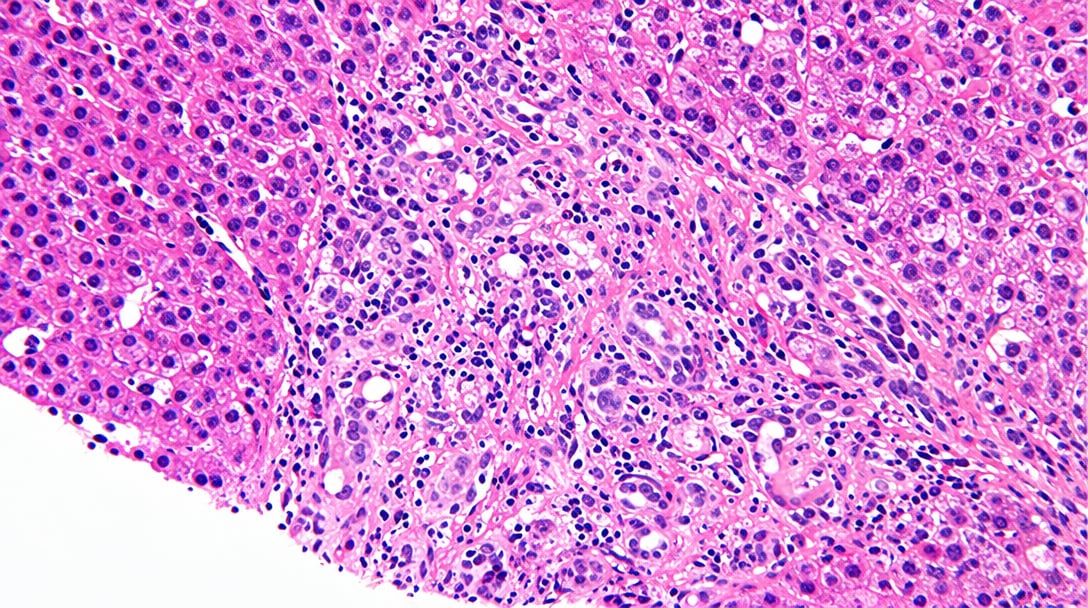
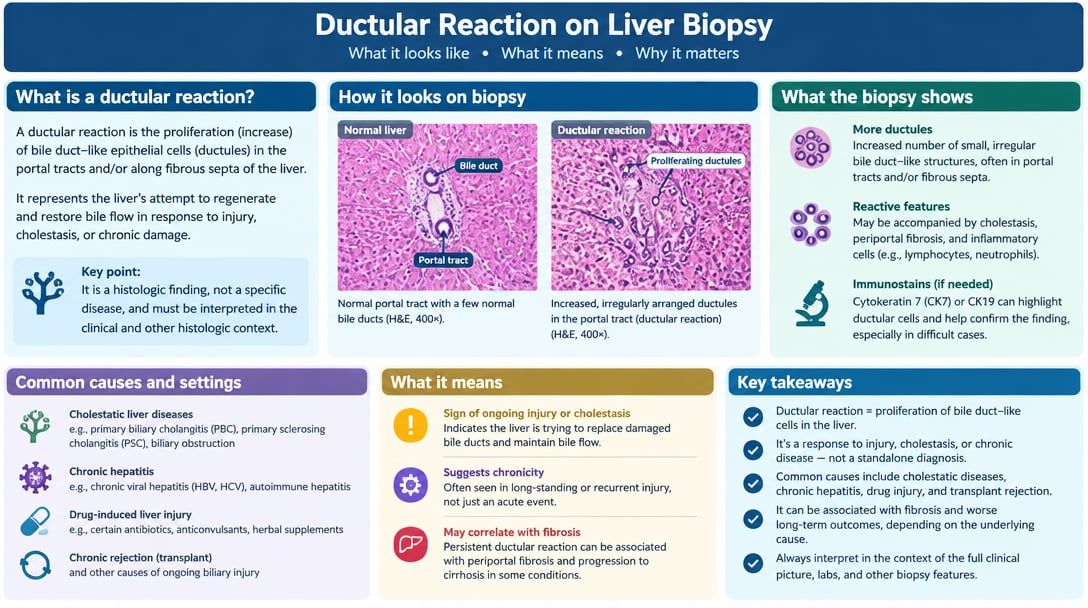
A ductular reaction liver biopsy describes an increase in tiny duct-like structures at the edges of portal tracts, the small areas of liver tissue that contain bile ducts, blood vessels, and connective tissue. Pathologists see this pattern under the microscope when the liver is trying to respond to injury, especially injury involving bile flow or the area around bile ducts. A liver biopsy report may mention ductular reaction as mild, moderate, prominent, or marked, depending on how much of this pattern is present.
A helpful analogy is a road repair crew appearing near a damaged intersection. The ductular reaction is not necessarily the original problem; it is often a visible sign that the liver is reacting to stress nearby. This stress may come from bile duct injury, blocked bile flow, inflammation, scarring, medication-related damage, autoimmune bile duct disease, viral hepatitis, fatty liver disease, or other causes. The same microscopic pattern can appear in several conditions, so the phrase must be interpreted with the rest of the biopsy.
In routine liver pathology, the pathologist studies the portal tracts, lobules, bile ducts, vessels, inflammation, and amount of scar tissue. The phrase ductular reaction liver biopsy is therefore a clue, not a complete diagnosis on its own. A liver biopsy report that includes this finding should be read alongside liver enzyme patterns, especially alkaline phosphatase, bilirubin, AST, and ALT. For patients trying to understand the structure of a report, What Is a Pathology Report? can help explain why microscopic findings are listed separately from the final diagnosis.
Why Your Report Shows This Finding
Ductular reaction often appears when bile is not flowing normally or when small bile ducts have been irritated or damaged. This may happen in cholestatic injury, where bile flow is impaired within the liver or in the larger drainage system outside the liver. It may also occur with bile duct injury from autoimmune conditions, obstruction, medication effects, infections, transplant-related problems, or chronic liver disease. Portal tract inflammation is commonly evaluated at the same time because inflammation in this region can injure bile ducts and trigger a repair response.
Pathologists look carefully at the pattern because different diseases leave different microscopic “footprints.” Primary biliary cholangitis often targets small bile ducts, while primary sclerosing cholangitis can involve larger and smaller bile ducts with scarring patterns that may be patchy. Drug-induced liver injury can also show cholestatic injury and ductular reaction, sometimes with eosinophils or other inflammatory cells. Chronic liver disease from fatty liver disease, viral hepatitis, alcohol-related liver injury, or autoimmune hepatitis can also show ductular reaction, especially when hepatic fibrosis is present.
Another reason this finding appears is that the liver has regenerative capacity. In more sustained injury, tiny duct-like structures may expand as part of a repair system involving progenitor cells, which are immature cells capable of helping restore injured liver tissue. This does not mean the biopsy shows cancer; progenitor cells can be part of a noncancerous repair process. However, their presence tells the pathologist that the liver has experienced enough stress to activate deeper repair pathways, especially near areas of hepatic fibrosis or portal tract inflammation.
How Serious Is Ductular Reaction Liver Biopsy?
The seriousness of ductular reaction liver biopsy depends on why the reaction is present and what else the biopsy shows. A mild ductular reaction with little inflammation and no significant scarring may be a limited, treatable, or temporary response. A prominent ductular reaction with marked portal tract inflammation, bile duct injury, cholestatic injury, or bridging hepatic fibrosis may suggest a more active or longer-standing liver problem. The finding matters most when it appears together with abnormal blood tests, jaundice, itching, imaging abnormalities, or evidence of progressive chronic liver disease.
A ductular reaction liver biopsy is not automatically a sign of liver failure. It also does not automatically mean cirrhosis, cancer, or the need for a transplant. Pathologists usually weigh the amount of ductular reaction against the degree of scar tissue, the condition of native bile ducts, the type of inflammation, and whether features of obstruction or autoimmune disease are present. A liver biopsy report may be more reassuring if the reaction is mild and the overall architecture of the liver is preserved.
At the same time, the finding should not be ignored. Ductular reaction is often a signal that the liver is responding to injury, and the cause should be identified when possible. For example, bile duct injury may need a different workup than fatty liver disease, and cholestatic injury may lead clinicians to review medications, imaging of bile ducts, and autoimmune blood tests. Patients who feel uncertain about whether the biopsy explanation matches the clinical picture may benefit from a second expert review, especially when treatment decisions depend on the exact diagnosis.
What Happens Next: Treatment And Monitoring
The next step after ductular reaction liver biopsy is usually correlation, meaning the biopsy is compared with clinical information. Doctors often review liver blood tests, imaging studies such as ultrasound, CT, MRI, or MRCP, medication history, alcohol history, autoimmune markers, viral hepatitis testing, and metabolic risk factors. A liver biopsy report is strongest when it answers a specific clinical question, such as whether there is bile duct injury, autoimmune hepatitis, fatty liver disease, drug injury, or chronic liver disease.
Treatment is aimed at the cause, not at the ductular reaction itself. If the reaction is linked to bile duct obstruction, evaluation of the bile ducts may be needed. If the pattern suggests autoimmune bile duct disease, medications such as ursodeoxycholic acid or immune-directed treatment may be considered by the treating clinician. If fatty liver disease or alcohol-related injury is the main driver, management may focus on metabolic health, alcohol cessation, weight loss when appropriate, diabetes control, and monitoring for hepatic fibrosis.
Monitoring may include repeat liver enzymes, bilirubin, alkaline phosphatase, platelet count, imaging, and sometimes noninvasive fibrosis tests. Another biopsy is not always needed, but it may be considered when the diagnosis remains uncertain or when the disease behaves differently than expected. For help understanding how individual lines in a report fit together, Understanding Your Pathology Report: How to Read It with Confidence offers a practical framework. The key point is that ductular reaction liver biopsy language should prompt careful interpretation rather than panic.
Questions To Ask Your Doctor Or Pathologist
Specific questions can turn a confusing biopsy phrase into a clearer plan. Patients may want to bring the liver biopsy report, blood test results, medication list, imaging reports, and any prior liver test history to the appointment. The following questions can help focus the discussion:
- Does the ductular reaction look mild, moderate, or marked?
- Is there evidence of bile duct injury in the biopsy?
- Does the pattern suggest cholestatic injury, obstruction, autoimmune bile duct disease, drug injury, or another cause?
- How much hepatic fibrosis or scarring is present?
- Is portal tract inflammation mild or severe, and what type of inflammatory cells are present?
- Does the liver biopsy report show features of chronic liver disease or cirrhosis?
- Would a second pathology review change diagnosis, staging, or treatment?
A second opinion is most helpful when the diagnosis is uncertain, the report uses cautious language, the clinical picture does not match the biopsy, or major treatment decisions are being considered. Liver biopsies can be challenging because some diseases are patchy and because bile duct problems may overlap with other patterns of injury. The article When Should You Get a Second Pathology Opinion? explains common situations where an expert review can provide clarity.
A second pathology review typically examines the original glass slides, special stains, and available clinical information. It may confirm the original interpretation, refine the diagnosis, or clarify the amount of hepatic fibrosis and bile duct injury. For patients considering this option, How to Get a Second Opinion on Your Pathology Diagnosis explains the process in practical terms.
Frequently Asked Questions
Is ductular reaction on liver biopsy cancer?
No. Ductular reaction liver biopsy is not a cancer diagnosis by itself. It usually describes a repair or response pattern near bile ducts and portal tracts. Rarely, pathologists may consider other diagnoses if the cells look abnormal, but ordinary ductular reaction is interpreted in the context of inflammation, scarring, bile ducts, and clinical information.
What causes ductular reaction in the liver?
Ductular reaction can be caused by bile duct injury, impaired bile flow, chronic liver disease, drug-induced liver injury, autoimmune bile duct disease, viral hepatitis, fatty liver disease, or obstruction. Portal tract inflammation and cholestatic injury are common associated findings. The cause cannot always be determined from one phrase in the report, so blood tests and imaging are often needed.
Does ductular reaction mean cirrhosis?
Ductular reaction liver biopsy does not automatically mean cirrhosis. It can be seen before cirrhosis, during chronic liver disease, or in temporary injury patterns. The biopsy must be checked for hepatic fibrosis, nodules, and architectural distortion to determine whether cirrhosis is present. The fibrosis stage is usually more important than ductular reaction alone when judging long-term risk.
Can ductular reaction go away?
It may improve if the underlying cause is treated or removed. For example, medication-related injury, bile duct obstruction, or active inflammation may improve with the right management. If chronic liver disease continues, the ductular reaction may persist or become more prominent. Follow-up blood tests and clinical monitoring help show whether the liver is improving.
Should a liver biopsy with ductular reaction be reviewed again?
A review can be useful when the diagnosis is unclear, treatment depends on the exact pattern, or the liver biopsy report does not match symptoms, blood tests, or imaging. Ductular reaction liver biopsy interpretation can be nuanced because several liver diseases overlap under the microscope. An expert liver pathologist can reassess bile duct injury, portal tract inflammation, cholestatic injury, and hepatic fibrosis. The review may confirm the diagnosis or provide a more specific explanation.
A ductular reaction can be an unsettling phrase, but it is best understood as a signpost rather than a final answer. The most useful interpretation comes from matching the biopsy pattern with blood tests, imaging, symptoms, and the clinical question. Honest Pathology consultations can help clarify difficult liver biopsy wording and support more confident conversations with the treating team.
References:
National Cancer Institute — Pathology Reports Fact Sheet
NCBI Bookshelf — Biomedical And Clinical Reference Texts
MedlinePlus — Liver Function Tests