Worried after a transplant report mentions C4d kidney biopsy findings? Learn what C4d may mean and what to ask the transplant team next.
C4d kidney biopsy results can mean that a transplanted kidney is showing evidence of antibody-related immune injury, but the meaning depends on the full biopsy pattern, blood tests, and clinical picture. C4d is not a diagnosis by itself. It is one clue that pathologists use when evaluating a kidney transplant biopsy for antibody mediated rejection.
Seeing words such as C4d, rejection, capillaries, or antibodies can feel frightening, especially after a transplant journey that may have involved dialysis, surgery, medications, and constant monitoring. A biopsy report can sound like a foreign language at the exact moment a patient most needs clarity. The goal is to translate the pathology language into practical meaning, without making the result sound either less serious or more hopeless than it is.
A C4d kidney biopsy report should be read as part of a larger medical story. The transplant team usually combines the biopsy findings with creatinine trends, urine findings, medication levels, and donor specific antibodies before deciding what is happening and what treatment may help.
C4d Kidney Biopsy — What It Actually Means
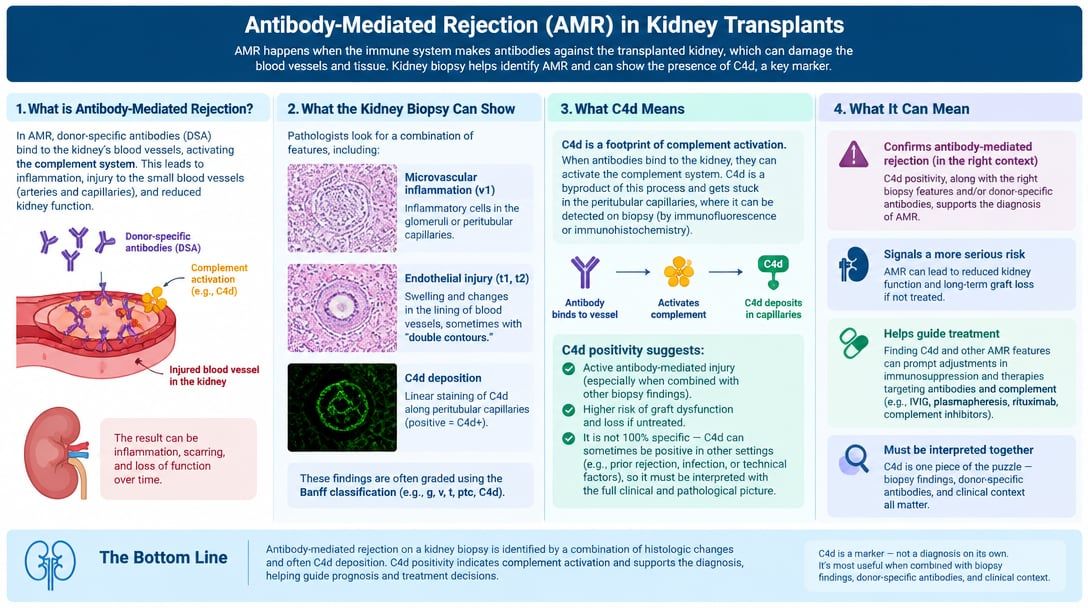
A C4d kidney biopsy is a kidney transplant biopsy in which the pathologist checks for C4d, a small protein fragment that can be left behind when antibodies activate part of the immune system. A helpful analogy is a footprint in wet concrete. C4d does not show the moving person directly, but it can show that an immune process recently passed through that area.
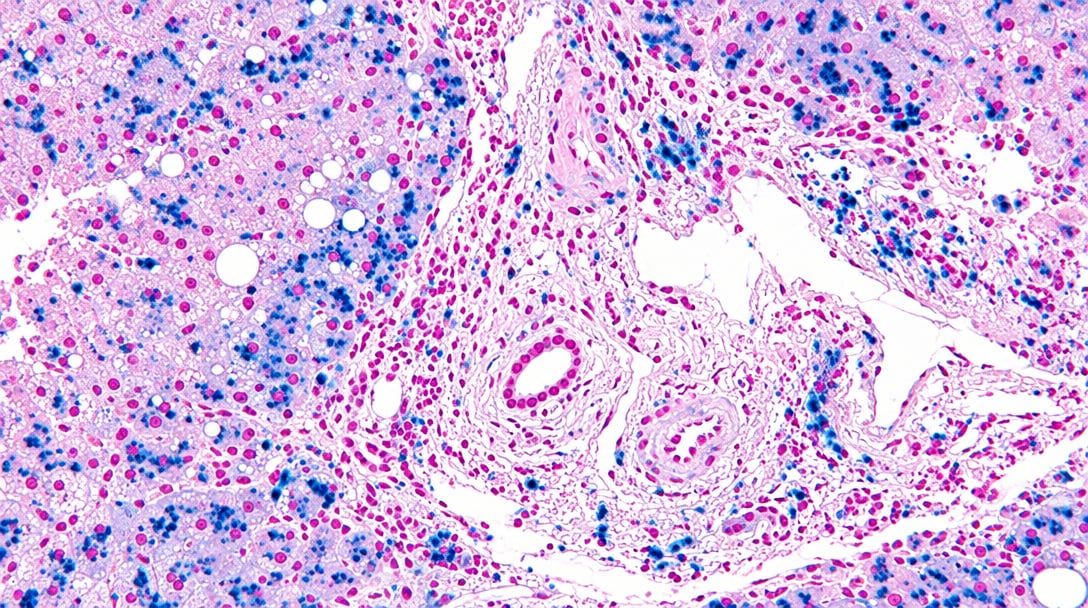
In transplant pathology, C4d is usually evaluated in tiny blood vessels called peritubular capillaries. These capillaries run between the kidney tubules and are a common site where antibody mediated rejection may leave evidence. When C4d staining is present in the right location and pattern, it raises concern that antibodies are interacting with the transplanted kidney.
C4d is commonly detected by immunohistochemistry or immunofluorescence, depending on how the biopsy tissue was processed. These techniques use special laboratory stains to highlight specific proteins under the microscope. For a patient trying to understand the larger biopsy document, a general explanation of how pathology reports are structured can be helpful; resources such as What Is a Pathology Report? can make the format feel less overwhelming.
The key point is that C4d kidney biopsy findings are interpreted with the rest of the biopsy, not in isolation. A report may mention C4d along with inflammation in peritubular capillaries, glomerulitis, tubulitis, scarring, or vascular injury. Pathologists often use the Banff classification, an international system for kidney transplant biopsy interpretation, to organize these findings into a clinically meaningful category.

Why The Report Shows C4d In A Transplant Biopsy
A kidney transplant biopsy may show C4d when antibodies have recognized the transplanted kidney as a target. These antibodies may be directed against donor tissue markers, often called donor specific antibodies. When donor specific antibodies bind to cells in the kidney graft, they can trigger complement activation, which is part of the immune system’s defense machinery.
Complement activation can be useful when the body fights infection, but in a transplanted organ it may contribute to injury. C4d is one of the breakdown products that can remain attached to tissue after this process occurs. This is why C4d is often described as a marker of antibody activity rather than as the direct cause of all damage.
In the microscope room, pathologists look carefully at where the stain appears. C4d in peritubular capillaries has a different meaning than nonspecific staining in other areas. The Banff classification helps standardize how C4d staining, capillaritis, glomerulitis, and other biopsy features are reported, so the transplant team can compare results across time and between institutions.
Antibody mediated rejection is not the only reason a transplant biopsy can be complicated. A biopsy may also show T cell mediated rejection, drug toxicity, recurrent kidney disease, infection, ischemic injury, or chronic scarring. The phrase transplant rejection can also refer to more than one immune pattern, which is why precise pathology language matters.
Some reports describe C4d as positive, negative, focal, diffuse, minimal, or suspicious. These words usually reflect how much of the sampled tissue shows staining and how convincing the pattern looks. A patient reading the report may benefit from a structured approach to report language, such as Understanding Your Pathology Report: How to Read It with Confidence.
How Serious Is A C4d Kidney Biopsy Finding?
A C4d kidney biopsy finding can be serious because it may support a diagnosis of antibody mediated rejection, but it is not automatically a sign that the transplant is failing. Seriousness depends on the strength and distribution of C4d staining, the amount of inflammation, whether donor specific antibodies are present, and how the kidney is functioning. A stable creatinine with limited biopsy changes may carry a different meaning than a rising creatinine with widespread microvascular inflammation.
In a milder scenario, C4d kidney biopsy staining may be focal or borderline, and the transplant team may look for additional evidence before labeling the case as definite antibody mediated rejection. In a more concerning scenario, the biopsy may show diffuse C4d staining in peritubular capillaries, glomerulitis, peritubular capillaritis, and positive donor specific antibodies. That combination may point strongly toward active antibody mediated rejection.
The Banff classification is especially important here because it prevents the result from being reduced to a single word. A report may separate active injury from chronic injury. Active antibody mediated rejection suggests a current immune process, while chronic active antibody mediated rejection suggests ongoing injury with longer-term structural changes such as transplant glomerulopathy.
Transplant rejection is often treatable, especially when recognized early, but response varies. Treatments are chosen by the transplant team and may include adjustments in immunosuppression, plasma exchange, intravenous immunoglobulin, corticosteroids, rituximab, complement-directed therapy, or other center-specific protocols. The biopsy does not make those decisions alone; it helps guide them.
A C4d kidney biopsy result should also be interpreted alongside medication adherence, infection risk, prior rejection episodes, and time since transplant. A recent transplant with new donor specific antibodies is different from a long-standing graft with chronic scarring. This is why the most useful question is not simply, “Is C4d bad?” but, “What does C4d mean in this exact biopsy and clinical context?”
What Happens Next: Treatment And Monitoring
After a C4d kidney biopsy result, the transplant team usually reviews the biopsy with blood tests and clinical history. The next steps often include checking or repeating donor specific antibodies, reviewing creatinine trends, measuring urine protein, and confirming immunosuppressive medication levels. These details help determine whether the findings fit antibody mediated rejection, another form of transplant rejection, or a mixed pattern.
Monitoring may be close and frequent. A patient may have repeated bloodwork, urine testing, medication adjustments, and sometimes follow-up biopsy if the transplant team needs to know whether the injury is improving. The purpose of monitoring is not to punish or frighten a patient; it is to catch changes early enough to protect kidney function whenever possible.
Treatment varies because antibody mediated rejection is not one single situation. Some patients have active inflammation that needs urgent therapy, while others have chronic changes that require careful long-term management. Pathologists help by describing the degree of inflammation, chronic scarring, vascular injury, and C4d staining pattern in the kidney transplant biopsy.
When the report is unclear, unusually complex, or does not seem to match the clinical picture, a second pathology review can be reasonable. This is particularly true when major treatment decisions depend on whether the biopsy truly shows antibody mediated rejection. Honest Pathology resources such as When Should You Get a Second Pathology Opinion? and How to Get a Second Opinion on Your Pathology Diagnosis explain how such reviews typically work.
Questions To Ask Your Doctor Or Pathologist
- Does the biopsy meet Banff classification criteria for antibody mediated rejection?
- Was the C4d staining focal, diffuse, weak, strong, positive, negative, or suspicious?
- Was C4d seen in peritubular capillaries, and why does that location matter?
- Are donor specific antibodies present in the blood, and have they changed over time?
- Does the kidney transplant biopsy show active injury, chronic injury, or both?
- Is there evidence of another cause, such as drug toxicity, infection, recurrent kidney disease, or T cell mediated rejection?
- What findings will be monitored to judge whether treatment is working?
These questions help turn a frightening report into a practical conversation. A C4d kidney biopsy result is most useful when the patient understands how the stain fits with antibody tests, kidney function, and the biopsy pattern.
A pathologist may not choose the treatment plan, but the pathology interpretation can strongly influence that plan. If the wording is uncertain, or if the diagnosis will lead to intensive treatment, an expert kidney transplant pathology review may provide valuable clarity.
Frequently Asked Questions
What does C4d mean on a kidney transplant biopsy?
C4d is a protein fragment that can remain in tissue after complement activation. On a kidney transplant biopsy, C4d is most meaningful when it is seen in peritubular capillaries. This pattern can support antibody mediated rejection, especially when donor specific antibodies and microvascular inflammation are also present. C4d is a clue, not the entire diagnosis.
Does a positive C4d kidney biopsy always mean rejection?
A positive C4d kidney biopsy does not always mean definite rejection by itself. The transplant team must compare the stain with the biopsy pattern, donor specific antibodies, kidney function, and clinical history. Some cases are clear, while others are borderline or require additional testing. The Banff classification helps organize these findings into a more precise diagnosis.
Can antibody mediated rejection be treated?
Antibody mediated rejection can often be treated, especially when detected early, but the response is variable. Treatment may involve changing immunosuppression, removing or blocking antibodies, and monitoring kidney function closely. Chronic injury may be harder to reverse than active inflammation. The transplant team uses the kidney transplant biopsy to estimate the pattern and severity of injury.
What are donor specific antibodies after kidney transplant?
Donor specific antibodies are antibodies that recognize tissue markers from the kidney donor. They can develop before or after transplant, and they may increase the risk of antibody mediated rejection. Their presence does not always mean the graft is being damaged, but they become more concerning when biopsy findings show C4d, glomerulitis, or peritubular capillaritis. Serial testing can show whether the antibody level is changing.
Should a C4d kidney biopsy get a second opinion?
A C4d kidney biopsy may deserve a second opinion when the diagnosis is uncertain, the findings are borderline, or treatment decisions are high stakes. Kidney transplant pathology is specialized, and small differences in interpretation can matter. A second review typically examines the original slides, C4d stain, and report in the context of the clinical question. This process can confirm the diagnosis or clarify what remains uncertain.
A C4d result can feel like a sudden threat to a transplanted kidney, but it is best understood as one piece of a carefully assembled puzzle. Clear interpretation can help patients and families ask better questions and participate more confidently in the next steps. Honest Pathology consultations can provide an independent pathology-focused review when a biopsy report needs clearer explanation.
References:
National Cancer Institute — Pathology Reports Fact Sheet
NCBI Bookshelf — Biomedical And Clinical Reference Books
MedlinePlus — Laboratory Tests