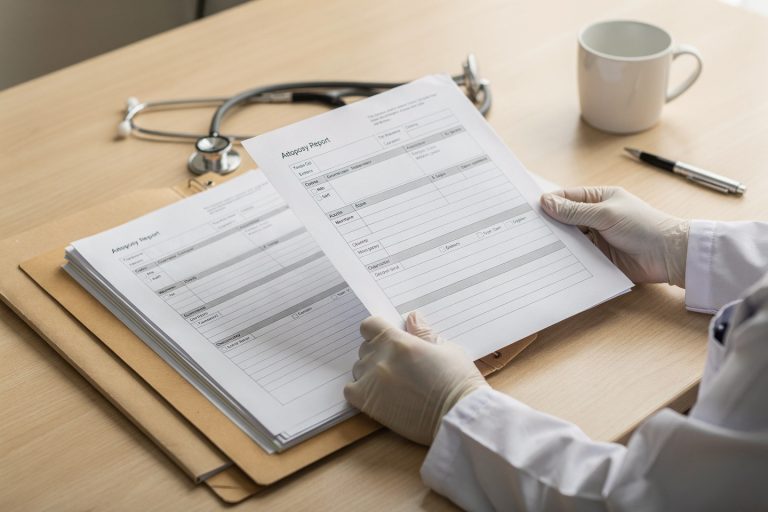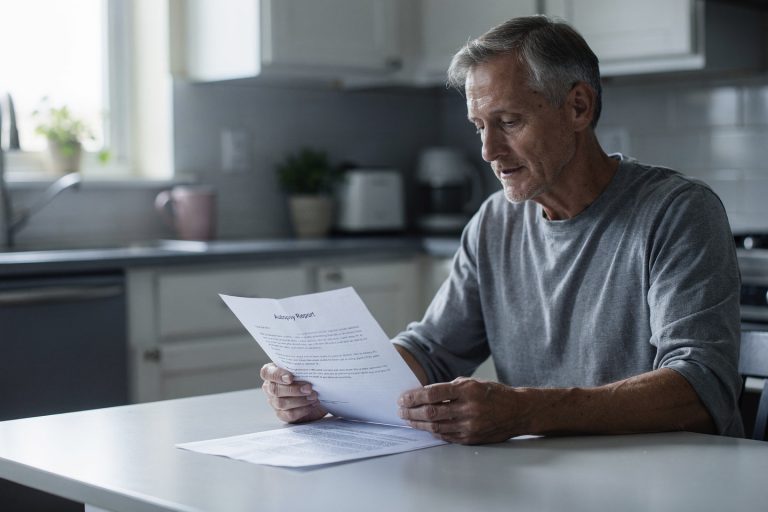
Autopsy report review can feel overwhelming after a loss. Learn when expert guidance helps and what questions to ask next.
Receiving an autopsy report after the death of a loved one can be overwhelming, especially when the language is technical and the conclusions feel hard to connect to what happened. An autopsy report review helps families understand the medical findings, the stated cause of death, and the limits of what the report can prove. The report may describe major diseases, injuries, procedures, laboratory results, toxicology, microscopic findings, and the pathologist’s final interpretation.
For many families, the report answers some questions while raising others. This is not just paperwork. It is a document tied to grief, shock, unfinished conversations, and sometimes uncertainty about medical care. A careful review can help families understand what the report can and cannot show, ask clearer questions, and feel less alone in the process.
Understanding What the Autopsy Report Says

An autopsy report review involves a pathologist or qualified physician reading the completed report with fresh eyes and explaining the meaning of the findings. Think of it like having an experienced mechanic review the full inspection report after a serious car failure. The goal is not to rewrite history. The goal is to understand which parts failed, which findings mattered most, and how the final conclusion was reached.
In an autopsy, the pathologist studies the body, organs, medical history, and sometimes tissue slides under the microscope. The report may list findings in sections, including external examination, internal examination, microscopic examination, toxicology, and final diagnoses. A family may see words that sound frightening or unfamiliar, such as atherosclerosis, pulmonary edema, aspiration, sepsis, hemorrhage, or cardiomegaly. A review helps translate those terms into plain language and connects them to the stated cause of death.
This type of review can also help families understand the difference between the death certificate and the full autopsy report. The death certificate is usually a shorter legal summary, while the autopsy report is a more detailed medical explanation. Sometimes the wording on the death certificate does not capture every contributing condition. For readers who are new to pathology language, this article on what a pathology report is can help explain how pathologists organize medical findings.
How Pathologists Connect Findings to the Cause of Death

An autopsy report documents evidence, not just an opinion. The report may include disease processes that were known during life, diseases discovered only after death, injuries, medication effects, infections, or complications of treatment. Medical records often provide the timeline, while the body examination provides physical confirmation. When those two sources are compared, the pathologist decides which findings are central and which are background conditions.
Some autopsy findings are direct causes of death, while others are contributing conditions. For example, a severe heart attack may be the immediate cause of death, but diabetes and coronary artery disease may be contributing conditions. In another case, pneumonia may be present, but the deeper question is whether it developed because of cancer, aspiration, immobility, immune suppression, or a hospital complication. This is why forensic pathology and hospital autopsy work often require careful reconstruction of the sequence of events.
The microscopic examination can be especially helpful when the gross examination does not tell the whole story. Tiny tissue sections may show inflammation, clotting, infection, cancer spread, heart muscle injury, liver disease, or lung damage that was not obvious to the naked eye. The microscopic examination may confirm the suspected diagnosis or reveal a different process. In complex cases, forensic pathology principles may also help clarify the manner of death, such as natural, accidental, suicidal, homicidal, or undetermined.
When an Autopsy Review Matters Most
An autopsy review is important because it deals with final medical conclusions about a person’s death. It does not always mean something went wrong, and it does not automatically mean there is a dispute. Many families seek clarification simply because the language feels too technical, the loss was sudden, or the explanation does not match what they saw at the bedside. A careful review can separate medical uncertainty from true contradiction.
The level of concern depends on the questions being asked. If the family wants to understand a natural cause of death, such as heart disease or a stroke, the review may mainly provide clarity and reassurance. If the concern involves delayed diagnosis, surgical complications, medication effects, injury, workplace exposure, or a possible mismatch between the autopsy report and death certificate, the review may require deeper analysis. This can be especially useful when the stated cause of death feels too broad, such as cardiopulmonary arrest, respiratory failure, or multi-organ failure.
Those terms describe how the body stopped working, but they may not fully explain why it happened. Every person who dies has cardiac and respiratory arrest at the end, but families usually need the underlying reason. A second opinion may help determine whether the cause of death is supported by the autopsy findings, medical records, toxicology, and microscopic examination. When there is uncertainty, the most honest answer may be that the evidence supports one conclusion more strongly than another, rather than absolute certainty.
What Families Can Do After the Review

After a review, the next step depends on the family’s goal. Some families need a plain-language explanation for closure. Others need help preparing questions for the physician, medical examiner, coroner, attorney, insurance company, or hospital patient relations office. The review may identify missing medical records, unclear wording, unanswered toxicology results, or sections of the report that need clarification from the original pathologist.
There is no treatment for the person who has died, of course, but there may be health implications for surviving relatives. If the autopsy shows inherited heart disease, certain cancers, clotting disorders, aneurysm syndromes, or unusual infections, family members may need screening. In those situations, the cause of death can guide living relatives toward preventive care. A death certificate may not provide enough detail for that kind of family health planning.
A review may also help a family decide whether to request a second opinion or additional consultation. That may involve review of the autopsy report, medical records, photographs if available, toxicology reports, hospital pathology, or tissue slides. For families considering a broader pathology review, this article on when to get a second pathology opinion may be helpful. For practical steps, this guide on how to get a second opinion on your pathology diagnosis explains how records and materials are usually requested.
Questions to Ask the Doctor or Pathologist

- What is the immediate cause of death, and what is the underlying cause of death?
- Does the death certificate accurately reflect the full autopsy findings?
- Were there any unexpected findings that were not known during life?
- Did the microscopic examination change or confirm the final diagnosis?
- Were toxicology, cultures, genetic tests, or special studies performed?
- Are there findings that surviving family members should discuss with their own doctors?
- Would a second opinion be reasonable based on the medical records and report?
Asking these questions is not being difficult. It is part of trying to understand a medical document connected to someone who was loved. A good physician or pathologist should be willing to explain the main conclusions, the limits of the evidence, and any uncertainty in the report.
If the report feels overwhelming, families may find it helpful to write questions before the appointment. They can also compare the report structure with this explanation of how to read a pathology report with confidence. Even though an autopsy report is different from a biopsy report, the habit is the same: identify the diagnosis, the evidence, and the unanswered questions.
Frequently Asked Questions
Can an autopsy report be wrong?
Yes. An autopsy report can contain an error, incomplete wording, or a conclusion that deserves clarification, although many reports are carefully prepared. In some cases, the concern is not that the report is wrong, but that the wording is broad, technical, or difficult to apply to the events before death. A second opinion may be helpful when the medical records, death certificate, and autopsy findings do not seem to match.
Why does the death certificate say something different from the autopsy report?
The death certificate is a short legal document, while the autopsy report is a more detailed medical document. The certificate may list the main cause of death without including every contributing condition. Sometimes it is completed before final autopsy findings, toxicology results, or microscopic examination results are available. When the wording differs, families can ask whether the death certificate should be clarified or amended.
What should I do if the cause of death is unclear?
Families can ask whether all final studies have been completed, including toxicology, cultures, microscopic slides, and review of outside medical records. It is also reasonable to ask what evidence supports the listed cause of death and what remains uncertain. A focused review can help organize those questions before a discussion with the medical examiner, coroner, hospital pathologist, or treating physician. Keeping copies of the final report and relevant medical records is important.
Can an autopsy show medical malpractice?
An autopsy can show disease, injury, complications, and clues about timing, but it does not automatically prove malpractice. Medical malpractice is a legal conclusion that usually requires review of the clinical care, the applicable standard of care, and the complete medical record. The autopsy may provide important medical evidence, especially when the events before death were complicated. A pathology review can help explain what the autopsy supports and what it cannot prove by itself.
Do families need a pathologist to explain an autopsy report?
Not every family needs a pathologist, but many benefit from expert explanation when the report is technical, unexpected, or emotionally difficult to read. A pathologist can translate the findings into plain language and explain how they relate to the stated cause of death. This can be especially helpful before a meeting, when considering a second opinion, or when the findings may have health implications for relatives. Clear explanation can reduce confusion during a very painful time.
Families do not have to understand every medical term on the first reading. If the report leaves more questions than answers, an Honest Pathology consultation can help translate the findings, organize concerns, and prepare for the next conversation. Clarity will not erase grief, but it can make the medical story less confusing.
References:
Shojania KG, et al. — Changes in Rates of Autopsy-Detected Diagnostic Errors Over Time
Goldman L, et al. — The Value of the Autopsy in Three Medical Eras
NCI Dictionary of Cancer Terms — Autopsy