Worried this means Crohn disease? A terminal ileitis biopsy report can have several causes. Learn what to ask next.
Terminal ileitis biopsy report means inflammation was seen in tissue from the last part of the small intestine, but it does not automatically mean Crohn disease. The terminal ileum is a common place for Crohn disease to appear, so the phrase understandably creates fear when it appears in a pathology report. Pathologists look for patterns of injury, not just one word, before suggesting a specific cause.
Receiving this result can feel like being handed a diagnosis before anyone has explained the evidence. Many patients worry that a lifelong condition has already been confirmed. In reality, terminal ileitis is a finding, and the meaning depends on symptoms, colonoscopy appearance, medications, stool tests, imaging, and the exact microscopic details in the ileum biopsy.
The goal is not to minimize the finding. The goal is to separate what the biopsy proves from what it only raises as a possibility, so the next conversation with the gastroenterology team can be calmer and more productive.
Terminal Ileitis Biopsy Report — What It Actually Means
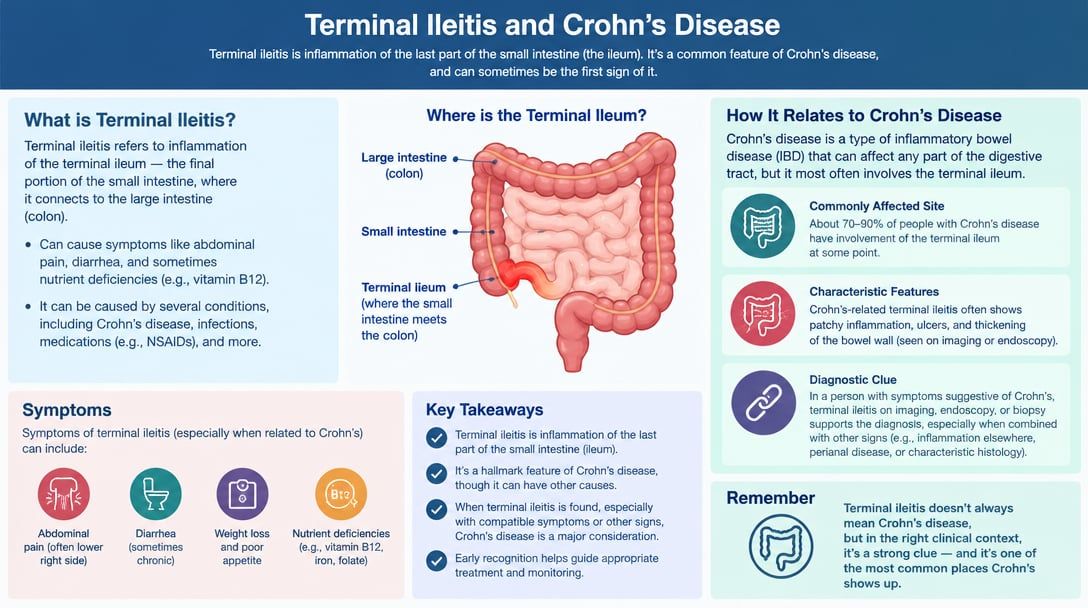
A terminal ileitis biopsy report describes inflammation in the terminal ileum, the short segment at the end of the small intestine where it joins the colon. In plain language, the tissue looked irritated or injured under the microscope. The word “ileitis” means inflammation of the ileum, and “terminal” refers to the location, not to anything life-ending. That distinction matters because the phrase can sound far more frightening than it is.
A helpful analogy is a smoke alarm. Smoke can come from a serious fire, but it can also come from burnt toast, steam, or dust. In the same way, terminal ileitis can be caused by Crohn disease, but it can also be caused by infection, medication effect, bowel preparation changes, or short-lived irritation. The ileum biopsy is one piece of evidence, not the entire verdict.
In the laboratory, pathologists evaluate the architecture of the tissue, the types of inflammatory cells, whether ulcers are present, and whether the pattern looks chronic or recent. A pathology report may use terms such as active ileitis, chronic ileitis, erosion, ulceration, granuloma, or nonspecific inflammation. Each term has a different weight. A terminal ileitis biopsy report becomes more meaningful when the wording is matched with the colonoscopy findings and clinical history.
Why A Report Shows Terminal Ileitis
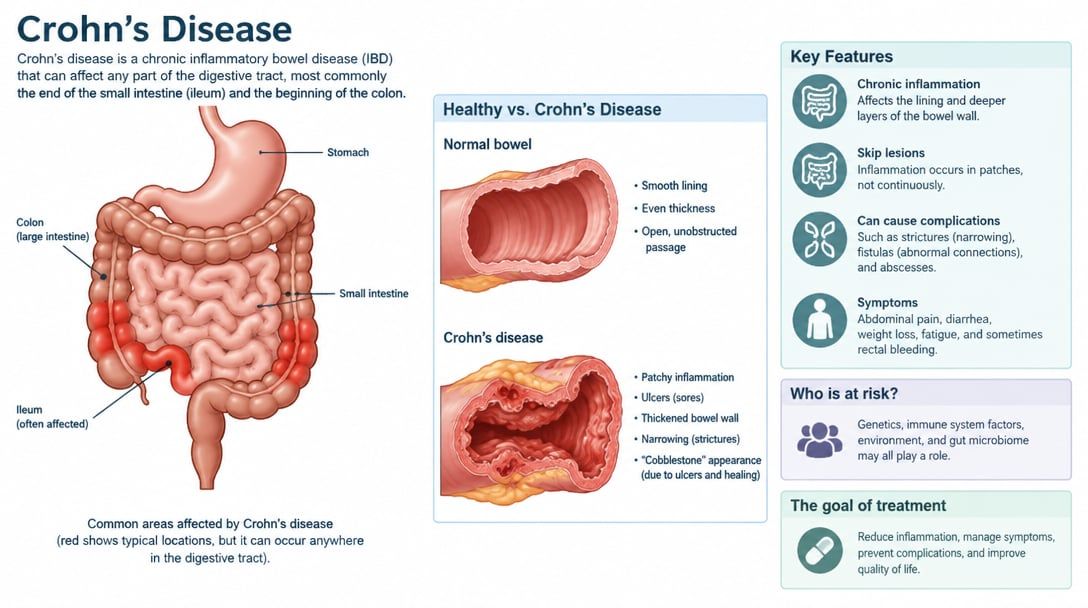
One common reason for terminal ileitis is Crohn disease, a form of inflammatory bowel disease that can affect any part of the digestive tract. Crohn disease often causes patchy inflammation, meaning normal areas can sit next to inflamed areas. When Crohn disease involves the small intestine, the terminal ileum is one of the most frequent sites. However, a biopsy alone may not show every classic feature, especially early in the disease.
Other causes can look similar. An intestinal infection can inflame the ileum and cause abdominal pain, diarrhea, fever, or blood in the stool. Certain infections may produce active inflammation that resembles early inflammatory bowel disease. NSAID injury from medications such as ibuprofen or naproxen can also affect the small intestine and produce ulcers or erosions. For that reason, medication history is not a side detail; it can directly change how the ileum biopsy is interpreted.
The pathologist also looks for clues that point away from Crohn disease. Purely acute inflammation without chronic architectural change may suggest infection, bowel preparation effect, or recent irritation. Chronic changes, granulomas, and certain patterns of ulceration may raise concern for Crohn disease, especially when endoscopy and imaging agree. Because a pathology report is a technical document, many patients find it helpful to review basic report structure through Understanding Your Pathology Report before meeting with the clinician.
How Serious Is A Terminal Ileitis Biopsy Report?
A terminal ileitis biopsy report can be mild, temporary, or a sign of a chronic condition, depending on the full picture. Mild active ileitis in a patient with a recent intestinal infection may resolve without becoming inflammatory bowel disease. A small area of irritation after NSAID use may improve once the medication exposure is addressed. In those settings, the biopsy finding is real, but it may not predict a lifelong diagnosis.
The finding becomes more concerning when the terminal ileitis biopsy report shows chronic active inflammation, granulomas, deep ulceration, or repeated abnormalities over time. Crohn disease becomes more likely when symptoms are persistent, blood tests show inflammation, stool calprotectin is elevated, imaging shows small intestine thickening, or colonoscopy shows ulcers in a pattern typical for Crohn disease. Even then, careful correlation is needed. Pathologists often avoid overcalling Crohn disease when the biopsy features are suggestive but not definitive.
Seriousness also depends on the patient’s current condition. Severe pain, weight loss, anemia, fever, obstruction symptoms, or ongoing bleeding deserve prompt clinical attention. By contrast, a person with minimal symptoms and a nonspecific ileum biopsy may be monitored with repeat testing rather than immediately labeled with Crohn disease. A terminal ileitis biopsy report is best understood as a signal that the end of the small intestine needs explanation, not as an automatic final diagnosis.
What Happens Next: Treatment And Monitoring
After a terminal ileitis biopsy report, the next step is usually clinical correlation. The gastroenterology team may compare the ileum biopsy with colonoscopy photographs, symptom history, medication use, stool cultures, inflammatory markers, and imaging such as CT enterography or MR enterography. The goal is to decide whether the inflammation fits Crohn disease, intestinal infection, NSAID injury, or another cause. Treatment should follow the most likely cause, not the biopsy phrase alone.
If Crohn disease is suspected, additional tests may look for inflammation elsewhere in the digestive tract. Blood tests may check anemia, vitamin deficiencies, and inflammatory markers. Stool tests may help rule out infection and measure intestinal inflammation. In some cases, a repeat colonoscopy or small intestine imaging study is recommended to see whether the abnormality persists or progresses.
If the finding is nonspecific, doctors may recommend observation, medication review, infection testing, or symptom-based follow-up. Stopping an NSAID should only happen under medical guidance when the medication is being used for an important condition. If a patient feels uncertain about whether the pathology wording supports the diagnosis being discussed, a second pathology opinion can help clarify whether the microscopic findings are specific, suggestive, or nonspecific. This can be especially useful before long-term immune-suppressing treatment is started.
Questions To Ask The Doctor Or Pathologist
- Does the ileum biopsy show active inflammation, chronic inflammation, or both?
- Were granulomas, ulcers, erosions, or architectural distortion seen?
- Does the pattern specifically support Crohn disease, or is it nonspecific terminal ileitis?
- Could an intestinal infection explain the biopsy and symptoms?
- Could NSAID injury or another medication effect be contributing to the small intestine findings?
- Do the colonoscopy images match what the pathology report describes?
- Is more testing needed before starting treatment for inflammatory bowel disease?
These questions help turn a frightening phrase into a structured conversation. They also remind everyone that the diagnosis should be built from several forms of evidence, not from one line in a report. When the wording is unclear, asking whether the diagnosis is “definite,” “favored,” or “possible” can be very helpful.
A second review may be reasonable when the result will change major treatment decisions, when symptoms and biopsy findings do not seem to match, or when the report uses uncertain wording. The practical steps are explained in How to Get a Second Opinion on Your Pathology Diagnosis. A careful review can confirm the original interpretation or refine the level of certainty.
Frequently Asked Questions
Does terminal ileitis always mean Crohn disease?
No. A terminal ileitis biopsy report does not always mean Crohn disease. Crohn disease is one important possibility, especially when chronic changes, typical ulcers, imaging abnormalities, and persistent symptoms are present. Other causes include intestinal infection, NSAID injury, bowel preparation effect, and short-term irritation. The final interpretation should combine the biopsy with the clinical picture.
What is nonspecific terminal ileitis?
Nonspecific terminal ileitis means inflammation is present, but the microscopic pattern does not clearly point to one cause. The pathology report may not show enough chronic injury or specific features to diagnose Crohn disease. In this situation, follow-up often depends on symptoms, stool tests, blood tests, and imaging. Some cases resolve, while others are watched for signs of inflammatory bowel disease.
Can an ileum biopsy miss Crohn disease?
Yes, an ileum biopsy can miss Crohn disease in some cases because Crohn disease can be patchy. A biopsy samples tiny pieces of tissue, so inflamed areas may be missed if they are not in the sampled fragments. Early Crohn disease may also show subtle or nonspecific changes. That is why endoscopy findings, imaging, and symptoms remain important.
What should patients do after a terminal ileitis biopsy report?
After a terminal ileitis biopsy report, patients should ask what exact microscopic features were seen and whether the findings are specific for Crohn disease. The doctor may review medications, stool studies, inflammatory markers, and small intestine imaging. If symptoms are severe or persistent, follow-up should not be delayed. If the diagnosis remains uncertain, expert pathology review can help clarify the biopsy language.
Can terminal ileitis go away?
Terminal ileitis can go away when the cause is temporary, such as certain infections or medication-related irritation. If inflammatory bowel disease is the cause, inflammation may improve with treatment but often needs long-term monitoring. The course depends on the cause, severity, and whether inflammation returns. Repeat testing may be used when the initial pathology report is nonspecific.
A terminal ileitis biopsy report can be unsettling, but it is not the same thing as an automatic Crohn disease diagnosis. The most useful next step is to clarify what the biopsy proves, what it suggests, and what still needs clinical correlation. Honest Pathology consultations can provide an expert review of the pathology wording when patients and families need clearer answers before major decisions.
References:
National Cancer Institute — Pathology Reports Fact Sheet
MedlinePlus — Crohn's Disease
NCBI Bookshelf — Medical Reference Library