One of the most emotional moments in medicine can occur when a patient learns that a second pathology opinion differs from the original diagnosis. Patients often feel confused, frightened, or unsure about which opinion to trust. They may immediately wonder whether the first diagnosis was wrong, whether treatment plans now need to change, or whether their doctors will disagree about what to do next.
In reality, differences between pathology opinions are not as unusual as many people assume. Pathology is a highly specialized medical field that sometimes involves subtle interpretation, evolving diagnostic criteria, and complex microscopic findings. A second opinion does not automatically mean someone made a mistake. Instead, it often reflects the complexity of modern medicine and the value of subspecialty review.
At Honest Pathology, patients frequently seek guidance because they are unsure what to do after receiving conflicting pathology information. Understanding the next steps can help patients feel more informed and less overwhelmed during an already stressful situation.
How Often Do Pathology Second Opinions Differ?
One of the most commonly searched questions is whether pathology second opinions frequently change diagnoses. Most pathology diagnoses are accurate and ultimately confirmed during review. However, studies have shown that second opinions can occasionally result in meaningful diagnostic differences, particularly in difficult, rare, or borderline cases. Some changes are minor and do not affect treatment. Others may involve differences in tumor grading, staging, classification, or interpretation that could influence management decisions.
Importantly, pathology interpretation sometimes exists within gray areas rather than absolute black-and-white answers. Certain lesions may have overlapping features, evolving terminology, or subtle findings that experienced pathologists interpret differently. This is one reason why second opinions are considered a normal and accepted part of modern pathology practice.
Does a Different Second Opinion Mean the First Pathologist Was Wrong?
Patients often assume that differing pathology opinions mean one doctor must be completely wrong. The reality is more nuanced. Some pathology disagreements involve genuinely difficult cases where multiple reasonable interpretations exist. Others arise because subspecialty pathologists may encounter rare diagnoses far more frequently than general pathologists.
Diagnostic criteria also evolve over time as medical research advances. New molecular findings, updated classification systems, and changing treatment standards can all influence how pathology is interpreted. In some cases, additional testing performed during the second opinion process may reveal information that was not available initially.
A differing second opinion should therefore be viewed as additional expert input rather than immediate evidence of negligence or incompetence. At Honest Pathology, pathology consultation services help patients understand these differences more clearly and approach the situation thoughtfully rather than react out of fear.
What Happens After a Different Second Opinion?
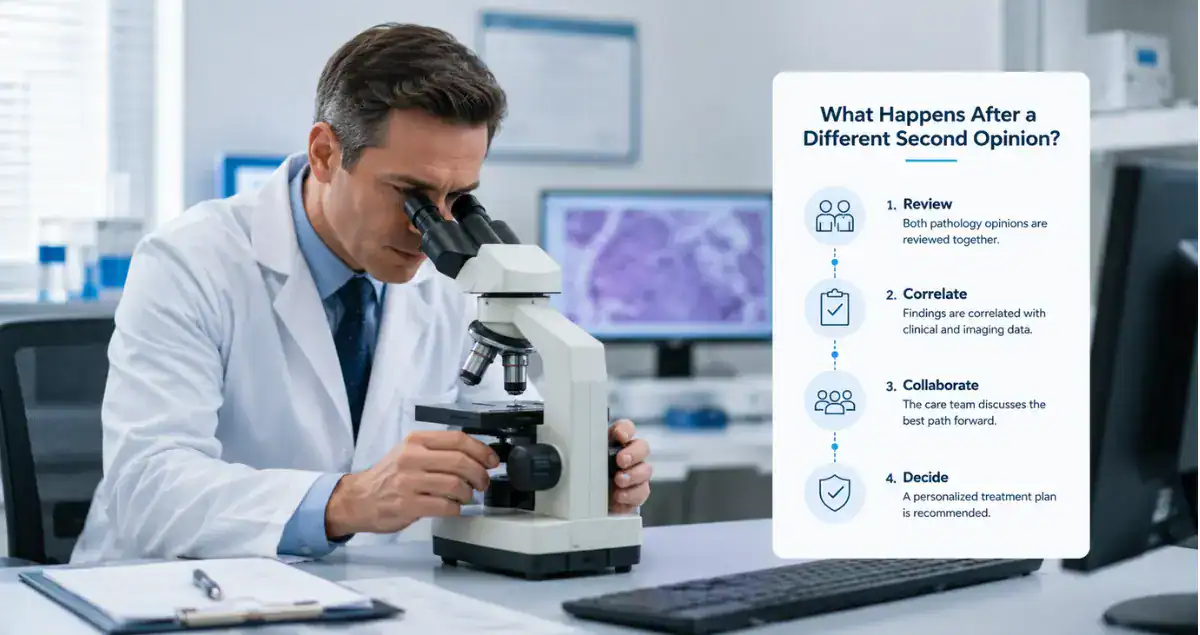
Another common question patients ask is what actually happens next if the second opinion differs from the original diagnosis. The answer depends on the type and significance of the difference. In many cases, the treating healthcare team reviews both pathology opinions together along with imaging studies, clinical findings, laboratory data, and the patient’s overall medical situation.
Sometimes the difference may not substantially affect treatment recommendations. For example, a small grading adjustment or terminology refinement may not change the broader management plan. In other situations, however, the new interpretation may influence decisions involving surgery, chemotherapy, radiation, targeted therapy, active surveillance, or additional testing. The healthcare team may also recommend further pathology review by an additional subspecialist if disagreement remains significant. Medicine often works collaboratively in these situations rather than through a simple “right versus wrong” framework.
Which Diagnosis Should a Patient Trust?
This is one of the most emotionally difficult questions patients face after receiving differing pathology opinions. Patients naturally want certainty. Unfortunately, medicine does not always provide absolute certainty immediately, especially in diagnostically challenging cases. When evaluating differing opinions, several factors may become important, including subspecialty expertise, additional testing performed, the complexity of the disease, and how well the pathology findings fit the clinical picture.
In some situations, highly specialized pathologists who focus almost exclusively on a particular disease category may provide valuable additional insight. Patients should discuss both pathology opinions openly with their treating physicians and ask specific questions about why the interpretations differ and whether additional review may help clarify the diagnosis further. At Honest Pathology, consultations help patients understand the nature of these disagreements and prepare more informed questions for their healthcare team.
Could a Different Second Opinion Change Treatment?
Yes, sometimes it can. Pathology findings directly influence many treatment decisions. If a second opinion changes tumor classification, stage, grade, biomarker interpretation, or disease subtype, treatment recommendations may also change. For example, a tumor initially believed to be invasive cancer may later be interpreted as a less aggressive lesion requiring less extensive treatment. Conversely, additional pathological findings may sometimes identify higher-risk features that support more comprehensive therapy.
A second opinion may also clarify whether certain molecular tests, immunotherapies, targeted treatments, or clinical trial options are appropriate. Importantly, treatment changes are typically made collaboratively with the patient’s healthcare team rather than automatically based on one pathology report alone. Patients should never feel pressured to make rushed treatment decisions without fully understanding the reasons behind differing opinions.
What If Treatment Has Already Started?
Many patients fear discovering a differing second opinion after treatment has already begun. This situation can feel extremely stressful, but it does not automatically mean harm has occurred or that prior care was inappropriate. Sometimes treatment remains appropriate despite diagnostic refinements. In other cases, the healthcare team may adjust the treatment plan moving forward based on the updated pathology information.
The most important step is open communication with treating physicians. Patients should ask how the differing pathology opinions affect the current treatment strategy and whether any modifications are recommended. Physicians may also coordinate additional pathology review if uncertainty remains. At Honest Pathology, patients often seek consultation because they want help understanding the implications of differing pathology interpretations before making further decisions.
Why Additional Testing May Be Ordered
Another common patient question is why new tests sometimes appear after a second opinion review. Modern pathology increasingly relies on immunohistochemistry, molecular diagnostics, genetic profiling, and advanced laboratory studies to refine diagnoses. A second opinion pathologist may request additional stains or molecular testing if the microscopic findings raise questions that were not fully addressed initially.
These tests can help distinguish between similar appearing diseases, identify treatment-relevant biomarkers, or clarify tumor classification. Patients sometimes interpret additional testing as evidence that something went wrong previously. More often, it reflects the complexity of modern pathology and the desire to obtain the most accurate information possible. Readers interested in learning more about why two pathologists may give different opinions on the same biopsy can explore this topic in greater detail.
How Patients Can Handle the Emotional Stress of Conflicting Diagnoses
Receiving differing pathology opinions can create enormous emotional strain. Patients may feel uncertainty, anger, confusion, or loss of trust in the medical system. Some worry they will need to choose between doctors or become responsible for making impossible medical decisions themselves. This is one reason why education and communication are so important. Understanding why pathology disagreements occur and how physicians evaluate them collaboratively can reduce some of the fear surrounding the situation.
Patients should not feel embarrassed about asking questions or requesting clarification. They should understand exactly what aspects of the diagnosis are agreed upon, what remains uncertain, and what additional steps may help provide clarity. At Honest Pathology, consultations focus on helping patients better understand these complex situations so they can communicate more confidently with their healthcare team.
How Honest Pathology Helps Patients Navigate Different Opinions
Many patients seek pathology consultation because they feel lost after hearing conflicting medical information. At Honest Pathology, consultations are designed to help patients understand the pathology findings themselves, clarify the nature of diagnostic differences, and prepare individualized questions for their physicians.
Rather than replacing the healthcare team, the consultation process supports more informed and collaborative communication. Patients may better understand whether the differences involve minor terminology changes, significant treatment implications, or areas where additional formal review could still be beneficial. For some patients, the consultation provides reassurance that the situation is manageable and understandable. For others, it helps organize the next steps more clearly.
Different Opinions Do Not Mean Patients Are Alone
One of the most important things patients should remember is that differing pathology opinions are part of the complexity of modern medicine, not evidence that they have failed or that their care is hopelessly broken. Pathology second opinions exist because diagnosis matters deeply and because collaborative expertise can improve understanding in difficult cases.
The next steps usually involve thoughtful discussion, additional review when appropriate, collaboration between specialists, and individualized treatment planning. At Honest Pathology, the goal is to help patients navigate these challenging moments with greater clarity, understanding, and confidence. By helping patients better understand what the pathology findings actually mean, consultations can make the process of handling conflicting opinions feel less overwhelming and more manageable.