Receiving a cancer diagnosis can create an immediate sense of urgency. Many patients open their pathology report, see unfamiliar medical terminology, and quickly begin searching online for “fast pathology second opinion,” “urgent cancer pathology review,” or “how to get a second opinion on a biopsy.” The desire for reassurance is completely understandable. When major treatment decisions may depend on a pathology diagnosis, patients naturally want confidence that the diagnosis is accurate. As pathologists, we understand that instinct.
At the same time, many patients seeking an urgent pathology second opinion are actually experiencing something slightly different: they do not yet fully understand their pathology report. Before pursuing an emergency second opinion, it is often helpful to first determine whether the issue is diagnostic uncertainty or simply lack of explanation. In many cases, patients may benefit enormously from pathology consultation services focused on understanding the report more clearly.
At HONEST Pathology, we regularly speak with patients who initially believe they urgently need another pathologist to review their diagnosis. But after carefully explaining the pathology findings, staging terminology, grading systems, and biomarker results, many patients realize that the original diagnosis is actually straightforward and well-supported. The problem was not necessarily the diagnosis itself. The problem was that no one had fully translated the report into understandable language.
Situations Where a Second Pathology Opinion May Be Helpful
Still, there are absolutely situations where obtaining a formal pathology second opinion is appropriate and important. If your diagnosis involves a rare cancer, unusual tumor subtype, borderline lesion, conflicting findings, or uncertain pathology interpretation, another review may provide valuable reassurance or clarification. Some cancers are diagnostically challenging, and specialized pathology expertise can be helpful in complex cases.
When patients truly do need a pathology second opinion, one of the fastest and most reliable approaches is to have the original pathology slides reviewed by a large academic medical center or major cancer institution with dedicated subspecialty pathologists.
Why Major Academic Medical Centers Are Often Preferred
Large pathology departments routinely provide second-opinion consultation services for patients and outside physicians. These institutions often have pathologists who specialize exclusively in specific areas such as breast pathology, lung pathology, gastrointestinal pathology, dermatopathology, hematopathology, or gynecologic pathology.
For example, institutions such as Mayo Clinic, MD Anderson Cancer Center, Cleveland Clinic, Memorial Sloan Kettering Cancer Center, and Johns Hopkins Medicine all have internationally recognized pathology departments that routinely perform outside slide reviews for cancer diagnoses. Many university pathology departments also provide formal consultation services, including departments at Stanford Medicine, Mass General Brigham, and University of Michigan Health.
How the Second-Opinion Review Process Typically Works
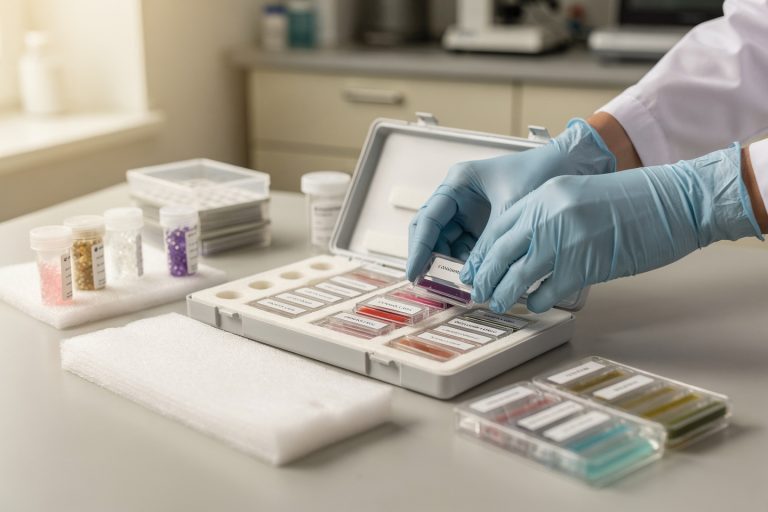
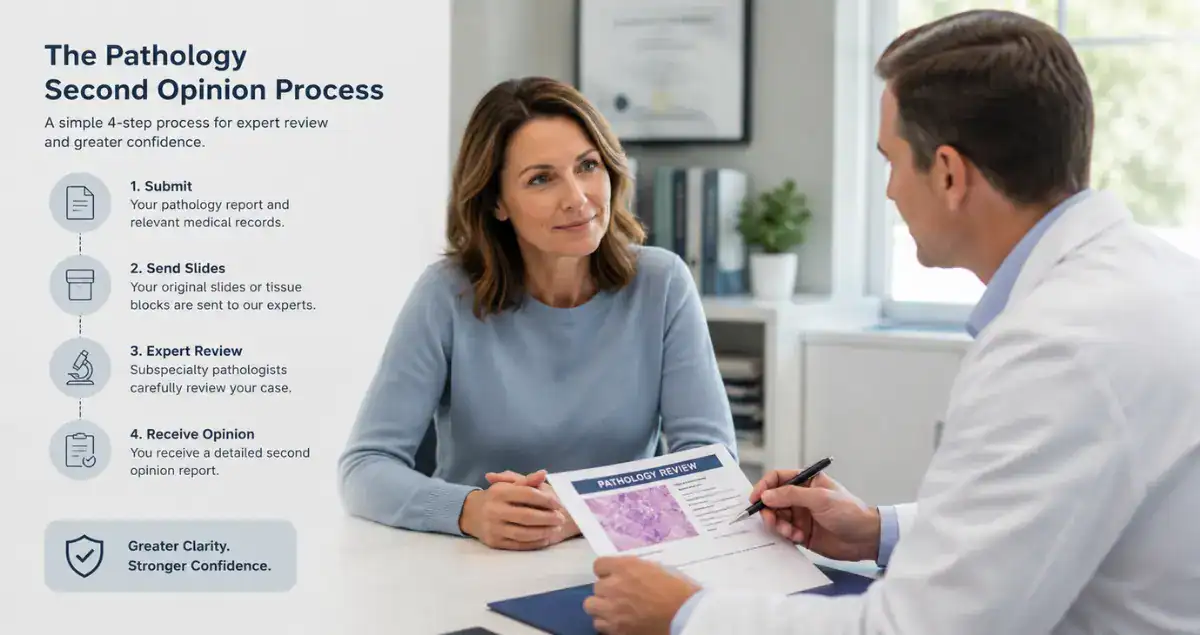
In general, the fastest way to obtain a pathology second opinion is usually to work directly with your treating physician or hospital pathology department to have the original slides and pathology materials sent electronically or physically to the consulting institution. Many major pathology departments have streamlined consultation workflows specifically for cancer cases. The process typically involves obtaining copies of the pathology report, authorizing release of pathology slides or tissue blocks, and arranging transfer to the consulting pathology department. Some institutions now offer digital pathology review systems that may accelerate the process further.
However, patients are often surprised to learn that even when second opinions are requested quickly, the process may still take time. Slides must be retrieved, packaged, shipped, accessioned, reviewed by subspecialists, and sometimes supplemented with additional stains or molecular studies. Depending on complexity, the turnaround may range from several days to multiple weeks. That is one reason why understanding the original pathology report first can be so valuable.
How Pathology Consultations Help Patients Understand Their Reports
At HONEST Pathology, we help patients better understand whether the pathology findings themselves truly suggest uncertainty or whether the language simply sounds alarming because pathology terminology is highly technical. For example, a patient diagnosed with breast cancer may panic after reading “invasive ductal carcinoma, grade 2, estrogen receptor positive.” A patient with colon cancer may become frightened by terminology describing lymphovascular invasion or positive lymph nodes. A lung cancer patient may see immunohistochemical markers like TTF-1 or CK7 and assume the diagnosis is somehow unclear or disputed. In reality, these may be very standard components of pathology reporting.
A pathology consultation can help patients understand what these findings mean, which terms are routine, and what questions are most important to discuss with their oncologist or surgeon. In many cases, patients leave the consultation feeling substantially more reassured and informed without immediately needing an urgent second opinion.
Knowing When Additional Expert Review Is Truly Necessary
Importantly, a pathology consultation can also help clarify when a second opinion genuinely would be beneficial. At HONEST Pathology, we believe one of the most valuable aspects of speaking directly with a pathologist is that patients gain perspective about the complexity of their diagnosis. Sometimes the consultation confirms that the pathology findings are straightforward and consistent with standard diagnostic criteria. Other times, the discussion may identify legitimate reasons why formal additional review could be worthwhile.
For example, rare tumors, ambiguous biopsies, borderline precancerous lesions, unusual immunohistochemical findings, or discrepancies between imaging and pathology may all justify specialized second-opinion review. The goal is not to discourage second opinions. The goal is to help patients pursue them thoughtfully and from an informed position rather than from panic alone.
Finding Peace of Mind Through Better Understanding
Modern healthcare systems often expose patients to pathology reports before anyone has had time to explain the findings. Patients may read highly technical terminology late at night and immediately assume the worst. Internet searches frequently amplify anxiety by presenting isolated pathology terms without medical context.
At HONEST Pathology, we believe patients deserve direct access to pathologists who can explain their reports clearly and compassionately. Understanding your pathology findings is often the first step toward deciding whether additional pathology review is truly needed, including knowing when to ask for expert pathology review in more diagnostically complex situations. Patients should never feel embarrassed for wanting reassurance. Seeking clarity after a cancer diagnosis is reasonable and responsible. But reassurance does not always require rushing immediately into another formal diagnosis review. Sometimes what patients need first is education, explanation, and context.
A pathology consultation can provide exactly that. If you are wondering whether you need an urgent second opinion on a cancer pathology report, HONEST Pathologyoffers consultations designed to help patients better understand their pathology findings, ask more informed questions, and determine whether formal second-opinion review may actually be appropriate. Because sometimes the fastest path to peace of mind is not necessarily another diagnosis — it is finally understanding the one you already have.