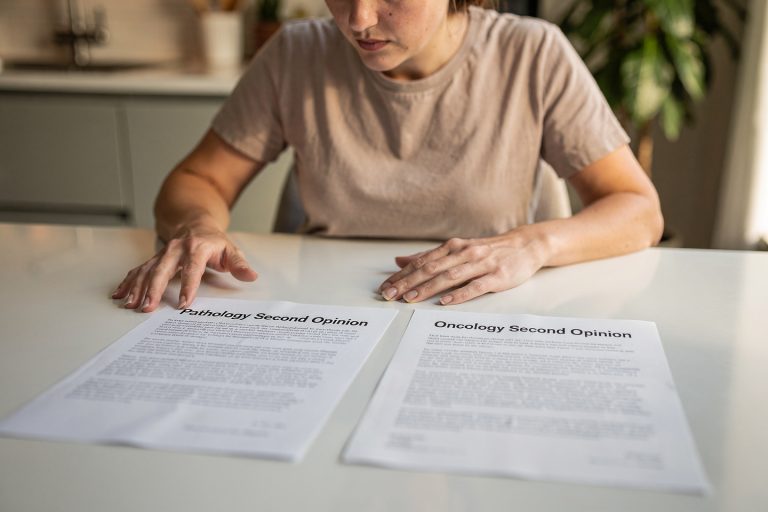
After receiving a cancer diagnosis, many patients consider getting a formal pathology second opinion for reassurance. The idea seems straightforward: another expert reviews the biopsy slides, confirms the diagnosis, and the patient gains peace of mind. But patients rarely think about what happens if the second opinion does not completely match the original diagnosis. What if the outside pathologist describes the tumor differently? What if the second opinion changes the grade, stage, or classification? What if the patient’s treating doctor disagrees with the outside interpretation? These situations can become emotionally overwhelming very quickly.
At HONEST Pathology, we frequently speak with patients who pursued formal second opinions hoping for reassurance but instead ended up more confused and anxious because the reports did not align perfectly. Patients suddenly feel caught between institutions, uncertain which doctor to trust, and frightened that major treatment decisions may now be unclear. This is one reason why understanding the difference between a formal pathology second opinion and a pathology consultation services approach is so important.
A formal pathology second opinion is a new diagnostic interpretation. Another pathologist reviews the actual pathology slides and may offer a slightly different assessment, particularly in complex or borderline cases. Medicine is highly specialized, and pathology often involves nuanced interpretation. Even highly experienced pathologists can occasionally differ in how they classify difficult findings.
Why Different Pathologists May Interpret the Same Case Differently
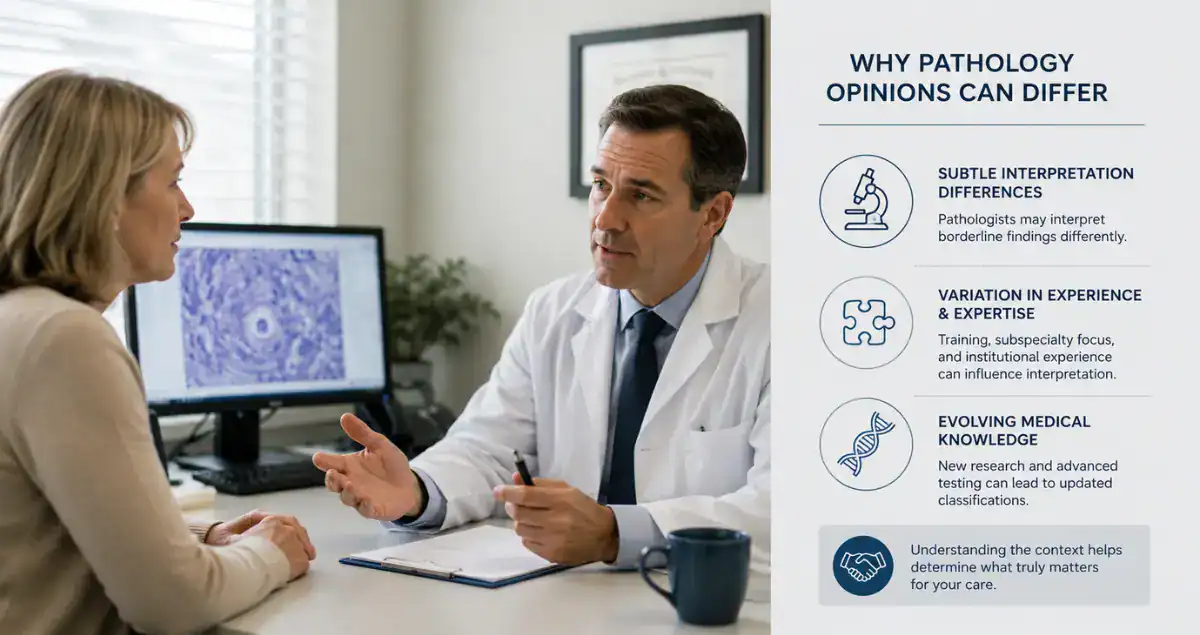
Importantly, disagreement does not necessarily mean one doctor is “wrong” and the other is “right.” Many pathology differences involve subtle interpretation rather than completely opposite diagnoses. One pathologist may classify a tumor as grade 2 while another calls it grade 3. One physician may favor a borderline precancerous lesion while another interprets the same findings as early carcinoma. One institution may emphasize certain molecular features differently than another.
These nuances can matter medically, but they can also create enormous anxiety for patients who expected a simple yes-or-no confirmation. For example, a breast cancer patient may receive an original diagnosis of ductal carcinoma in situ while an outside institution describes focal microinvasion. A prostate biopsy may receive different Gleason grading interpretations. A lung tumor may be classified somewhat differently based on additional immunohistochemical or molecular testing.
How Doctors Evaluate Conflicting Pathology Opinions
When patients receive conflicting information, they often begin to lose confidence in the entire medical system. At HONEST Pathology, we believe patients deserve help understanding these situations before they become overwhelming. One of the most important realities patients should understand is that treating physicians do not automatically discard the original diagnosis simply because an outside institution phrases findings differently.
Instead, the healthcare team typically reviews the reports carefully, considers the clinical context, evaluates imaging and surgical findings, and determines whether the differences meaningfully change treatment recommendations. In many cases, the practical treatment plan may remain largely unchanged despite small pathology differences. Unfortunately, patients often do not hear this context clearly. They simply see two different reports and assume something has gone terribly wrong.
How Pathology Consultations Help Patients Understand Disagreements
This is where pathology consultations can be incredibly valuable. At HONEST Pathology consultations, we help patients understand what pathology disagreements actually mean and whether the differences are clinically significant or primarily interpretive nuances within accepted medical standards. That distinction matters enormously.
Patients frequently assume any disagreement between pathologists means someone made a dangerous mistake. In reality, pathology interpretation sometimes exists within ranges of reasonable professional judgment, especially in borderline or highly specialized cases. For patients wondering whether two pathologists can give different opinions on the same biopsy, these situations are more common than many people realize.
Why Some Pathology Findings Are Open to Interpretation
For example, grading systems in certain cancers can contain subjective elements. Some precancerous lesions exist on a biological spectrum rather than within perfectly rigid categories. Molecular findings may evolve as additional testing becomes available. Rare tumors may be interpreted differently depending on institutional expertise and subspecialty focus.
Without explanation, these realities can make patients feel frightened and trapped between competing opinions. At HONEST Pathology, our goal is not to create more confusion. Our goal is to help patients understand the medical language, the nature of the disagreement, and what questions they should ask their healthcare team moving forward.
When a Formal Second Opinion May Not Be Necessary
Importantly, many patients who initially seek formal second opinions are not actually facing truly uncertain diagnoses. They are facing understandable fear and confusion after reading complex pathology reports. In those situations, immediately pursuing formal outside review can sometimes create unnecessary stress, expense, and conflicting terminology before the patient even fully understands the original diagnosis.
Major cancer centers such as Mayo Clinic, MD Anderson Cancer Center, and Memorial Sloan Kettering Cancer Centerprovide excellent formal second-opinion services. But these reviews can become expensive, time-consuming, and emotionally complicated, especially when slight differences emerge between reports.
Patients may spend thousands of dollars pursuing additional reviews only to end up with more questions than answers. At HONEST Pathology, we often encourage patients to first focus on understanding their pathology report clearly before assuming another formal diagnostic interpretation is urgently necessary.
The Difference Between a Consultation and an Adversarial Review
A pathology consultation is different because it is educational rather than adversarial. The purpose is not to challenge your doctor or replace your healthcare team. The purpose is to help you understand the diagnosis already made, clarify terminology, reduce confusion, and determine whether a formal second opinion is truly likely to provide meaningful benefit.
Sometimes a consultation reveals that a formal second opinion absolutely makes sense because the case is genuinely complex or diagnostically challenging. But many times, patients discover that the pathology findings are already straightforward and well-supported and that what they really needed was explanation and reassurance. That clarity can prevent unnecessary panic later if small wording differences emerge between institutions.
Understanding Your Existing Pathology Reports With Confidence
Another important point patients should understand is that medicine works best collaboratively. Most treating physicians are not threatened when patients ask thoughtful questions or seek to better understand their diagnosis. In fact, patients who understand their pathology reports more clearly often communicate more effectively with their healthcare teams and feel more confident during treatment planning discussions.
At HONEST Pathology, we believe patients deserve honest explanations without unnecessary fear. Cancer diagnoses are already emotionally exhausting. Patients should not feel abandoned in the middle of complicated pathology terminology or trapped between conflicting reports they do not fully understand.
If you are considering a formal pathology second opinion or have already received differing pathology interpretations, a pathology consultation may help you better understand the nature of the disagreement, clarify what differences actually matter clinically, and identify the most important questions to discuss with your treating physicians. Because sometimes the most important step is not collecting more opinions. Sometimes it is finally understanding the ones you already have.