One of the biggest reasons patients hesitate to seek a pathology second opinion or pathology consultation is surprisingly emotional rather than medical. Many patients worry they will offend their doctor. After receiving a cancer diagnosis, patients often develop deep trust in their surgeon, oncologist, primary care physician, or treatment team. These doctors may have delivered difficult news compassionately, answered urgent questions, and guided patients through frightening early decisions. Patients frequently feel grateful for that care and do not want to appear distrustful by asking for another opinion.
At the same time, patients may still feel confused about their pathology report, uncertain about terminology, or anxious about major treatment decisions. They may want reassurance or a better understanding of the diagnosis but fear damaging the relationship with their physician.
Why Seeking Clarification Is Completely Normal
At HONEST Pathology, we want patients to understand something very important: seeking clarity about your diagnosis is normal, responsible, and common in modern medicine. Good doctors understand that cancer diagnoses are emotionally overwhelming and that patients often need additional explanation, reassurance, or perspective before feeling comfortable moving forward.
In fact, many physicians routinely encourage second opinions for complex diagnoses, major surgeries, or unusual pathology findings. Most experienced doctors recognize that informed patients are often more confident, less anxious, and better prepared for treatment discussions. The key is understanding the difference between seeking understanding and accusing your doctor of being wrong. Those are not the same thing.
Understanding What Patients Are Really Feeling
Patients sometimes assume that asking for another pathology review automatically sends the message, “I do not trust you.” But in reality, patients are usually saying something very different: “I want to understand this better.” “I want reassurance before starting treatment.” “I want to feel confident moving forward.” “I am overwhelmed and need more clarity.” These are completely reasonable feelings after a cancer diagnosis.
At HONEST Pathology, we frequently speak with patients who delayed seeking clarification because they were afraid their physician would feel insulted. Unfortunately, this hesitation often leaves patients silently anxious, confused, and overwhelmed while trying to make major medical decisions.
The reality is that pathology reports are highly technical documents written primarily for physicians. Even very good oncologists and surgeons may not have enough time during busy appointments to fully explain every pathology detail in depth. Patients may leave appointments still confused about terms like tumor grade, stage, lymphovascular invasion, biomarker testing, or surgical margins despite receiving excellent medical care overall.
Pathology Consultation vs. Formal Second Opinion
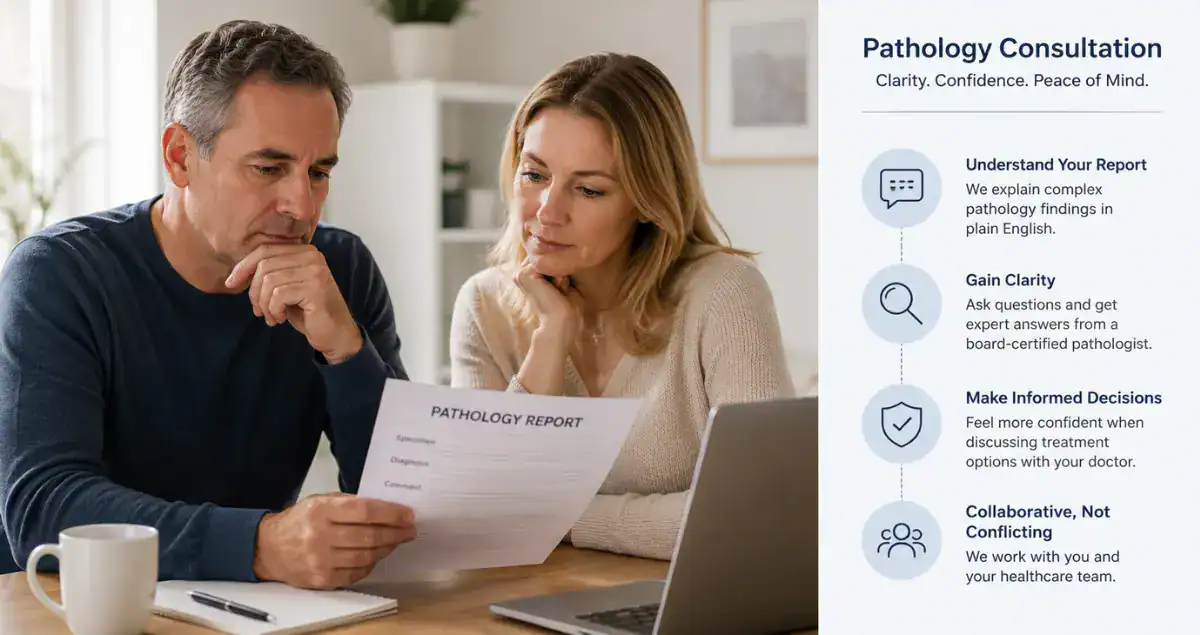
Wanting more explanation does not mean you distrust your healthcare team. In many situations, patients may not actually need a formal pathology second opinion at all. What they truly need is a pathology consultation service focused on understanding the report more clearly. This distinction is incredibly important.
A formal pathology second opinion involves another pathologist independently reviewing the biopsy slides and issuing a diagnostic interpretation. This may be valuable in rare cancers, borderline lesions, ambiguous findings, or diagnostically difficult cases. A pathology consultation, however, is educational.
How Pathology Consultations Help Patients
At HONEST Pathology consultations, we help patients understand the diagnosis already made. We explain pathology terminology, grading systems, biomarker results, staging language, and other findings in plain English so patients can feel more informed and confident during conversations with their healthcare team.
For many patients, this approach provides exactly the reassurance they were seeking without immediately entering a formal second-opinion process that may be expensive, time-consuming, and emotionally stressful. Importantly, pathology consultations can also help clarify whether a formal second opinion would truly be beneficial.
Sometimes patients discover their diagnosis is straightforward and well-supported and that their anxiety came primarily from not understanding the report. Other times, a consultation may reveal legitimate reasons why additional review at a major cancer center or subspecialty pathology department could add value. At HONEST Pathology, our goal is not to create conflict between patients and physicians. Our goal is to help patients feel more informed, empowered, and confident about their care.
Why Doctors Usually Support Additional Questions
Most doctors appreciate patients who are engaged and thoughtful about their health. In fact, many physicians become frustrated when patients quietly search the internet alone rather than asking questions openly. A pathology consultation creates a healthier alternative by allowing patients to receive accurate explanations from a board-certified pathologist rather than relying on confusing or alarming online information.
Patients are often surprised by how supportive doctors can be when second opinions or consultations are approached respectfully and collaboratively. For example, patients can frame the conversation around understanding rather than distrust. Instead of saying, “I am not sure I believe this diagnosis,” patients may say: “I would feel more comfortable understanding the pathology report in more detail.” “I think having additional explanation would help me feel more confident moving forward.” “I would like to better understand the findings and treatment recommendations.” “This is overwhelming, and I think more clarification would help me process everything.” These conversations are very different emotionally from accusing a physician of incompetence or error.
Second Opinions Are Common in Medicine
At HONEST Pathology, we believe patients should never feel guilty for wanting to understand their diagnosis more clearly. Cancer care involves enormous emotional and medical complexity. Patients are being asked to make life-changing decisions while simultaneously processing fear, uncertainty, and highly technical medical information. Seeking education and reassurance is not offensive. It is responsible.
Another important point patients should understand is that second opinions are extremely common in medicine. Physicians themselves frequently consult colleagues when evaluating difficult cases. Pathologists routinely request subspecialty review on unusual tumors or borderline findings. Collaboration is part of good medical care, not a sign of failure. Still, not every patient needs an expensive formal second opinion immediately.
Major cancer centers such as MD Anderson Cancer Center, Mayo Clinic, or Memorial Sloan Kettering Cancer Center provide excellent second-opinion services, but these reviews can involve substantial cost, insurance complexity, delays, and occasionally conflicting terminology that creates even more confusion. A pathology consultation is often a more approachable and cost-effective first step for patients primarily seeking understanding and peace of mind.
Helping Patients Feel More Confident and Informed
At HONEST Pathology, we believe confidence comes from understanding. Patients deserve clear explanations of the pathology findings shaping major treatment decisions in their lives. They deserve to ask questions without fear of offending anyone. And they deserve honest guidance about whether additional formal review is truly necessary.
If you have received a pathology report and feel uncertain about how to discuss second opinions or additional clarification with your doctor, HONEST Pathology offers pathology consultations designed to help patients better understand their diagnosis, reduce anxiety, and feel more prepared for conversations with their healthcare team. Patients who are still struggling with difficult conversations may also benefit from resources on explaining cancer pathology results to family members during emotionally overwhelming situations. Because asking questions is not a sign of distrust. It is a sign that your health matters to you.