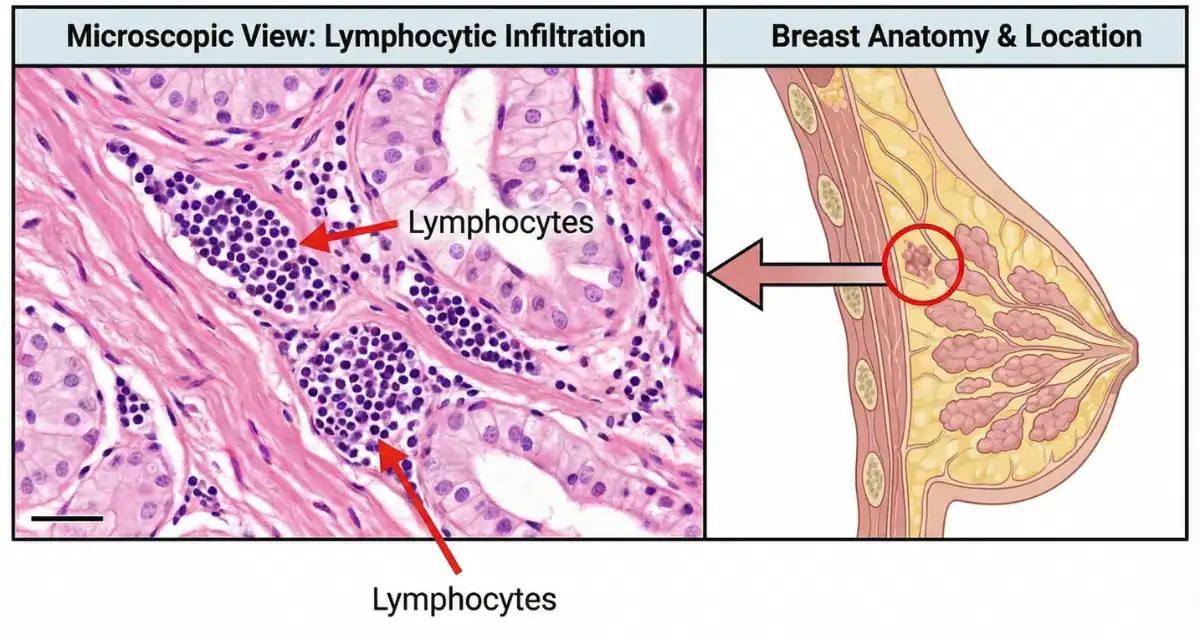
Lymphocytic infiltration is a frequently reported histologic finding that reflects the movement of immune cells into tissues. These lymphocytes, which are central to the body’s immune defense, often appear in response to inflammation, infection, autoimmune conditions, or cancer. While the phrase may sound concerning when seen on a pathology report, its meaning is highly context-dependent and requires careful interpretation.
In pathology, the presence of lymphocytes is not inherently abnormal. What matters most is how they are distributed, how dense they are, and how they interact with surrounding cells. In some cases, lymphocytic infiltration represents a normal immune response. In others, it provides important clues about underlying disease processes, including malignancy. Because of this complexity, many patients and even clinicians seek additional clarity when they encounter this term in a report.
Breast Tissue: Immune Response and Tumor Interaction
In breast pathology, lymphocytic infiltration can be seen in both benign and malignant conditions. One benign example is lymphocytic mastitis, a condition often associated with autoimmune disease or diabetes. Under the microscope, pathologists see dense clusters of lymphocytes surrounding ducts and blood vessels, often accompanied by fibrotic stroma. While this can appear alarming, it is a non-cancerous process.
In breast cancer, however, lymphocytes may be found infiltrating tumor tissue. These are known as tumor-infiltrating lymphocytes, and their presence is increasingly recognized as clinically meaningful. In certain subtypes, such as triple-negative and HER2-positive breast cancers, higher levels of these immune cells are associated with better responses to treatment.
There are also distinct tumor types, such as medullary carcinoma, where dense lymphocytic infiltration is a defining feature. Despite aggressive microscopic features, these tumors may have a more favorable prognosis, illustrating how the immune system can influence cancer behavior.
Colon Pathology: From Chronic Inflammation to Cancer Clues
The colon offers several important examples of lymphocytic infiltration with diagnostic significance. In chronic inflammatory conditions like ulcerative colitis and Crohn disease, lymphocytes are a key component of ongoing mucosal inflammation. Over time, this can lead to architectural distortion and increased cancer risk.
Another condition, lymphocytic colitis, demonstrates how subtle lymphocytic infiltration can be essential for diagnosis. Patients often have normal colonoscopy findings, but biopsies reveal increased lymphocytes within the surface epithelium. Without histologic examination, this diagnosis would be missed.
In colorectal cancer, lymphocytic infiltration can provide insight into the tumor’s biology. Tumors with high microsatellite instability often show prominent immune cell infiltration. This pattern reflects the immune system recognizing abnormal tumor cells and can be associated with better prognosis and responsiveness to immunotherapy.
Lung Pathology: Distinguishing Patterns in Complex Tissue
In the lung, lymphocytic infiltration is seen in a wide range of conditions, from infections to chronic interstitial diseases. Viral infections often produce diffuse lymphocytic involvement of the lung interstitium, while hypersensitivity pneumonitis shows a more localized, airway-centered pattern.
A particularly important diagnostic challenge arises when distinguishing reactive lymphocytic infiltration from lymphoma. Conditions like lymphoid interstitial pneumonia can closely mimic low-grade lymphomas under the microscope. Making the correct distinction often requires a combination of morphology, clinical information, and specialized testing.
In lung cancer, lymphocytic infiltration again plays a growing role. Tumor-infiltrating lymphocytes may indicate an ակտիվ immune response against cancer cells and can help predict which patients are more likely to benefit from immunotherapy. This highlights how immune findings are becoming increasingly central to cancer care.
Prostate Tissue: Common Findings and Diagnostic Challenges
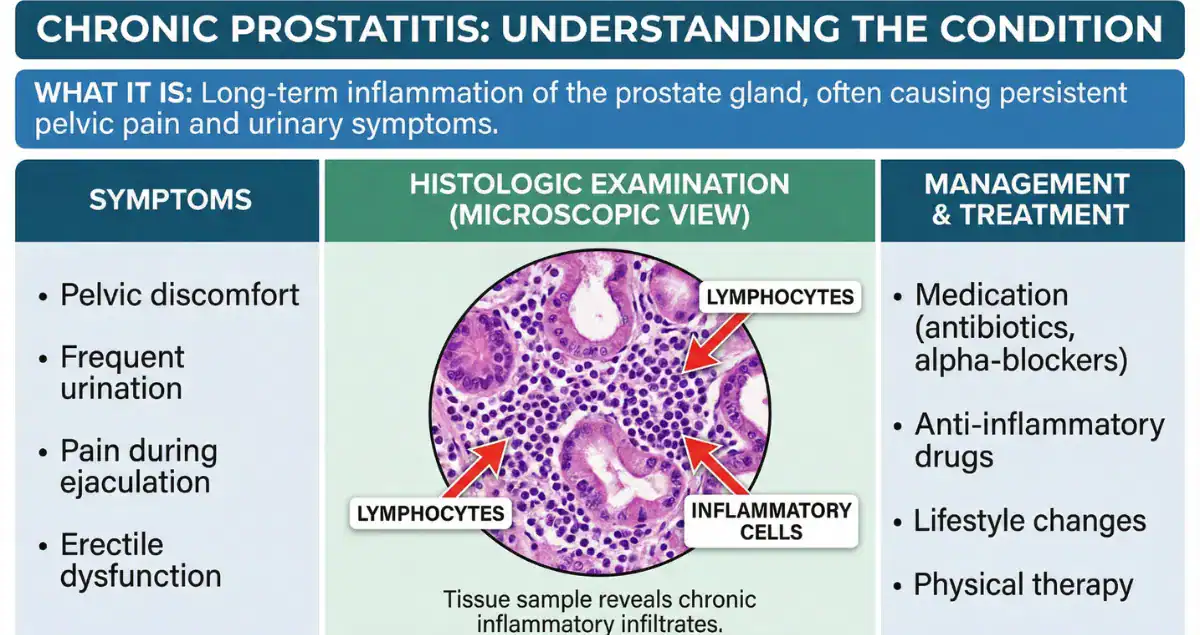
Lymphocytic infiltration is very common in prostate biopsies, most often as a feature of chronic prostatitis. In these cases, lymphocytes surround and sometimes infiltrate prostatic glands. While benign, this pattern can sometimes create diagnostic confusion.
Inflammation can distort glandular architecture and mimic prostate cancer, particularly when associated with reactive cellular changes. Pathologists must carefully assess nuclear features and gland structure to avoid overdiagnosis. This is one of the many areas where subtle histologic interpretation makes a significant difference in patient outcomes.
Although less prominent than in other cancers, lymphocytic infiltration can also be present in prostate cancer. Its role in prognosis and treatment response is still being studied, but it remains an area of active research.
 What Lymphocytic Infiltration Means for Patients
When patients read the phrase “lymphocytic infiltration” in a pathology report, it often raises immediate concern. A natural question is whether it indicates cancer. In most cases, it does not. More often, it reflects inflammation or an immune response to a non-cancerous condition.
Another common concern is whether it is a good or bad finding. The answer varies depending on the context. In inflammatory diseases, it may simply indicate chronic irritation. In cancer, it can sometimes be a positive sign, suggesting that the immune system is actively responding to tumor cells.
Understanding these nuances is not always straightforward, especially when pathology reports use technical language. This is why many patients and clinicians look for additional explanation beyond the standard report.
Why Expert Interpretation Matters
Histologic findings like lymphocytic infiltration are rich in meaning but require expert interpretation to fully understand. Subtle differences in pattern and context can change the diagnosis entirely. Even experienced clinicians may seek second opinions when findings are complex or unclear.
This is where services like Honest Pathology can be especially valuable. By providing clear, detailed, and clinically relevant explanations of pathology reports, Honest Pathology helps bridge the gap between microscopic findings and real-world understanding. Rather than leaving patients to interpret unfamiliar terminology on their own, it offers accessible insights grounded in expert review.
For individuals navigating a new diagnosis or trying to better understand their pathology results, having a reliable source of clarification can make a meaningful difference. It allows patients to engage more confidently in their care and supports better communication with their healthcare team.
The Growing Importance of Immune Findings in Pathology
As medicine continues to evolve, the role of the immune system in disease is becoming increasingly important. Lymphocytic infiltration is no longer viewed as a secondary or incidental finding. It is now recognized as a key component of disease biology in many conditions, particularly cancer.
Advances in immunotherapy have further elevated the importance of understanding how immune cells interact with tumors. In several organ systems, including the breast, colon, and lung, the presence and pattern of lymphocytes can influence treatment decisions.
This shift underscores the need for clear, accurate interpretation of pathology findings. As reports become more complex and incorporate immunologic and molecular data, resources that provide clarity and context will continue to grow in importance.
Gaining Clarity and Confidence in Your Pathology Report
Reading a pathology report can feel overwhelming, especially when it includes unfamiliar terms like lymphocytic infiltration. While the finding itself is common, its meaning depends on a wide range of factors that are not always immediately clear from the report alone.
Seeking additional explanation is not only reasonable but often helpful. Services like Honest Pathology are designed to provide that extra layer of understanding, offering straightforward explanations that empower patients and support informed decision-making.
In a field where small details carry significant weight, having access to clear and trustworthy interpretation can transform confusion into clarity.