A pathology report can feel overwhelming on its own, but in many cases it is only one piece of a much larger medical picture. At Honest Pathology, our goal is to help you fully understand your diagnosis through a clear, one-on-one consultation with a board-certified pathologist. The more complete your information is at the time of your visit, the more precise and helpful that explanation can be.
Preparing the right documents before your Honest Pathology consultation ensures that nothing important is missing and allows us to give you a more accurate, context-rich interpretation of your pathology report. While every case is different, there are several types of medical documents that can significantly improve the quality of your consultation experience.
Your Full Pathology Report Is the Most Important Document
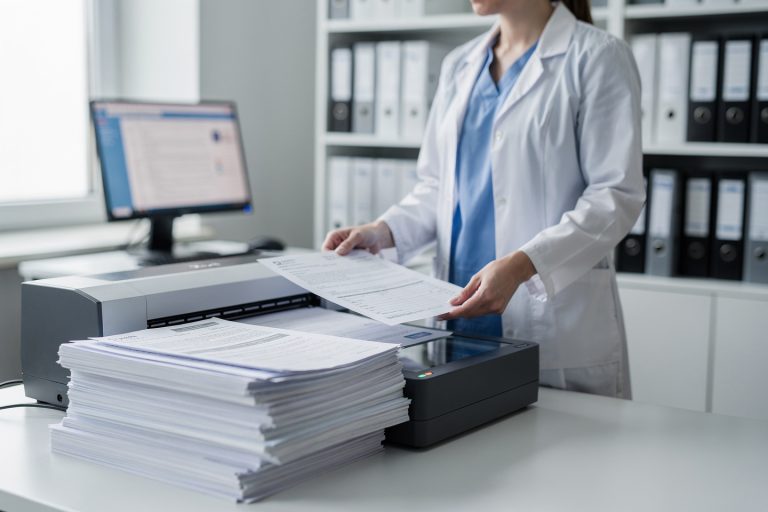
The foundation of your consultation is your original pathology report. This is the document that contains the official diagnosis, microscopic description, and interpretive findings made by the original pathology laboratory.
It is important to provide the complete report rather than a summarized version or patient portal excerpt. Full pathology reports often include detailed sections such as gross description, microscopic findings, diagnosis, margins, and sometimes special studies or immunohistochemistry results.
At Honest Pathology, reviewing the complete report allows us to walk you through each section line by line and explain exactly what it means in clear, understandable language.
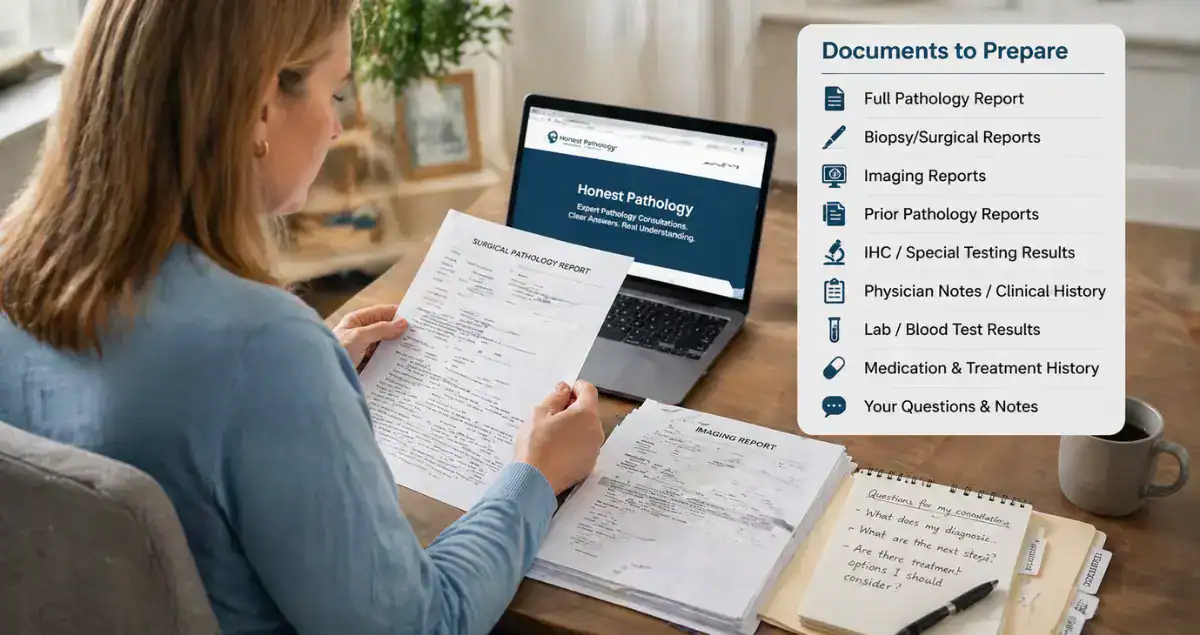
Biopsy Reports and Surgical Pathology Reports
If your diagnosis was made through a biopsy or surgical procedure, the corresponding procedure report is extremely helpful.
A biopsy report provides details about how the tissue sample was obtained, while a surgical pathology report may include additional findings from a larger specimen removed during surgery. These documents help us understand the context behind your diagnosis and how the tissue was collected and processed.
Having both the biopsy and surgical pathology reports, when available, allows for a more complete interpretation of your case.
Imaging Reports That Support Your Diagnosis
Imaging studies such as CT scans, MRIs, ultrasounds, or PET scans are not part of pathology itself, but they often play a key role in how a diagnosis is made and understood.
While we do not interpret radiology images directly, the written imaging reports can provide valuable clinical context. They help connect what was seen microscopically under the pathologist’s review with what was observed clinically or radiologically.
For example, imaging may help explain why a biopsy was performed in a particular area or how a lesion was initially identified.
Including imaging reports when relevant helps create a more complete clinical picture.
Prior Pathology Reports for Comparison
If you have had previous biopsies, surgeries, or pathology evaluations, those earlier reports can be extremely useful.
Comparing current findings with prior results can help identify changes over time, clarify progression, or confirm consistency in a diagnosis. This is especially important in cases involving chronic conditions, recurrent disease, or ongoing monitoring.
At Honest Pathology, reviewing prior reports allows us to explain not just what your current diagnosis means, but how it relates to your broader medical history.
Immunohistochemistry and Special Testing Results
Many modern pathology diagnoses rely on additional testing beyond standard microscopic examination. These may include immunohistochemistry (IHC), molecular testing, genetic markers, or special stains.
These results are often included as separate sections or supplemental reports. They can provide important diagnostic details, such as confirming the type of tissue involved or helping classify a condition more precisely.
If these results are available, including them in your consultation helps ensure that we fully understand how your diagnosis was reached and what factors influenced it.
Physician Notes and Clinical History Summaries
Clinical notes from your treating physician can also be helpful when preparing for your consultation.
These may include referral notes, surgical summaries, or progress notes that explain why the pathology test was ordered in the first place. While we do not rely on these documents for diagnosis, they help us understand the clinical reasoning behind your workup.
Knowing the symptoms, concerns, or findings that led to your biopsy or surgery helps us place your pathology report into proper context.
Laboratory and Blood Test Results (When Relevant)
In some cases, blood tests or laboratory findings may be relevant to your pathology report. This is especially true for conditions involving hematology, inflammation, infection, or systemic disease.
If your physician ordered lab work that relates to your diagnosis, including those results can help provide additional context during your consultation.
While not always necessary, these results can help connect your pathology findings to your overall health picture.
Medication and Treatment History
Your current or prior treatments can also be relevant to understanding your pathology report.
This may include medications, chemotherapy, radiation therapy, or surgical interventions. Treatment history can sometimes influence how pathology findings are interpreted or explained.
For example, prior treatment may affect how tissue appears under the microscope, or it may help explain certain changes seen in follow-up specimens.
Providing this information helps ensure a more accurate and complete discussion.
Patient Questions and Personal Notes
While not a formal medical document, your own notes are just as important as clinical records.
Before your Honest Pathology consultation, many patients find it helpful to write down questions, concerns, or anything they found confusing when reading their report. These notes guide the conversation and ensure that your most important concerns are addressed.
You do not need to use medical language. Simple questions such as what a term means, how serious a finding is, or what happens next are all valuable and appropriate.
At Honest Pathology, we structure the consultation around your understanding, so your questions help shape the entire experience.
Why Having the Right Documents Matters
A pathology report on its own provides important information, but understanding it fully often requires knowing what is a pathology report and how it is structured and interpreted in clinical practice. Diagnosis is often influenced by clinical context, imaging findings, prior history, and additional laboratory testing.
When you provide complete documentation, your consultation becomes more than a general explanation. It becomes a personalized interpretation of your specific medical situation.
At Honest Pathology, this preparation allows us to connect all the pieces of information together and give you a clearer, more meaningful understanding of your diagnosis.
How Honest Pathology Uses Your Documents During the Consultation
Before your appointment, a board-certified pathologist carefully reviews all submitted materials in line with our standard pathology consultation requirements to ensure every case is properly prepared. This preparation ensures that your consultation time is focused entirely on explanation and discussion rather than document review.
During your session, we use your pathology report as the central guide, while referencing supporting documents to provide context where needed. This allows us to explain not just what your diagnosis is, but how it was determined and why certain conclusions were reached.
The result is a structured, easy-to-follow conversation that is tailored specifically to your case.
Preparing for a Clear and Meaningful Consultation
Preparing the right documents before your Honest Pathology consultation does not need to be complicated. In most cases, it simply involves gathering what you already have from your healthcare providers and submitting it securely in advance.
The goal is not to overwhelm you with paperwork, but to ensure that nothing important is missing when we begin your consultation.
With complete information, we are able to provide a more detailed, accurate, and personalized explanation of your pathology report.
Moving Forward With Confidence
A pathology report can be one of the most difficult medical documents to understand on your own. But with the right preparation and the right support, it becomes something you can actually understand and use.
At Honest Pathology, we are here to help you make sense of your diagnosis in clear, accessible language. By providing the right documents ahead of time, you help us give you the most accurate and helpful consultation possible.
Because when it comes to your health, clarity starts with understanding the full picture—and the right documents are the first step toward that clarity.