When reviewing a pathology report, patients may encounter the term tumor budding. This finding describes small clusters of cancer cells that have separated from the main tumor and are seen at the edges, invading surrounding tissue. Tumor budding has become an important factor in assessing cancer aggressiveness and guiding prognostic discussions.
At Honest Pathology, we help patients understand what tumor budding means in different cancers and how this information may influence monitoring and treatment strategies.
What Is Tumor Budding?
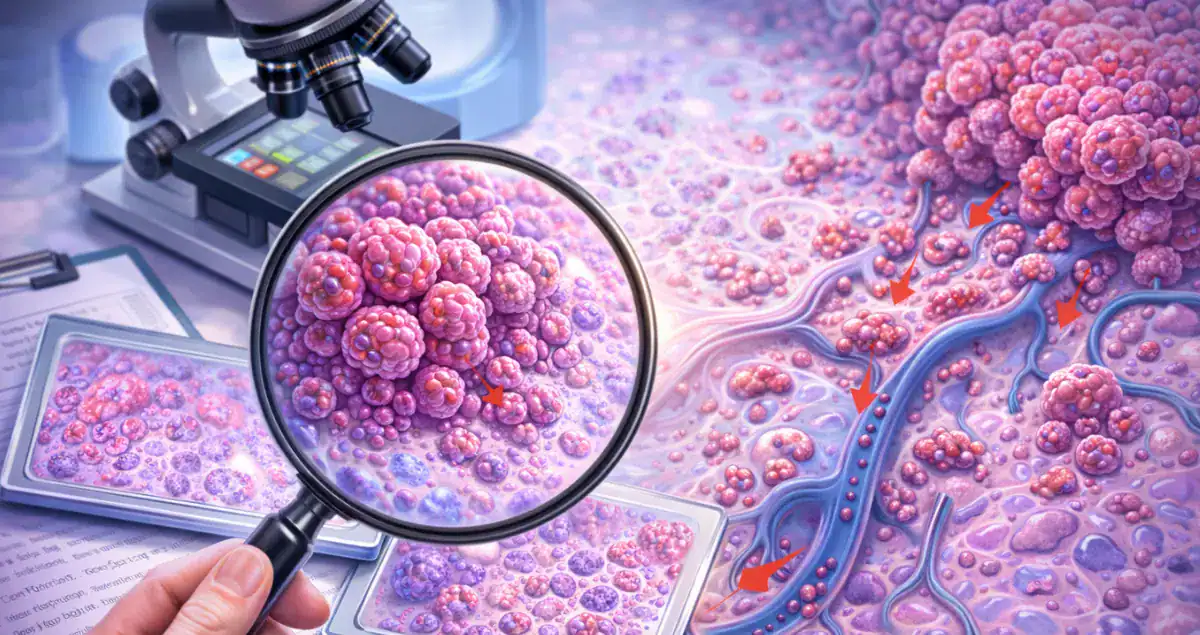
Tumor budding refers to single cells or small clusters of up to five cancer cells observed at the invasive front of a tumor under a microscope. Pathologists consider the degree of tumor budding—categorized as low, intermediate, or high—because it often correlates with how aggressive the cancer may be.
High tumor budding indicates a higher likelihood that cancer cells have the ability to invade surrounding tissue and potentially spread to lymph nodes or other organs. While it is not a diagnosis on its own, tumor budding provides important context for understanding tumor behavior.
Tumor Budding in Colon Cancer
Tumor budding is most commonly studied in colon cancer. In this setting, high tumor budding is associated with a higher risk of lymph node metastasis and worse overall prognosis, especially in early-stage cancers. Pathologists examine tissue samples from the tumor’s invasive front to evaluate the presence and extent of budding.
For patients with stage II colon cancer, identifying high tumor budding may influence the recommendation for adjuvant chemotherapy, even when no lymph node involvement is detected. It also highlights the importance of careful follow-up and monitoring for recurrence.
Tumor Budding in Pancreatic Cancer
In pancreatic adenocarcinoma, tumor budding is considered a marker of aggressive disease. Studies show that high tumor budding in pancreatic tumors is linked to increased metastatic potential and shorter survival. Pathologists assess tumor budding as part of the overall grading and staging of pancreatic cancer, helping to inform treatment planning and prognosis.
While tumor budding is one piece of the puzzle, it complements other features such as tumor size, lymph node involvement, and margin status to provide a comprehensive view of disease aggressiveness.
Tumor Budding in Head and Neck Squamous Cell Carcinoma
Tumor budding is also observed in head and neck squamous cell carcinoma, particularly in the oral cavity and tongue. High tumor budding in these cancers is associated with higher rates of local invasion, lymph node metastasis, and recurrence.
Assessing tumor budding can help guide surgical planning, radiation therapy decisions, and follow-up strategies. It is particularly valuable when combined with other histopathologic features such as perineural invasion and tumor grade.
 Tumor Budding in Other Cancers
Tumor budding has been reported in several other malignancies, including esophageal cancer, gastric cancer, and lung adenocarcinoma. In all cases, the presence of tumor budding generally correlates with more aggressive tumor biology and a higher risk of spread.
While tumor budding is not used in isolation to make treatment decisions, it provides valuable prognostic information that can guide discussions about surveillance, therapy, and risk assessment.
How Pathologists Report Tumor Budding
Pathology reports may describe tumor budding as low, intermediate, or high, often based on the number of buds observed in a defined area of the tumor. Reports may also note the location of the budding, usually at the invasive front, where the tumor interacts with surrounding tissue.
Patients may see terms like “isolated cell clusters,” “microscopic buds,” or “budding index” in the report. These findings are important for understanding tumor behavior, but they are always interpreted in the context of other features such as tumor stage, grade, and lymphovascular invasion.
Why Tumor Budding Matters
Tumor budding provides insight into a tumor’s potential for aggressive behavior. High tumor budding may indicate that the cancer is more likely to invade nearby tissue, spread to lymph nodes, or recur after treatment.
For clinicians, tumor budding is a valuable factor in deciding post-surgical treatment, surveillance frequency, and prognosis. While it does not replace standard staging systems, it adds another layer of information to help personalize patient care.
Moving Forward With Tumor Budding Findings
Discovering tumor budding in a pathology report can feel concerning, but it is important to understand what it represents. It is a marker of cancer behavior, not a separate diagnosis. Knowing whether tumor budding is low or high helps doctors and patients assess prognosis, plan treatment, and determine appropriate follow-up.
At Honest Pathology, we help patients interpret tumor budding findings and explain their significance in the context of the overall pathology report. Whether the budding is seen in colon cancer, pancreatic cancer, or head and neck squamous cell carcinoma, understanding the result helps patients and clinicians make informed decisions about monitoring and care.