Worried your biopsy needs another look? Specialist pathologist consultation can clarify risk, diagnosis, and what to ask next.
When a pathology diagnosis feels uncertain, complex, or especially high-stakes, asking for deeper expertise can be a very reasonable next step. A specialist pathologist consultation brings in a pathologist with focused experience in the exact organ system, tumor type, or diagnostic question involved. In plain terms, it is a second set of highly trained eyes looking at the tissue that guides the treatment plan.
Patients asking about this process may already feel unsettled. The report may use unfamiliar words, or a doctor may mention sending the case out for review. That can sound frightening, but it often means the care team is being careful, not that something has gone wrong.
Asking for the right expertise is not insulting anyone. It is one of the most practical ways to protect clarity, confidence, and treatment planning.
What a Specialist Pathology Review Involves
A specialist pathologist consultation means that another pathologist reviews the case because they have focused experience in that organ system, tumor type, or diagnostic problem. For example, a breast pathologist spends much of their time looking at breast biopsies, while a dermatopathologist focuses on skin specimens. This is similar to seeing a cardiologist for a heart rhythm problem instead of relying only on a general medical visit. Both doctors may be excellent, but one has more focused pattern recognition for a narrow area.
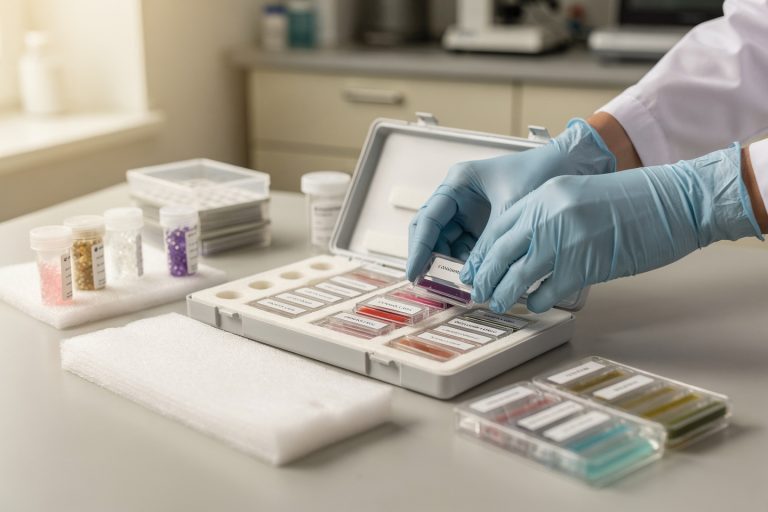
In the laboratory, the consultation usually involves reviewing the original glass slides, digital slide images, the pathology report, and sometimes special stains or molecular results. The consultant may confirm the original pathology diagnosis, refine the wording, or recommend additional testing. A pathology second opinion does not always mean the first diagnosis was wrong. Often, it confirms the diagnosis and gives everyone more confidence before surgery, chemotherapy, radiation, or surveillance begins.
A specialist review can be especially helpful when small differences in wording carry big treatment consequences. Terms such as atypical, suspicious, borderline, in situ, invasive, low grade, high grade, positive margin, or indeterminate can change what a doctor recommends. For patients still learning the basics of the report itself, What Is a Pathology Report? may help explain what the document is meant to do. An expert pathology review gives the care team a chance to make sure the words on the page match the biology under the microscope.
Why a Case May Be Sent to a Subspecialist

A doctor may suggest a specialist review because the biopsy has features that are difficult to classify. Some tissues sit in a gray zone between benign and malignant, or between one tumor type and another. In cancer cases, tumor grading can be challenging when cells show mixed patterns. A subspecialty pathologist may recognize subtle features that are uncommon in general practice but familiar in a focused practice area.
Another reason is that treatment decisions often depend on precise pathology details. Margin status may determine whether more surgery is needed after a tumor is removed. Tumor grading may influence whether chemotherapy, radiation, or closer follow-up is discussed. Diagnostic accuracy matters because the pathology report is often the foundation for staging, prognosis, and treatment selection.
Sometimes the request happens because the case is being reviewed at a cancer center, tumor board, or specialty clinic. Those teams often require an internal expert pathology review before they make recommendations. This protects patients because it checks that the pathology diagnosis, imaging findings, and clinical story all fit together. For patients who want to understand the parts of the report before a visit, Understanding Your Pathology Report: How to Read It with Confidence may be useful.
When a Consultation Can Affect Care

A specialist pathologist consultation is important because the diagnosis matters, but it is not automatically a sign that the situation is worse than originally described. Many consultations confirm the original report completely. Others adjust a grade, clarify a subtype, or recommend another stain without dramatically changing the overall plan. The goal is not to create fear; the goal is to reduce uncertainty.
It becomes more urgent when the answer could change treatment. For example, if the question is whether a lesion is benign or malignant, whether a tumor is invasive or noninvasive, or whether margin status is positive or negative, a pathology second opinion can be very valuable. A specialist review may also be helpful for rare tumors, unusual immune stains, unexpected molecular results, or conflicting opinions between doctors. In those situations, diagnostic accuracy is not a luxury; it directly supports safer decision-making.
In less urgent cases, the consultation may simply provide reassurance. If the original report is straightforward and matches the clinical picture, a subspecialty pathologist may agree with the diagnosis and add no new testing. That kind of confirmation still has value because it can help a patient move forward with less doubt. Specialist pathology is best understood as a quality checkpoint, especially when the stakes are high or the wording feels unclear.
What Happens After the Review
If a doctor recommends consultation, the usual next step is to request the original slides and blocks from the first laboratory. The reviewing pathologist may receive glass slides, scanned digital images, paraffin tissue blocks, prior reports, imaging summaries, and clinical notes. An expert pathology review works best when the consultant sees the same material that produced the original pathology diagnosis. Sometimes the consultant also asks for additional stains or molecular testing if the first material does not answer the question fully.
The result may be an addendum, a consultation report, or a revised diagnosis. The treating doctor should explain whether the review changed anything about surgery, medication, radiation, surveillance, or prognosis. If nothing changes, that is still meaningful because it supports the original plan. If something does change, patients should ask the doctor to explain exactly what changed and why.
Timing varies by institution, specimen type, and whether extra testing is needed. Some reviews are finished in a few days, while complex cases can take longer. If treatment is already scheduled, patients should ask whether it should wait for the final review. For more practical steps, How to Get a Second Opinion on Your Pathology Diagnosis may be helpful.
Questions to Ask Before the Case Is Reviewed

- Does this case need review by a subspecialty pathologist for this organ or tumor type?
- What exact question is the consultant being asked to answer?
- Could the pathology second opinion change the treatment plan?
- Were all slides, blocks, stains, and prior reports sent for review?
- Is there any uncertainty about tumor grading, margin status, invasion, or subtype?
- Will the expert pathology review include additional stains or molecular testing?
- How will the final consultation report be received, and who will explain it?
These questions help turn a vague recommendation into a clear plan. Asking them is not being difficult. It helps make sure the consultation has a purpose, a timeline, and a direct connection to patient care.
For patients who are unsure whether to ask for another review, When Should You Get a Second Pathology Opinion? explains common situations where it can help. A good consultation should leave patients with more clarity, not more confusion. The best use of specialist pathology is to answer the question that matters most for the next decision.
Frequently Asked Questions
Should my biopsy be reviewed by a specialist pathologist?
It may be worth asking when a diagnosis is rare, borderline, unexpected, or likely to affect major treatment. A specialist review is especially useful when small wording differences could change surgery, medication, radiation, or follow-up. If the case is straightforward, the review may simply confirm the original report. That confirmation can still be reassuring.
Does a specialist pathology review mean my diagnosis is wrong?
No. A request for review does not automatically mean the diagnosis is wrong. Many consultations confirm the first pathology diagnosis without any change. The reason is often caution, complexity, or preparation for treatment at another center. It is best understood as a safety check rather than a criticism.
How long does a pathology second opinion take?
A pathology second opinion often takes several days once the slides and records arrive, but timing can vary. Extra stains, molecular tests, or outside slide transfers can add time. Patients can ask when the consultant received the material, not just when the request was placed. That date gives a more realistic timeline.
Can a specialist pathologist change my treatment?
Yes, sometimes the consultation can change treatment, especially if it changes tumor type, tumor grading, margin status, invasion, or biomarker interpretation. In other cases, the review confirms the original plan. Both outcomes are useful because treatment decisions depend on diagnostic accuracy. The treating doctor should explain any change in plain language.
Can I request expert pathology review myself?
In many situations, yes. Patients can ask a treating doctor, surgeon, oncologist, or the original laboratory about sending the case for expert pathology review. Some institutions require a doctor’s request, while others have patient-access processes. A patient may need to sign a release for slides, blocks, and reports. Keeping a copy of the final consultation report is recommended.
If a report has left a patient with questions, that uncertainty does not need to be managed alone. Specialist input can bring the report, the microscope findings, and the treatment plan into sharper focus. Honest Pathology consultations are designed to help patients and families understand what the pathology really says and what questions deserve answers next.
References:
National Cancer Institute — Pathologist Definition
National Cancer Institute — Pathology Reports
National Cancer Institute — Finding a Doctor or Treatment Facility