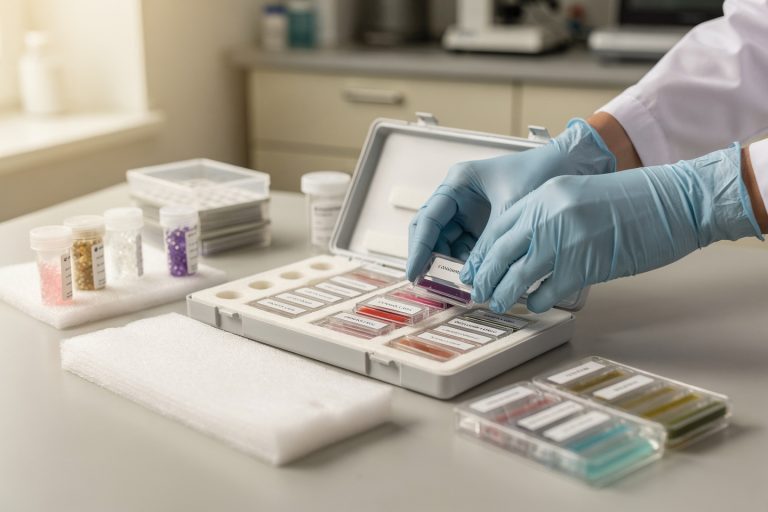
Worried a second opinion seems disloyal? A pathology consultation can clarify the diagnosis and help patients ask informed questions.
Pathology consultation second opinion can be worthwhile even when a patient fully trusts the treating doctor, because it reviews the diagnosis itself rather than the doctor’s intentions. A trusted doctor and a careful second pathology opinion can work together, especially when a biopsy result affects surgery, chemotherapy, radiation, targeted therapy, or long-term follow-up. The goal is not to prove anyone wrong; the goal is to make sure the foundation of care is as solid as possible.
Many patients feel uneasy about asking for another review. Some worry that the treating doctor will feel questioned, offended, or undermined. In real clinical practice, thoughtful physicians usually understand that high-stakes diagnoses deserve careful confirmation, just as pilots use checklists even when they are highly experienced.
A pathology report can feel like a locked door full of unfamiliar terms, grades, margins, stains, and measurements. A pathology consultation second opinion gives patients and families another trained set of eyes on the tissue, the report, and the clinical question. That extra clarity can reduce anxiety, support better conversations, and help the treating team move forward with confidence.
What a Pathology Second Opinion Involves
A pathology consultation second opinion is a focused review of a diagnosis by another pathologist, often one with subspecialty experience in the organ system or disease type involved. The consultant may review the original pathology report, microscopic glass slides, digital slide images, special stains, immunohistochemistry, and relevant clinical history. In many cases, the actual biopsy slides are the most valuable material because they show the tissue directly. This process is different from repeating a biopsy, because the existing tissue is usually reviewed first.
A helpful analogy is a complex legal document. A trusted attorney may write an excellent first interpretation, but a second expert may still be asked to review the wording before a major decision is made. In pathology, that wording may include the tumor type, grade, margin status, lymph node involvement, hormone receptor results, or molecular findings. A second pathology opinion can confirm the original interpretation or identify a detail that changes how the case is understood. Diagnostic accuracy matters most when a small wording change may affect major treatment decisions.
A pathology report review is also a communication tool. It can translate technical language into a clearer medical picture for the treating doctor, patient, and family. An expert pathologist review may explain why a diagnosis is straightforward, why it is borderline, or why additional testing may be needed. Patients who are still learning the structure of a report may also find background information helpful in What Is a Pathology Report?. Understanding what the report contains can make the consultation feel less mysterious and more practical.
Why Trust and Review Can Both Be Reasonable

Trust and verification are not opposites in medicine. A patient can trust the treating doctor deeply and still request a second pathology opinion when the diagnosis carries major consequences. Doctors often base the treatment plan on the pathologist’s diagnosis, so a careful check of that diagnosis can support the entire care team. This is especially true when the report describes cancer, precancerous changes, unusual inflammation, rare tumors, unclear margins, or unexpected findings.
Pathology is highly accurate, but it is also interpretive. Tissue patterns may overlap, small biopsies may sample only part of a lesion, and some diseases have gray zones. The laboratory may use special stains, molecular tests, and clinical information to narrow the diagnosis, but some cases still benefit from another expert perspective. A pathology report review can be particularly useful when the biopsy slides show subtle features, rare entities, or findings that do not fit the clinical picture. In those settings, diagnostic accuracy improves when the right materials and the right subspecialty expertise come together.
A cancer diagnosis review may be recommended when a tumor type is unusual, a grade seems unexpected, a biomarker result will guide medication, or treatment options differ widely depending on the diagnosis. For example, one tumor category may call for surgery alone, while another may lead to chemotherapy, radiation, immunotherapy, or targeted therapy. The treatment plan depends on precise classification, not just the word “cancer.” Patients who want practical steps for arranging a review may find How to Get a Second Opinion on Your Pathology Diagnosis useful. The process is usually collaborative, not confrontational.
When a Pathology Second Opinion Matters Most

Pathology consultation second opinion matters most when the result will change what happens next. A small benign skin lesion removed completely may not need the same level of review as a rare sarcoma, a new breast cancer, a prostate biopsy with borderline grade, or a colon polyp with possible invasion. The more a diagnosis affects surgery, drug treatment, radiation, fertility decisions, or surveillance intensity, the more reasonable a second review becomes. A cancer diagnosis review is also worth considering when the diagnosis is rare or when treatment is urgent but not yet started.
Pathology consultation second opinion can also be helpful when the report uses uncertain language. Phrases such as “atypical,” “suspicious,” “cannot exclude,” “favor,” or “indeterminate” may reflect real diagnostic uncertainty. That does not mean the first pathologist did anything wrong. It often means the tissue is limited, the features overlap, or additional correlation is needed. An expert pathologist review can clarify whether the uncertainty is minor, expected, or central to the treatment decision.
Another common reason is mismatch. If imaging suggests one condition but the biopsy slides suggest another, a second review can help reconcile the difference. If symptoms, blood tests, tumor markers, or endoscopy findings do not match the diagnosis, the clinical team may ask for more review before finalizing the treatment plan. Diagnostic accuracy is strongest when pathology, imaging, laboratory findings, and clinical findings fit together like pieces of the same puzzle. A pathology consultation second opinion may not change the answer, but a confirmed answer can be just as valuable as a revised one.
What Happens During and After the Review
The process usually begins with collecting the original report and requesting the tissue materials from the laboratory or hospital where the biopsy was processed. The consultant may need glass slides, tissue blocks, digital images, prior pathology reports, operative notes, imaging summaries, and relevant laboratory results. A pathology report review is strongest when the consultant can see both the microscopic findings and the clinical context. Missing information does not always prevent a review, but it can limit how specific the final opinion can be.
After the review, the consulting pathologist issues a written opinion. The opinion may fully agree with the original diagnosis, refine terminology, recommend additional stains or molecular testing, or change the diagnosis. A second pathology opinion may also comment on margins, grade, stage-related features, biomarker interpretation, or whether more tissue is needed. When the review affects the treatment plan, the treating doctor usually discusses the result with the patient and may adjust the next steps.
Most reviews do not create conflict between physicians. They create documentation, clarity, and shared confidence. A trusted doctor may welcome a second set of expert eyes because it helps confirm that treatment is being built on the most accurate diagnosis available. Patients who are unsure when a review is warranted may find additional context in When Should You Get a Second Pathology Opinion?. A second opinion is often less about doubt and more about due diligence.
Questions to Ask the Doctor or Pathologist

- Is the diagnosis completely certain, or is there any borderline or indeterminate wording?
- Would a subspecialty pathologist commonly review this type of case?
- Could the diagnosis affect surgery, chemotherapy, radiation, immunotherapy, or surveillance?
- Were all needed stains, biomarkers, or molecular tests completed?
- Would a pathology report review require the original biopsy slides or tissue blocks?
- Could an expert pathologist review change the tumor type, grade, margin status, or stage-related features?
- How would the treatment plan change if the second opinion agreed or disagreed?
These questions can help patients discuss consultation without making the conversation feel accusatory. A clear question about risk, uncertainty, and next steps often sounds reasonable to a treating doctor because it focuses on care quality. Many patients also benefit from reading Understanding Your Pathology Report: How to Read It with Confidence before the appointment.
An expert pathologist review is especially appropriate when the report contains terminology that is difficult to interpret or when the patient has received different explanations from different clinicians. The consultation may confirm the original diagnosis, but confirmation is still clinically meaningful. Peace of mind is not a minor outcome when a patient is facing life-changing treatment.
Frequently Asked Questions
Should I get a pathology second opinion if I trust my doctor?
Yes, a patient may reasonably request a pathology consultation second opinion even when the treating doctor is trusted. The review evaluates the tissue diagnosis, not the doctor’s character or competence. Many excellent doctors support second opinions because treatment depends on accurate pathology. A confirmed diagnosis can make the patient, family, and care team feel more confident moving forward.
Will my doctor be offended if I ask for a pathology consultation?
Most physicians understand that patients want certainty before major treatment decisions. A second pathology opinion is a normal part of care for complex, rare, or high-impact diagnoses. The request can be framed as a desire to confirm the diagnosis before choosing treatment. In many cases, the treating doctor or office can help arrange the transfer of materials.
Can a pathology consultation second opinion change my diagnosis?
A pathology consultation second opinion can change a diagnosis, but it can also confirm the original findings. Changes may involve tumor type, grade, margin status, biomarker interpretation, or whether a finding is benign, precancerous, or malignant. The chance of change is higher in rare tumors, borderline lesions, limited biopsies, and cases with uncertain wording. Even when there is no change, the confirmation may strengthen confidence in the treatment plan.
What materials are needed for a pathology report review?
A pathology report review usually needs the original report and the biopsy slides. Tissue blocks, special stain results, molecular reports, imaging summaries, and clinical notes may also be helpful. The consultant may request additional materials if the first package is incomplete. The original laboratory typically has a formal process for sending these materials safely.
Is a cancer diagnosis review worth it before treatment starts?
A cancer diagnosis review is often worth considering before major treatment begins, especially if surgery, chemotherapy, radiation, or targeted therapy is planned. The exact cancer type and grade can affect the treatment plan. Review is also useful for rare cancers, unusual pathology wording, or results that do not match imaging or symptoms. A timely review may prevent confusion later and support a more confident care decision.
A trusted doctor and a second pathology review can serve the same goal: safer, clearer, better-informed care. Honest Pathology consultations are available for patients and families who need an independent review of pathology findings before making major decisions. A calm, careful look at the diagnosis can turn uncertainty into a clearer next question.
References:
National Cancer Institute — Pathology Reports Fact Sheet
National Cancer Institute — NCI Dictionary of Cancer Terms: Second Opinion
National Cancer Institute — NCI Dictionary of Cancer Terms: Pathologist