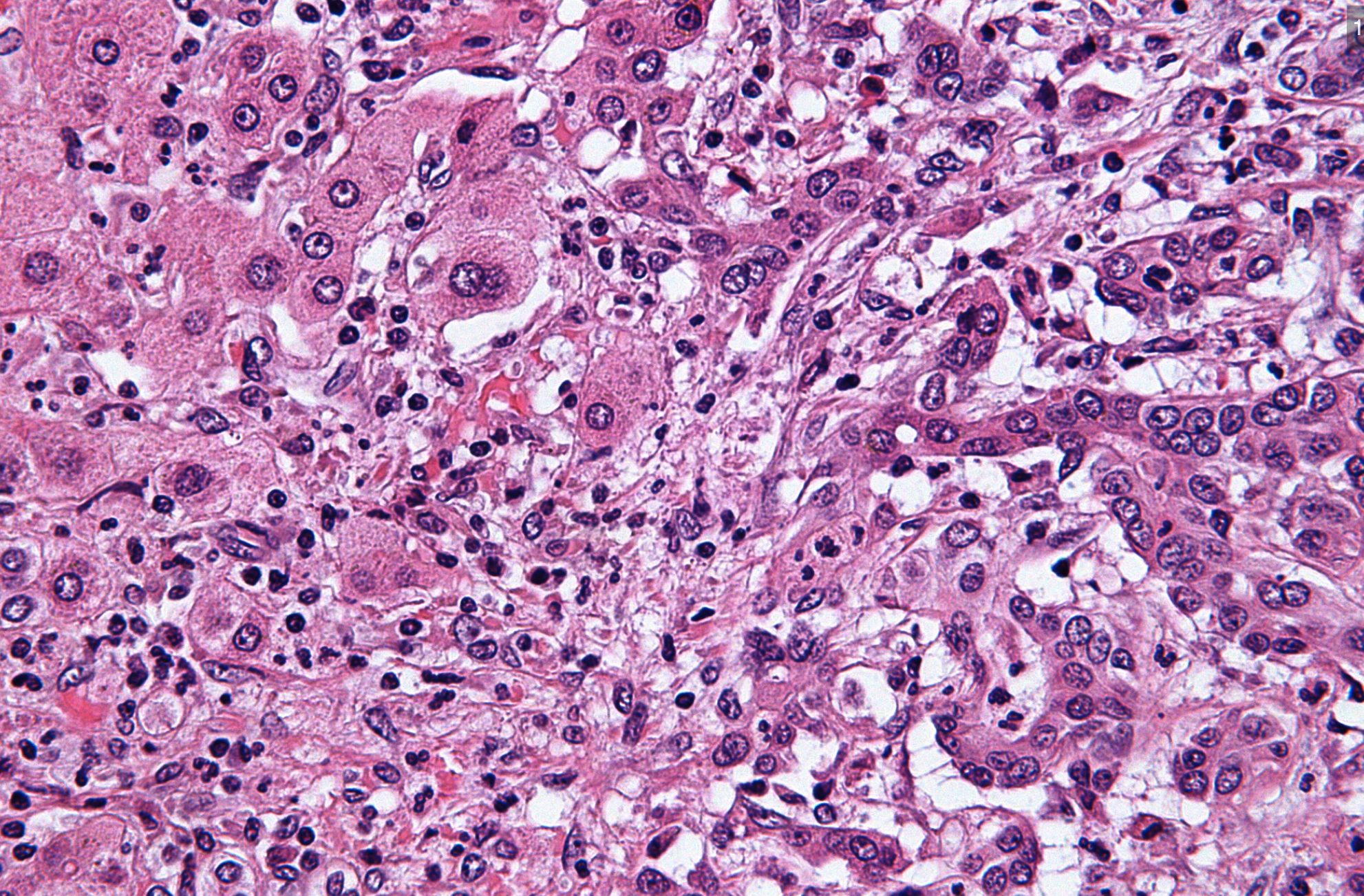
A cancer report can feel terrifying. p16 positive oropharyngeal cancer has a specific meaning; learn what to ask next.
p16 positive oropharyngeal cancer usually means that a cancer in the tonsil, base of tongue, soft palate, or nearby throat region shows a strong laboratory pattern linked to human papillomavirus, often called HPV. This finding is made by a pathologist using a special stain, most often on a biopsy or surgical specimen. It helps the oncology team understand the likely biology of the tumor, plan treatment, and assign the correct stage.
Receiving this result can feel frightening because the report may contain unfamiliar words such as p16, HPV, squamous cell carcinoma, invasion, margins, and lymph nodes. The language can make the diagnosis feel more mysterious than it is. A pathology report is not meant to scare patients; it is a technical medical document that records exactly what was seen under the microscope and with supporting tests. Clear explanation can turn that document from a source of panic into a roadmap for the next conversation.
P16 Positive Oropharyngeal Cancer — What It Actually Means
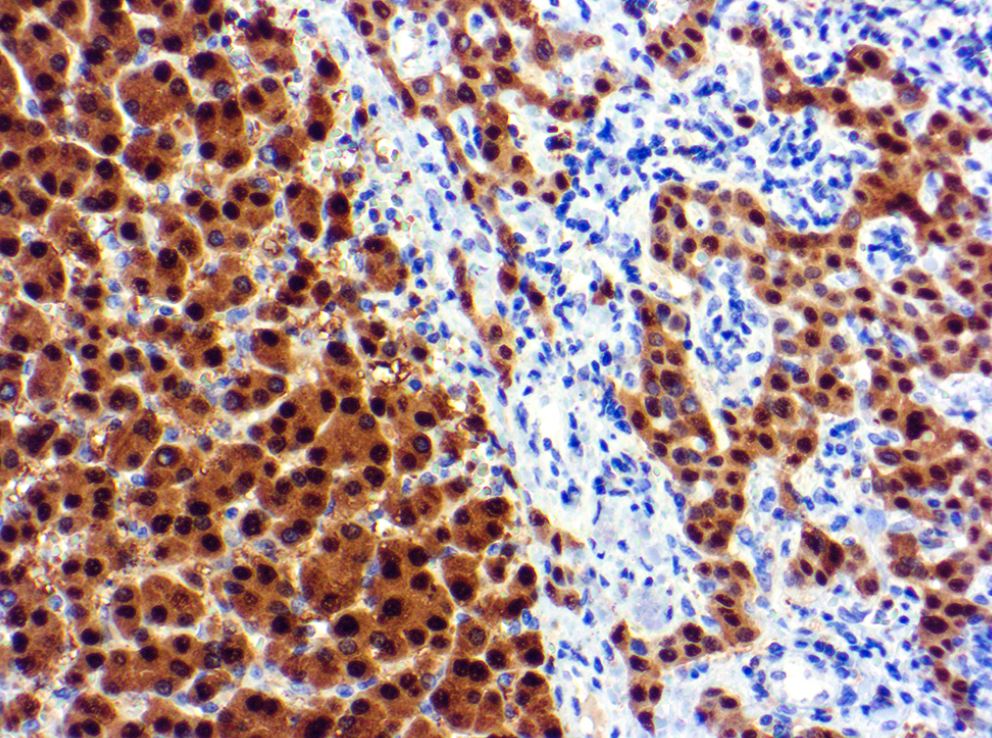
P16 Positive Oropharyngeal Cancer refers to an oropharyngeal squamous cell carcinoma that shows strong p16 staining in the tumor cells. The oropharynx includes the tonsils, base of tongue, soft palate, and back wall of the throat. The p16 test result is usually performed by immunohistochemistry, a method that uses antibodies to highlight specific proteins in tissue. When the stain is strong and widespread, it supports the diagnosis of an HPV associated tumor in the right clinical and anatomic setting.
A helpful analogy is a fingerprint at a scene. The p16 stain is not the whole story by itself, but it gives pathologists and oncologists an important clue about what likely drove the cancer to develop. In the oropharynx, a strong p16 test result is widely used as a practical marker for HPV throat cancer. This does not mean that every detail of the infection history can be reconstructed from the biopsy. It means the tumor has a pattern that behaves differently from many tobacco-related throat cancers.
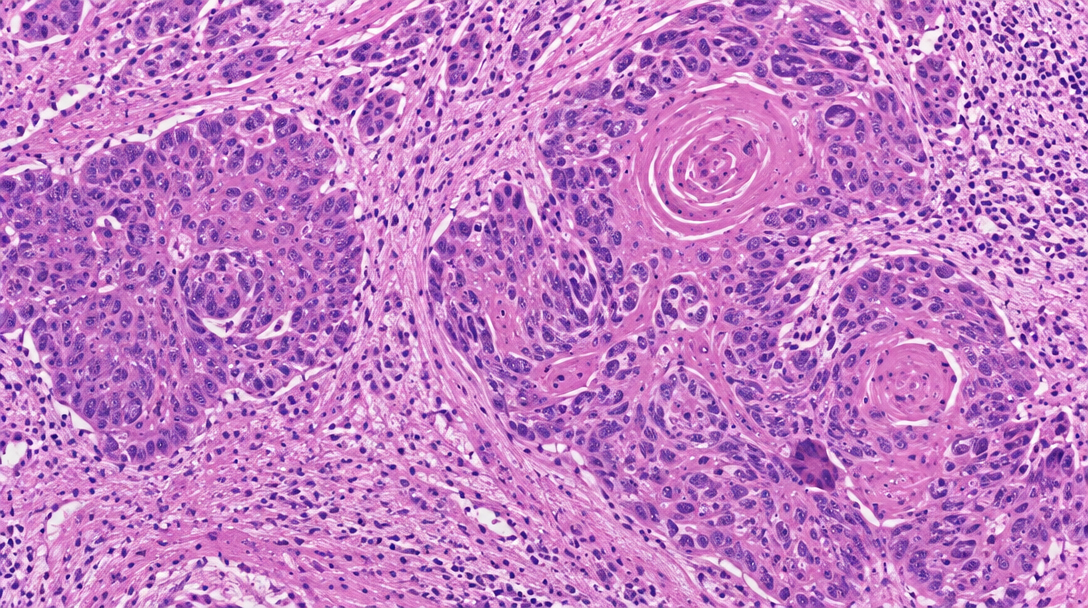
The phrase squamous cell carcinoma describes the type of cancer cell. Squamous cells are flat lining cells found on surfaces such as the mouth, throat, skin, and cervix. When these cells become malignant in the oropharynx and show the right p16 pattern, the diagnosis may be written as p16 positive oropharyngeal cancer or HPV-mediated oropharyngeal squamous cell carcinoma. For patients trying to understand the structure of a pathology report, What Is a Pathology Report? can help explain how diagnosis, microscopic description, and special studies fit together.
Why Your Report Shows This Finding
A report shows this finding because the pathologist saw squamous cell carcinoma in tissue from the oropharyngeal region and then used a p16 stain to better classify it. The stain is interpreted by looking at both the percentage of tumor cells stained and the strength and location of the staining. In true p16 positive oropharyngeal cancer, staining is typically strong and diffuse rather than faint or patchy. The p16 test result must also make sense with the tumor location and the microscopic appearance.
HPV throat cancer develops when high-risk HPV causes molecular changes inside the cells of the oropharynx. One effect of these changes is overexpression of p16, which is why p16 becomes visible on the stain. This is why the term HPV associated tumor may appear in clinical discussions, even when the report itself says p16 positive rather than listing a separate HPV DNA or RNA test. In many cases, p16 is considered an accepted surrogate marker for HPV-mediated disease in the oropharynx.
The pathologist also looks for features that help with tumor staging, such as the size or extent of the tumor when enough tissue is available. If lymph nodes are removed or sampled, the report may describe lymph node metastasis, extranodal extension, and the number of involved nodes. These details matter because p16 positive oropharyngeal cancer has its own staging system that differs from many p16 negative head and neck cancers. A patient reading the full pathology report may find it useful to compare each section with the treating clinician’s staging summary, because biopsy reports may not contain every staging detail.
How Serious Is P16 Positive Oropharyngeal Cancer?
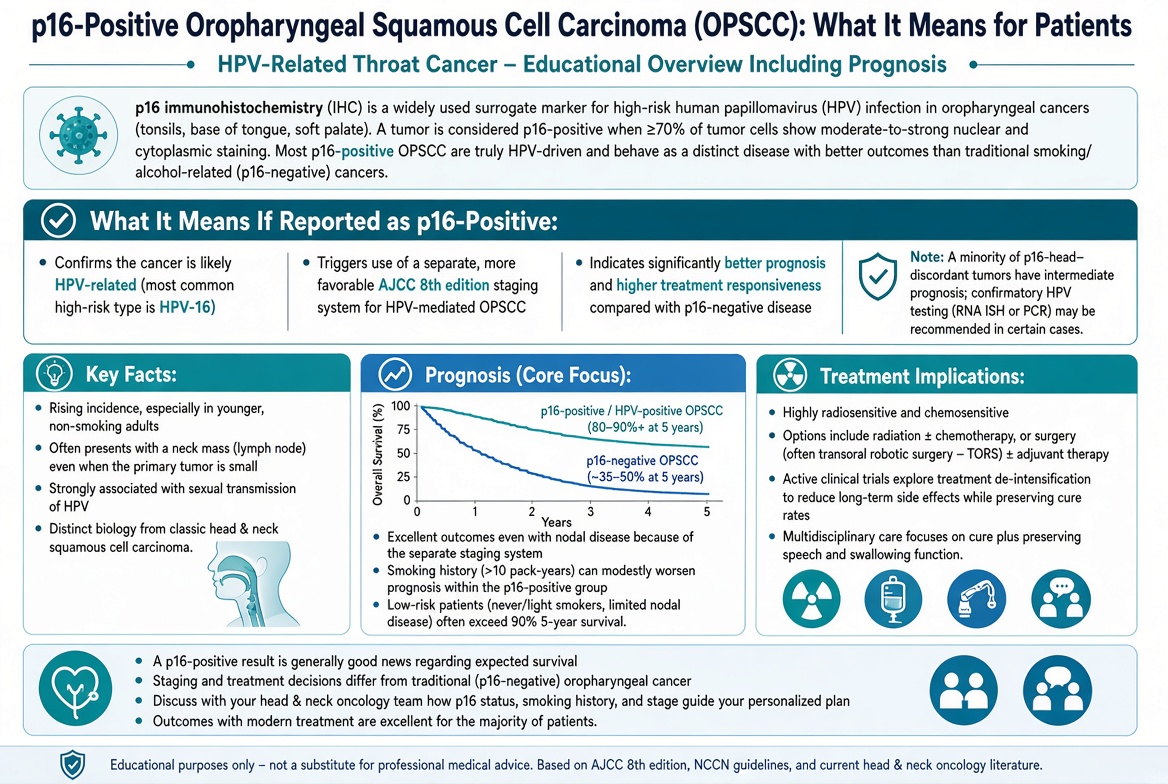
P16 positive oropharyngeal cancer is serious because it is a real cancer diagnosis, but the p16 positive status often carries more favorable treatment response and prognosis than p16 negative oropharyngeal cancer. That distinction can feel confusing: The word cancer is frightening, while the word positive may sound either hopeful or alarming. In this setting, p16 positive is not saying the report is good news in a simple way. It is saying the tumor belongs to a biologic group that often responds well to radiation, chemotherapy, surgery, or combinations of treatment.
The seriousness depends on several factors, not the p16 result alone. Tumor size, tumor staging, imaging findings, smoking history, overall health, and whether there is lymph node metastasis all influence treatment planning. Some patients have a small primary tumor with limited lymph node disease, while others have more extensive disease in the throat or neck. The diagnosis p16 positive oropharyngeal cancer gives the team a major clue, but it does not replace a full clinical stage.
Another source of anxiety is seeing lymph nodes mentioned in the report. HPV throat cancer commonly presents with a neck mass because the tumor has spread to a cervical lymph node, sometimes before the primary throat tumor is obvious. Lymph node metastasis sounds frightening, and it should be taken seriously, but it does not automatically mean the same thing as widespread incurable cancer. In p16 positive oropharyngeal cancer, lymph node involvement is built into a distinct staging approach, and many patients with nodal disease are still treated with curative intent.
What Happens Next: Treatment And Monitoring
After a diagnosis of p16 positive oropharyngeal cancer, the next step is usually review by a head and neck cancer team. This may include an ear, nose, and throat surgeon, radiation oncologist, medical oncologist, radiologist, pathologist, dentist or oral medicine specialist, speech and swallowing therapist, and nutrition team. Imaging studies help define the primary tumor and check for lymph node metastasis or distant spread. The pathology report and imaging results are then combined for final tumor staging.
Treatment may involve surgery, radiation therapy, chemotherapy, immunotherapy in selected settings, or a combination. The best approach depends on where the tumor is, how large it is, whether lymph nodes are involved, and how treatment might affect swallowing, speech, taste, dry mouth, and long-term quality of life. The p16 test result helps classify the cancer, but treatment decisions require the whole clinical picture. Patients often benefit from asking whether their case was reviewed at a multidisciplinary tumor board.
Monitoring after treatment usually includes physical examinations, imaging when appropriate, and careful evaluation of symptoms. Follow-up is designed to watch for recurrence, manage side effects, and support recovery. HPV throat cancer follow-up may also involve swallowing therapy, dental care, and nutrition support because throat cancer treatment can affect daily function. For patients who want help reading the wording of the report before an appointment, Understanding Your Pathology Report: How to Read It with Confidence offers a practical framework.
Questions To Ask Your Doctor Or Pathologist
- Does the report confirm squamous cell carcinoma in the oropharynx?
- Was the p16 test result strong and diffuse, or was it borderline?
- Does the diagnosis meet criteria for p16 positive oropharyngeal cancer?
- Is any additional HPV testing needed, such as HPV DNA or RNA testing?
- What is the current tumor staging after combining pathology and imaging?
- Is there lymph node metastasis, and is extranodal extension present?
- Should the slides be reviewed by a head and neck pathologist before treatment begins?
These questions are specific because head and neck pathology can be detail-dependent. A small wording difference in the pathology report can change how the oncology team describes the diagnosis, confirms the site of origin, or plans treatment. If the biopsy came from a neck lymph node and the primary tumor is not yet obvious, pathology and imaging must be interpreted together.
A second pathology opinion can be valuable when the diagnosis is unexpected, the p16 test result is unclear, the tumor site is uncertain, or major treatment decisions are pending. This does not mean the first diagnosis is wrong. It means another expert review can confirm the findings and reduce uncertainty before treatment starts. Patients considering review can read When Should You Get a Second Pathology Opinion? or How to Get a Second Opinion on Your Pathology Diagnosis.
Frequently Asked Questions
What does p16 positive mean in throat cancer?
P16 positive means the tumor cells show strong staining for the p16 protein on a special pathology test. In the oropharynx, this pattern usually supports an HPV associated tumor. The phrase p16 positive oropharyngeal cancer is commonly used when the cancer is in the tonsil, base of tongue, soft palate, or nearby throat region. The finding helps classify the cancer and guide staging.
Is p16 positive oropharyngeal cancer caused by HPV?
Most p16 positive oropharyngeal cancer is related to high-risk HPV, especially when the staining is strong and diffuse and the tumor is truly from the oropharynx. P16 is often used as a practical marker for HPV throat cancer in this anatomic site. In some situations, the care team may order additional HPV-specific testing. The report should be interpreted with the tumor location and clinical findings.
Is p16 positive throat cancer curable?
Many patients with p16 positive throat cancer are treated with curative intent, including some patients with lymph node metastasis. Outcomes are often better than for p16 negative oropharyngeal cancers, although every case is different. Tumor staging, smoking history, overall health, and treatment response all matter. The oncology team can explain the expected treatment goal for the individual case.
Does a p16 positive result change cancer stage?
Yes, a p16 positive result can change how oropharyngeal cancer is staged. Modern staging systems separate HPV-mediated, p16 positive tumors from p16 negative tumors because they behave differently. This is one reason the p16 test result is so important in the pathology report. Imaging and clinical examination are still needed for complete tumor staging.
Should I get a second opinion for p16 positive oropharyngeal cancer?
A second opinion can be reasonable when treatment has not started, the biopsy site is uncertain, or the wording of the diagnosis feels unclear. For p16 positive oropharyngeal cancer, review by a head and neck pathologist can confirm the tumor type, p16 staining pattern, and any other key features. This review may not change the diagnosis, but it can give patients and clinicians more confidence. The original slides and report are usually enough to begin the review process.
A diagnosis of p16 positive oropharyngeal cancer can feel overwhelming, but the pathology result contains information that helps guide modern, site-specific treatment. Clarity comes from understanding what the p16 stain means, what still needs staging, and which questions deserve careful answers. Honest Pathology consultations can help patients and caregivers understand the report language and prepare for a more focused discussion with the treating team.
References:
National Cancer Institute — Pathology Reports Fact Sheet
National Cancer Institute — Oropharyngeal Cancer
National Cancer Institute — Human Papillomavirus