For many patients, a pathology diagnosis feels final. A biopsy report often determines whether someone has cancer, what type of cancer is present, how aggressive the disease appears, and which treatments will follow. Yet many patients do not realize that pathology diagnoses can also be reviewed by another specialist through a formal second opinion process. Large academic medical centers such as the departments of pathology at Mayo Clinic, MD Anderson Cancer Center, and Beth Israel Deaconess Medical Center routinely perform pathology second opinions for difficult, unusual, or high-stakes cases. These reviews are an established part of modern medicine and are often encouraged when a diagnosis may significantly affect treatment decisions.
At Honest Pathology, patients frequently ask how pathology slide review actually works and what happens behind the scenes when another pathologist evaluates their case. Many also want to understand the difference between a formal second opinion and an educational pathology consultation. Understanding this process can help patients make more informed decisions about their care and better understand the role pathology plays in diagnosis.
What Is a Formal Pathology Second Opinion?
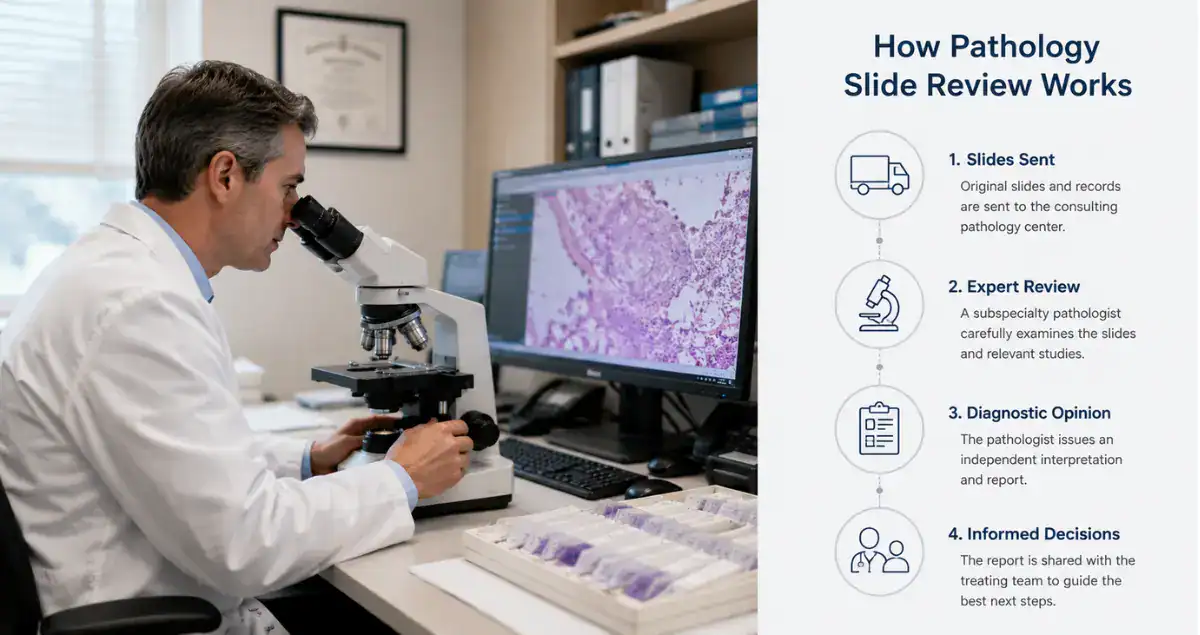
A formal pathology second opinion occurs when another qualified pathologist independently reviews the original pathology material and issues a diagnostic interpretation. This process usually involves examination of the actual glass microscope slides prepared from the patient’s biopsy or surgery specimen. In many cases, the reviewing institution also evaluates the original pathology report, supporting laboratory studies, immunohistochemical stains, and molecular testing results. The consulting pathologist does not simply glance at the diagnosis and agree automatically. Instead, the reviewing physician reevaluates the tissue independently, often from the beginning, while applying their own expertise and diagnostic judgment.
At major academic centers such as Mayo Clinic and MD Anderson Cancer Center, this process may involve subspecialty pathologists who focus almost entirely on one disease category, such as breast pathology, hematopathology, dermatopathology, or gastrointestinal pathology. In especially difficult cases, multiple pathologists may review the slides together during consensus conferences or intradepartmental consultations.
How Pathology Slides Are Sent for Review
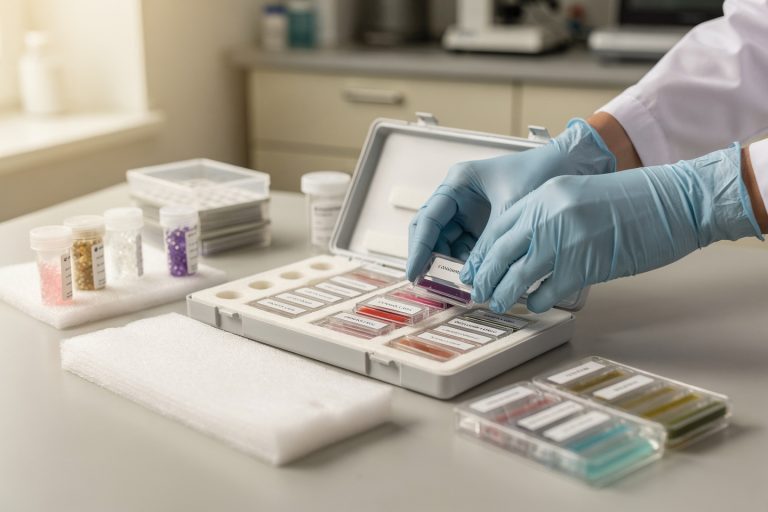
Many patients imagine pathology consultations occurring digitally or through simple document sharing. In reality, formal second opinions often depend on physical slide transfer. After a biopsy or surgery is completed, the pathology laboratory prepares thin sections of tissue mounted on glass slides. These slides are stained and examined under a microscope to establish the diagnosis.
If a patient requests a second opinion, the original laboratory typically ships the glass slides, tissue blocks, or digital slide scans to the consulting institution. The receiving pathology department logs the material into its own system before review begins. Major referral centers such as Beth Israel Deaconess Medical Center and Mayo Clinic have dedicated consultation services that process incoming pathology material from hospitals and clinics around the world. The review process may take days or sometimes weeks depending on the complexity of the case and whether additional testing is required.
What Pathologists Actually Look for During Review
Pathology review is far more detailed than many patients realize. The pathologist carefully examines tissue architecture, cellular appearance, patterns of invasion, inflammatory changes, mitotic activity, necrosis, and subtle microscopic features that distinguish one disease from another. In cancer pathology, the reviewing specialist may reassess tumor grade, depth of invasion, margin status, lymphovascular invasion, lymph node involvement, or biomarker interpretation. Even small differences in interpretation can potentially influence staging or treatment recommendations.
For example, in breast pathology, subtle distinctions between atypical ductal hyperplasia and ductal carcinoma in situ may carry very different clinical implications. In prostate pathology, changes in Gleason grading can alter treatment planning significantly. In lymphoma diagnosis, advanced immunohistochemical panels and molecular studies are often necessary to classify disease accurately.
At institutions such as MD Anderson Cancer Center, pathology review frequently incorporates advanced ancillary testing that may not have been performed originally. Pathologists may also compare current slides with prior specimens to evaluate disease progression or identify previously unrecognized findings.
Why Diagnostic Disagreement Sometimes Happens
Patients are often alarmed when they hear that pathology diagnoses can differ between experts. In reality, medicine contains many areas where interpretation requires judgment and experience. Some pathology discrepancies involve borderline lesions that exist on a spectrum rather than within rigid categories. Others arise because subspecialists encounter rare diseases more frequently than general pathologists. Diagnostic criteria also evolve over time. New tumor classifications, molecular markers, and staging systems continue to reshape pathology practice.
Importantly, most pathology diagnoses are accurate. However, second opinions can occasionally identify meaningful differences that affect treatment recommendations. This is one reason why many cancer centers routinely review outside pathology before initiating therapy. Second opinions are not an accusation of incompetence against the original pathologist. Rather, they reflect the complexity of modern pathology and the importance of subspecialty expertise.
The Difference Between a Formal Second Opinion and an Honest Pathology Consultation
Many patients confuse educational pathology consultation with formal diagnostic second opinion services. A formal second opinion involves a licensed physician issuing an official pathology interpretation that may become part of the patient’s medical record and directly influence clinical management. These services operate within specific regulatory and licensing frameworks and may require compliance with state medical practice laws. At Honest Pathology, consultations are approached differently.
An Honest Pathology consultation focuses on reviewing pathology slides and helping patients better understand what is being observed under the microscope. Rather than formally changing diagnoses or replacing the original pathology report, the consultation serves as an educational review that helps patients decide whether a formal second opinion may be appropriate. This distinction is important.
Some patients simply want reassurance that their pathology appears straightforward and consistent with the original report. Others may have questions about ambiguous wording, rare diagnoses, unusual treatment recommendations, or whether subspecialty review could add value. During an Honest Pathology consultation, the slides may reveal findings that appear entirely concordant with the original diagnosis.
In other situations, the review may identify features that suggest the patient could benefit from obtaining a formal second opinion from a specialized pathology department. The purpose is not to overturn diagnoses casually. Instead, the goal is to provide patients with thoughtful observational guidance and a clearer understanding of their pathology through pathology consultation services designed to support patient education.
Why Patients Seek Pathology Review
Patients pursue pathology review for many reasons. Some want confirmation before beginning major cancer treatment. Others have received rare or unexpected diagnoses and want additional reassurance. Certain patients become concerned after reading their pathology reports and realizing how complex the terminology appears.
Second opinions are also common when pathology findings do not seem to match the clinical picture. For example, imaging findings, laboratory results, or disease behavior may raise questions about whether the diagnosis fully explains the patient’s condition. Patients dealing with uncertainty after biopsy testing may also wonder whether a biopsy can miss cancer and whether additional pathology review could provide more clarity.
At large referral centers such as Mayo Clinic and MD Anderson Cancer Center, outside pathology review is often integrated into multidisciplinary cancer care precisely because accurate pathology interpretation is so critical to treatment planning. Patients increasingly recognize that pathology is not simply a laboratory technicality. It is the foundation upon which many medical decisions are built.
The Growing Role of Digital Pathology
Digital pathology is beginning to change how consultations are performed. Instead of shipping glass slides physically, some laboratories now create high-resolution whole-slide digital images that can be reviewed remotely by consulting pathologists. These digital systems allow specialists to zoom, pan, and analyze tissue similarly to traditional microscopy.
Digital pathology may improve access to subspecialty expertise, particularly for patients in rural areas or smaller healthcare systems. However, many institutions still rely heavily on traditional glass slide review, especially for complex consultations. Physical slides remain the standard in many formal second opinion workflows. At Honest Pathology, the emphasis remains on careful visual review and patient education regardless of whether the material is examined digitally or through traditional microscopy.
How Patients Can Decide Whether They Need a Formal Second Opinion
Not every pathology diagnosis requires formal reevaluation. Many routine cases are straightforward and highly reproducible among pathologists. However, patients may wish to consider formal second opinion review when diagnoses involve rare diseases, unusual tumor types, borderline lesions, conflicting clinical information, or treatments with major life consequences.
Patients may also consider second opinions when they feel uncertain about the explanation they received or when pathology terminology appears especially complex. An educational consultation through Honest Pathology can help patients understand whether their case appears routine or whether additional subspecialty review may be worth pursuing. In many situations, the consultation provides reassurance. In others, it may help patients recognize that a more formal evaluation at a major pathology referral center could offer additional clarity.
Pathology Review Is About Clarity and Confidence
Pathology second opinions exist because diagnosis matters deeply. Every biopsy slide represents a real person facing important medical decisions. Whether a patient seeks review through a major academic pathology department or through an educational consultation service, the goal is ultimately the same: greater clarity, understanding, and confidence. Formal pathology second opinions at institutions such as Mayo Clinic, MD Anderson Cancer Center, and Beth Israel Deaconess Medical Center provide highly specialized diagnostic review that may directly influence treatment planning.
At Honest Pathology, the focus is different but complementary. By reviewing pathology slides carefully and discussing observations honestly, patients can better understand their diagnosis and make informed decisions about whether a formal second opinion is necessary. As patients become more involved in their healthcare decisions, access to transparent pathology review and education will likely continue to grow. Understanding how pathology consultations work is an important first step in navigating that process confidently.