Scared by double hit lymphoma results? Learn what MYC, BCL2, and BCL6 findings mean and what to ask before treatment starts.
double hit lymphoma results usually mean that a lymphoma has certain gene changes involving MYC plus BCL2 and/or BCL6, and those changes can affect diagnosis, prognosis, and treatment planning. These results often appear after special testing on a biopsy, not from routine blood work alone. The wording can feel sudden and frightening because the report may use technical phrases such as rearrangement, translocation, high grade lymphoma, or FISH testing.
Receiving this kind of report can make time feel suspended. Many patients and caregivers remember the exact moment they saw MYC, BCL2, or BCL6 written on the page, even if the rest of the report felt impossible to understand. Clear information cannot remove all fear, but it can turn a confusing phrase into a set of specific questions for the oncology team.
This article explains double hit lymphoma results from a pathology perspective, including what the genes mean, why additional testing matters, and when a second pathology review may be helpful.
Double Hit Lymphoma Results — What They Actually Mean
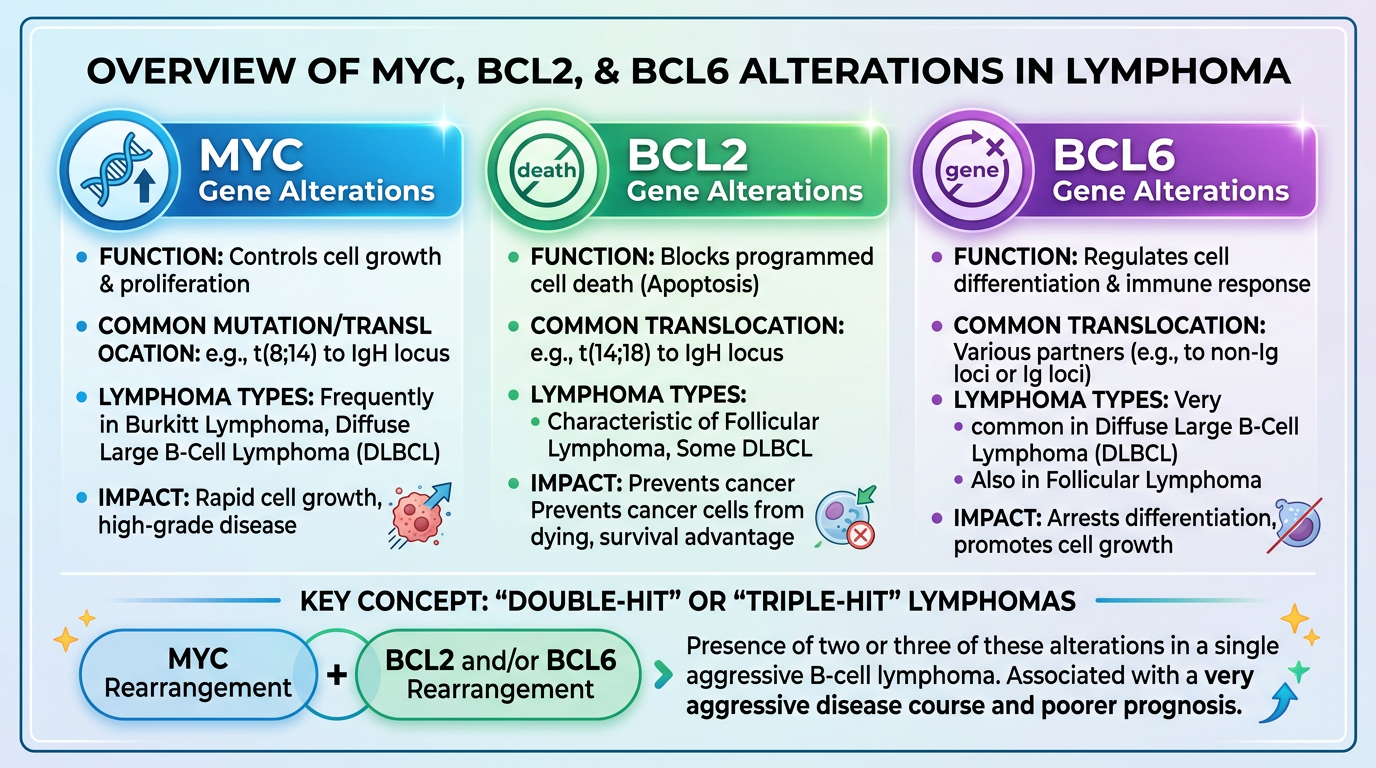
Double hit lymphoma results refer to lymphoma cells that carry a MYC rearrangement together with either a BCL2 rearrangement or a BCL6 rearrangement. Triple-hit lymphoma means that MYC, BCL2, and BCL6 rearrangements are all present. These are not inherited changes passed from parent to child; they are acquired changes within the lymphoma cells. In many reports, the diagnosis may be written as high grade B-cell lymphoma with MYC and BCL2 and/or BCL6 rearrangements.
A helpful analogy is to think of a cell as a factory with several control switches. MYC can act like an accelerator switch that pushes cell growth, while BCL2 can help abnormal cells avoid dying when they should. BCL6 can affect how certain B cells mature and behave. When these switches are rearranged in certain combinations, the lymphoma may act more aggressively than a typical diffuse large B-cell lymphoma.
Pathologists do not usually call a lymphoma double hit based only on how the cells look under the microscope. The diagnosis depends on proving the gene rearrangement pattern, most often with FISH testing. Immunohistochemistry may show that MYC and BCL2 proteins are highly expressed, but protein expression alone is not the same as a confirmed MYC rearrangement or BCL2 rearrangement. For patients trying to understand the structure of the report itself, Understanding Your Pathology Report: How to Read It with Confidence can help explain where diagnoses, comments, and special studies usually appear.
Why A Report Shows MYC, BCL2, And BCL6 Findings

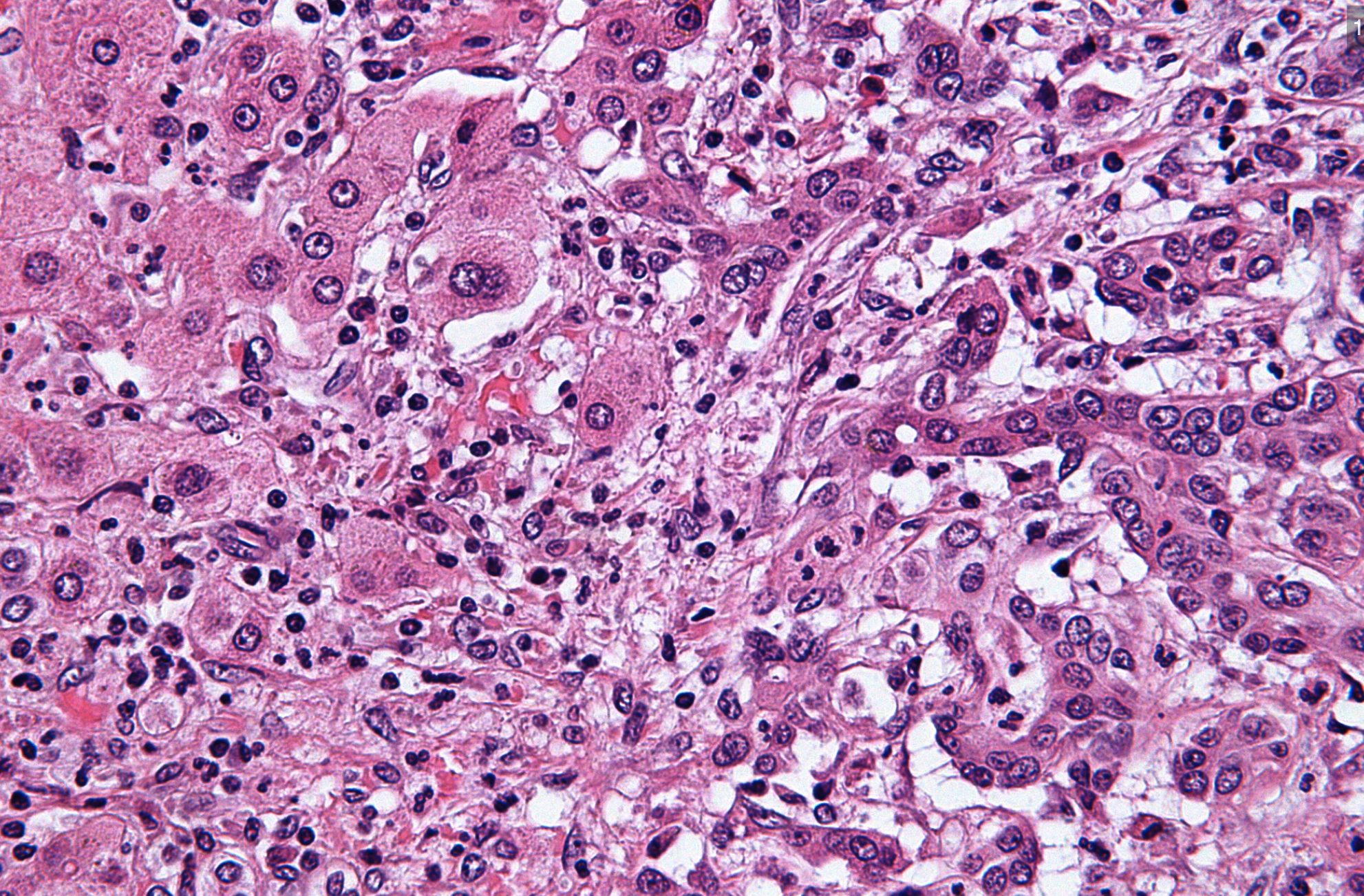
A pathology report shows MYC, BCL2, and BCL6 findings because the biopsy raised concern for an aggressive B-cell lymphoma that needs more precise classification. Under the microscope, these lymphomas often show sheets of abnormal lymphoid cells, frequent cell division, and areas where cells are dying rapidly. The pattern may resemble diffuse large B-cell lymphoma, Burkitt lymphoma, or another high grade lymphoma. Because appearance alone can overlap, additional stains and molecular tests help place the lymphoma into the most accurate category.
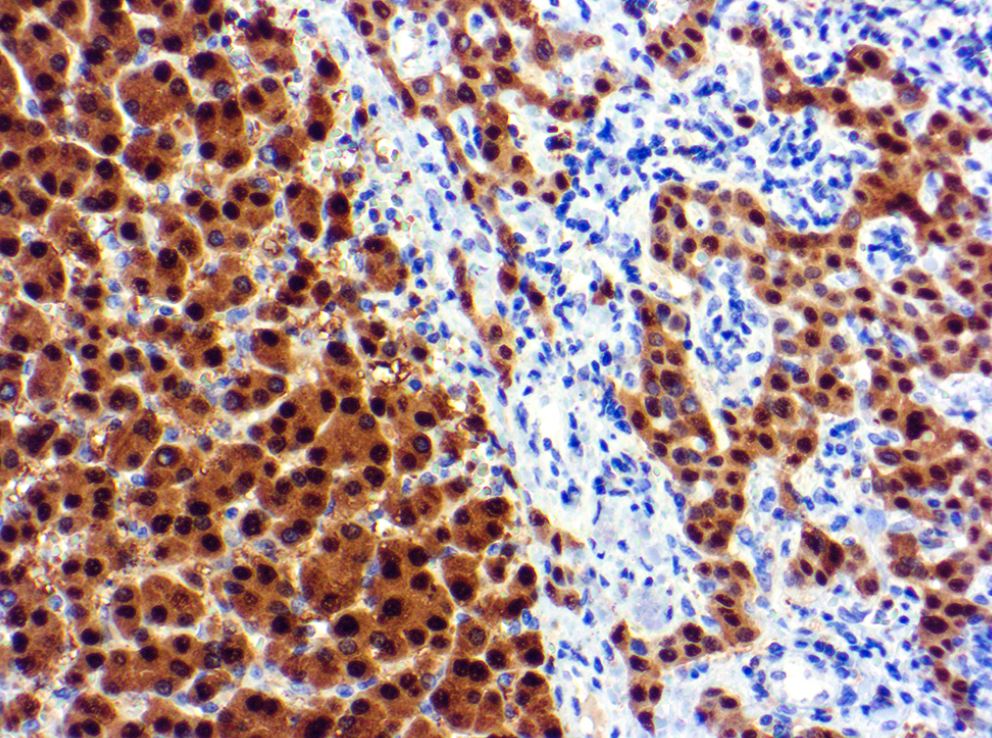
Immunohistochemistry is often the first layer of added testing. This method uses antibodies to detect proteins in the tumor cells, such as CD20, CD10, BCL6, BCL2, MYC, and Ki-67. A high Ki-67 can show that many cells are actively dividing, but Ki-67 does not by itself prove double-hit lymphoma. When proliferation is mentioned alongside MYC and BCL2, What Does Ki-67 Mean and How High Is Concerning? may help clarify how that number fits into the bigger picture.
FISH testing is commonly used to look for a gene rearrangement involving MYC, BCL2, or BCL6. A gene rearrangement means that a piece of DNA has moved or joined in an abnormal way, changing how the lymphoma cell behaves. FISH testing uses fluorescent probes that attach to specific gene regions, allowing the laboratory to detect rearranged signals. Reports may list each result separately, such as MYC rearrangement detected, BCL2 rearrangement detected, or BCL6 rearrangement not detected.
How Serious Are Double Hit Lymphoma Results?
Double hit lymphoma results are serious because these lymphomas often grow quickly and usually require prompt specialist management. Serious does not mean hopeless, and it does not mean that every patient has the same outcome. It means the diagnosis carries enough risk that the oncology team typically considers more intensive evaluation and treatment than might be used for some other lymphomas. The exact treatment plan depends on age, overall health, stage, symptoms, organ function, and the full pathology findings.
The reason double hit lymphoma results receive close attention is that MYC rearrangement combined with BCL2 rearrangement or BCL6 rearrangement can make the lymphoma biologically more aggressive. MYC may drive rapid cell growth, while BCL2 may help lymphoma cells survive longer than they should. BCL6 rearrangement can add another layer of abnormal growth control in some cases. This combination is why many reports classify the disease as high grade lymphoma rather than leaving it under a broad diffuse large B-cell category.
There are still important differences from one case to another. Some biopsies show a confirmed MYC rearrangement and BCL2 rearrangement, while others show MYC with BCL6, or all three genes. Some cases have strong MYC and BCL2 protein expression but no confirmed gene rearrangement; those may be called double-expressor lymphomas, which is related but not identical. Because these distinctions can change the final diagnosis and treatment discussion, patients may benefit from reviewing whether the report used immunohistochemistry, FISH testing, or both.
What Happens Next: Treatment And Monitoring
After double hit lymphoma results are reported, the next step is usually urgent coordination with a hematologist-oncologist. The oncology team may order imaging, blood tests, bone marrow evaluation, heart testing before certain chemotherapy drugs, and infectious disease screening. These steps help determine the stage and whether treatment can begin safely. The pathology report remains central because it confirms the lymphoma type and identifies features that guide therapy.
Treatment decisions are individualized, but double-hit and triple-hit lymphomas are often treated more aggressively than many standard diffuse large B-cell lymphoma cases. The oncology team may discuss combination chemotherapy, immunotherapy with an anti-CD20 antibody, central nervous system risk assessment, clinical trials, or additional supportive care. The presence of MYC rearrangement, BCL2 rearrangement, and BCL6 rearrangement can influence how strongly these options are considered. FISH testing results should be clearly documented before the plan is finalized whenever possible.
Monitoring usually includes physical exams, blood counts, chemistry tests, imaging at selected intervals, and assessment of symptoms. Pathologists may become involved again if a later biopsy is needed to confirm response, investigate relapse, or rule out a different process. Patients who want a clearer overview of what pathology reports can and cannot answer may find What Is a Pathology Report? useful. In complex lymphoma cases, a second pathology review can be especially valuable before treatment begins if there is uncertainty about the exact classification.
Questions To Ask Your Doctor Or Pathologist
- Was the diagnosis confirmed by FISH testing, immunohistochemistry, or both?
- Does the report show MYC rearrangement, BCL2 rearrangement, BCL6 rearrangement, or all three?
- Is the diagnosis double-hit lymphoma, triple-hit lymphoma, double-expressor lymphoma, or another high grade lymphoma?
- Does the report mention diffuse large B-cell lymphoma, high grade B-cell lymphoma, or Burkitt-like features?
- What is the Ki-67 proliferation index, and how does it affect interpretation in this case?
- Were all necessary lymphoma markers performed on the biopsy tissue?
- Would a hematopathology second opinion change treatment planning or confirm the diagnosis?
These questions are not meant to challenge the care team; they help make sure the diagnosis and treatment plan are based on the same information. Lymphoma classification can be technically demanding, especially when a gene rearrangement result changes the final category. A clear report should connect the microscopic findings, immunohistochemistry, FISH testing, and final diagnosis.
When the wording feels inconsistent or incomplete, a second review by a pathologist with hematopathology expertise may be reasonable. Guidance on timing and reasons for review is available in When Should You Get a Second Pathology Opinion?. This is most helpful when treatment has not yet started, but review can still provide value later in selected cases.
Frequently Asked Questions
What does double hit lymphoma mean?
Double hit lymphoma means that lymphoma cells have a MYC rearrangement plus either a BCL2 rearrangement or a BCL6 rearrangement. These changes are detected in the tumor cells, usually by FISH testing. Double hit lymphoma results often place the disease into a high grade lymphoma category. The term helps oncologists choose treatment that matches the biology of the cancer.
Is triple hit lymphoma worse than double hit lymphoma?
Triple-hit lymphoma means that MYC, BCL2, and BCL6 rearrangements are all detected. It is generally considered an aggressive form of high grade lymphoma, but individual outcomes depend on many clinical factors. Age, stage, performance status, treatment response, and other laboratory results all matter. The pathology result is one major piece of the full risk picture.
Can MYC and BCL2 be positive without double hit lymphoma?
Yes. MYC and BCL2 proteins can be positive by immunohistochemistry without the gene rearrangement pattern required for double hit lymphoma. This situation is often called double-expressor lymphoma, which is related but not the same diagnosis. FISH testing helps separate protein expression from true gene rearrangement. This distinction can affect how double hit lymphoma results are interpreted.
How long does FISH testing for lymphoma take?
Turnaround time varies by laboratory, specimen quality, and whether the test is performed in-house or sent to a reference lab. Many FISH testing results take several days to around two weeks. Delays can happen if tissue needs additional processing or if the first sample is limited. The oncology team can often begin planning while waiting for the final gene rearrangement results.
Should I get a second opinion for double hit lymphoma results?
A second opinion can be very reasonable for double hit lymphoma results because classification depends on detailed pathology and molecular findings. A review may confirm the diagnosis, clarify whether the case is double hit, triple hit, or double expressor, or recommend additional testing. This does not mean the first report is wrong. It means complex lymphoma diagnoses deserve the highest possible confidence before treatment decisions are finalized.
Double hit lymphoma results can feel overwhelming, but the report is not just a label; it is a map for the next decisions. Careful review of MYC, BCL2, BCL6, immunohistochemistry, and FISH testing can bring needed clarity. Honest Pathology consultations can help patients and families understand the wording of a lymphoma report and prepare focused questions for the treating team.
References:
National Cancer Institute — Pathology Reports
National Cancer Institute — Lymphoma
National Cancer Institute — Pathologist