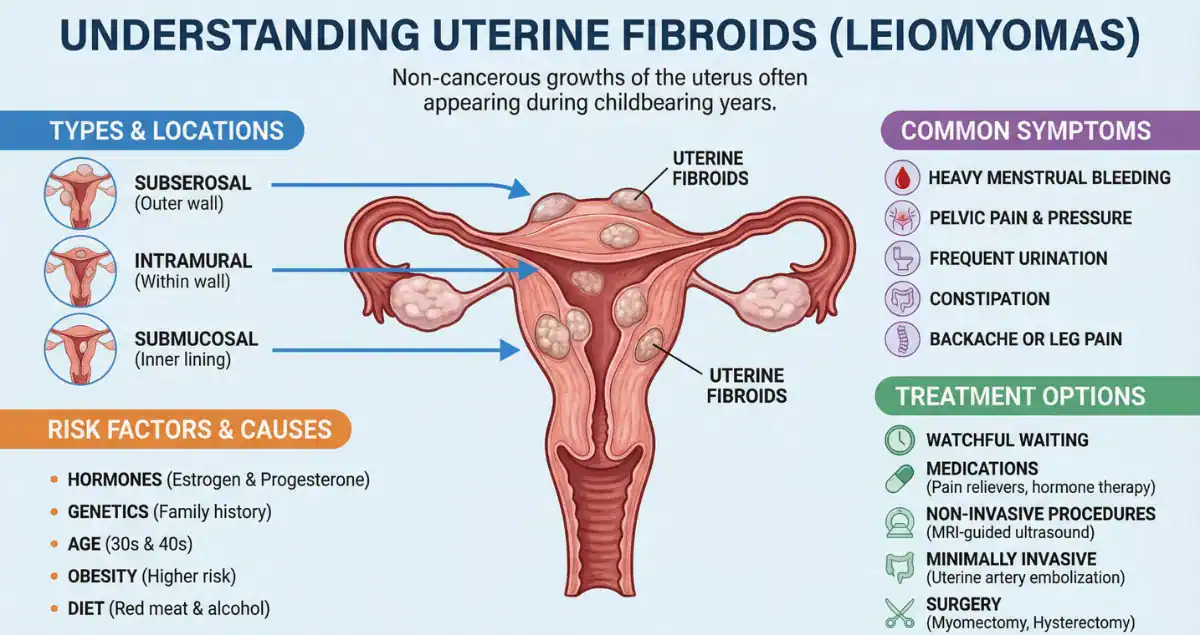
Uterine fibroids, also known as leiomyomas, are the most common benign tumors of the uterus. They arise from smooth muscle cells within the uterine wall and can vary widely in size, number, and location. Some women may have a single small fibroid, while others develop multiple large masses that can significantly alter the shape of the uterus.
Despite how frequently they occur, fibroids often cause anxiety when diagnosed, largely because they are described as “tumors.” It is important to understand that uterine fibroids are almost always non-cancerous and behave very differently from malignant tumors.
Why Do Fibroids Develop?
Fibroids are strongly influenced by hormones, particularly estrogen and progesterone. These hormones stimulate the growth of smooth muscle cells, which can lead to the formation of fibroids over time.
They are most commonly diagnosed during reproductive years and tend to grow during periods of higher hormone levels, such as pregnancy. After menopause, when hormone levels decline, fibroids often shrink.
A common question is whether lifestyle or diet causes fibroids. While certain factors may influence risk, such as genetics and hormonal exposure, there is no single cause that explains all cases.
What Symptoms Do Fibroids Cause?
Many fibroids do not cause any symptoms and are discovered incidentally during imaging or routine exams. When symptoms do occur, they often relate to the size and location of the fibroid.
Common symptoms include heavy menstrual bleeding, pelvic pressure, frequent urination, and sometimes pain. Larger fibroids can press on surrounding organs, leading to discomfort or bloating.
Another frequent concern is fertility. Depending on their location, fibroids can sometimes interfere with implantation or pregnancy, but many women with fibroids are still able to conceive and carry pregnancies successfully.
 What Do Uterine Fibroids Look Like Under the Microscope?
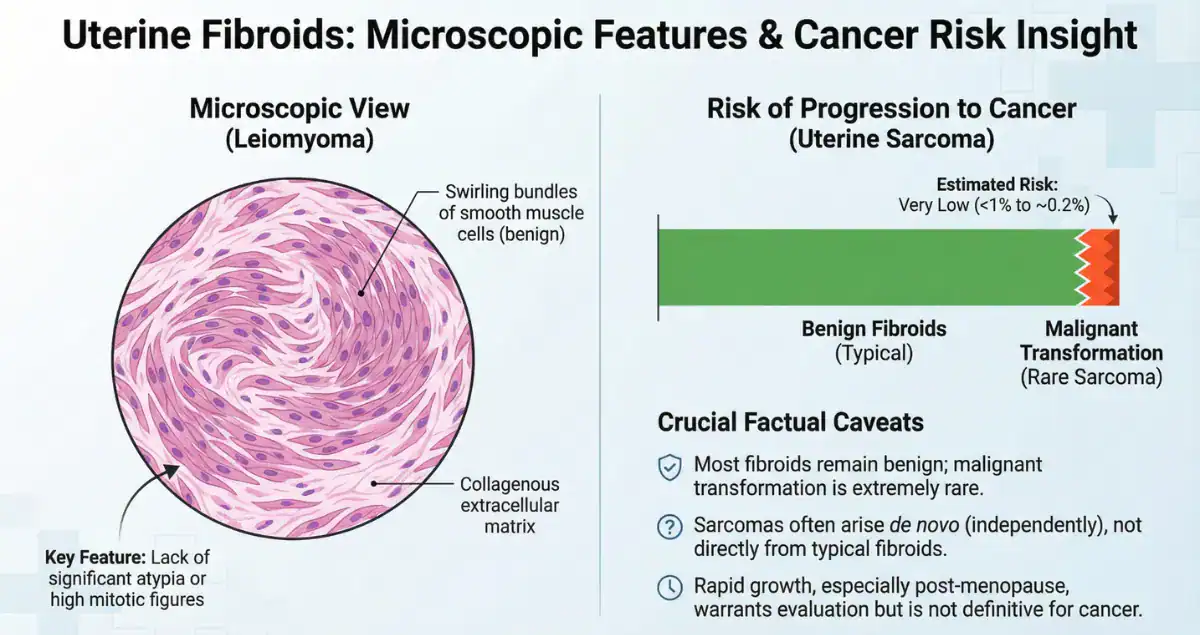
When examined histologically, uterine fibroids have a very characteristic appearance. They are composed of well-organized bundles of smooth muscle cells arranged in intersecting fascicles. The cells are typically uniform, with elongated nuclei and minimal atypia.
One of the reassuring features of fibroids is their lack of significant cellular abnormalities. Mitoses, or cell divisions, are usually low in number, and there is no evidence of invasive growth into surrounding tissues.
Variants of fibroids may show additional features, such as hyalinization, calcification, or cystic degeneration. These changes can occur as the fibroid outgrows its blood supply but do not indicate malignancy.
Can Uterine Fibroids Turn Into Cancer?
This is one of the most commonly asked and important questions. The answer is that uterine fibroids almost never turn into cancer.
The malignant counterpart, known as leiomyosarcoma, is a completely separate and rare tumor that arises independently rather than from pre-existing fibroids. In other words, fibroids do not typically “transform” into cancer.
The risk of having a leiomyosarcoma is very low, estimated to be a small fraction of cases involving uterine masses. However, because imaging cannot always definitively distinguish between benign and malignant tumors, surgical removal and histologic evaluation may sometimes be recommended.
How Are Fibroids Diagnosed?
Fibroids are most often diagnosed using imaging techniques such as ultrasound or MRI. These studies can identify the size, number, and location of fibroids within the uterus.
In some cases, particularly when surgery is performed, the diagnosis is confirmed by pathologic examination. This allows for definitive distinction between benign fibroids and rare malignant tumors.
Patients often ask whether a biopsy is needed before treatment. In many cases, biopsy is not performed prior to removal because fibroids are typically diagnosed based on imaging and clinical findings. However, tissue evaluation after removal is essential to confirm the diagnosis.
Do Fibroids Always Need Treatment?
Not all fibroids require treatment. Many women with fibroids have no symptoms and may only need routine monitoring. Treatment decisions depend on factors such as symptom severity, fibroid size, and reproductive goals.
Options range from medical management to minimally invasive procedures and surgical removal. The choice of treatment is highly individualized.
A common concern is whether fibroids will continue to grow. Growth patterns vary, but many fibroids remain stable or grow slowly. Hormonal changes, particularly menopause, often lead to stabilization or shrinkage.
Why Pathology Still Matters
Even though fibroids are usually diagnosed clinically and radiologically, pathology plays a crucial role in confirming the diagnosis. When fibroids are removed, microscopic examination ensures that the lesion is truly benign and not a rare malignancy.
Pathology reports may include descriptions of cellular features, growth patterns, and any degenerative changes. While these details are important, they can also be difficult to interpret without medical training.
Patients frequently find themselves wondering what specific terms mean and whether any findings are concerning. This is a normal and understandable reaction.
Getting Clear Answers with Honest Pathology
This is where Honest Pathology can be especially helpful. Honest Pathology focuses on providing clear, patient-friendly explanations of pathology reports, helping individuals understand exactly what their results mean.
For uterine fibroids, this might include explaining why the findings confirm a benign process, what specific microscopic features were identified, and whether any follow-up is needed. This added clarity can help reduce anxiety and support informed decision-making.
Rather than trying to navigate complex medical language alone, patients can gain confidence in their diagnosis and better understand their overall health.
What This Means for Your Long-Term Health
Uterine fibroids are extremely common and, in the vast majority of cases, not dangerous. While they can cause bothersome symptoms, they do not typically increase the risk of cancer.
Understanding the difference between benign fibroids and rare malignant tumors is key to putting the diagnosis into perspective. With appropriate evaluation and management, most women are able to effectively address symptoms and maintain a high quality of life.
Moving Forward with Confidence
Being told you have uterine fibroids can feel overwhelming at first, especially when faced with unfamiliar terminology and treatment decisions. The good news is that fibroids are well understood, highly manageable, and almost always benign.
Accurate diagnosis, including pathologic confirmation when needed, provides reassurance and helps guide appropriate care. For those seeking a clearer understanding of their pathology results, Honest Pathology offers a reliable resource to turn complex reports into meaningful insight.
With the right information and support, it becomes much easier to move forward with confidence and peace of mind.