For many patients, treatment decisions begin with a pathology report. Whether someone undergoes surgery, chemotherapy, radiation, immunotherapy, active surveillance, or additional testing often depends on what the pathologist identifies under the microscope. Because pathology plays such a central role in diagnosis, patients sometimes wonder whether a pathology consultation could actually influence or change their treatment plan. The answer is yes, in certain situations, pathology review can provide information that affects how the healthcare team approaches treatment decisions.
However, pathology consultations are not about patients working against their doctors or replacing their medical team. Instead, the goal is collaboration. A thoughtful pathology consultation service can help patients better understand their diagnosis, ask more informed questions, and participate more actively in discussions with their physicians. At Honest Pathology, consultations are designed to empower patients with clearer understanding so they can work together with their healthcare team to develop a treatment plan that best fits their individual situation.
Why Pathology Is So Important in Treatment Planning
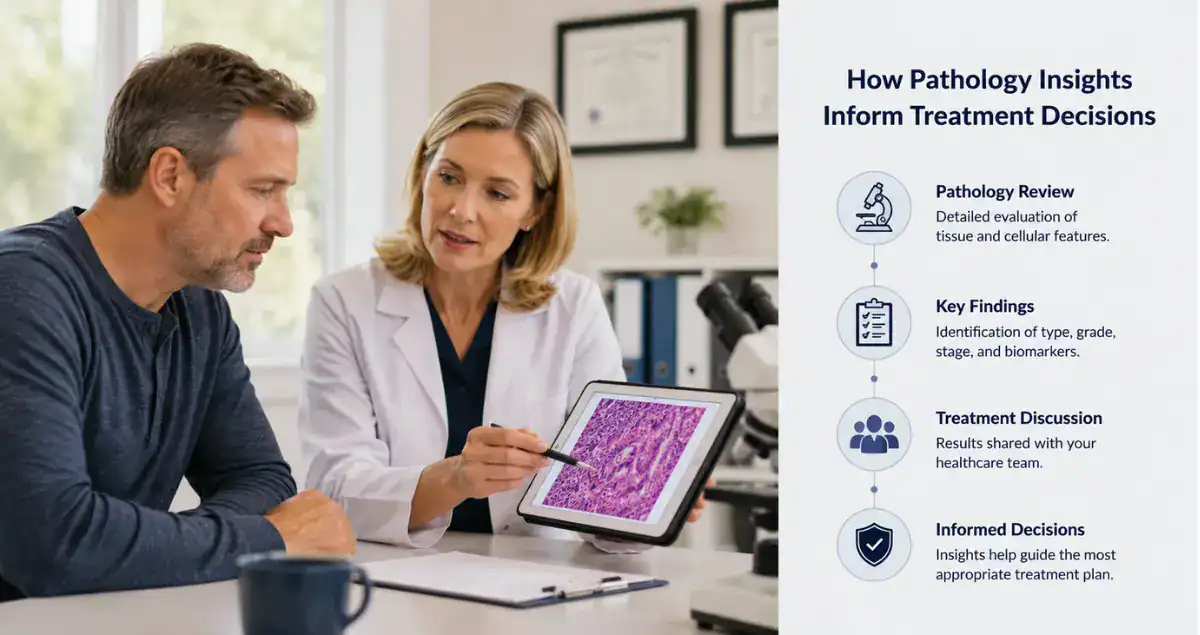
Pathology is the foundation of many medical decisions, especially in cancer care. The pathology report determines whether tissue is benign or malignant, what type of disease is present, how aggressive it appears, whether margins are involved, whether lymph nodes contain tumor, and which biomarkers may influence therapy options.
Oncologists, surgeons, radiologists, and other specialists rely heavily on pathology findings when building treatment recommendations. For example, in breast cancer, pathology determines hormone receptor status, HER2 expression, tumor grade, lymphovascular invasion, and tumor subtype. These findings directly influence whether a patient may receive chemotherapy, hormone therapy, targeted therapy, surgery, or radiation.
In prostate cancer, Gleason grading strongly affects whether patients pursue surgery, radiation, active surveillance, or multimodal treatment. In colon cancer, pathology staging influences whether chemotherapy is recommended after surgery. Because pathology drives so many downstream decisions, even subtle differences in interpretation can sometimes affect treatment planning.
How a Pathology Consultation May Influence Care
Most pathology diagnoses are accurate and appropriate. However, pathology is a highly specialized medical field, and some cases involve significant complexity. A pathology consultation may occasionally identify findings that lead the healthcare team to reconsider certain aspects of treatment planning.
This does not necessarily mean the original diagnosis was wrong. Sometimes additional context, subspecialty expertise, or deeper review simply refines the understanding of the disease. For example, a pathology consultation may clarify tumor subtype, adjust grading, identify additional biomarkers, or recognize features suggesting a less aggressive or more aggressive process than originally appreciated.
In some situations, a pathology review may support more conservative management. In others, it may reinforce the need for more aggressive therapy or additional testing. At large academic institutions such as Mayo Clinic and MD Anderson Cancer Center, pathology second opinions are frequently incorporated into multidisciplinary cancer care precisely because accurate pathology interpretation is so important to treatment planning.
Patient Empowerment Does Not Mean Working Against Your Doctors
One of the biggest misconceptions about pathology consultations is that seeking additional review somehow creates conflict between patients and their physicians. In reality, collaborative medicine often includes second opinions, multidisciplinary review, and subspecialty consultation. Complex medical decisions benefit from careful evaluation and communication between multiple experts.
Patient empowerment does not mean distrusting the healthcare team. It means understanding the diagnosis more clearly and feeling confident participating in treatment discussions. Many patients leave pathology consultations with a better ability to ask meaningful questions during oncology or surgical appointments. They may better understand why certain treatments are being recommended, whether alternative options exist, or whether additional testing might help personalize care. At Honest Pathology, consultations are intended to support communication between patients and their healthcare teams, not replace that relationship.
Examples of How Pathology Review Can Affect Treatment Discussions
There are many situations where pathology review may influence treatment conversations. A patient diagnosed with ductal carcinoma in situ of the breast may learn that pathology features appear highly favorable, supporting a discussion about less aggressive treatment approaches. Another patient may discover that certain microscopic findings suggest higher-risk disease requiring more comprehensive management.
A prostate biopsy consultation may clarify Gleason scoring and help determine whether active surveillance is a reasonable option or whether definitive treatment should be discussed more urgently. A gastrointestinal biopsy may distinguish inflammatory disease from dysplasia, changing recommendations for surveillance or surgery. In hematopathology, additional immunohistochemical or molecular review may refine lymphoma classification and influence chemotherapy planning.
Importantly, pathology findings are only one part of the clinical picture. Treatment decisions always involve collaboration between pathology, imaging, laboratory data, physical examination findings, patient preferences, and physician judgment. That is why pathology consultations work best when integrated thoughtfully into ongoing medical care.
Why Personalized Treatment Planning Matters
Modern medicine increasingly recognizes that patients are individuals, not simply diagnoses. Two patients with technically similar pathology reports may still choose different treatment paths based on age, overall health, family responsibilities, personal priorities, tolerance for risk, fertility considerations, or quality-of-life concerns.
Understanding pathology more deeply helps patients engage in these conversations more confidently. Some patients want to pursue the most aggressive treatment available for maximum reassurance. Others prioritize minimizing side effects or preserving certain aspects of quality of life when medically reasonable.
A pathology consultation can help patients better understand the biological features underlying those decisions. At Honest Pathology, the goal is to help patients feel informed enough to have meaningful, individualized discussions with their physicians about what treatment approach best aligns with their specific medical situation and personal priorities.
Sometimes Reassurance Is the Most Important Outcome
Not every pathology consultation leads to treatment changes. In many cases, the most valuable outcome is reassurance that the diagnosis appears consistent, well-supported, and appropriately managed by the healthcare team. Patients often seek consultation because they feel overwhelmed, uncertain, or frightened after receiving a major diagnosis. Understanding the pathology more clearly can reduce anxiety and help patients move forward with greater confidence in their care plan.
Sometimes patients simply need confirmation that their treatment recommendations make sense given the pathology findings. At Honest Pathology, helping patients gain confidence and clarity is considered just as important as identifying situations where additional subspecialty review may be beneficial.
The Difference Between Educational Consultation and Formal Treatment Changes
Patients should understand that pathology consultations themselves do not directly prescribe treatment. Formal treatment decisions are made by the treating healthcare team, including oncologists, surgeons, primary physicians, radiologists, and other specialists involved in care. An educational pathology consultation helps patients better understand the pathology behind those recommendations and recognize whether further formal review or discussion may be worthwhile.
At Honest Pathology, consultations focus on reviewing pathology findings, discussing observations, explaining terminology, and helping patients prepare individualized questions for their physicians. This educational process can help patients participate more actively in treatment planning discussions while preserving the collaborative relationship with their medical team.
Why More Patients Are Seeking Pathology Consultations
Patients today have greater access to medical information than ever before. Online patient portals allow individuals to read their pathology reports directly, often before they fully understand the terminology or implications. As a result, many patients seek additional educational support to help interpret what they are reading.
Pathology consultations provide an opportunity to slow down, review the details carefully, and understand how microscopic findings relate to larger treatment decisions. Patients increasingly recognize that pathology is not simply a technical laboratory process. It is one of the most important factors shaping medical care.
Patients who want to better understand complex diagnoses may also explore educational resources about how pathologists determine the stage of cancer and how staging affects treatment planning. At Honest Pathology, consultations are designed to help patients navigate that information more confidently and collaboratively.
Better Understanding Can Lead to Better Conversations
Ultimately, the goal of a pathology consultation is not to create conflict or confusion. It is to help patients better understand their diagnosis so they can participate thoughtfully in decisions about their care. Treatment planning works best when patients feel informed, prepared, and comfortable asking questions. A clearer understanding of pathology can help patients communicate more effectively with their healthcare team and explore options that align with both medical evidence and personal priorities.
At Honest Pathology, the consultation process is built around patient education, thoughtful slide review, and collaborative empowerment. By helping patients understand the pathology behind their diagnosis, consultations can support more informed discussions and potentially help guide treatment plans that feel better suited to the individual patient’s needs.