As patients learn more about pathology consultations and online second opinions, many begin asking the same important questions. Are digital pathology slides accurate? Do digital slides lose detail compared to traditional glass slides? Can cancer truly be diagnosed remotely? Are digital pathology systems used by major medical centers? At Honest Pathology, patients frequently ask these questions when seeking clarity about their biopsy results or considering a pathology consultation service. Understanding how digital pathology works can help patients feel more comfortable with the growing role of remote slide review in modern healthcare.
What Is Digital Pathology?
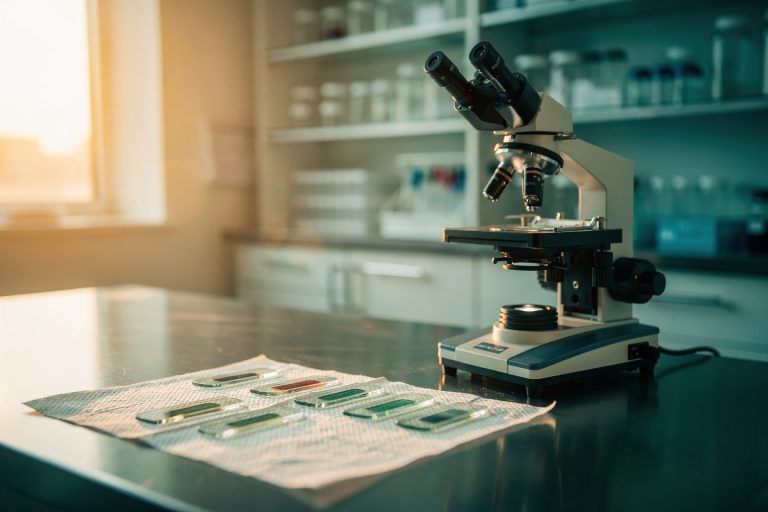
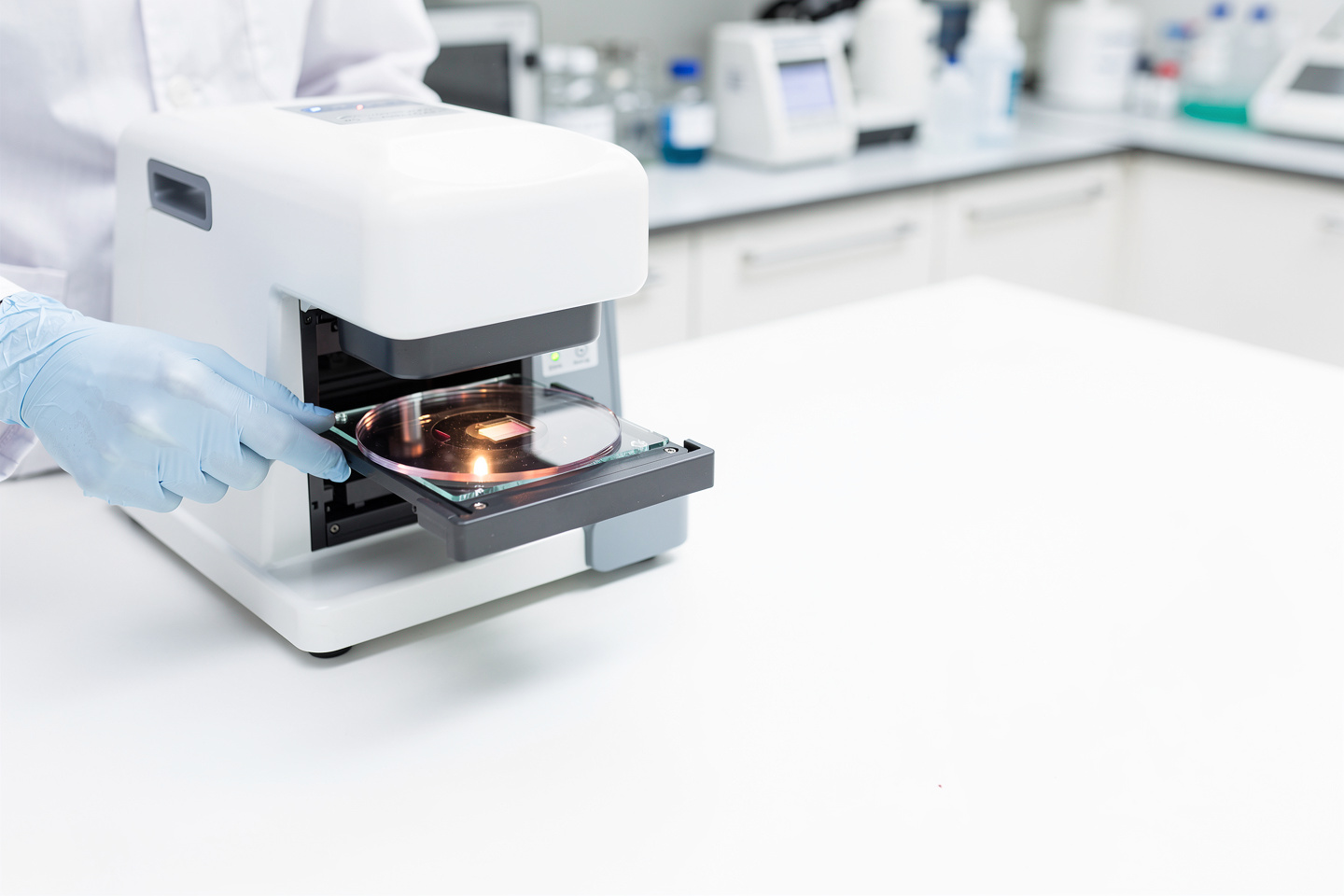
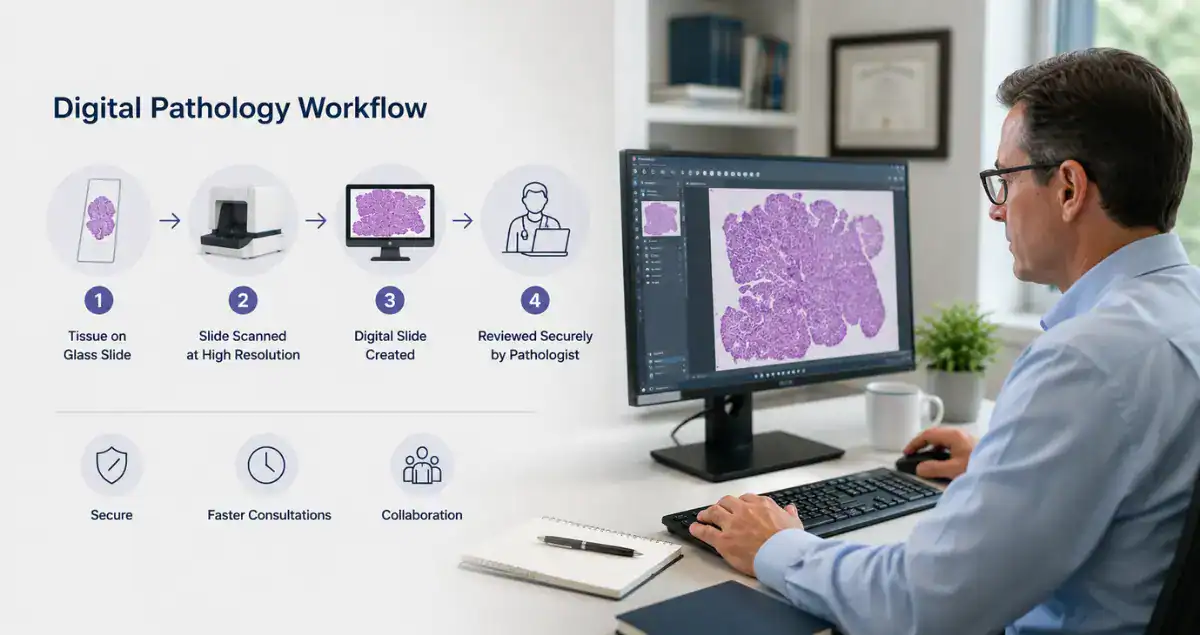
Traditional pathology relies on glass slides viewed under a microscope. Tissue from a biopsy or surgery specimen is processed, stained, mounted on a glass slide, and examined manually by a pathologist. Digital pathology begins with the same tissue preparation process. However, instead of only reviewing the glass slide directly through a microscope, the slide is scanned using a specialized whole-slide imaging system. The scanner creates an extremely high-resolution digital image that can be viewed on a computer screen.
These images are not simple photographs. Whole-slide digital scans allow pathologists to zoom in and out at multiple magnifications, navigate across tissue sections, and examine microscopic details in ways that closely resemble conventional microscopy. The resulting files are often extremely large because they preserve remarkable detail. In many systems, the digital image can be magnified to visualize individual cells, nuclei, mitotic figures, inflammatory patterns, and subtle tissue architecture.
Are Digital Pathology Slides as Accurate as Glass Slides?
One of the most commonly searched questions about digital pathology is whether digital slides are as reliable as traditional glass slides. For most routine and many complex pathology applications, studies have shown that digital pathology performs extremely well compared to conventional microscopy. Many large institutions now use digital pathology routinely for consultations, education, tumor boards, and increasingly for primary clinical diagnosis.
The integrity of the underlying tissue does not change during scanning. The original glass slide still exists physically, and the digital image represents a highly detailed reproduction of that slide. Pathologists using digital systems can typically zoom through tissue at multiple magnifications similarly to how they would manipulate a microscope. High-quality scanners preserve enormous amounts of visual information, often allowing excellent evaluation of cellular detail.
That said, glass slides still remain important in pathology practice. Certain subtle findings may occasionally be easier to appreciate directly through traditional microscopy depending on the case type, staining characteristics, or image quality. Some pathologists also prefer reviewing difficult cases on glass because they have decades of training using conventional microscopes.
In practice, many modern pathology departments use both systems together rather than viewing them as competitors. At Honest Pathology, the focus remains on careful pathology review regardless of whether slides are examined digitally or through traditional microscopy. The quality of interpretation depends not only on the imaging platform, but also on the expertise and attention of the reviewing pathologist.
Why Large Academic Centers Are Adopting Digital Pathology
Major academic pathology departments increasingly use digital pathology because it improves efficiency, collaboration, and access to subspecialty expertise. Institutions such as Mayo Clinic, MD Anderson Cancer Center, and Beth Israel Deaconess Medical Center have integrated digital pathology into various aspects of clinical and academic practice.
One major advantage is consultation speed. Instead of shipping glass slides physically across the country, digital scans can often be shared electronically with subspecialty experts. This may reduce delays for patients awaiting second opinions or treatment decisions. Digital pathology also supports multidisciplinary cancer conferences where surgeons, oncologists, radiologists, and pathologists review cases together.
High-resolution images can be displayed during meetings, allowing collaborative discussion of pathology findings. Academic centers additionally use digital pathology extensively for resident education, research, artificial intelligence development, and quality assurance programs. The technology has become especially valuable for connecting smaller hospitals with subspecialty expertise at large referral centers.
Can Cancer Really Be Diagnosed Using Digital Slides?
Another frequent patient question is whether cancer diagnoses can truly be made using digital pathology. The answer is yes. Many pathology departments now use validated digital pathology systems for clinical diagnosis. Regulatory approvals and validation studies have supported the use of whole-slide imaging in numerous diagnostic settings. Pathologists can identify malignant cells, tumor architecture, invasion patterns, mitotic activity, necrosis, and other critical features using digital systems.
Digital pathology has proven especially useful in consultation services because subspecialists can review cases remotely without requiring physical slide shipment in every situation. However, pathology diagnosis still depends on professional interpretation rather than the technology itself. A digital scanner does not diagnose cancer independently. The pathologist remains responsible for reviewing the tissue and rendering diagnostic judgment.
At Honest Pathology, digital pathology serves as a tool that helps facilitate slide review and patient education. Patients interested in learning how molecular tests help in cancer diagnosis may also better understand how advanced technologies support modern pathology evaluation. The most important factor remains the expertise of the physician interpreting the material.
Do Digital Slides Ever Miss Important Details?
Patients often worry that digital pathology may miss tiny abnormalities or subtle findings visible only through a microscope. Modern whole-slide scanners are designed specifically to capture extremely high-resolution images suitable for medical diagnosis. Validation studies at major institutions have demonstrated high concordance between digital and glass slide interpretation across many pathology applications.
Still, pathology is a nuanced medical field. Certain rare situations may require direct glass slide examination, additional levels, special stains, or repeat scanning. Most experienced pathologists recognize the strengths and limitations of both methods. In some workflows, pathologists review cases digitally initially and then confirm select findings on glass slides when needed. Importantly, digital pathology does not destroy or replace the original slide. The physical slide remains available for future review, additional testing, or consultation.
Why Patients Like Digital Pathology Consultations
Patients increasingly appreciate the convenience and accessibility that digital pathology can provide. Historically, obtaining a pathology consultation often involved complex logistics, including requesting glass slide shipment between hospitals. This process could feel intimidating and time consuming. Digital pathology can simplify consultations by allowing secure electronic review of scanned slides. In some situations, patients may gain access to subspecialty expertise more quickly than through traditional workflows alone.
Patients also value the educational potential of digital pathology. High-resolution images can sometimes be shared during consultations to help explain findings visually. Seeing actual biopsy material may help patients better understand their diagnosis. At Honest Pathology, pathology consultations are designed to help patients understand what is being observed under the microscope rather than simply receiving a technical report. Digital pathology helps support that educational process.
Is Digital Pathology Safe and Secure?
Another common concern involves privacy and security. Medical digital pathology systems typically operate within secure healthcare environments designed to protect patient information. Large hospitals and pathology departments use encrypted systems, secure servers, and regulated access controls when handling digital slides.
As with other areas of healthcare technology, institutions must comply with patient privacy regulations and cybersecurity standards. Patients considering online pathology consultation services should ensure that the platform appears professional, transparent, and medically legitimate. They should also understand whether the service provides formal medical diagnosis or educational consultation.
Will Digital Pathology Replace Traditional Microscopes?
Many people wonder whether microscopes will eventually disappear from pathology laboratories. For now, most experts view digital pathology as complementary rather than fully replacement-based. Traditional microscopy remains deeply embedded in pathology practice and training. Many pathologists continue using both methods depending on the case type and workflow.
However, digital pathology adoption continues to expand rapidly. Improvements in scanning quality, storage systems, internet infrastructure, and artificial intelligence are accelerating this transition. Future pathology practice will likely involve hybrid systems where digital and glass slide review coexist depending on clinical needs. At Honest Pathology, the emphasis is not on the technology itself but on helping patients access thoughtful pathology interpretation and education in an increasingly digital medical environment.
How Honest Pathology Helps Patients Navigate Digital Pathology
Many patients encounter pathology terminology, consultation options, and digital slide technology for the first time after receiving a serious diagnosis. The process can feel overwhelming. At Honest Pathology, consultations are designed to help patients understand what digital pathology is, how pathology slides are reviewed, and whether additional subspecialty evaluation may be appropriate.
Rather than formally replacing diagnoses, Honest Pathology focuses on careful slide review, observational guidance, and patient education. In some cases, the consultation may reassure patients that their pathology appears straightforward. In others, it may help patients recognize when formal second opinion review at a major academic pathology department could be beneficial.
As digital pathology becomes increasingly integrated into healthcare, patients now have more opportunities than ever to access pathology expertise remotely. Understanding how digital slides compare with traditional glass slides can help patients feel more confident navigating this evolving field of medicine.