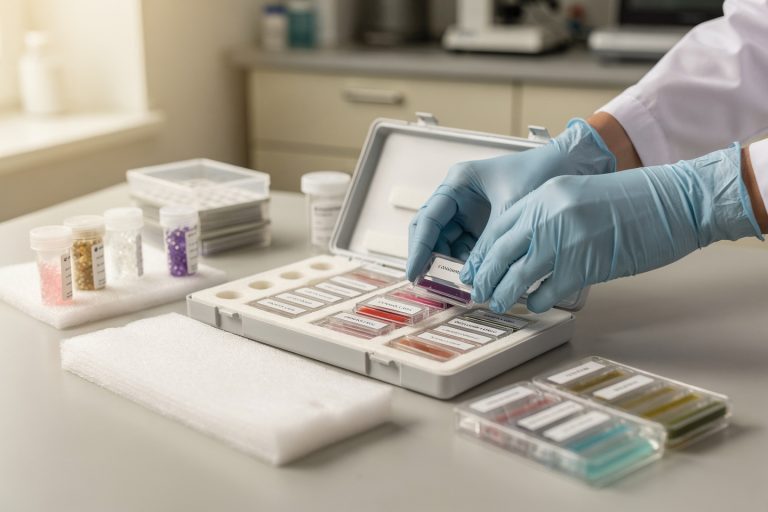
Unsure which second opinion to seek? Learn how pathology and oncology reviews differ and what records to gather before the next visit.
Pathology second opinion and oncology second opinion answer different questions, and both can be valuable when a cancer diagnosis or treatment decision feels overwhelming. A pathologist reviews the tissue, cells, stains, biomarkers, and exact words in the pathology report. An oncologist reviews the clinical picture, stage, treatment plan, medication options, and overall care strategy.
Confusion is common because both opinions can affect cancer care, but they do not examine the same evidence in the same way. The difference is similar to checking the blueprint of a house versus deciding how to repair it. The blueprint must be accurate before the repair plan can be trusted.
For a patient or family, the goal is not to choose one expert over the other. The goal is to understand which question is being asked, which records are needed, and when a diagnosis review should happen before major treatment decisions are made.
What a Pathology Second Opinion Reviews
A pathology second opinion focuses on whether the diagnosis in the pathology report is accurate, complete, and supported by the tissue findings. The reviewing pathologist looks at glass slides, tissue blocks when available, immunohistochemistry stains, biomarker testing, and the language used in the final report. This review may confirm the diagnosis, refine the tumor classification, or identify details that were not fully addressed in the first report. A helpful overview of report structure is available in What Is a Pathology Report?.
In practical terms, a pathology second opinion asks, “What exactly is this disease under the microscope?” That question can involve surgical pathology from a biopsy, resection, lymph node, or cytology specimen. The pathologist checks whether the tumor type, grade, margins, invasion, lymphovascular invasion, and special stains match the diagnosis. A diagnosis review may also assess whether additional testing should be considered, especially when the findings are unusual or the treatment depends on a precise category.
The real-world analogy is a passport check before travel. An oncology second opinion may help choose the best route, but the pathology report is the identity document for the disease. If the name, type, or biomarker status is wrong, the treatment plan may be aimed at the wrong target. A pathology second opinion is therefore most useful when the exact diagnosis drives surgery, chemotherapy, radiation, immunotherapy, targeted therapy, or enrollment in a clinical trial.
What an Oncology Second Opinion Reviews

An oncology second opinion usually focuses on treatment choices after a diagnosis has been made. The oncologist reviews the pathology report, imaging, stage, prior treatments, lab results, performance status, other medical conditions, and the patient’s goals. This type of consultation may compare chemotherapy regimens, targeted therapy options, immunotherapy, radiation timing, surgery, surveillance, or clinical trials. The main question is whether the treatment plan is the best fit for the diagnosis and the person receiving care.
An oncology second opinion may also identify whether more information is needed before treatment starts. For example, the oncologist may request missing biomarker testing, additional imaging, genetic counseling, or a formal pathology second opinion if the pathology report is unclear. This is common when a tumor has an unusual appearance, when the diagnosis is rare, or when a major therapy depends on a single marker. In that setting, the oncology second opinion and the pathology review work together rather than compete.
The distinction matters because an oncologist generally does not re-read the microscope slides as a pathologist would. The oncologist interprets the diagnosis and builds the treatment plan around it. If the diagnosis is solid, the oncology second opinion can focus on care strategy. If the diagnosis is uncertain, the treatment plan may need to pause until the tissue has been reviewed by a pathologist with the right subspecialty experience.
How Much Can a Pathology Second Opinion Change Care?
A pathology second opinion can change care in small, moderate, or major ways, depending on what is found. In many cases, it confirms the original diagnosis and gives the patient more confidence before treatment begins. In other cases, the diagnosis review may adjust the tumor classification, grade, margin interpretation, or biomarker result. Even a small wording change in a pathology report can matter when it affects eligibility for surgery, radiation, targeted therapy, or a clinical trial.
The most serious changes occur when the review changes the disease category itself. For example, a lesion thought to be benign may be reclassified as malignant, or a tumor thought to be one cancer type may be recognized as another. A pathology second opinion may also identify that more surgical pathology material is needed, that a stain was misinterpreted, or that biomarker testing should be repeated. These changes are not everyday events, but they are meaningful enough that a second review is often reasonable when the diagnosis is rare, unexpected, or treatment-defining.
An oncology second opinion may also change care, but usually by changing the treatment plan rather than the diagnosis itself. This may include a different drug combination, a different sequence of surgery and chemotherapy, or a recommendation for observation instead of immediate treatment. The strongest approach often starts with confirming the diagnosis and then asking whether the proposed treatment fits. For patients wondering when review is appropriate, When Should You Get a Second Pathology Opinion? explains common scenarios in patient-friendly language.
When Each Type of Second Opinion Matters Most

A pathology second opinion is most useful when the diagnosis is unusual, the report contains uncertainty, or the treatment depends heavily on a precise tissue finding. Words such as “suspicious,” “favor,” “cannot exclude,” “atypical,” or “indeterminate” may signal that the case is difficult. A diagnosis review may also be helpful when the tumor classification is rare, when the grade seems surprising, or when the pathology report does not match the imaging or the clinical story. In these situations, reviewing the slides can clarify the foundation of care.
An oncology second opinion is most useful when the diagnosis is established but the treatment plan has several reasonable options. This may include choosing between surgery and systemic therapy, deciding whether chemotherapy is needed, comparing targeted therapy choices, or evaluating clinical trials. It can also help when a patient is concerned about side effects, quality of life, fertility, work, caregiving responsibilities, or timing. The oncology second opinion translates the diagnosis into a practical care pathway.
Some patients benefit from both reviews, especially in complex cancer cases. A pathologist may first confirm the pathology report, surgical pathology findings, and biomarker testing. Then an oncologist can use that clarified diagnosis to refine the treatment plan. Patients who need step-by-step instructions may find How to Get a Second Opinion on Your Pathology Diagnosis helpful before requesting slides, blocks, or outside records.
What Happens After the Review

After a pathology second opinion, the reviewing pathologist typically issues a written report or consultation note. That report may agree with the original pathology report, add detail, recommend more testing, or provide a different diagnosis. If biomarker testing is missing or incomplete, the pathologist may recommend additional stains or molecular studies. If the case is complex, the findings may be discussed at a tumor board with oncologists, surgeons, radiologists, and radiation oncologists.
After an oncology second opinion, the oncologist typically provides treatment recommendations based on all available information. The treatment plan may stay the same, change slightly, or shift substantially. Sometimes the oncologist cannot give a firm recommendation until the diagnosis review is complete. That is not a delay without purpose; it is a way to avoid building a major treatment decision on uncertain information.
Patients often feel pressure to move quickly, especially after hearing the word cancer. Speed matters, but accuracy matters too. A short, organized review of the pathology report can prevent confusion later and may make the next oncology visit more productive. For patients trying to understand individual report terms before a visit, Understanding Your Pathology Report: How to Read It with Confidence can help turn dense medical language into clearer questions.
Questions to Ask the Doctor or Pathologist
Specific questions can help separate a pathology issue from a treatment issue. The most useful questions are concrete and tied to the report, slides, testing, and next decision.
- Was the diagnosis made from a biopsy, cytology sample, surgical resection, or outside slides?
- Does the pathology report contain any uncertain wording, such as “favor,” “suspicious,” or “cannot exclude”?
- Would a pathology second opinion by a subspecialty pathologist be appropriate for this diagnosis?
- Are all required stains, molecular tests, and biomarker testing complete before treatment starts?
- Could the tumor classification, grade, margin status, or stage-related information change the treatment plan?
- Should the oncology second opinion wait until the diagnosis review is finished?
- Which records, slides, blocks, scans, and reports should be sent for the next consultation?
A calm, organized conversation can reduce fear because it turns a frightening report into a checklist of answerable questions. Pathologists often help by clarifying what the tissue shows and what it does not show. Oncologists then use that information to shape treatment.
When uncertainty remains, an expert consultation can be valuable even if the final answer confirms the original report. Confirmation itself can bring relief before a major decision. The point is not to create doubt; the point is to make sure the diagnosis and the treatment plan are aligned.
Frequently Asked Questions
What is the difference between a pathology second opinion and an oncology second opinion?
A pathology second opinion reviews the diagnosis in the tissue, cells, stains, and pathology report. An oncology second opinion reviews the treatment plan, staging information, medication choices, and overall cancer care strategy. The pathology review answers what the disease is. The oncology review answers how that disease may best be treated.
Can a pathology second opinion change my cancer diagnosis?
Yes, a pathology second opinion can change a diagnosis, although many reviews confirm the original result. Changes may involve tumor classification, grade, margin status, or biomarker testing. Sometimes the change is small but still affects the treatment plan. In rare cases, the change can be major enough to redirect care.
Should I get a pathology or oncology second opinion first?
If the diagnosis is uncertain, rare, unexpected, or based on limited tissue, the diagnosis review often comes first. If the diagnosis is clear but treatment choices are complex, an oncology second opinion may be the next best step. Many patients benefit from both, especially when therapy depends on precise biomarkers. The order should match the unanswered question.
Does an oncologist review pathology slides?
Oncologists review the pathology report and use it to recommend treatment, but they usually do not interpret microscope slides themselves. Slide interpretation is the role of the pathologist, especially in surgical pathology and complex cancer diagnosis. An oncologist may request a formal diagnosis review when the report is unclear or when treatment depends on exact tissue findings. This teamwork helps keep care accurate and coordinated.
What records are needed for a second opinion?
A strong second opinion usually needs the pathology report, glass slides, tissue blocks if requested, imaging reports, scan images, operative notes, oncology notes, and recent lab results. For an oncology second opinion, the proposed treatment plan and medication history are also helpful. For a pathology second opinion, the actual slides are often more valuable than the report alone. Complete records help avoid delays and repeated requests.
A second opinion is not a sign of mistrust. It is a careful way to make sure the diagnosis, pathology report, and treatment plan all point in the same direction. Honest Pathology consultations can help patients and families understand whether a pathology-focused review is the right next step before major cancer treatment decisions.
References:
National Cancer Institute — Pathology Reports Fact Sheet
National Cancer Institute — NCI Dictionary of Cancer Terms: Second Opinion
National Cancer Institute — NCI Dictionary of Cancer Terms: Pathologist