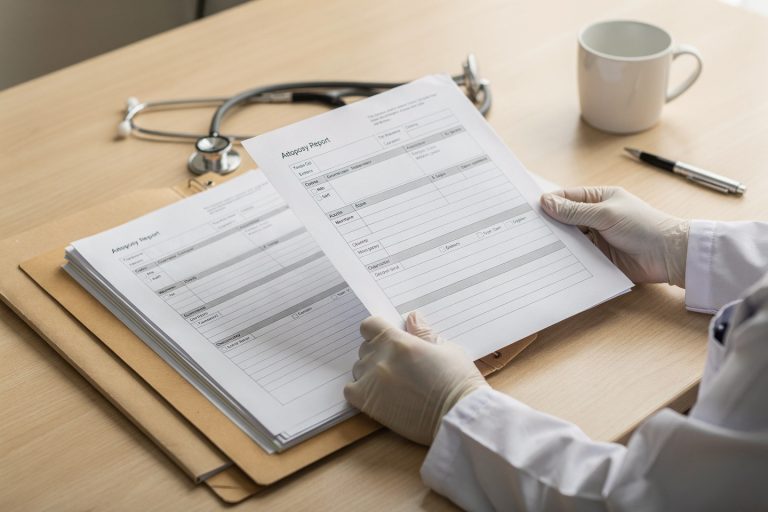
Concerned an autopsy report may be wrong? Learn what can be uncertain, what can be reviewed, and what families can ask next.
Wrong autopsy report concerns are understandable when a family sees details that do not match what was witnessed, what doctors said, or what a loved one experienced before death. An autopsy is a careful medical examination performed after death to understand disease, injury, and the cause of death. Most autopsy reports are thoughtful, evidence-based documents, but they can contain uncertainty, incomplete information, or conclusions that later deserve clarification.
For families, this can feel deeply unsettling. An autopsy report is not just another medical record; it may become part of a death certificate, insurance claim, legal matter, or family story. When the words feel wrong, the concern is not only technical. It is emotional, personal, and often tied to grief. A careful autopsy review can help separate understandable questions from true diagnostic problems.
What a Wrong Autopsy Report Really Means
A Wrong autopsy report does not always mean that a pathologist was careless or that the entire report is false. It may mean that one conclusion is incomplete, one phrase is unclear, or one listed cause of death does not fully fit the medical facts. Autopsy findings are interpreted using the body examination, medical history, hospital records, laboratory tests, imaging, and sometimes scene information. Like a complex puzzle, the final picture depends on how complete the pieces are.
Pathologists often distinguish between a factual observation and an interpretation. A factual observation might be an enlarged heart, pneumonia in the lungs, a blood clot, or a tumor. An interpretation connects those observations to the cause of death. For example, a heart may show chronic disease, but the pathologist still has to decide whether that disease actually caused death or was only a background condition. This is where a second look at autopsy findings can matter.
An autopsy is also different from a routine biopsy or surgical specimen, although many principles overlap. A biopsy usually asks, “What is this tissue?” while an autopsy often asks, “Why did this person die?” Families who want a foundation for medical report language may find What Is a Pathology Report? helpful because it explains how pathologists describe tissue and reach conclusions. A medical examiner report may also include legal categories, such as natural, accidental, homicide, suicide, or undetermined, which adds another layer beyond the medical diagnosis. Microscopic examination can support or challenge the initial gross findings seen during the autopsy.
Why Autopsy Conclusions May Be Unclear or Disputed

Autopsy conclusions can be disputed because death is sometimes the endpoint of several overlapping problems. A patient may have heart disease, infection, medication effects, cancer, and recent trauma at the same time. The pathologist must decide which finding was the immediate cause of death, which conditions contributed, and which findings were incidental. Autopsy findings can be accurate as observations while the final explanation remains open to discussion.
Some information may not be available when the first report is issued. Toxicology results may take weeks, and specialized testing can take longer. Microscopic examination may reveal pneumonia, myocarditis, emboli, cancer spread, or other changes not visible during the initial examination. If toxicology results later show a significant drug level, or if microscopic examination shows a missed infection, the original cause of death may need an addendum or amended interpretation.
The death certificate can also create confusion because it compresses a complex medical story into a short format. A death certificate may list the immediate cause of death, underlying causes, and contributing conditions, but it may not capture every important nuance in the autopsy narrative. A medical examiner report may use legal wording that feels blunt or incomplete to families. For example, “natural disease” can sound dismissive when the death felt sudden, even when the autopsy findings show severe coronary artery disease or another lethal condition. Careful reading of both the narrative report and the death certificate is often needed.
When a Wrong Autopsy Report Is a Serious Concern

A Wrong autopsy report concern becomes more serious when the report appears to contradict documented medical records, witnessed events, imaging results, or later laboratory data. Minor wording issues, typographical errors, or unclear phrasing may be upsetting but may not change the medical conclusion. More significant concerns include an unexplained mismatch between the listed cause of death and the autopsy findings, missing toxicology results, omitted major diagnoses, or a conclusion that ignores key clinical facts. In those situations, an autopsy review may provide meaningful clarity.
Some disagreements are about certainty. A report may say that the cause of death is “probable” or “consistent with” a condition because the evidence supports that conclusion but does not prove it absolutely. That language can feel unsatisfying, but it is often honest medical wording. A Wrong autopsy report is more likely when strong contradictory evidence exists, not simply when a conclusion is emotionally hard to accept. Pathology often deals in probabilities when the body shows several possible explanations.
There are also situations where the stakes are especially high. A disputed cause of death may affect genetic risk for relatives, life insurance, workplace claims, malpractice concerns, criminal investigations, or public health reporting. A medical examiner report may also influence whether a death is classified as natural, accidental, suicide, homicide, or undetermined. When the classification seems unsupported, the family can ask whether all records, toxicology results, and microscopic examination slides were considered. A focused autopsy review by an experienced pathologist can identify whether the concern is a documentation issue, an interpretation issue, or a true diagnostic discrepancy.
What Happens Next With Records, Review, and Amendment
The next step is usually to gather the complete record rather than relying on a single page or summary. Helpful documents often include the full autopsy report, death certificate, medical examiner report, hospital records, emergency medical services notes, imaging reports, laboratory results, and any addenda. If the case involved toxicology results, the final toxicology report should be obtained, not only a preliminary note. Families may also need to ask whether tissue blocks, glass slides, photographs, or retained specimens are available for review.
An autopsy review can be limited or broad. A limited review may answer one focused question, such as whether pneumonia was severe enough to contribute to death. A broader review may compare the entire medical history with the autopsy findings and the stated cause of death. When tissue remains available, microscopic examination slides may be re-reviewed by another pathologist. If retained tissue blocks exist, additional stains or testing may sometimes be possible.
If a genuine error or omission is found, the response depends on the institution and the type of case. A hospital autopsy report may receive an addendum or amendment. A medical examiner report may require a formal request to the office that issued it, and changes to the death certificate usually follow local rules. Families considering this path may find When Should You Get a Second Pathology Opinion? useful for understanding when review is most helpful. For practical steps, How to Get a Second Opinion on Your Pathology Diagnosis explains how records and materials are commonly requested.
Questions Families Can Ask the Pathologist or Medical Examiner

Families do not need to know medical terminology perfectly before asking questions. Clear, specific questions are often the best way to discover whether a concern reflects a misunderstanding, an incomplete report, or a potential error. The following questions can help guide a respectful, focused conversation:
- What specific findings support the listed cause of death?
- Were the final toxicology results available when the report was signed?
- Did microscopic examination confirm the main diagnosis or reveal additional disease?
- Which autopsy findings were considered incidental rather than fatal?
- Were hospital records, imaging reports, and medication history reviewed before the final opinion?
- Does the medical examiner report explain the manner of death separately from the medical cause?
- Can an autopsy review be requested if the family believes key facts were missed?
A respectful request for clarification is not an accusation. Pathologists and medical examiners understand that these reports carry enormous emotional and practical weight. Sometimes a short explanation resolves the concern. Sometimes the answer reveals that more information, such as records or slides, should be reviewed.
For families reading unfamiliar wording, Understanding Your Pathology Report: How to Read It with Confidence can help translate common report structure into plain language. In an autopsy setting, the same principle applies: separate what was seen, what was tested, and what was concluded. That approach makes the discussion calmer and more productive.
Frequently Asked Questions
Can an autopsy report be wrong?
Yes, an autopsy report can be wrong, incomplete, or later clarified, although many reports are accurate and carefully prepared. A Wrong autopsy report may involve the stated cause of death, omitted information, unclear wording, or a conclusion made before all testing was finalized. Some concerns are resolved by reviewing the full report and final addenda. Others may require a formal autopsy review.
How often are autopsy reports incorrect?
There is no single percentage that applies to every hospital, medical examiner office, or type of death. Errors and disagreements vary depending on case complexity, available records, testing, and whether later information becomes available. Autopsy findings are often reliable, but interpretation can be difficult when several diseases or injuries are present. A focused second review is most useful when there is a specific contradiction or missing piece of evidence.
Can toxicology change the cause of death?
Yes, toxicology results can change or refine the cause of death. A preliminary report may be issued before final testing is complete, especially when specialized drug testing is needed. If toxicology results show a lethal drug level, medication interaction, or absence of an expected substance, the interpretation may change. Families can ask whether the final toxicology report was included in the signed opinion.
What should I do if I disagree with an autopsy report?
The first step is to obtain the full autopsy report, any addenda, the death certificate, and the complete medical examiner report if one exists. A family can then list the specific statements that appear inconsistent with medical records, witnessed events, or testing. A Wrong autopsy report concern is strongest when it points to a concrete mismatch rather than a general feeling that the conclusion is wrong. An independent autopsy review can help determine whether the report should be clarified or challenged.
Can a second opinion change an autopsy report?
A second opinion can sometimes change an autopsy interpretation, especially when slides, tissue blocks, toxicology results, or medical records were incomplete or not fully considered. In other cases, the second opinion confirms the original cause of death but explains it more clearly. The reviewing pathologist may identify wording that should be clarified even if the main conclusion remains the same. Any formal amendment usually has to be made by the institution or office that issued the original report.
A suspected Wrong autopsy report deserves careful attention, not panic. Clear records, focused questions, and expert review can often separate grief-driven uncertainty from a true medical discrepancy. Honest Pathology consultations can help families understand autopsy language, identify the right questions, and decide whether further review is reasonable.
References:
National Cancer Institute — Autopsy
National Cancer Institute — Pathologist
National Cancer Institute — Pathology Reports Fact Sheet