Worried after an expert review? Pathology consultation results can change next steps. Learn what to expect and what to ask.
Waiting for another expert to review a pathology case can make an already stressful time feel even more uncertain. Pathology consultation results are the written opinion that explains whether another pathologist agrees with, refines, or changes the original diagnosis after reviewing slides, tissue blocks, images, or the pathology report. The goal is not to create confusion, but to make the diagnosis as accurate and useful as possible before major decisions are made about care.
Many patients worry that a consultation automatically means something is wrong, rare, or worse than expected. Often, it simply means the care team is being careful. Pathologists often view this as a safety step: one more set of trained eyes looking at the evidence before treatment moves forward.
What the Consultant Is Reviewing
These results are not a separate disease, stage, or test. They are an expert interpretation of tissue or cells that have already been removed and examined. It is similar to asking a second experienced mechanic to inspect the same engine before replacing a major part. The engine has not changed, but the interpretation may become clearer.
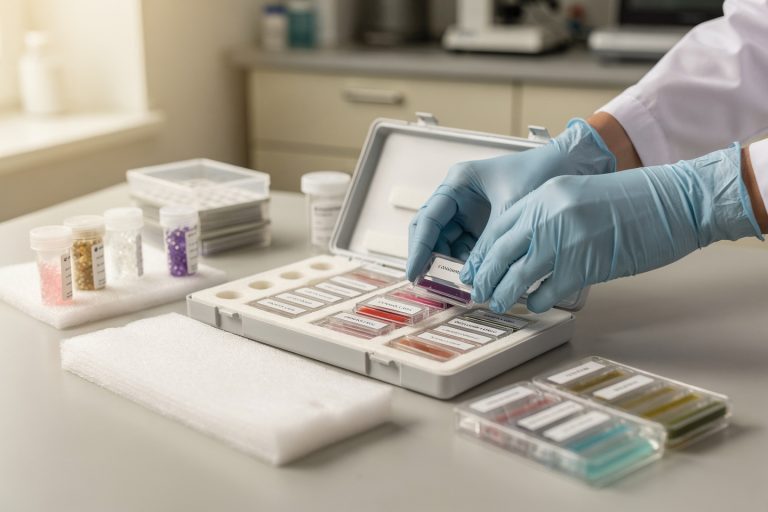
In the laboratory, a consultation often starts with the original pathology report, the microscopic glass slides, and sometimes the paraffin tissue block used to make new slides. If special stains, immunohistochemistry, or molecular tests were performed, those results may also be reviewed. A second pathology opinion may confirm the original diagnosis, add more detail, or recommend additional testing. A diagnosis review can be especially helpful when the finding is uncommon, borderline, or has major treatment implications.
Sometimes the answer is very straightforward: the consultant agrees completely with the first diagnosis. Other times, the consultant may adjust wording, grade, tumor type, margins, or other details that matter for care. For a foundation before reading any of this, start with What Is a Pathology Report?. Understanding the structure of a pathology report makes a consultation report much less intimidating.
Why a Case May Be Sent for Expert Review

A report may show a consultation because the original pathologist wanted another expert opinion, the treating doctor requested it, or the patient requested it. This is common in cancer diagnoses, rare tumors, unusual inflammatory conditions, and cases where the microscope findings do not perfectly match the clinical picture. The pathologist may review outside slides from another hospital or request additional material from the original laboratory. Those outside slides allow the consultant to see the actual tissue, not just the written summary.
During a diagnosis review, the consultant looks at the tissue pattern, cell appearance, special stains, and clinical context. The goal is to reach the most accurate final diagnosis possible. Sometimes the final diagnosis is unchanged, but the report adds details such as subtype, grade, margin status, or whether more testing is advised. In cancer care, even small wording differences in a pathology report can affect surgery, radiation, chemotherapy, immunotherapy, or surveillance.
Some consultations are discussed at a tumor board, where pathologists, surgeons, oncologists, radiologists, and other specialists review the case together. A tumor board is not a sign that the case is hopeless. It is a structured way to match the microscope findings with imaging, symptoms, and treatment options. If outside slides, molecular results, or prior biopsies are missing, the consultant may delay the final diagnosis until the full picture is available.
When a Consultation Can Affect Care
A consultation can be routine, reassuring, or very meaningful, depending on what the report says. The review itself is not the serious part; the content of the answer is what matters. A second pathology opinion that confirms the original diagnosis often gives the care team more confidence to proceed. In that situation, the main value is certainty, not a dramatic change.
The results become more important when the consultant changes the diagnosis, identifies a more aggressive pattern, finds a different tumor type, or recommends a different treatment plan. For example, a lesion first thought to be benign may be reclassified as borderline or malignant, or one cancer subtype may be changed to another subtype with different therapy. The reverse can also happen: a worrisome diagnosis may be softened, narrowed, or corrected after expert review. That is why a diagnosis review can protect patients from both undertreatment and overtreatment.
The impact also depends on timing and clinical context. If surgery is already scheduled, a changed final diagnosis may alter the operation or prompt a tumor board discussion. If treatment has not started, the consultation may help doctors choose the most appropriate treatment plan from the beginning. For patients who are unsure when a second pathology opinion makes sense, this patient guide may help: When Should You Get a Second Pathology Opinion?. A consultation may feel stressful, but it is often one of the strongest safeguards in complex medical care.
What Happens After the Review

After the consultation is complete, the consultant sends a written report to the ordering doctor, original pathologist, or institution that requested the review. The doctor should then explain whether the final diagnosis stayed the same, became more specific, or changed. If the consultant confirms the original pathology report, the treatment plan may continue as expected. If the report adds new details, the care team may adjust the plan carefully rather than starting over from scratch.
In some cases, the next step is additional testing. The consultant may recommend deeper tissue levels, more immunohistochemistry, molecular testing, or comparison with older biopsies. If outside slides were incomplete, the laboratory may request more slides or the original tissue block. These steps can feel slow, but they are often needed to avoid guessing.
The doctor may also bring the case to a tumor board, especially when treatment choices are complex. The treatment plan may involve surgery, medical therapy, radiation, observation, or repeat biopsy, depending on the diagnosis. If the second pathology opinion changes something significant, patients can ask exactly what changed and how that affects the next decision. For step-by-step help with the process, read How to Get a Second Opinion on Your Pathology Diagnosis.
Questions to Ask the Doctor or Pathologist
- Did the consultant agree with the original diagnosis, or did the final diagnosis change?
- What exact wording changed between the original pathology report and the consultation report?
- Does this diagnosis review affect the stage, grade, margins, or tumor type?
- Were all outside slides, tissue blocks, special stains, and prior biopsies available for review?
- Do the pathology consultation results change the treatment plan or surgery recommendation?
- Should the case be discussed at a tumor board before treatment begins?
- Is more testing needed, such as immunohistochemistry, molecular testing, or another biopsy?
These questions are not confrontational. They are practical, respectful ways to understand how the consultation affects care. If the language in the report feels dense, that does not mean a patient is failing; pathology reports are written for medical teams, not frightened patients reading them at midnight.
For help understanding the report line by line before an appointment, this may help: Understanding Your Pathology Report: How to Read It with Confidence. Patients can also ask whether the pathologist is available to clarify the diagnosis review. Many patients do not realize that pathologists can be part of the conversation, especially when the final diagnosis has major treatment implications.
Frequently Asked Questions
What happens after pathology consultation results come back?
After the consultant’s report is available, the doctor compares it with the original diagnosis and explains whether anything changed. If the reports agree, the care plan usually moves forward with added confidence. If they differ, the doctor may adjust treatment, request more testing, or bring the case to a tumor board. Patients should ask for a plain-language explanation of what changed and why it matters.
Can a pathology consultation change my diagnosis?
Yes. A pathology consultation can change the diagnosis, although many reviews confirm the original finding. Changes may involve tumor type, grade, margin status, stage-related information, or whether a process is benign or malignant. A second pathology opinion is most useful when the diagnosis is rare, borderline, or likely to affect treatment. The purpose is accuracy, not disagreement for its own sake.
How long does a pathology consultation take?
Many consultations take several days to two weeks, but the timing depends on slide transfer, tissue availability, additional stains, and case complexity. If outside slides or blocks are delayed, the review cannot be completed right away. Additional testing can also extend the timeline. Patients can ask which office is tracking the materials and when the final diagnosis is expected.
Do pathology consultation results mean cancer is worse?
No. A consultation report does not automatically mean the cancer is worse. It means another expert has reviewed the tissue and provided an opinion. Sometimes the result confirms the original pathology report, sometimes it adds detail, and sometimes it changes the diagnosis. The serious part is the specific conclusion, not the fact that a consultation happened.
Should I get another second pathology opinion?
Another second pathology opinion may be reasonable if the diagnosis is rare, the reports conflict, or the treatment plan carries major risks. It may also help if the report language remains unclear after the doctor explains it. Before requesting another review, patients should ask whether all outside slides, stains, and clinical information were available to the consultant. A focused question often leads to a better answer than simply repeating the same review.
For patients reading pathology consultation results and still feeling unsure, confusion is a normal response to specialized medical language. Honest Pathology consultations are available to help patients understand what a report says, what changed, and what questions to bring back to the care team. Clarity will not remove every worry, but it can help patients make the next decision with steadier footing.
References:
National Cancer Institute — Pathology Reports
NCI Dictionary of Cancer Terms — Pathologist
College of American Pathologists — Cancer Protocol Templates