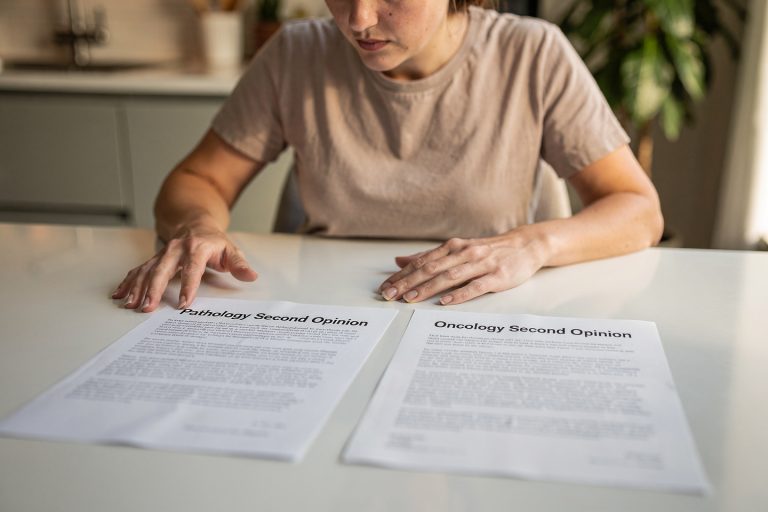
After receiving a cancer diagnosis, many patients immediately begin researching formal pathology second opinions at major cancer centers. Patients often look into institutions such as MD Anderson Cancer Center, Mayo Clinic, Memorial Sloan Kettering Cancer Center, or Cleveland Clinic because they want reassurance that their diagnosis is accurate before starting treatment. This reaction is completely understandable.
Cancer pathology reports contain highly technical terminology, and many patients receive these reports through online medical portals before anyone has had time to explain the findings clearly. Patients often become frightened by unfamiliar language and immediately assume they need another institution to review their slides. But before pursuing a costly and sometimes complicated formal pathology second opinion, patients should ask an important question: Do I truly think the diagnosis is wrong, or do I simply not understand the diagnosis yet?
At HONEST Pathology, we frequently speak with patients who initially planned to spend thousands of dollars obtaining formal second opinions, only to realize after a pathology consultation that the original diagnosis was actually straightforward and well-supported. What they needed most was clarity, not necessarily another diagnosis. That distinction matters because formal pathology second opinions can become expensive very quickly.
The Real Cost of Formal Cancer Second Opinions
Major cancer centers commonly charge several hundred dollars just for an outside slide review, and total costs may increase substantially if additional stains, molecular testing, physician consultations, imaging review, or multidisciplinary evaluations are added. MD Anderson Cancer Center publicly notes that outside pathology slide reviews begin at approximately $571 before any additional testing or studies are performed. In practice, many patients ultimately spend far more than that.
Comprehensive cancer second-opinion programs at major institutions may involve consultations with oncologists, surgeons, radiologists, and subspecialty pathologists. Depending on insurance coverage and network status, patients may face bills ranging from hundreds to several thousands of dollars. Some published estimates for second-opinion programs at institutions like Mayo Clinic suggest costs may range from roughly $500 to more than $2,500 depending on complexity and specialty involvement.
Travel expenses can add even more financial stress. Many patients travel across the country for second opinions, requiring airfare, hotels, transportation, missed work, and caregiver coordination. Even when virtual consultations are available, pathology slides often still need to be physically transferred and reviewed.
Does Insurance Cover Pathology Second Opinions?
Insurance coverage can help, but it is often more complicated than patients expect. Medicare generally covers second opinions for medically necessary procedures and cancer-related evaluations under Medicare Part B. Patients typically remain responsible for deductibles and approximately 20% coinsurance for outpatient physician services unless supplemental insurance helps cover those costs. Medicare Advantage plans may also cover second opinions, but network restrictions can significantly affect out-of-pocket expenses. Patients sometimes discover that out-of-network cancer centers or specialists are not fully covered, even when the second opinion itself is technically allowed under the plan.
Patients with Blue Cross Blue Shield often find that coverage depends heavily on the specific BCBS plan, employer contract, state regulations, and whether the consulting institution is considered in-network. Many Blue Cross Blue Shield plans do provide coverage for cancer second opinions, particularly when medically necessary, but deductibles, coinsurance, and referral requirements can still create significant out-of-pocket costs.
The same variability applies to UnitedHealthcare and Aetna plans. Some policies cover second opinions relatively generously, while others impose prior authorization requirements, referral restrictions, narrow provider networks, or higher costs for prestigious cancer centers that may fall outside standard networks. Patients are often surprised to learn that “covered” does not necessarily mean inexpensive.
Hidden Expenses Patients Often Overlook
Even when insurance contributes, patients may still be responsible for specialist consultation fees, pathology review charges, repeat testing, imaging, travel, and uncovered ancillary services. In some cases, insurance may cover the physician visit itself while additional pathology testing or slide review fees are billed separately.
There is also another reality that many patients do not initially consider: formal second opinions do not always change the diagnosis. In fact, many patients pursue second opinions because they are anxious, overwhelmed, or confused by medical terminology rather than because there is actual diagnostic uncertainty.
For example, a patient with breast cancer may become alarmed by language such as “invasive ductal carcinoma, grade 2, estrogen receptor positive, HER2 negative.” A colon cancer patient may panic after reading about lymph node involvement or lymphovascular invasion. A lung cancer patient may assume immunohistochemical markers or biomarker testing suggest uncertainty when they are actually standard parts of pathology evaluation. These reports can sound terrifying without explanation. Patients who are also frustrated by waiting for results may benefit from understanding some of the common reasons why a pathology report may be delayed before assuming something is wrong with their diagnosis.
How HONEST Pathology Helps Patients Gain Clarity
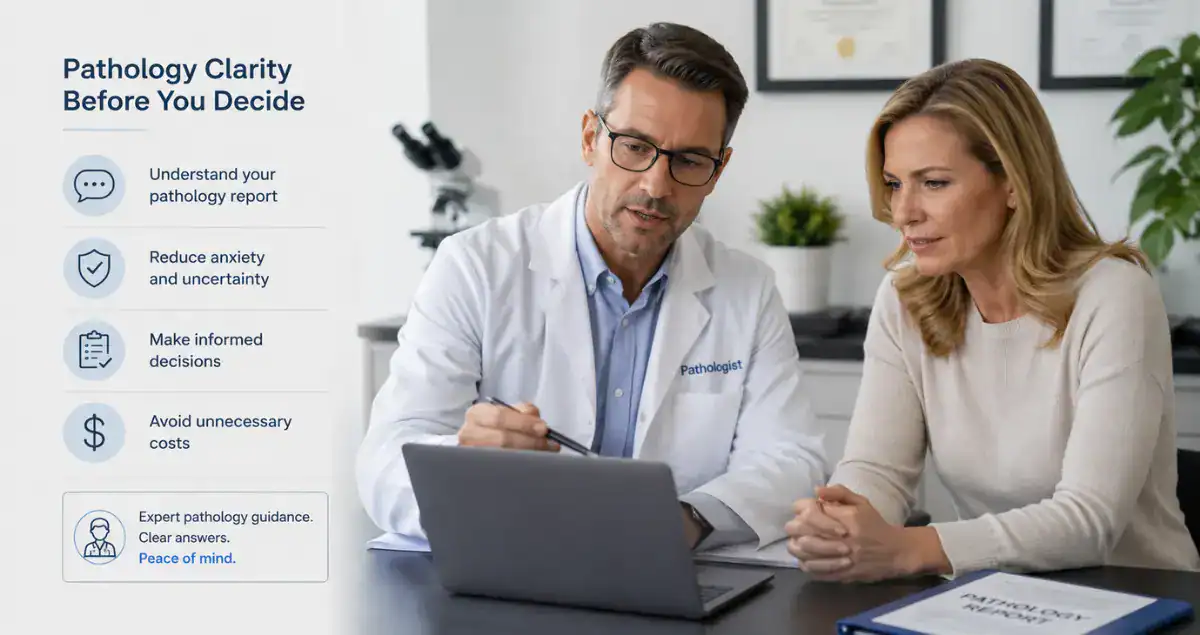
At HONEST Pathology, our consultations are designed specifically to help patients understand these findings clearly and affordably before immediately entering a costly second-opinion process. A pathology consultation at HONEST Pathology is not a formal second opinion. We do not issue a replacement diagnosis or reinterpret slides. Instead, we help patients understand the diagnosis they already have through our pathology consultation services. That difference is extremely important.
For many patients, understanding the pathology report more clearly provides the reassurance and peace of mind they were actually seeking all along. Patients often discover that what initially sounded frightening or uncertain is actually very standard pathology terminology. They learn what findings are routine, what findings truly matter clinically, and what questions are most important to ask their oncologist or surgeon. This approach is often substantially more cost effective than pursuing immediate outside slide review at a major cancer center.
Rather than spending thousands of dollars driven primarily by fear and confusion, patients can first gain clarity from a board-certified pathologist who explains the report in understandable language and helps determine whether additional formal review is genuinely warranted. Importantly, HONEST Pathology consultations can also help identify situations where a formal second opinion truly does make sense. Rare cancers, unusual tumor subtypes, conflicting pathology findings, borderline lesions, ambiguous biopsies, or discrepancies between imaging and pathology may absolutely justify additional review at a major institution. At HONEST Pathology, we believe patients deserve honest guidance about when second opinions are likely to add meaningful value and when patients may primarily need explanation, education, and context. That honesty matters.
Why Understanding Should Come First
Patients facing cancer diagnoses are already coping with emotional stress, treatment decisions, insurance concerns, scheduling pressures, and uncertainty about the future. Adding major financial burdens and administrative complexity without first understanding the pathology report can sometimes increase anxiety rather than relieve it. At HONEST Pathology, we believe understanding should come first. Patients deserve direct access to pathologists who can explain pathology terminology clearly, answer questions honestly, and help them feel more informed before making major decisions about additional testing or second opinions.
Formal pathology second opinions remain extremely valuable tools in complex or uncertain cases. But for many patients, the most effective and affordable first step is simply gaining a clearer understanding of the diagnosis they already have. If you have received a cancer pathology report and are considering an expensive formal second opinion, HONEST Pathology offers pathology consultations designed to help patients better understand their pathology findings, reduce anxiety, gain peace of mind, and determine whether additional formal review is truly necessary. Because sometimes peace of mind does not come from another diagnosis. Sometimes it comes from finally understanding the first one.