
When patients receive a cancer diagnosis, one of the first things they often do is search online for answers. They look up terms from their pathology report, try to understand staging language, and wonder whether they need a pathology second opinion. In many cases, patients are not actually questioning whether the diagnosis is correct. They are struggling to understand what the diagnosis means for them personally.
That is where a pathology consultation can help. At HONEST Pathology, one of the most important things we explain to patients is this: a pathology consultation is not designed to change a diagnosis. It is designed to help patients understand their pathology report, feel more informed about their condition, and become empowered participants in their medical care.
This distinction matters because many patients approach a pathology consultation believing that the purpose is to reinterpret their biopsy or overturn a diagnosis. That is not the role of the consultation service at HONEST Pathology. Instead, the consultation focuses on education, clarity, and communication.
Why Pathology Reports Can Feel Overwhelming
A pathology report contains some of the most important information in cancer care. It defines the diagnosis, identifies the type of cancer, measures how aggressive the tumor appears, and helps guide treatment decisions. However, pathology reports are written primarily for physicians. They are dense, technical, and often filled with terminology that can sound frightening or impossible to interpret without medical training.
Patients commonly read phrases like “invasive adenocarcinoma,” “poorly differentiated carcinoma,” “lymphovascular invasion,” “positive margins,” or “metastatic involvement of lymph nodes” and immediately assume the worst. Without context, every word can feel alarming.
At HONEST Pathology, our consultations are intended to bridge that gap between the technical language of pathology and the real-life questions patients actually have. We help patients understand what their pathology report means in practical, understandable terms so they can move forward with greater confidence and less confusion.
How a Consultation Helps Patients Understand Their Diagnosis
For example, a patient with breast cancer may receive a pathology report stating “invasive ductal carcinoma, grade 2, estrogen receptor positive, progesterone receptor positive, HER2 negative.” To an oncologist, this language provides essential treatment information. To a patient reading the report online late at night, it may feel overwhelming.
A pathology consultation helps explain what those terms actually mean. “Invasive ductal carcinoma” is the most common form of breast cancer. “Grade 2” refers to how the tumor cells appear under the microscope. Hormone receptor positivity often means the tumor may respond well to hormone-blocking therapies. HER2 status helps guide targeted treatment decisions.
The consultation does not replace the oncologist or surgeon. It does not create a new diagnosis. Instead, it gives the patient a clearer understanding of the diagnosis already made. That understanding is powerful.
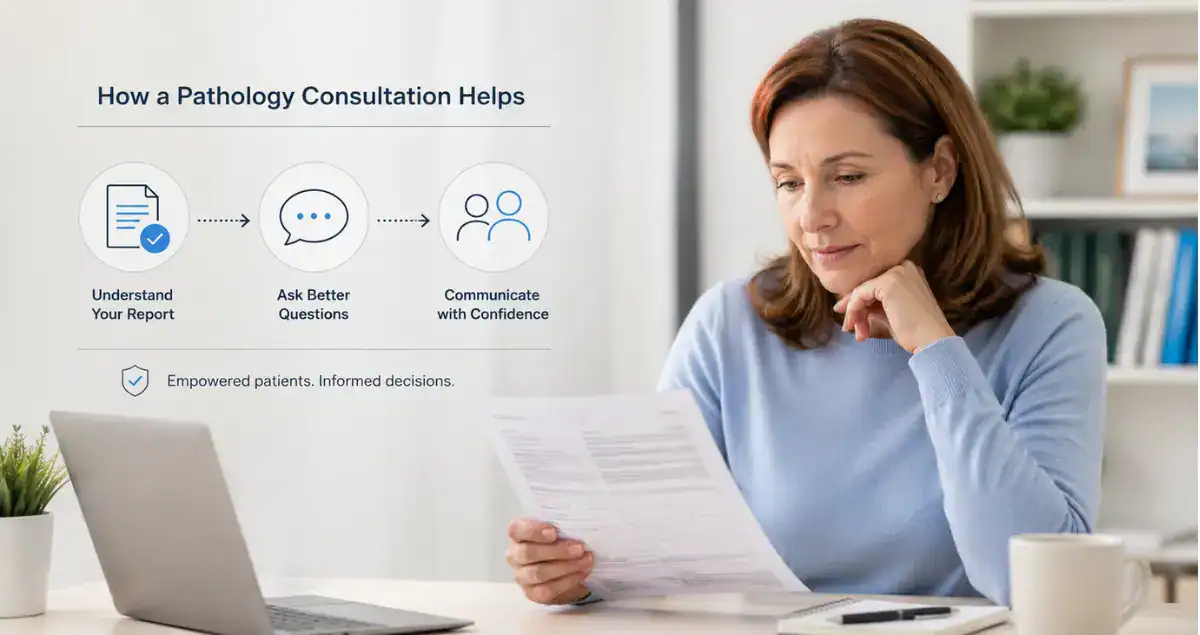
Helping Patients Feel More Prepared for Medical Appointments
Patients who understand their pathology reports are often better prepared for appointments with their healthcare teams. They know what questions to ask. They can follow discussions more easily. They feel less intimidated by medical terminology and more capable of participating in treatment conversations.
This empowerment is one of the core goals of HONEST Pathology’s consultation service. The purpose is not to disrupt the patient’s existing care team. The purpose is to support patients through education and explanation.
Many patients tell us that after a cancer diagnosis, appointments move very quickly. Surgeons discuss operations. Oncologists review chemotherapy options. Radiologists explain imaging findings. Patients are processing enormous amounts of emotional information while simultaneously trying to understand highly technical medical language.
Under those circumstances, it is very common for patients to leave appointments with unanswered questions. Some patients are embarrassed to ask for clarification. Others do not realize what questions they should even be asking. A pathology consultation can help identify targeted, practical questions that patients can bring back to their treating physicians.
Examples of Questions Patients May Learn to Ask
For example, a patient with colon cancer might learn during a consultation that their report mentions lymphovascular invasion or lymph node involvement. That understanding may help them ask their oncologist specific questions about staging, recurrence risk, or chemotherapy recommendations. A patient with lung cancer may learn that molecular testing is an important part of treatment planning and can then ask their oncology team whether additional biomarker testing is pending or recommended.
A breast cancer patient may better understand the significance of hormone receptor testing and ask informed questions about endocrine therapy or surgical planning. These conversations are incredibly valuable because patients who understand their diagnosis often feel more in control during a very uncertain time.
At HONEST Pathology, we believe pathology consultations improve communication between patients and their healthcare teams. They do not replace medical care. They strengthen the patient’s ability to engage with it.
Pathology Consultation vs. Pathology Second Opinion
One of the biggest misconceptions about pathology consultations is the belief that they are equivalent to formal pathology second opinions. They are not the same thing.
A pathology second opinion involves another pathologist reviewing the actual biopsy slides and potentially issuing a separate diagnostic interpretation. This may be appropriate when a diagnosis is uncertain, when findings are unusual, or when a rare tumor type is involved.
A pathology consultation at HONEST Pathology is different. The consultation is educational and informational. It focuses on helping patients understand pathology terminology, staging language, biomarker results, grading systems, and diagnostic concepts so they can better navigate their cancer journey through pathology consultation services.
That distinction is important because patients sometimes fear that if they seek clarification, they are somehow questioning or challenging their doctors. In reality, understanding your diagnosis is an essential part of modern patient-centered healthcare. Patients deserve to understand the information that is guiding life-changing medical decisions.
Why Clear Pathology Education Matters
Unfortunately, modern healthcare systems do not always create enough time for detailed pathology education. Many patients receive pathology reports automatically through online portals before they ever speak to a physician. They may spend hours searching online for answers and encounter confusing or misleading information.
Internet searches can quickly escalate anxiety because pathology terminology is often interpreted without context. A single phrase taken out of context can sound far worse than it actually is clinically.
At HONEST Pathology, we help patients place these findings into perspective. We explain what matters most, what terms are routine components of pathology reporting, and what topics patients may want to discuss further with their healthcare providers. This clarity often reduces fear dramatically.
Building Confidence Through Better Understanding
Patients frequently tell us that simply hearing a pathologist explain the report in plain language changes the way they experience their diagnosis. Instead of feeling overwhelmed by unfamiliar medical jargon, they begin to understand the structure and meaning of the report. That understanding creates confidence.
Empowered patients are often better advocates for themselves. They can participate more actively in treatment discussions, organize their questions more effectively, and communicate more comfortably with their physicians.
At HONEST Pathology, our goal is to make pathology more accessible and understandable for patients facing difficult diagnoses. We believe patients should not feel excluded from understanding the reports that shape their medical care. A pathology report should not feel like a foreign language. Patients deserve explanations that are compassionate, accurate, and understandable.
What a Pathology Consultation Can and Cannot Change
A pathology consultation will not change your diagnosis. What it can change is your understanding, your confidence, and your ability to participate meaningfully in conversations about your care. That knowledge can make an enormous difference during one of the most stressful periods of a patient’s life.
If you have received a pathology report and feel confused by the terminology, uncertain about what questions to ask, or overwhelmed by the complexity of your diagnosis, you may also wonder can pathology reports be wrong, while HONEST Pathology provides consultations designed to help patients better understand their pathology findings and communicate more effectively with their healthcare teams.
Because understanding your diagnosis is not about changing the pathology report. It is about helping you move forward with clarity, confidence, and informed questions.