When you receive a pathology report, it can feel overwhelming to decide what the next step should be. Many patients find themselves asking whether they need a second opinion, a consultation, or sometimes both. The truth is that these two options serve different purposes, and understanding the difference is key to making the right decision for your health journey.
At Honest Pathology, we regularly help patients navigate this exact question. In many cases, what patients need first is clarity and understanding through pathology consultation services, while in other situations a formal diagnostic review may also be appropriate.
This article will help you understand when each option is needed, whether you might benefit from both, and how to make a confident and informed decision.
Understanding the Purpose of a Pathology Consultation
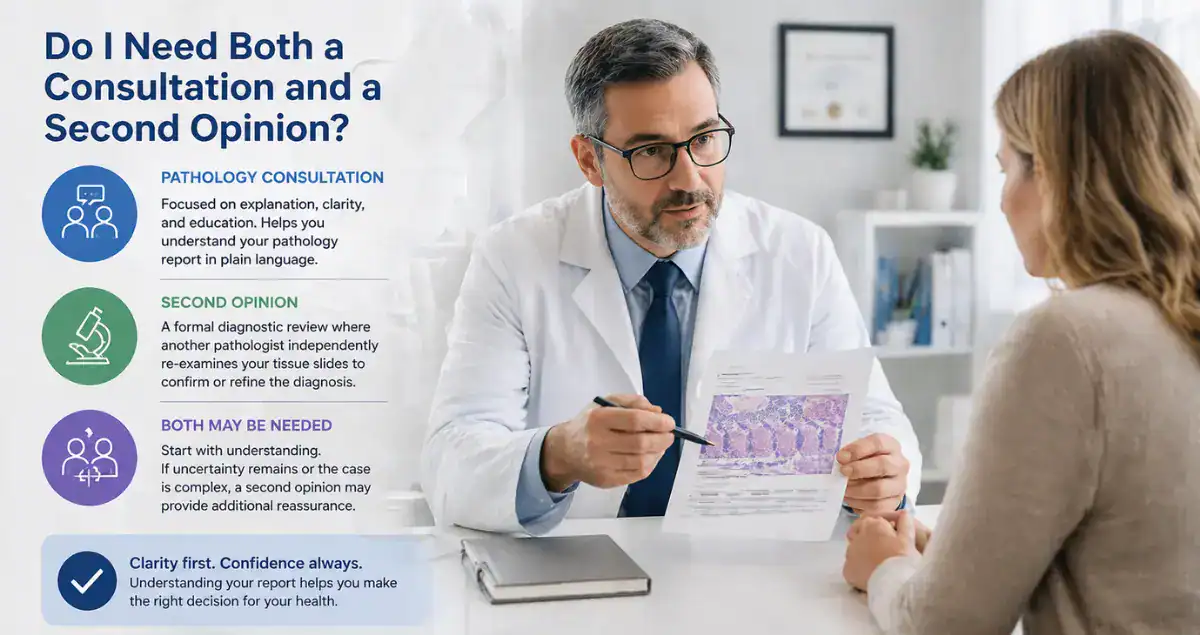
A pathology consultation is focused on explanation, clarity, and education. It does not involve re-examining tissue samples or changing a diagnosis. Instead, it helps you understand the contents of your pathology report in plain, accessible language.
Many patients struggle with medical terminology, unclear phrasing, or uncertainty about what their results actually mean. A consultation bridges that gap by providing a detailed interpretation from a board-certified pathologist.
At Honest Pathology, this process is designed to reduce confusion and help patients feel more confident about their diagnosis before deciding on any further steps.
What a Second Opinion Actually Means
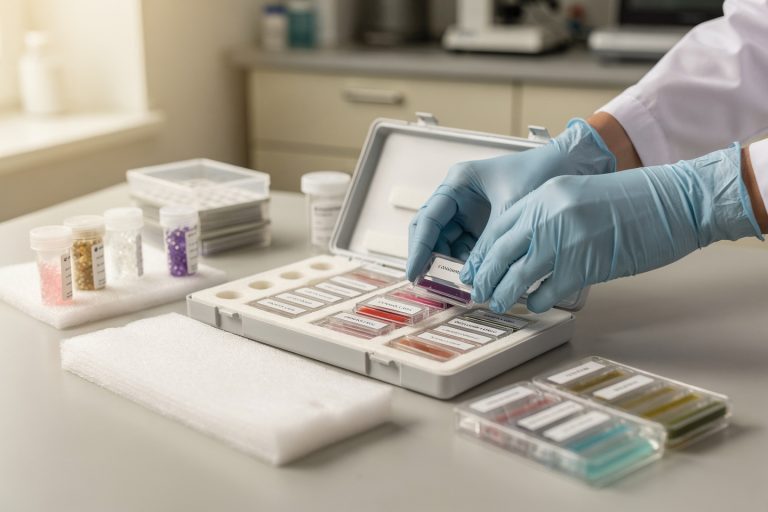
A second opinion is a formal diagnostic process where another pathologist independently reviews your original tissue slides. This is not about explanation—it is about re-evaluation of the diagnosis itself.
This process is typically used in more complex, rare, or high-stakes cases where there may be uncertainty about the accuracy or completeness of the original diagnosis.
If you are unsure about when this level of review is appropriate, resources such as when you need a second opinion can help clarify the situations where further diagnostic confirmation is recommended.
Do You Always Need Both?
In most cases, patients do not need both a pathology consultation and a second opinion. These services are designed for different stages of understanding and decision-making.
A consultation is usually the first step. It helps you understand your diagnosis clearly so you can determine whether anything about your report actually requires further review.
A second opinion is only necessary when there is genuine uncertainty in the diagnosis itself—not just confusion about the wording or meaning of the report.
However, there are situations where both may be useful, depending on complexity and patient concern.
When a Consultation Alone Is Enough
Many patients discover that a consultation is all they need. This is especially true when the diagnosis is already well-established but the language of the report feels difficult to understand.
In these cases, the issue is not accuracy but clarity. Once the report is explained in detail, most patients feel reassured and do not require further evaluation.
At Honest Pathology, we often see that once patients understand their report properly, their anxiety about needing a second opinion significantly decreases.
When a Second Opinion Alone May Be Enough
In some situations, patients already understand their report but are advised by their physician that a diagnostic re-evaluation is needed. In these cases, they may proceed directly to a second opinion without a separate consultation.
This typically happens when the clinical situation is complex or when treatment decisions depend heavily on microscopic interpretation of tissue.
Here, the focus is not on explanation but on confirming or refining the diagnosis itself.
When You Might Need Both
There are situations where both services can be valuable, especially in more complex or emotionally stressful diagnoses.
For example, a patient may first receive a pathology consultation to fully understand their report. This helps reduce confusion and provides clarity about what the diagnosis actually means.
After that, if uncertainty still remains about the accuracy of the diagnosis—or if the findings are particularly complex—a formal second opinion may be recommended.
In this sequence, the consultation acts as a foundation for informed decision-making, while the second opinion serves as diagnostic confirmation if needed.
The Value of Starting With Clarity
One of the most common mistakes patients make is going straight to a second opinion without first understanding their original report. This can lead to unnecessary stress, duplication of effort, and confusion when receiving multiple interpretations.
Starting with a consultation ensures that you fully understand your diagnosis before deciding whether additional testing is necessary.
Clear understanding often reveals that a second opinion is not required at all, or it helps you ask more precise questions if it is.
How Honest Pathology Helps You Decide
At Honest Pathology, our approach is centered on helping patients make informed decisions rather than rushing into additional procedures. We provide detailed explanations of pathology reports and help patients understand whether their situation is straightforward or complex.
This clarity often plays a critical role in deciding whether a second opinion is truly necessary or whether understanding alone is sufficient.
In many cases, patients feel reassured after a consultation and choose not to pursue further diagnostic review. In others, the consultation highlights specific areas where a second opinion may be beneficial.
Factors That Influence Your Decision
p>
Several factors can help determine whether you need a consultation, a second opinion, or both. One important factor is the complexity of the diagnosis, as more complex cases may require deeper review or additional clarification. Another key consideration is the clarity of the pathology report language, since reports that are difficult to interpret often benefit from a detailed explanation through a consultation.
The level of uncertainty about the findings also plays a significant role, as higher uncertainty may point toward the need for further review or confirmation. In addition, the impact of the diagnosis on treatment decisions is crucial, since more serious or treatment-defining results may require additional validation. Finally, recommendations from your treating physician can help guide whether a consultation, a second opinion, or both are appropriate.
Understanding these factors can help you avoid unnecessary procedures while ensuring that you get the level of clarity you actually need.
Why These Services Are Often Confused
Patients often assume that a consultation and a second opinion are interchangeable, but they are fundamentally different in purpose. One focuses on explanation, while the other focuses on diagnostic re-evaluation.
This confusion is understandable, especially since both involve pathologists and pathology reports. However, their roles in the diagnostic process are not the same.
Recognizing this difference is key to making the right decision for your care pathway.
Final Thoughts: Choosing the Right Path
Whether you need a pathology consultation, a second opinion, or both depends entirely on your individual situation. In many cases, starting with clarity through a consultation is the most effective first step.
At Honest Pathology, we focus on helping patients understand their pathology reports in a clear and meaningful way. This understanding often removes unnecessary uncertainty and provides a strong foundation for any further decisions.
When additional review is truly needed, that decision becomes much clearer once you fully understand your original diagnosis.
Ultimately, the goal is not to do more for the sake of it—but to do what is necessary, at the right time, for the right reason.