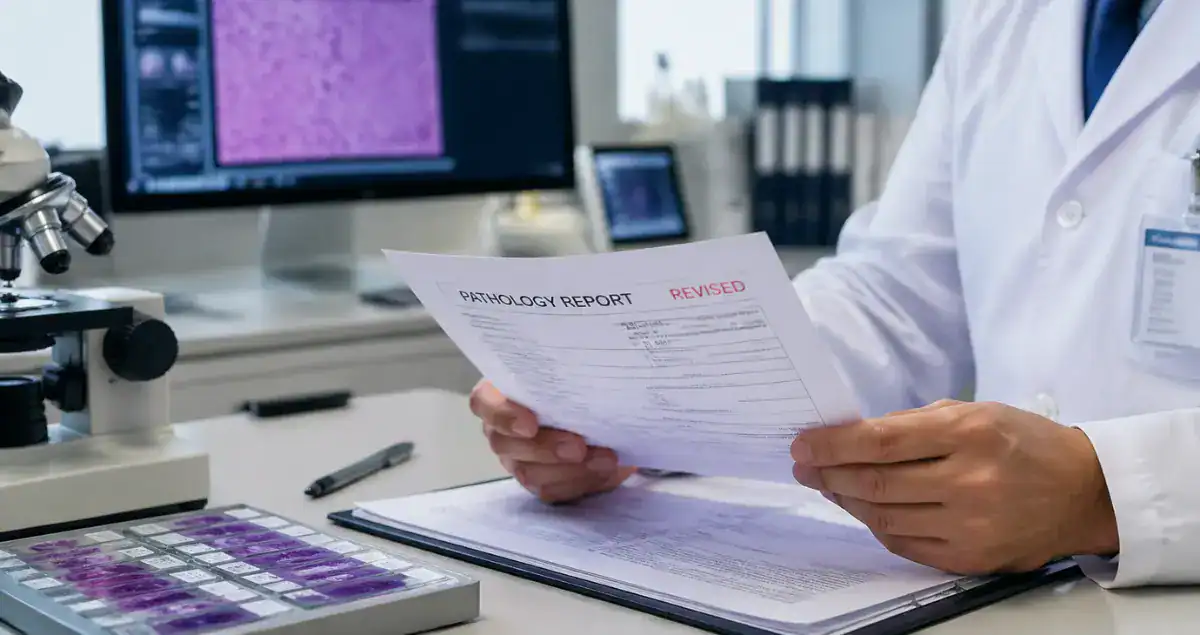
Getting a pathology report can already feel like a lot to process. So when you later learn that your report has been revised or amended, it can be confusing, unsettling, and sometimes even alarming.
Does it mean something was missed? Has your diagnosis changed? Do you need different treatment?
At Honest Pathology, we regularly work with patients who are navigating exactly this situation. A revised report is not uncommon, but understanding the amended pathology report meaning and what changed is absolutely critical. Without that clarity, it’s easy to misunderstand your diagnosis or miss important updates that could affect your care.
What Does It Mean When a Report Is Revised or Amended?
A revised or amended pathology report means that the original report has been updated after it was first issued.
This doesn’t automatically mean there was a major error. In many cases, updates happen because new information became available or additional analysis was completed after the initial report was finalized.
Pathology is a careful, step-by-step process. Sometimes, not all the answers are available at once. As more data comes in, the report may be updated to reflect a more complete or refined understanding.
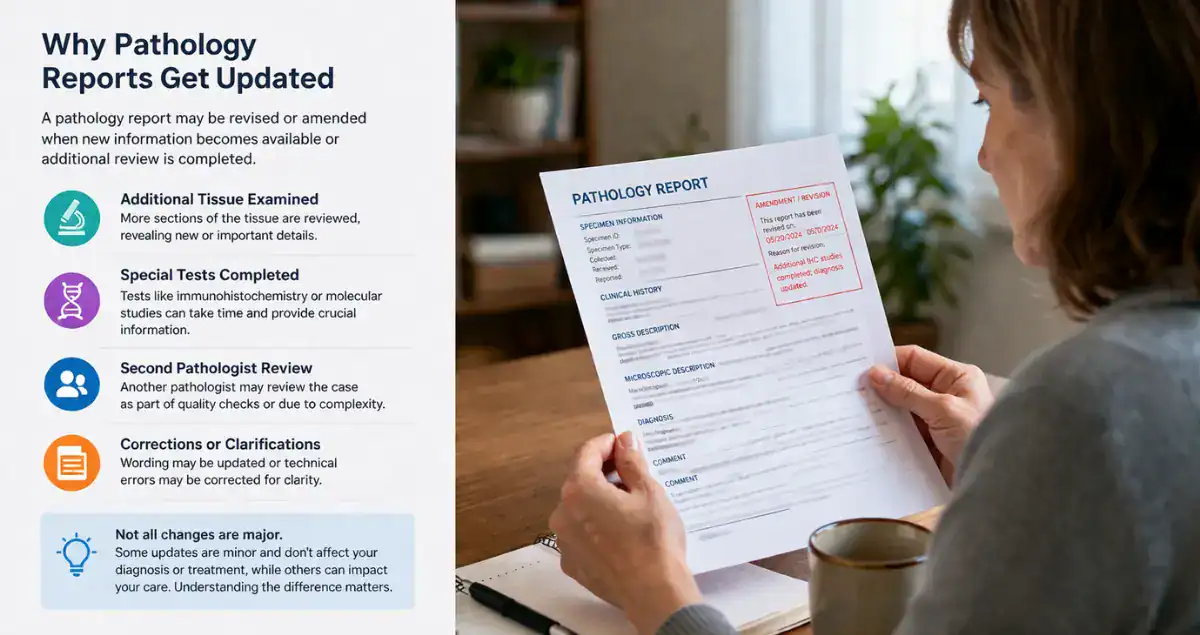
Why Reports Get Updated
There are several common reasons why a pathology report might be revised.
Sometimes additional sections of the tissue are examined after the initial diagnosis. This can reveal new details that weren’t visible in the first review.
In other cases, special tests—such as immunohistochemistry or molecular studies—take longer to complete. These tests can provide important information that leads to a more specific or accurate diagnosis.
A second review by another pathologist can also lead to updates. This might happen as part of routine quality checks or when a case is particularly complex.
Occasionally, a correction is made to clarify wording or fix a technical issue in the original report.
When the Changes Are Small—and When They’re Not
Not all revisions carry the same weight.
Some updates are minor and don’t affect your diagnosis or treatment. For example, a report might be amended to include additional descriptive details or clarify language without changing the overall conclusion.
Other revisions can be more significant. A diagnosis may be refined, reclassified, or expanded with new information. In some cases, staging details or margin status may be updated, which can directly influence treatment decisions.
The challenge is that, without guidance, it’s not always obvious which kind of change you’re looking at.
Why This Can Be So Confusing for Patients
Pathology reports are already complex. When a second version appears, it adds another layer of difficulty.
Many patients try to compare the two reports on their own, line by line, without fully understanding the terminology. Small wording changes can look more significant than they are, while important updates can be easy to overlook.
It’s also common to assume that any revision means something was “wrong” the first time. In reality, updates are often part of a normal, careful diagnostic process.
Still, the uncertainty can create stress—especially if you’re not sure how the changes affect your diagnosis or next steps.
What You Need to Pay Attention To
When a report is revised, the most important question is not just what changed, but what that change means for you.
Did the diagnosis itself change, or just the description?
Was new information added that affects staging or prognosis?
Does the update influence what your doctor might recommend next?
These are not always questions that can be answered by simply reading the report. They require context and explanation.
Why It’s Critical to Review Both Reports Carefully
This is not a situation where it’s enough to skim the updated version and move on.
Understanding the difference between the original and revised report is essential. Even small changes can have meaningful implications, and larger changes need to be clearly understood so you can make informed decisions about your care.
AAt Honest Pathology, we strongly encourage patients in this situation to consider a pathology report review with someone who can walk through both reports in detail. When you can clearly see what changed, why it changed, and how it affects you, the uncertainty becomes much more manageable.
The Questions Patients Are Really Asking
When a report is amended, most patients are trying to answer a few key questions, even if they don’t phrase them that way.
They want to know if their diagnosis is now different.
They want to know if their treatment plan needs to change.
They want to know if something important was missed the first time.
And most importantly, they want to feel confident that they understand what’s going on.
These are important questions, and they deserve clear, direct answers.
Turning Confusion Into Clarity
A revised pathology report is not just an update—it’s a moment that requires careful attention.
This is not the time to guess, assume, or try to interpret complex medical language on your own. The differences between reports need to be clearly explained so you can move forward with confidence.
At Honest Pathology, we help patients review both their original and revised reports together, translating the medical language into something understandable and meaningful. When you know exactly what changed and why, you’re better prepared to have informed conversations with your care team.
Don’t Navigate This Alone
If your pathology report has been revised or amended, it’s important to take that seriously—not with fear, but with attention.
Make sure you fully understand the differences between the reports and what they mean for your diagnosis and care. This is one of those moments where having the right guidance can make a significant difference.
Consider scheduling a consultation with Honest Pathology so you can review your reports in detail and feel confident about your next steps. Because when it comes to your health, clarity isn’t optional—it’s essential.