Reading a pathology report after a cancer diagnosis can feel overwhelming. The language is technical, the stakes are high, and even familiar words can carry very specific meanings that aren’t always obvious. For patients, common misunderstandings in breast, colon, and lung cancer pathology reports are completely understandable.
At Honest Pathology, we work with patients every day who are trying to make sense of their reports through clear pathology report explanation. What we often find is that the confusion isn’t about intelligence or effort—it’s about how complex and nuanced pathology language can be. Once these common misunderstandings are clarified, patients feel more confident and better prepared to move forward.
Why Pathology Reports Are So Easy to Misinterpret
Pathology reports are written for medical professionals, not patients. They are designed to be precise, detailed, and standardized, which can make them difficult to read without context.
Terms may sound alarming when they aren’t, or reassuring when they actually require more attention. A single word or phrase can carry a very specific meaning that doesn’t match how it’s used in everyday language.
This is especially true in cancer reports, where details about tumor type, grade, margins, and staging all play a role in determining what happens next.
Breast Cancer Reports: What Patients Often Misunderstand
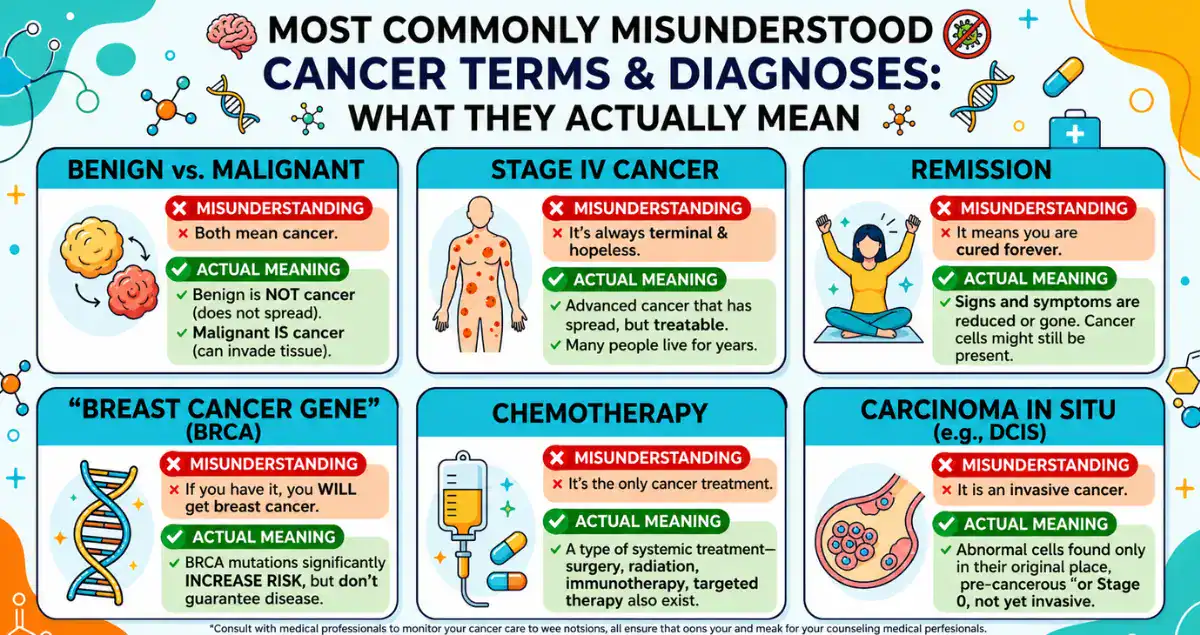
In breast cancer pathology, one of the most common areas of confusion is the difference between “in situ” and invasive cancer.
When a report describes something as “in situ,” it means the abnormal cells are confined to their original location and have not spread into surrounding tissue. Many patients see the word “carcinoma” and assume the worst, without realizing that “ductal carcinoma in situ” is an early, non-invasive condition with a very different outlook than invasive cancer.
Hormone receptor status is another area that raises questions. Terms like estrogen receptor positive or HER2 positive are critical for treatment decisions, but they are often misunderstood as indicators of severity rather than guides for therapy.
Margins are also frequently confusing. A “positive margin” does not mean something good—it means cancer cells are present at the edge of the removed tissue, suggesting that more treatment may be needed.
Colon Cancer Reports: Interpreting Depth and Spread
In colon cancer, one of the biggest sources of confusion is how the tumor is described in terms of depth.
Pathology reports often detail how far the tumor has grown into or through the layers of the colon wall. These descriptions are essential for staging, but they can be difficult to visualize. Patients may not realize that deeper invasion generally corresponds to a higher stage and may influence whether additional treatment is recommended.
Lymph node findings are another key area. A report might list how many lymph nodes were examined and how many contain cancer. Patients sometimes focus only on whether nodes are positive or negative, without understanding how the number of nodes involved affects staging and prognosis.
Terms like “well-differentiated” or “poorly differentiated” can also be misleading. These refer to how much the cancer cells resemble normal cells, not how “good” or “bad” the situation is in a general sense.
Lung Cancer Reports: Making Sense of Subtypes and Markers
Lung cancer pathology reports often include detailed classifications that can feel especially complex.
One common misunderstanding is around subtypes, such as adenocarcinoma versus squamous cell carcinoma. These are not just labels—they influence how the cancer behaves and how it is treated. Patients may not realize how important these distinctions are.
Molecular testing is another area where confusion is common. Reports may include information about genetic mutations or biomarkers that guide targeted therapy. These results can feel overwhelming, especially when they include unfamiliar names or abbreviations.
There is also often confusion about what has been fully removed versus what still needs to be addressed. As with other cancers, margin status and staging details are critical but not always easy to interpret without explanation.
Words That Don’t Mean What They Sound Like
Across all three types of cancer, certain words tend to cause consistent confusion.
The word “negative” is a good example. In everyday language, it sounds bad, but in pathology, a negative result often means that something concerning was not found. On the other hand, “positive” can indicate the presence of cancer or a marker that needs attention.
The term “atypical” can also be misunderstood. It doesn’t necessarily mean cancer, but it does indicate that something is not completely normal and may need further evaluation.
Even the word “consistent with” can raise questions. It means that the findings match a particular diagnosis, but it’s part of the careful, precise language pathologists use rather than a sign of uncertainty.
Why These Details Matter More Than You Think
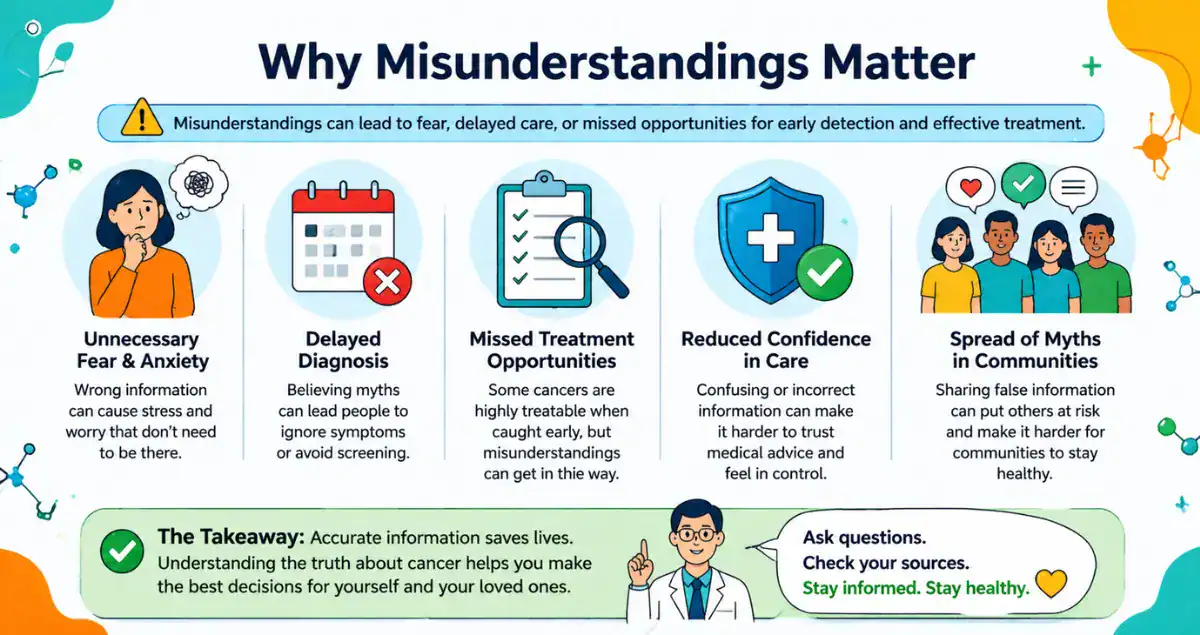
It’s easy to feel like the technical details in a pathology report are overwhelming or unnecessary, but they play a direct role in your care.
Treatment decisions, including surgery, chemotherapy, radiation, and targeted therapies, are often based on the specific features described in the report. Understanding these details can help you follow your treatment plan more confidently and ask more informed questions.
Without that understanding, it’s easy to feel disconnected from the decision-making process. That’s why learning how to read a pathology report carefully can make such a difference.
Getting Clear Answers Changes Everything
Many patients assume that once they receive their pathology report, they should be able to interpret it on their own. In reality, these reports are not designed to be self-explanatory.
That’s why taking the time to go through the report carefully can make such a difference.
At Honest Pathology, we help patients review their reports in plain language, focusing on what the findings actually mean for them. When you understand the terminology, the level of certainty, and how the pieces fit together, the entire experience becomes less overwhelming.
Moving Forward with Confidence
A pathology report is one of the most important documents in your care, but it doesn’t have to be a source of confusion.
By understanding the most common misunderstandings—whether it’s the meaning of margins, the role of staging, or the significance of specific markers—you can approach your diagnosis with greater clarity.
If you’re feeling unsure about your report, consider scheduling a consultation with Honest Pathology. Being informed, prepared, and confident in your understanding can help you take the next step with a clearer sense of direction and control.