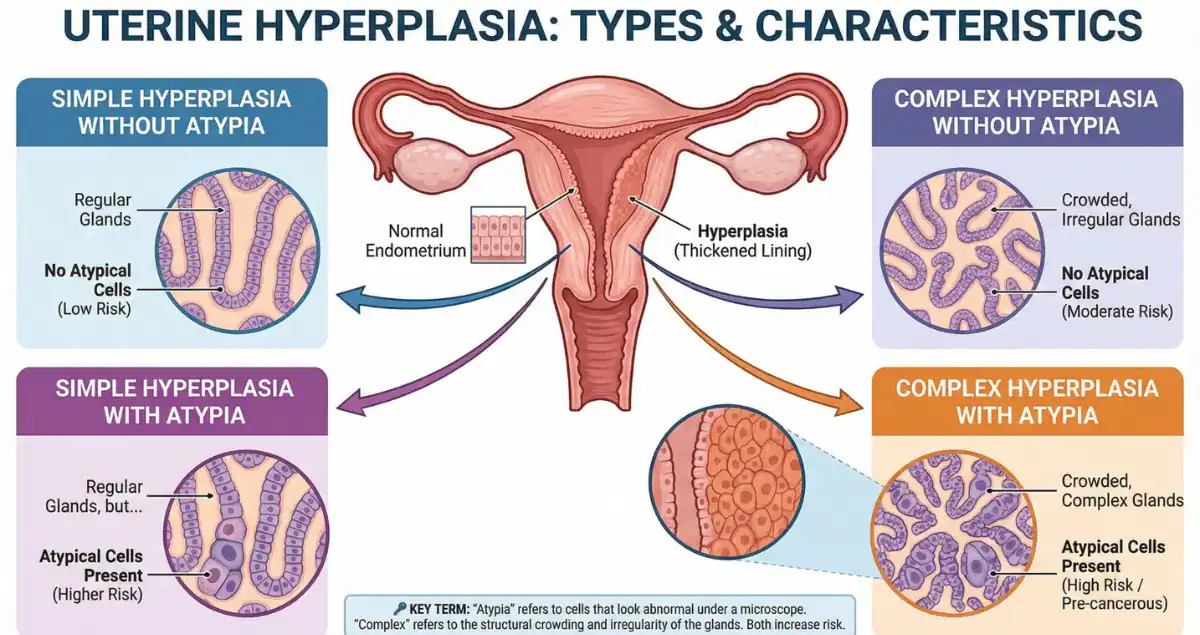
Uterine hyperplasia without atypia is a common condition in which the lining of the uterus, known as the endometrium, becomes thickened due to an increased number of glands. Importantly, while there is overgrowth, the cells themselves appear normal under the microscope. This distinction “without atypia” is critical and reassuring, as it means there are no precancerous cellular changes present.
This condition is most often related to hormonal imbalance, particularly excess estrogen without enough progesterone to counteract its effects. It is frequently diagnosed in women who experience irregular menstrual cycles, perimenopause, or conditions that affect ovulation.
Why Does Endometrial Hyperplasia Develop?
The endometrium is highly sensitive to hormones. Estrogen stimulates growth of the uterine lining, while progesterone stabilizes and helps shed it during menstruation. When estrogen is present without sufficient progesterone, the lining continues to grow, leading to hyperplasia.
This imbalance can occur in a variety of settings, including obesity, polycystic ovary syndrome, hormone therapy, or irregular ovulation. Over time, the persistent stimulation causes the glands within the endometrium to become crowded and increased in number.
A common question is whether this condition is preventable. While not all cases can be avoided, managing hormonal balance and underlying conditions can reduce risk.
What Are the Symptoms?
The most common symptom of uterine hyperplasia without atypia is abnormal uterine bleeding. This may include heavy periods, prolonged bleeding, spotting between cycles, or bleeding after menopause.
Some women may have minimal or no symptoms, and the condition is only discovered during evaluation for other concerns. Because abnormal bleeding can have many causes, further evaluation is often needed to determine the exact reason.
Patients frequently wonder whether abnormal bleeding always indicates something serious. While it should always be evaluated, many causes including hyperplasia without atypia are benign and treatable.
What Does It Look Like Under the Microscope?
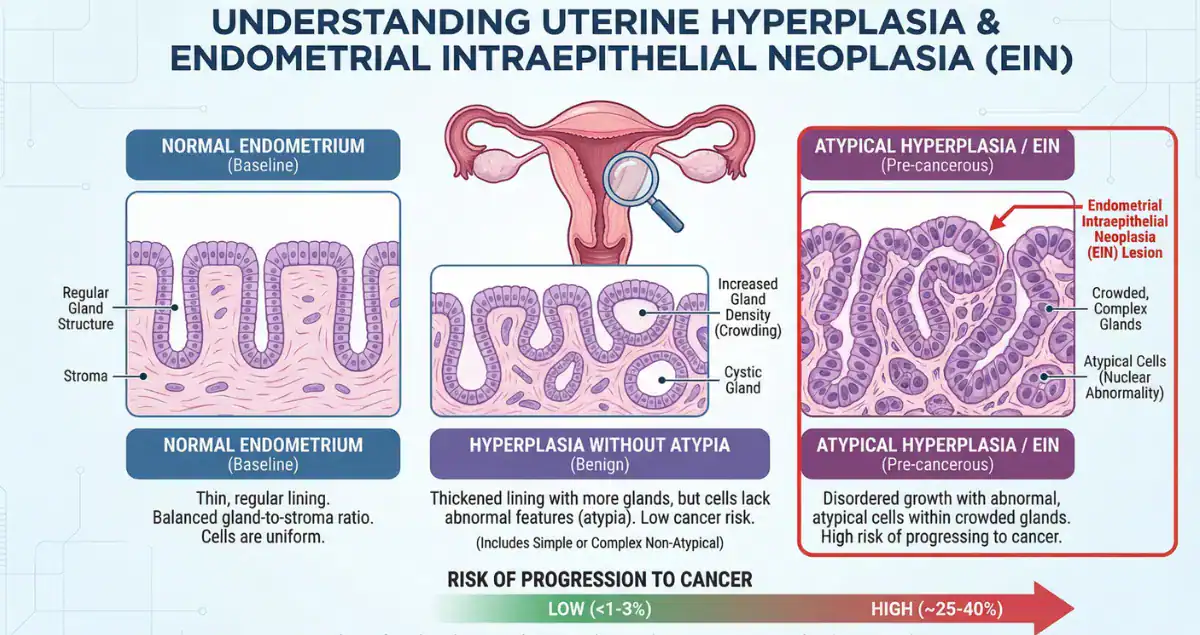
Histologically, uterine hyperplasia without atypia is defined by an increased number of endometrial glands relative to stroma. The glands may appear crowded and irregularly shaped, sometimes described as “back-to-back,” but the cells lining them remain cytologically normal.
The nuclei are uniform, without significant enlargement, irregularity, or abnormal mitotic activity. This absence of atypia is the key feature that separates this condition from more concerning forms of hyperplasia.
Pathologists carefully evaluate gland architecture and cellular features to ensure that no areas of atypia or early malignancy are present. This distinction directly impacts management and prognosis.
 Does Uterine Hyperplasia Without Atypia Turn Into Cancer?
This is one of the most important and frequently asked questions. The reassuring answer is that the risk of progression to cancer is very low.
Unlike hyperplasia with atypia, which carries a significant risk of developing into endometrial carcinoma, hyperplasia without atypia has a much lower likelihood of progression, especially when appropriately treated.
In many cases, the condition can regress with hormonal therapy, particularly with the use of progesterone. This helps counteract the effects of estrogen and allows the endometrium to return to a more normal state.
How Is It Diagnosed?
Diagnosis is made through sampling of the endometrial tissue, typically via endometrial biopsy or dilation and curettage. Imaging studies such as ultrasound may suggest thickening of the endometrium, but they cannot confirm the diagnosis on their own.
The biopsy allows pathologists to directly examine the tissue and determine whether hyperplasia is present and whether atypia is involved. This distinction is essential for guiding treatment.
Patients often ask whether the biopsy is necessary. Because treatment decisions depend heavily on the microscopic findings, tissue diagnosis is a key step in appropriate care.
What Is the Treatment?
Treatment for uterine hyperplasia without atypia usually focuses on correcting the hormonal imbalance. Progesterone therapy is the most common approach and can be administered in various forms, including oral medication, injections, or intrauterine devices.
Follow-up is important to ensure that the endometrium returns to normal. Repeat biopsy may be recommended to confirm resolution, particularly in patients with persistent symptoms.
Another common concern is whether surgery is required. In most cases, surgery is not necessary unless the condition does not respond to medical therapy or other risk factors are present.
Why Pathology Reports Can Be Confusing
Even though the diagnosis is generally reassuring, pathology reports often contain technical language that can be difficult to interpret. Terms like “glandular crowding,” “proliferative endometrium,” or “absence of atypia” may not be immediately clear to patients.
This can lead to unnecessary anxiety, especially when the word “hyperplasia” is associated with cancer risk in other contexts. Understanding the specific type of hyperplasia is crucial to putting the diagnosis into perspective.
Getting Clear Answers with Honest Pathology
This is where Honest Pathology can provide meaningful support. Honest Pathology specializes in translating complex pathology reports into clear, understandable explanations tailored to patients.
For uterine hyperplasia without atypia, this means helping patients understand why the findings are considered low risk, what the microscopic features indicate, and what steps may come next. This clarity can make a significant difference in how patients feel about their diagnosis and treatment plan.
Instead of trying to interpret unfamiliar terminology alone, patients can gain confidence in their results and better engage with their healthcare providers.
What This Means for Your Long-Term Health
Uterine hyperplasia without atypia is a common and treatable condition with an excellent prognosis. With appropriate management, most cases resolve without progressing to more serious disease.
The key is early recognition, accurate diagnosis, and proper follow-up. Understanding the role of hormones and the importance of monitoring helps ensure the best outcomes.
Moving Forward with Confidence
Hearing that there is an abnormality in the uterine lining can be unsettling, but uterine hyperplasia without atypia is one of the more reassuring diagnoses in gynecologic pathology.
With a low risk of cancer and effective treatment options available, most patients can expect a positive outcome. For those seeking a clearer understanding of their pathology report, Honest Pathology offers a trusted resource to turn complex information into meaningful insight.
Having the right information at the right time can make all the difference in moving forward with confidence and peace of mind.