Many patients worry when their doctor mentions possible kidney disease. The good news is that doctors can often diagnose and monitor kidney problems using simple blood and urine tests long before considering a kidney biopsy. These non-invasive tests give a clear picture of how well the kidneys are working, whether there is damage, and how quickly the condition may be progressing. While a biopsy remains the most detailed way to see exactly what is happening inside the kidney tissue, most patients start their journey with basic lab work and imaging. Honest Pathology offers expert pathology consultations that help patients understand both their initial test results and any later biopsy findings, empowering them to make informed decisions about their kidney health with clarity and confidence.
Blood Tests That Reveal Kidney Function
The two most important blood tests for detecting kidney disease are serum creatinine and estimated glomerular filtration rate (eGFR). Creatinine is a waste product made by muscles. Healthy kidneys remove it efficiently, so when creatinine rises in the blood, it usually means the kidneys are not filtering as well as they should. The eGFR is calculated from the creatinine level, age, sex, and race. It estimates how many milliliters of blood the kidneys are cleaning every minute. An eGFR above 90 is normal, while values between 60 and 89 suggest mild reduction, 30 to 59 indicate moderate chronic kidney disease, and below 30 signals more advanced disease. Doctors also check blood urea nitrogen (BUN), electrolytes, and complete blood count to look for anemia or mineral imbalances that often accompany declining kidney function. Patients frequently ask whether a single high creatinine level means permanent damage. A one-time elevation can result from dehydration, certain medications, or a recent illness, while persistently elevated levels point to ongoing kidney issues. These blood tests allow doctors to detect kidney disease early, often years before symptoms appear.
Urine Tests That Show Kidney Damage
Urine tests provide another simple window into kidney health. A basic urinalysis checks for blood, protein, glucose, and signs of infection. The presence of protein in the urine (proteinuria) is one of the earliest and most important signs of kidney damage, particularly when it involves albumin. Doctors often measure the albumin-to-creatinine ratio (ACR) on a spot urine sample. An ACR below 30 mg/g is normal, 30 to 300 mg/g indicates microalbuminuria (early damage), and above 300 mg/g shows significant proteinuria. A 24-hour urine collection is sometimes used for more precise measurement. Patients commonly wonder whether protein in the urine always means serious disease. Small amounts can appear after intense exercise, fever, or stress and may be temporary, but persistent proteinuria usually signals glomerular injury and warrants further evaluation. Urine tests also help detect blood (hematuria) that may come from glomeruli, stones, or infection. When combined with blood tests, urine studies give doctors a good sense of both kidney function and the presence of damage without needing invasive procedures.
Imaging Tests That Visualize the Kidneys
Ultrasound is the most common and safest imaging test for evaluating kidneys. It shows the size, shape, and texture of the kidneys and can detect cysts, stones, blockages, or scarring. Small, shrunken kidneys on ultrasound often indicate long-standing chronic kidney disease, while normal-sized or enlarged kidneys may suggest more acute or reversible problems. Doppler ultrasound can assess blood flow to the kidneys. CT scans or MRI provide more detail when needed, especially to look for tumors, complex cysts, or vascular issues, though they are used more selectively due to radiation or contrast risks. Patients often ask whether a normal ultrasound means their kidneys are fine. A normal ultrasound is reassuring but cannot detect early microscopic damage inside the glomeruli, which is why blood and urine tests remain essential. Imaging complements lab work and helps rule out structural problems that do not require a biopsy.
Putting the Pieces Together: Non-Invasive Diagnosis of Kidney Disease
Doctors usually diagnose and stage chronic kidney disease using a combination of eGFR, urine albumin, and clinical history without needing a biopsy. For example, a patient with diabetes and persistent microalbuminuria plus a reduced eGFR can be diagnosed with diabetic kidney disease based on these tests alone. Similarly, long-standing high blood pressure with gradual decline in eGFR and mild proteinuria often points to hypertensive nephrosclerosis. In many cases these non-invasive findings are enough to start treatment with blood pressure medications, ACE inhibitors or ARBs, SGLT2 inhibitors, and lifestyle changes. Patients frequently wonder why a biopsy is not done immediately. The answer is that biopsies carry small risks such as bleeding, and they are reserved for situations where the cause is unclear, the disease is progressing rapidly, or specific treatment decisions depend on the exact microscopic pattern. Honest Pathology helps patients understand how their blood and urine results fit together and when a biopsy might add important information.
When a Kidney Biopsy Is Still Necessary
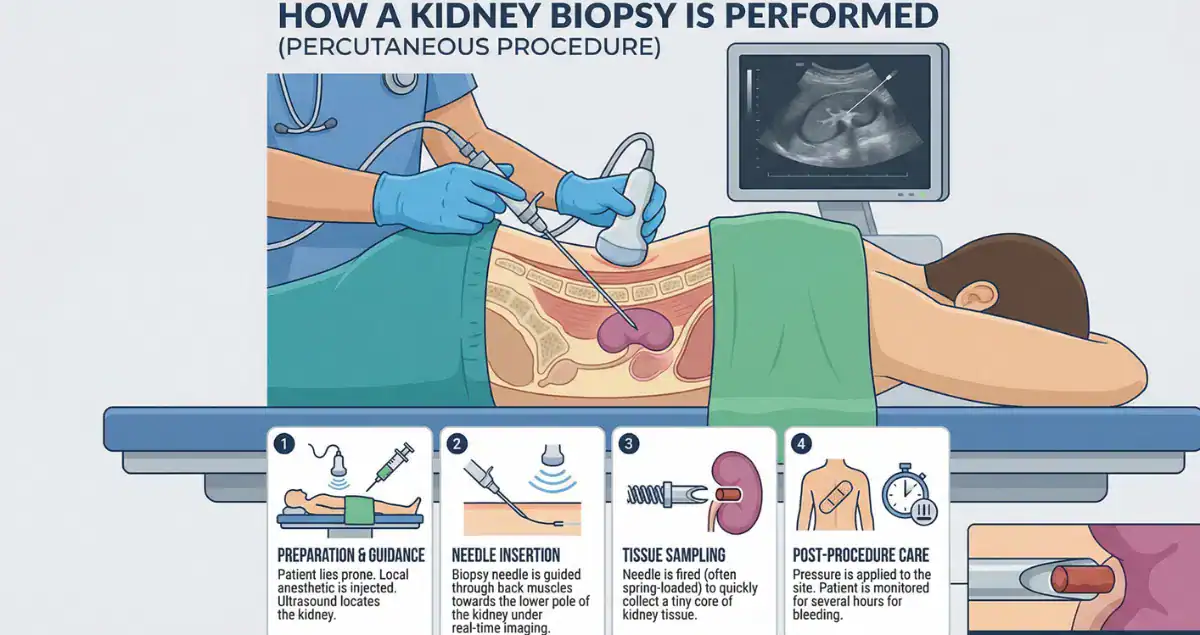
Although many kidney problems can be diagnosed without a biopsy, certain situations make the procedure valuable. A biopsy is typically recommended when the cause of kidney disease is unknown, kidney function is declining quickly, there is significant blood or protein in the urine without an obvious explanation, or the patient has systemic symptoms suggesting diseases like lupus or vasculitis. It is also useful when doctors need to confirm a specific type of glomerulonephritis before starting strong immunosuppressive medications. In these cases, the biopsy provides details that blood and urine tests cannot, such as the exact pattern of glomerulosclerosis, inflammation, or immune deposits. Patients often ask whether a biopsy is painful or dangerous. The procedure is done with local anesthesia and ultrasound guidance, and serious complications are uncommon (less than 5 percent). Honest Pathology consultations prepare patients for biopsy by explaining what the procedure involves and how the results will guide treatment.
How Honest Pathology Helps Patients Understand Their Kidney Test Results
Blood, urine, and imaging results can still feel confusing even when no biopsy has been done. Honest Pathology offers clear consultations that explain what an elevated creatinine, reduced eGFR, or protein in the urine actually means for kidney function and future risk. When a biopsy is eventually performed, the same experts review the slides and connect the microscopic findings back to the earlier non-invasive tests, giving patients a complete picture of their disease. This continuity helps individuals understand why certain medications or lifestyle changes are recommended and what they can realistically expect for their kidney health over time.
Kidney disease can often be detected and managed effectively using simple blood and urine tests along with ultrasound long before a biopsy is considered. These non-invasive tools allow doctors to identify problems early, estimate how well the kidneys are working, and guide initial treatment. While a biopsy provides the most detailed information in complex or rapidly progressing cases, most patients begin their journey with straightforward lab work that gives valuable answers. Through expert pathology consultations, Honest Pathology ensures patients receive clear explanations of both their initial test results and any later biopsy findings, empowering them to participate actively in protecting their kidney health with knowledge and confidence.