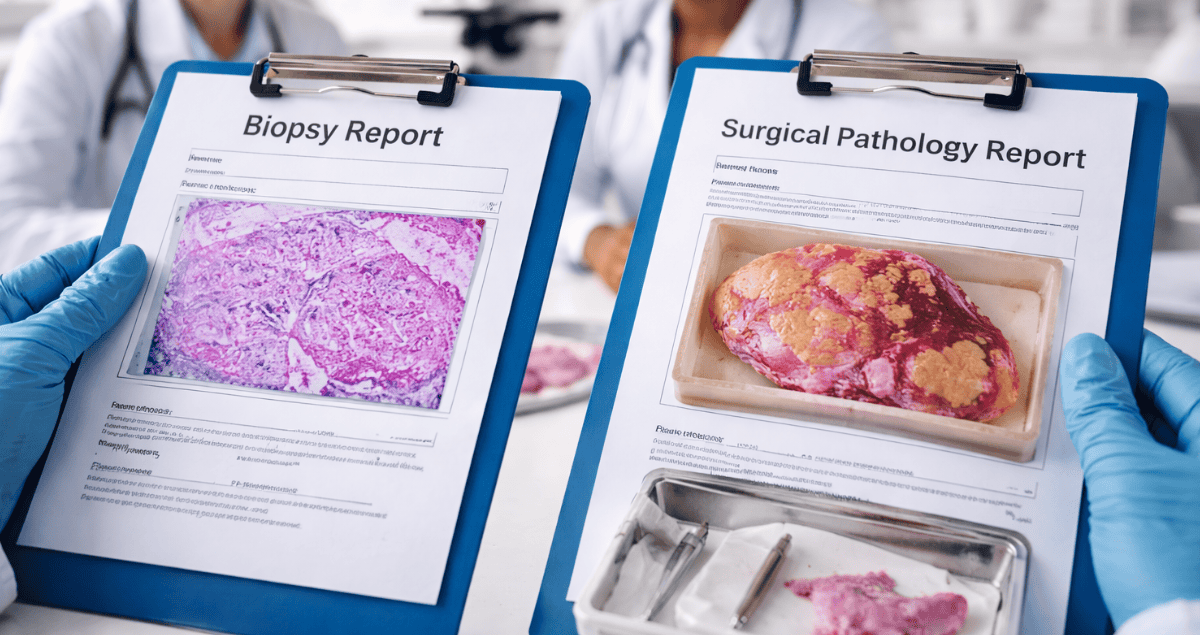
For many people diagnosed with breast cancer, the diagnostic journey begins with a biopsy and continues with surgery. When the pathology report from surgery differs from the original biopsy report, it can be confusing and unsettling. Patients may wonder whether a mistake was made or whether their cancer has changed. In reality, differences between biopsy and surgical pathology results are not uncommon in breast cancer and usually reflect the complexity of the disease and the limitations of sampling. Understanding why these differences occur can help patients make sense of their reports and feel more confident in their care.
The Purpose of a Breast Biopsy
A breast biopsy is performed to determine whether an abnormal area seen on imaging or felt on exam is cancerous. Using a needle or small surgical device, a limited sample of tissue is removed and examined by a pathologist. The goal is to establish a diagnosis and gather enough information to plan next steps in care.
Because biopsies sample only a small portion of the lesion, they are designed to answer key questions efficiently rather than provide a complete picture of the entire tumor.
What Surgical Pathology Examines
Surgical pathology, by contrast, evaluates a much larger amount of tissue. After a lumpectomy or mastectomy, the pathologist can examine the full tumor, surrounding breast tissue, and lymph nodes. This broader view allows for more precise assessment of tumor size, margins, grade, and additional features.
Because surgical pathology has access to more tissue, it often provides more detailed and definitive information than a biopsy alone.
 Sampling Differences Between Biopsy and Surgery
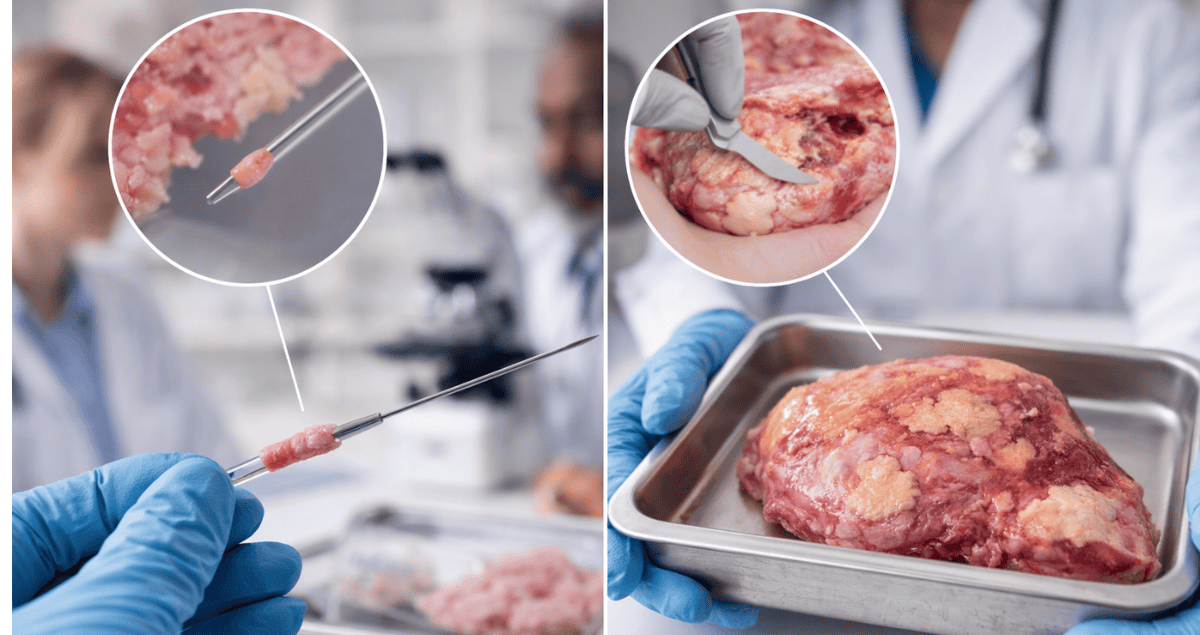
One of the most common reasons biopsy and surgical results differ is sampling. Breast tumors can be heterogeneous, meaning different areas of the tumor may look or behave differently. A biopsy captures only a small fragment, which may not represent the entire tumor.
For example, a biopsy may sample a lower-grade area of a tumor, while the surgical specimen reveals higher-grade features elsewhere. Alternatively, certain patterns such as invasive components or in situ disease may be present in areas not sampled by the biopsy.
Changes in Tumor Size and Extent
Tumor size is often estimated on biopsy and imaging but measured more accurately in surgical specimens. It is not unusual for the tumor size reported after surgery to be larger or smaller than expected based on biopsy findings.
This difference does not mean the tumor grew rapidly between procedures. Instead, it reflects the ability to see and measure the entire tumor once it has been removed.
Differences in Tumor Type or Grade
In some cases, the tumor type or grade may change between biopsy and surgical pathology. A biopsy might show ductal carcinoma in situ, while surgery reveals invasive carcinoma. Conversely, invasive cancer seen on biopsy may be less extensive than anticipated on surgical examination.
Tumor grade may also be upgraded or downgraded after surgery. Grading is based on evaluating multiple microscopic features across the tumor, which is more reliable when more tissue is available.
Hormone Receptor and HER2 Differences
Breast cancer treatment often depends on hormone receptor status and HER2 expression. These markers are usually tested on biopsy tissue, but results may occasionally differ in the surgical specimen.
Technical factors, tumor heterogeneity, and differences in tissue processing can all contribute. When discrepancies occur, clinicians typically rely on the most representative or clinically relevant result, sometimes repeating testing to clarify findings.
The Role of Pre-Surgical Treatment
If a patient receives treatment before surgery, such as chemotherapy or hormone therapy, pathology results may differ significantly from the initial biopsy. Tumors can shrink, change appearance, or even show no residual cancer in the surgical specimen.
These changes reflect treatment response rather than diagnostic error and are important for assessing how well the therapy worked.
Why Differences Do Not Usually Mean a Mistake
It is natural to worry that differing pathology reports indicate an error. In most cases, differences between biopsy and surgical pathology reflect increased information rather than incorrect interpretation.
Pathologists make careful, evidence-based diagnoses using the tissue available at each stage. As more tissue becomes available, the diagnosis may be refined or expanded to reflect a fuller understanding of the disease.
How Differences Affect Treatment Planning
When surgical pathology provides new or updated information, treatment plans may be adjusted accordingly. This could involve changes in recommendations for chemotherapy, radiation, or hormone therapy.
Rather than undermining care, these adjustments help ensure that treatment is tailored to the most accurate and complete information available.
When Expert Pathology Review Can Be Helpful
If biopsy and surgical results differ in ways that affect treatment decisions or cause concern, expert pathology review can provide clarity. An independent review can confirm findings, explain discrepancies, and ensure that all relevant features have been evaluated.
This can be especially valuable in complex cases or when results are unexpected.
What Patients Can Ask Their Care Team
Patients who notice differences between biopsy and surgical pathology reports can ask why the results changed, what new information was discovered, and how it influences treatment recommendations. These conversations can help transform confusion into understanding.
Being informed allows patients to participate more confidently in decisions about their care.
Understanding the Bigger Picture
Differences between biopsy and surgical pathology results in breast cancer reflect the evolving nature of diagnosis as more information becomes available. Rather than signaling a problem, these differences often represent a deeper and more accurate understanding of the disease.
For patients seeking clarity about breast cancer pathology or reassurance when reports differ, Honest Pathology offers independent expert pathology review with clear, patient-centered explanations. Their focus is on helping patients understand their diagnosis and feel confident as they move forward with care.