Many patients believe a pathology report is a fixed document, written once and never changed. So when an addendum appears days or weeks after a report is finalized, it can be unsettling. Some wonder whether something was missed, whether the diagnosis has changed, or whether they should be worried. In most cases, addendums are not red flags. They are signs of a careful, transparent diagnostic process.
Understanding why addendums are issued can help patients and clinicians interpret them with clarity rather than concern.
What a Pathology Addendum Is
An addendum is an official update added to a pathology report after the initial diagnosis has been issued. It becomes part of the permanent medical record and is linked directly to the original report. Addendums do not replace the original diagnosis. They expand on it.
Pathology addendums exist because not all diagnostic information is available at the same time. Some results take longer to generate, and others only become relevant after further review.
Why All Results Are Not Ready at Once
Pathology involves multiple layers of testing. While routine microscopic examination can often be completed quickly, additional studies such as immunohistochemistry, special stains, and molecular tests require more time. These tests involve multiple steps, quality controls, and careful interpretation.
Rather than delay the entire report, pathologists often issue a diagnosis when sufficient information is available and clearly indicate that additional results will follow. When those results are ready, they are documented as addendums.
Common Reasons Addendums Are Issued
One of the most common reasons for an addendum is the return of ancillary test results. Immunohistochemical stains may confirm the cell type or origin of a tumor. Molecular testing may identify mutations that influence prognosis or therapy. These results refine the diagnosis rather than contradict it.
Addendums may also be issued when deeper tissue sections are reviewed. Additional levels can reveal features not seen on the initial slides, particularly in small or fragmented biopsies.
Occasionally, addendums reflect further correlation with clinical information or imaging that clarifies interpretation. As context improves, so does diagnostic precision.
Do Addendums Mean the Original Diagnosis Was Wrong?
In most cases, no. Addendums usually provide additional detail, not correction. They may confirm a suspected diagnosis, provide prognostic information, or add classification details that were not initially available.
True diagnostic changes are uncommon and are handled transparently, often labeled as amendments rather than addendums. Clear documentation is part of maintaining trust in the medical record.
Why Pathologists Do Not Wait for Every Test
Waiting for every possible test before issuing a report can delay important care decisions. Clinicians often need timely information to plan treatment, discuss options, or reassure patients.
Issuing a report with planned addendums balances timeliness with completeness. It allows care to move forward while acknowledging that more information is forthcoming.
How Addendums Affect Treatment
In many cases, addendums do not change immediate treatment plans. They may confirm eligibility for certain therapies, provide additional prognostic insight, or guide future decisions.
Occasionally, an addendum does influence management. When this happens, clinicians incorporate the new information into ongoing care. Medicine is adaptive by nature.
Why Addendums Are a Sign of Transparency
Addendums reflect a willingness to document evolving understanding rather than presenting pathology as static or infallible. They show that the diagnostic process is responsive to new information and committed to accuracy.
This transparency protects patients from both overconfidence and undercommunication.
How Patients Often React to Addendums
Patients may interpret addendums as evidence that something was missed or corrected. Without explanation, this reaction is understandable. Clear communication helps patients see addendums for what they usually are: completion of the diagnostic picture.
Asking what the addendum adds, rather than what it fixes, can reframe the experience.
Addendums add information. Amendments correct or ch
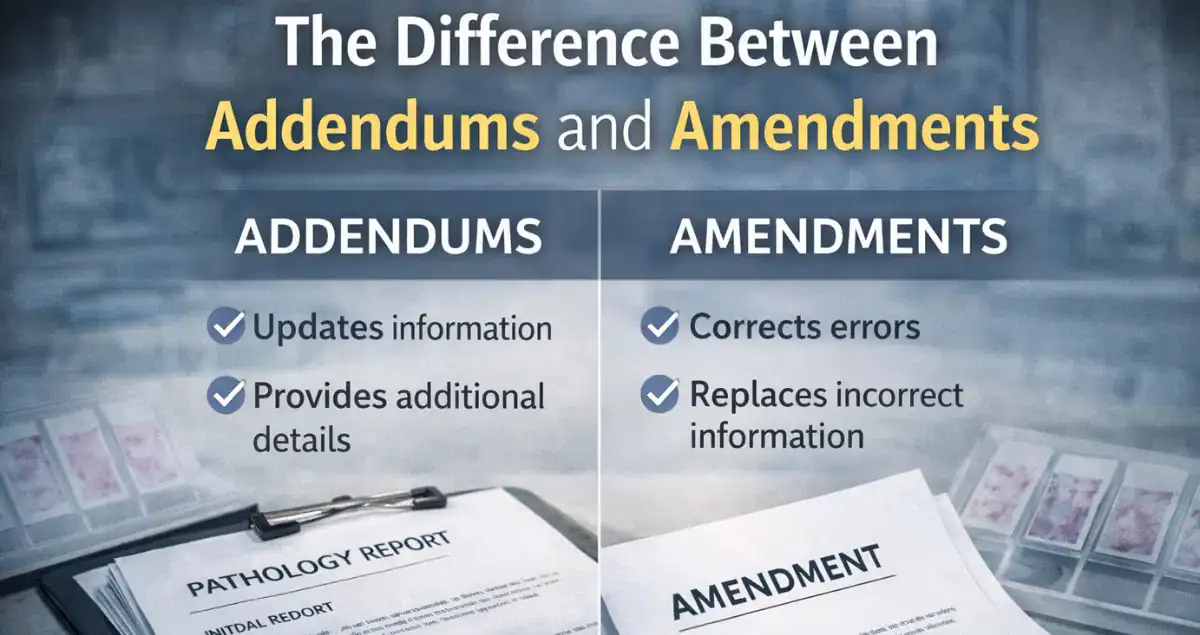 The Difference Between Addendums and Amendments
ange information. The distinction matters and is typically documented clearly in the report. Most post-report updates are addendums, not amendments.
Understanding this difference can reduce unnecessary alarm.
Why Addendums Improve Diagnostic Quality
Pathology is not a single snapshot. It is a process that benefits from time, testing, and reflection. Addendums allow pathologists to integrate new data responsibly rather than rushing to premature conclusions.
This approach improves accuracy and patient care.
Conclusion and Call to Action
Addendums in pathology reports are common, expected, and usually reassuring. They reflect thoroughness, not uncertainty, and transparency rather than error.
If you receive a pathology addendum and are unsure what it means or how it affects your care, clear explanation matters. Honest Pathology helps patients understand pathology reports, updates, and medical language so that new information feels informative, not alarming.