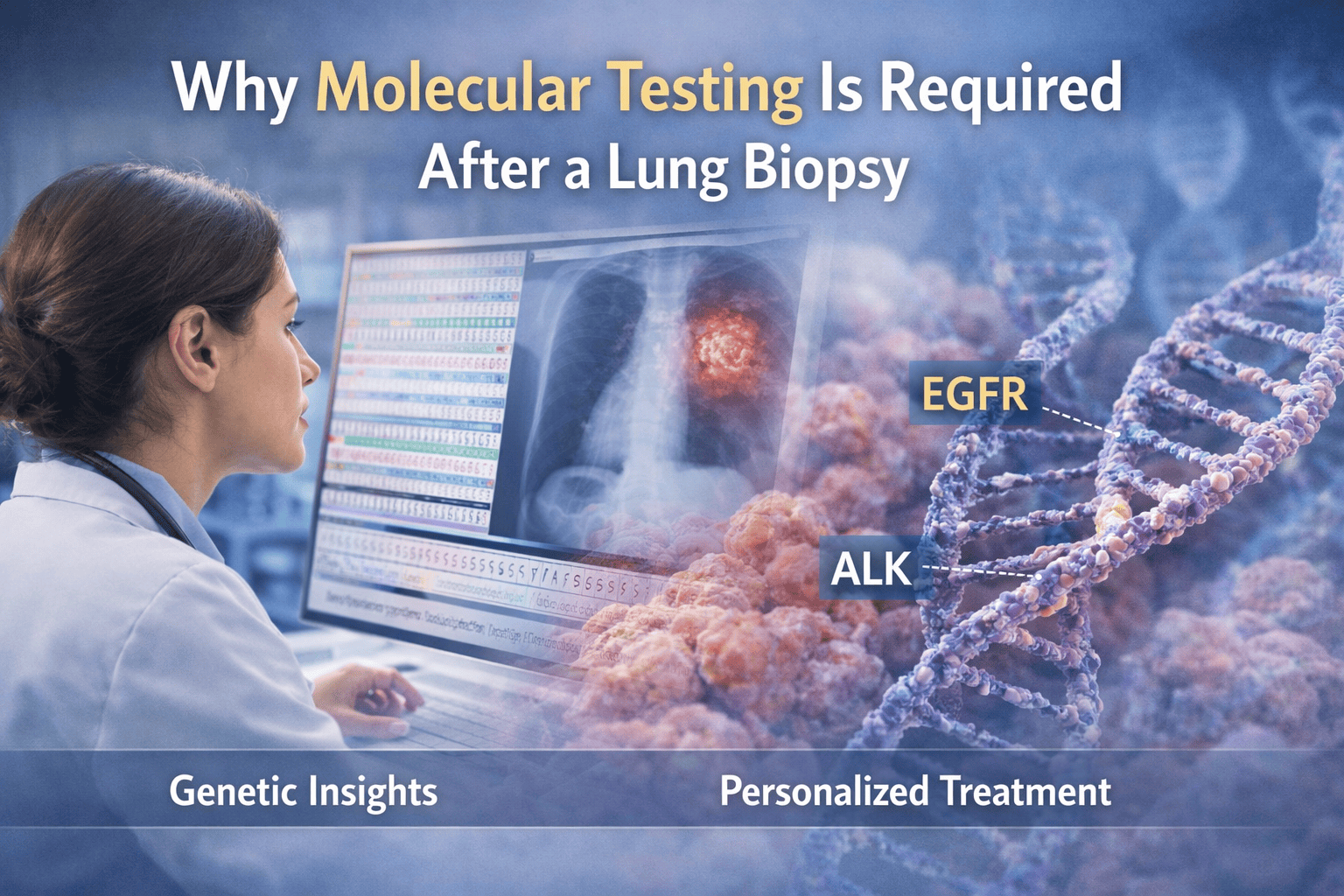
A lung biopsy is often the moment when uncertainty turns into answers. The tissue sample obtained during a biopsy allows pathologists to determine whether cancer is present and, if so, what type of lung cancer it is. But in modern lung cancer care, diagnosis does not stop there. Molecular testing has become a critical next step after many lung biopsies, providing information that directly influences treatment choices and outcomes. Understanding why molecular testing is required can help patients appreciate its importance and navigate the next phase of care with greater clarity.
How Lung Cancer Diagnosis Has Evolved
In the past, lung cancer classification focused primarily on how tumor cells looked under the microscope. Distinguishing between small cell lung cancer and non–small cell lung cancer was often enough to guide treatment. Today, this approach is no longer sufficient for many patients.
Advances in cancer biology have shown that lung cancers with similar appearances can behave very differently depending on their underlying genetic and molecular features. As a result, modern pathology combines traditional histology with molecular analysis to deliver a more complete and actionable diagnosis.
What Molecular Testing Means in Lung Cancer
Molecular testing examines the genetic makeup of cancer cells. It looks for specific mutations, rearrangements, or other alterations in DNA or RNA that drive tumor growth. These alterations can act as on-off switches for cancer behavior and, importantly, as targets for therapy.
In lung cancer, molecular testing is most commonly performed in non–small cell lung cancer, particularly adenocarcinoma and tumors with adenocarcinoma features. Identifying these molecular changes can dramatically alter treatment options.
Why Molecular Testing Is Not Optional
For many patients with lung cancer, molecular testing is not an extra or optional step. It is a standard and essential part of care. Certain genetic alterations have highly effective targeted therapies that can outperform traditional chemotherapy and often come with fewer side effects.
Without molecular testing, these treatment opportunities may be missed. This is why guidelines strongly recommend comprehensive molecular testing after a lung biopsy in appropriate cases.
How Molecular Results Guide Targeted Therapy
Targeted therapies are designed to interfere with specific molecular drivers of cancer. If a tumor harbors a targetable alteration, treatment can be tailored to that abnormality rather than using a one-size-fits-all approach.
This personalized strategy can lead to better response rates, longer disease control, and improved quality of life. Molecular testing is the gateway to this level of precision.
Molecular Testing and Immunotherapy Decisions
Molecular testing also plays an important role in determining how immunotherapy is used. Some molecular alterations are associated with lower likelihood of response to immunotherapy alone, even when other markers appear favorable.
Knowing the molecular profile of a tumor helps oncologists choose the most appropriate sequence or combination of treatments. This integrated approach prevents ineffective therapy and reduces unnecessary toxicity.
Why Adequate Tissue From the Biopsy Matters
Because molecular testing requires tumor DNA or RNA, sufficient and well-preserved tissue from the biopsy is essential. Pathologists carefully manage biopsy samples to balance traditional diagnostic tests, immunohistochemistry, and molecular studies.
In some cases, limited tissue can delay or restrict molecular testing, which is why careful planning and expert pathology handling are so important from the outset.
Molecular Testing in Small Biopsies and Cytology Samples
Advances in technology have made it possible to perform extensive molecular testing on small biopsy samples and even on cytology specimens. However, these tests still require careful interpretation and quality control.
When results are inconclusive or tissue is insufficient, repeat biopsy or additional testing may be recommended. While this can be frustrating, it reflects the importance of obtaining accurate molecular information.
The Timing of Molecular Testing
Molecular testing is often ordered as soon as lung cancer is diagnosed, sometimes even before final treatment discussions begin. Early testing helps avoid delays in starting the most appropriate therapy.
Waiting to perform molecular testing until after treatment has begun can limit options or complicate decision-making. This is why many care teams emphasize completing molecular testing as part of the initial diagnostic workup.
Why Molecular Testing Can Feel Overwhelming
For patients, molecular testing introduces new terminology, longer reports, and additional waiting periods. It can feel like one more hurdle in an already stressful process. Understanding that this testing is designed to open doors to better, more personalized treatment can help reframe the experience.
Molecular results often represent opportunity rather than complication.
When Expert Pathology Review Can Add Value
Because molecular testing is tightly linked to pathology interpretation, expert pathology review can be especially valuable in lung cancer. Subspecialty pathologists can help ensure that testing is appropriate, tissue is used efficiently, and results are correctly integrated into the final diagnosis.
Expert review can also clarify complex or unexpected molecular findings and their implications for care.
The Foundation of Personalized Lung Cancer Care
Molecular testing after a lung biopsy is a cornerstone of modern lung cancer treatment. It transforms a diagnosis from a general category into a personalized profile that can guide more effective and thoughtful care.
For patients seeking clarity about molecular testing and how it affects their diagnosis and treatment options, Honest Pathology provides independent expert pathology review with clear, patient-centered explanations. Their focus is on helping patients understand not just what tests were done, but why they matter and how the results shape the path forward.