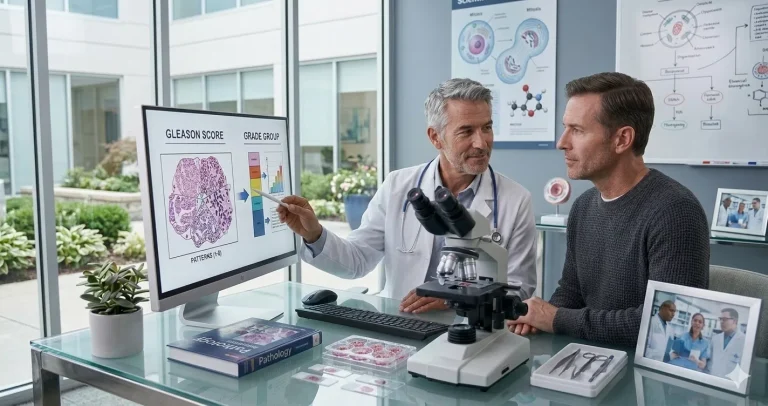
If you’ve opened a pathology report and your eyes locked onto the word “suspicious,” you are not alone. This single word causes more fear, confusion, and sleepless nights than almost any other term used in diagnostic medicine. Many patients immediately wonder if cancer has already been found and simply not said out loud. Others assume something went wrong with the biopsy or that the report is incomplete. Some feel frustrated that medicine seems unwilling to give a straight answer. Honest Pathology, we see this moment every day. And the most important thing to know right now is this: “suspicious” is not a diagnosis. It is a carefully chosen medical term that reflects caution, responsibility, and respect for what your tissue is truly showing under the microscope.
Pathology exists to tell the truth about cells. But truth in medicine is sometimes complex, and certainty requires evidence. When that evidence falls just short of a definitive diagnosis, the word “suspicious” is used to communicate concern without crossing a line that could harm you.
Why Pathologists Use the Word “Suspicious”
A pathologist’s job is not to guess. It is to evaluate tissue against strict, internationally accepted criteria and make a diagnosis only when those criteria are met. Cancer diagnoses carry enormous consequences, including surgery, chemotherapy, radiation, long-term surveillance, and lasting emotional impact. For that reason, pathologists cannot ethically label tissue as malignant unless the microscopic features clearly support it.
At the same time, they have an obligation to warn your clinical team when something does not look right. When cells show abnormal features that raise real concern but do not fully meet the definition of cancer, the word “suspicious” is used. It is a signal that something deserves attention, correlation, and often more information.
This is not hedging. It is precision.
Does “Suspicious” Mean Cancer Is Likely?
Sometimes cancer is ultimately found. Sometimes it is not. That uncertainty is exactly why the word exists.
Inflammation, healing tissue, prior biopsies, infection, scarring, and certain pre-cancerous changes can closely mimic cancer under the microscope. In small or fragmented biopsy samples, architecture may be distorted or incomplete, making it impossible to assess invasion or full behavior of the cells. In these situations, labeling something benign would be unsafe, but labeling it cancer would be premature.
Many patients later learn that their suspicious finding was benign or pre-cancerous after additional sampling. Others learn that follow-up testing confirms malignancy. What matters is that suspicious findings prompt careful next steps rather than false reassurance or unnecessary alarm.
Why Pathology Can’t Always Give a Simple Yes or No
Patients often feel frustrated that medicine seems unwilling to provide certainty. But pathology is evidence-based, not emotion-based. Diagnoses are not made by intuition or probability alone. They are made by meeting specific microscopic criteria.
A definitive diagnosis requires adequate tissue, preserved architecture, and clear features. When one or more of those elements is missing, honesty requires saying so. “Suspicious” tells your care team exactly where things stand without pretending the picture is clearer than it is.
This protects you from overtreatment just as much as it protects you from missed disease.
What Happens After a Suspicious Pathology Result?
The next steps depend heavily on where the biopsy came from and why it was done.
In breast pathology, a report that says “suspicious for malignancy” often means that some features of cancer are present, but the sample is too limited to confirm invasion. This frequently leads to a surgical excision or repeat biopsy. Many patients assume this means cancer is inevitable, but a significant number of these excisions ultimately show benign changes or in situ disease rather than invasive cancer.
In cervical pathology, suspicious findings may fall between low-grade and high-grade changes. These cases often require closer follow-up, additional biopsies, or treatment of precancerous lesions rather than immediate cancer therapy.
In lung biopsies, inflammation, infection, or scarring can closely resemble malignancy. Suspicious language prompts correlation with imaging, clinical history, and sometimes repeat sampling. In some cases, the abnormality stabilizes or resolves, confirming a non-cancerous cause.
In gastrointestinal pathology, suspicious findings may reflect atypical glands or architectural distortion that raises concern for early cancer but lacks definitive invasion. Additional tissue often clarifies the diagnosis.
Across all organ systems, the goal is the same: gather enough accurate information to make the right decision, not the fastest one.
How Long Can a Diagnosis Stay Uncertain?
Waiting is often the hardest part. Patients worry that uncertainty means danger or delay. In reality, suspicious findings usually trigger prompt follow-up. Most cases move forward within weeks, not months.
If cancer is present, it is often detected early enough to allow effective treatment. If it is not, unnecessary procedures are avoided. The timeline may feel slow emotionally, but medically, this approach is deliberate and protective.
Should You Get a Second Opinion?
Second opinions in pathology are common, appropriate, and often encouraged in suspicious cases. Many diagnoses are reviewed by additional pathologists or discussed in multidisciplinary tumor boards. This does not mean your original pathologist was unsure or inexperienced. It means the case deserves careful scrutiny.
Seeking clarity is not a sign of distrust. It is a reasonable response to uncertainty.
When Patients Feel Left in the Dark
One of the most common frustrations we hear is that patients feel their report was delivered without explanation. Pathology reports are written for clinicians, not patients, and the language can feel cold or confusing.
You deserve to understand what your report means in plain language. You deserve to know what features were concerning, what features were reassuring, and what questions still need answers. If those conversations are not happening, it is appropriate to ask for them.
The Truth About “Suspicious” Diagnoses
“Suspicious” is not a failure of medicine. It is medicine being honest about its limits while actively working to get you the right answer. It reflects caution, care, and respect for your body.
The worst outcomes in medicine come from false certainty, not thoughtful uncertainty. This term exists to prevent both over-treatment and under-treatment, and to keep patients safe while clarity is pursued.
Where Honest Pathology Fits In
At Honest Pathology, we specialize in translating pathology reports into clear, understandable language. We help patients understand what “suspicious” means in their specific case, what questions to ask next, and whether additional review may be helpful.
If you are sitting with a pathology report that raised more questions than answers, you do not have to navigate it alone. Understanding your diagnosis is not a luxury. It is part of your care.
Clarity matters. And you deserve it.