Urine cytology is a common, non-invasive lab test that looks at cells shed naturally from the lining of the bladder, ureters, and kidneys. Doctors use it to check for possible bladder cancer or other problems in the urinary tract. Many patients first hear about the test when they have blood in their urine, repeated bladder infections, or need ongoing monitoring after a previous bladder cancer diagnosis. The test itself is straightforward. You provide a urine sample, the lab concentrates the cells, stains them, and a pathologist examines them under a microscope. It is not used alone but works together with cystoscopy, which is a camera examination inside the bladder. Honest Pathology provides expert pathology consultations that turn these cytology reports into plain, everyday language, helping patients understand their specific results and feel more confident about the next steps.
Why Doctors Order Urine Cytology
Doctors recommend urine cytology in several situations. It is often used when someone has visible blood in the urine or microscopic blood found on routine testing to help determine whether cancer or another issue is the cause. It is also a standard part of long-term surveillance for people who have already been treated for bladder cancer. Individuals at higher risk, such as long-term smokers or those with workplace exposure to certain chemicals, may have the test as part of screening. It is not usually needed for people with very mild or one-time urinary symptoms. The main goal is to detect high-grade cancers early while avoiding unnecessary worry or procedures for low-risk situations.
How the Test Works and What Normal Results Look Like
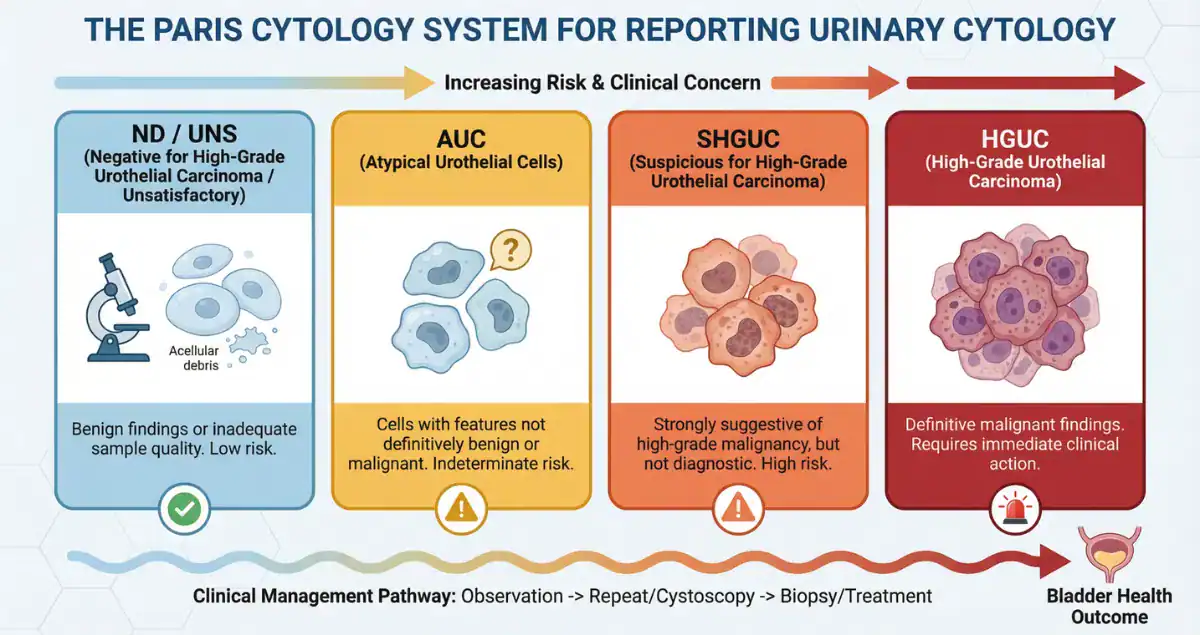
Your urinary tract constantly sheds old cells into the urine. In a normal sample these urothelial cells appear uniform in size and shape with small, regular centers. The pathologist checks whether the cells look healthy or show any concerning changes. Results are reported using standard categories so doctors know how concerned they are. A negative result is the most common and reassuring outcome. It means no signs of aggressive cancer cells were seen. While this does not completely rule out every possible problem, especially slow-growing low-grade tumors, it makes high-grade cancer much less likely.
What Atypical Cells Mean and Why They Are Common
Atypical urothelial cells are the most frequent abnormal finding. It simply means some cells look mildly unusual with slightly larger or irregular centers, but they do not meet the criteria for cancer. In the majority of cases these changes are caused by benign conditions such as a recent infection, bladder stones, irritation from a catheter, or inflammation. Only a small portion turn out to be related to cancer. When atypical cells appear, doctors usually suggest repeating the test in a few months along with a cystoscopy to look directly inside the bladder. Honest Pathology consultations explain exactly why the cells were called atypical in your case and whether they are more likely due to simple irritation or something that needs closer attention.
More Concerning Results: Suspicious or High-Grade Findings
If the report is suspicious for high-grade urothelial carcinoma, the cells show clearer signs of abnormality and there is a higher chance that cancer will be found on follow-up testing. A report stating high-grade urothelial carcinoma is a strong indication that aggressive cancer is likely present, usually leading to prompt additional procedures. These higher categories are much less common than atypical findings but are taken seriously because high-grade cancers can grow faster if not addressed early.
What the Results Mean for Cancer Risk
The actual risk of cancer depends on the exact wording of the report and your personal background. A negative result carries a very low risk of aggressive cancer in the following year, usually under five percent. An atypical result generally carries an eight to fifteen percent chance of finding high-grade cancer on follow-up for people without a prior history of bladder cancer, and twenty to thirty percent for those with a previous diagnosis. A suspicious result raises the likelihood significantly, often over fifty percent. When high-grade urothelial carcinoma is reported, the chance of confirming cancer on biopsy is over ninety percent. Over a ten-year period, most people with one atypical result and normal follow-up testing have a cancer risk similar to the average person. Smoking, older age, or repeated atypical findings can increase this risk and usually mean more frequent monitoring. The good news is that urine cytology is particularly good at catching aggressive cancers early when they are highly treatable. Honest Pathology helps you understand your personal risk level based on your specific report and medical history.
Limitations of Urine Cytology and Why Other Tests Are Needed
Urine cytology is very good at detecting high-grade cancers but often misses low-grade, slow-growing tumors. That is why it is almost always combined with cystoscopy and sometimes imaging of the upper urinary tract. A negative result is reassuring but does not mean there is definitely no cancer at all. False positives can occasionally occur with severe inflammation or recent treatment. Because of these limitations, doctors use multiple tests together to get the complete picture. Patients often ask whether a negative cytology means they are completely safe. The honest answer is that it greatly lowers concern for aggressive cancer but does not replace the need for cystoscopy in higher-risk situations.
How Honest Pathology Helps Patients Understand Their Urine Cytology Results
Urine cytology reports can contain technical terms and categories that feel confusing or worrying without proper explanation. Honest Pathology offers focused consultations that go through your report step by step. You will learn exactly what atypical, suspicious, or negative means in your specific case, how it fits with your symptoms and history, and what the realistic cancer risk is. The consultation helps you prepare clear questions for your urologist and understand why repeat testing or cystoscopy is or is not needed right away. This clarity turns a potentially scary report into something manageable and actionable, allowing you to move forward with confidence.
Urine cytology remains a helpful, non-invasive tool for detecting and monitoring cancers of the urinary tract. While the test has strengths and limitations, its results become much more meaningful when explained clearly in the context of your overall health. Through expert pathology consultations, Honest Pathology makes sure patients receive straightforward answers about their urine cytology findings, realistic risk information, and practical guidance on next steps. Whether your result is completely normal or shows atypical cells, this understanding helps you focus on the factors you can control for the best possible outcome.