Few phrases on a pathology report cause more confusion and anxiety than the words “clinical correlation advised.” Patients often encounter this line after carefully reading their biopsy results, only to feel abruptly stopped. It sounds vague, ominous, and unfinished, leaving many people wondering whether something is wrong, whether the pathologist is unsure, or whether important information is being withheld.
In reality, “clinical correlation advised” is one of the most commonly used phrases in pathology, and it is rarely a warning sign. Understanding what it truly means, why pathologists use it, and how it affects patient care can transform this phrase from a source of fear into a signal of thoughtful, responsible medicine.
Why Pathology Reports Are Not Stand-Alone Documents
Pathology does not exist in isolation. A biopsy is only one piece of a much larger clinical puzzle that includes symptoms, imaging studies, physical exam findings, laboratory results, and medical history. When a pathologist examines tissue under the microscope, they are interpreting what they see without always having access to the full clinical picture.
The phrase “clinical correlation advised” is a reminder that tissue findings must be interpreted in context. It does not mean the pathologist is uncertain or hesitant. It means the microscopic findings should be considered alongside what is happening with the patient as a whole.
What the Pathologist Is Really Saying
When a pathologist includes “clinical correlation advised,” they are communicating that the tissue findings make sense only when matched with clinical information. In some cases, the biopsy may show changes that could have multiple explanations depending on symptoms or imaging results. In other situations, the tissue may appear mild or nonspecific, but the patient’s clinical story could elevate its importance.
This phrase is not a way of passing responsibility to the clinician or avoiding a diagnosis. It is an acknowledgment that medicine works best when specialties communicate and collaborate.
Common Situations Where This Phrase Appears
“Clinical correlation advised” appears frequently in biopsies that show subtle, early, or reactive changes. Inflammatory patterns, borderline atypia, mild dysplasia, and nonspecific tissue reactions are common examples. These findings may be completely benign in one clinical scenario and more concerning in another.
For instance, a biopsy showing mild inflammation may be insignificant in an asymptomatic patient but meaningful in someone with persistent pain, weight loss, or abnormal imaging. The tissue itself does not change, but its interpretation does.
Why This Phrase Often Triggers Anxiety
Patients are increasingly proactive and informed, often reading their pathology reports in detail. When they encounter a phrase that sounds noncommittal, it can feel like an unfinished sentence. Many people search online asking whether “clinical correlation advised” means cancer, whether it means the biopsy was inconclusive, or whether it signals a missed diagnosis.
The internet often amplifies fear by presenting worst-case interpretations without context. In truth, this phrase is usually a sign of caution, not danger.

Does It Mean the Diagnosis Is Uncertain?
One of the most common concerns is whether “clinical correlation advised” means the pathologist does not know what the tissue shows. In most cases, the pathologist is confident in the microscopic findings but recognizes that those findings alone do not tell the full story.
Pathology uncertainty, when present, is usually expressed explicitly with terms like indeterminate, suspicious, or cannot exclude. “Clinical correlation advised” is different. It reflects completeness rather than doubt.
The Relationship Between Pathology and Clinical Medicine
Pathologists are physicians who specialize in diagnosis, not treatment. They rely on clinicians to provide context and apply pathology findings to real-world patient care. This phrase reinforces that partnership.
In complex cases, a clinician may contact the pathologist to discuss symptoms, imaging, or prior history. This exchange often clarifies the significance of the biopsy and leads to a more precise final interpretation.
Why Pathologists Use Careful Language
Medical language is deliberately precise. Overstating certainty can lead to overtreatment, while understating concern can delay necessary care. “Clinical correlation advised” is a balanced way of signaling that the findings should not be interpreted in a vacuum.
This cautious phrasing protects patients by preventing misinterpretation of tissue changes that may look worrisome under the microscope but behave benignly in real life, or vice versa.
Does This Mean More Testing Is Needed?
Sometimes, but not always. In some cases, clinical correlation simply means reviewing existing information, such as imaging studies or laboratory results. In others, it may prompt follow-up, repeat biopsy, or additional studies.
Importantly, the phrase itself does not automatically mean something is wrong or that further procedures are required. Decisions about next steps depend on the entire clinical picture, not just the wording of the report.
How Clinicians Interpret This Phrase
Most clinicians are very familiar with this language and do not view it as alarming. They understand it as an invitation to integrate pathology findings with their own assessment. In many cases, it confirms what they already suspected based on the patient’s presentation.
Patients may worry that their doctor will be confused or uncertain, but in practice, this phrase often reassures clinicians that the pathologist has carefully considered the limitations of tissue interpretation.
When Patients Should Ask Questions
While “clinical correlation advised” is usually benign, patients should feel empowered to ask what it means in their specific case. A good question is not whether something is wrong, but how the biopsy findings fit with symptoms, imaging, and treatment plans.
Clear explanations can transform vague concern into understanding and reduce unnecessary anxiety.
The Value of Expert Pathology Review
In some situations, particularly when symptoms persist or clinical findings do not align with the pathology report, an expert pathology review can be helpful. A second opinion may provide additional clarity, refine the interpretation, or explain why the findings are best understood in a broader clinical context.
Expert review is especially valuable when pathology language feels unclear or when decisions about surgery, medication, or surveillance depend on subtle distinctions.
What This Phrase Does Not Mean
It does not mean cancer was missed. It does not mean the biopsy was inadequate. It does not mean the pathologist is unsure or inexperienced. And it does not mean you are being left without answers.
Instead, it means the pathologist is practicing thoughtful, responsible medicine by acknowledging that tissue findings are only one part of your story.
Understanding Your Pathology Report as a Patient
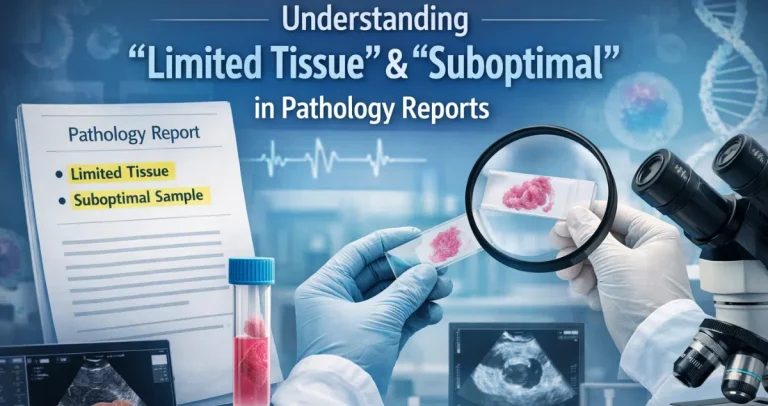
Pathology reports were traditionally written for physicians, not patients. As access to medical records has expanded, patients are reading reports that were never designed for a lay audience. This can lead to misunderstandings, especially when phrases like “clinical correlation advised” are taken out of context.
Education and transparent communication are key to bridging this gap and helping patients feel informed rather than alarmed.
A Patient-Centered Approach to Pathology
The best pathology care does not stop at issuing a report. It includes explanation, context, and collaboration with clinicians and patients alike. When pathology language raises questions, those questions deserve thoughtful answers.
Patients benefit most when pathology is not treated as a mysterious black box, but as a diagnostic service grounded in clarity and communication.
A Final Reassurance for Patients
Seeing “clinical correlation advised” on your pathology report is not a red flag. It is a signal that your diagnosis is being approached carefully and responsibly. It reflects the reality that good medicine considers the whole patient, not just what appears under a microscope.
If you are feeling uncertain, confused, or unsettled by the language in your pathology report, an expert review can help bring clarity and peace of mind.
If you are seeking a clear, honest explanation of your pathology findings or want a second opinion that puts your biopsy results into proper clinical context, consider reaching out to Honest Pathology. Our goal is to provide patient-centered, transparent pathology consultation so you can better understand what your report truly means and move forward with confidence.