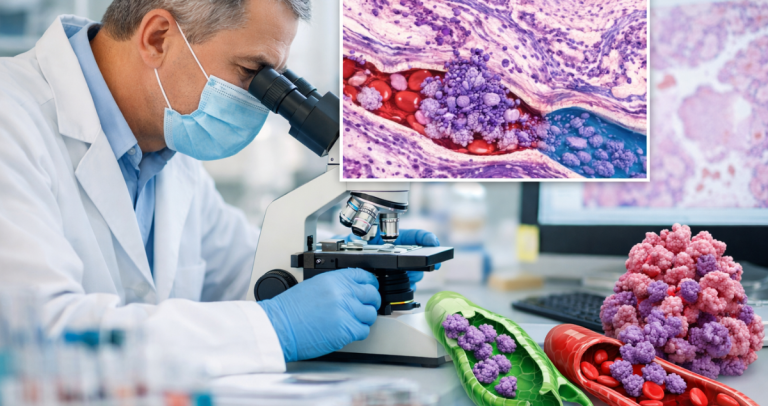
Reading the words “cannot rule out malignancy” on a pathology report can feel like being suspended in midair with no ground beneath you. For many patients, the phrase sounds like a quiet confirmation that cancer is present but not yet officially named. Others interpret it as indecision or fear that something important is being delayed. The uncertainty can feel heavier than a clear diagnosis, because it leaves room for imagination to take over.
At Honest Pathology, this phrase is one of the most common reasons patients reach out for clarity. And the first thing we want you to know is this: “cannot rule out malignancy” is not a diagnosis. It does not mean cancer has been found. It means that based on the tissue available, cancer cannot be confidently excluded.
Pathology is built on evidence, not assumptions. A diagnosis of cancer requires specific microscopic features to be present in a way that leaves no reasonable doubt. When those features are incomplete, distorted, or absent, a responsible pathologist cannot label the tissue malignant, even if something about it raises concern.
Why This Language Is Used Instead of a Clear Answer
Many patients wonder why pathology reports can’t simply say whether something is cancer or not. The reason is that tissue samples do not always tell the full story. Biopsies represent a very small portion of a much larger process happening in the body. If the sample is limited, crushed, inflamed, or altered by prior procedures, the pathologist may not be able to see the features required to confirm or exclude cancer.
In those cases, the phrase “cannot rule out malignancy” communicates something very specific to your care team. It signals that cancer is a possibility that must be taken seriously, but that the available evidence is insufficient to make that diagnosis safely. This is not indecision. It is restraint.
Does This Mean Cancer Is Likely?
This is often the question patients sit with in silence. The honest answer is that sometimes cancer is found on further testing, and sometimes it is not. The phrase itself does not predict the outcome.
Many benign and non-cancerous conditions can closely resemble malignancy under the microscope. Inflammation, infection, scarring, radiation changes, and healing tissue can all produce cellular abnormalities that overlap with cancer. Certain pre-cancerous or atypical processes may also sit in this gray zone. Without enough intact tissue to evaluate growth patterns or invasion, malignancy cannot be confidently excluded, even if it is not clearly present.
For many patients, follow-up procedures ultimately show no cancer at all. For others, additional tissue provides the missing information needed to make a definitive diagnosis. The language exists because both outcomes are possible.
Is This the Same as Being Diagnosed With Cancer?
No. A diagnosis of cancer requires confirmation. “Cannot rule out malignancy” means that confirmation has not yet been made. It does not mean treatment decisions have already been decided or that cancer therapy is inevitable.
This distinction matters. Cancer diagnoses change lives. Pathologists do not make them lightly or indirectly. If cancer were definitively present, it would be stated clearly.

What Happens Next After This Appears on a Report?
Patients often worry that nothing will happen or that they will be left waiting indefinitely. In reality, this phrase almost always triggers further evaluation.
In breast pathology, this language may lead to surgical excision or repeat biopsy to assess whether invasive cancer is present. Many patients fear this means the outcome is already determined, but a significant number of these cases ultimately prove benign or pre-cancerous rather than malignant. In lung biopsies, inflammation and scarring can closely mimic cancer, particularly in small needle samples. Imaging correlation, repeat biopsy, or clinical follow-up often clarifies the picture.
In gastrointestinal biopsies, ulceration or atypical glands may prevent reliable assessment of invasion. Additional sampling frequently resolves the uncertainty.
In gynecologic pathology, reactive or reparative changes can overlap with malignancy, especially in limited samples. Close follow-up or additional tissue is often recommended before any conclusions are made. Across organ systems, the goal is to obtain enough information to make the right diagnosis, not a rushed one.
How Long Can This Uncertainty Last?
Waiting is one of the most emotionally difficult parts of the diagnostic process. Patients often worry that uncertainty means danger or that time is being lost. In most cases, follow-up occurs within weeks. The process may feel slow when anxiety is high, but medically, it is often appropriate and protective.
If cancer is present, this careful approach often results in earlier, more accurate diagnosis. If cancer is not present, it prevents unnecessary treatment that could cause harm.
Does This Mean the Biopsy Was Done Wrong?
Not at all. Even technically excellent biopsies can be limited. Some lesions are difficult to access, and some diseases are patchy, meaning different areas behave differently under the microscope. A biopsy samples only a small portion of tissue.
This phrase reflects the limits of sampling, not a mistake or failure.
Should You Get a Second Opinion?
Many patients wonder whether a second pathology review would help. In cases like this, additional review is common and often encouraged. Another pathologist may see subtle features differently, or a subspecialist may provide further insight. Tumor boards frequently review cases described this way.
Seeking another opinion is not overreacting. It is a reasonable step when uncertainty exists.
Why This Phrase Feels So Heavy
The emotional burden of “cannot rule out malignancy” is real. Humans are wired to fear the unknown, and this phrase leaves room for worry to fill in the blanks. Patients may replay the wording over and over, wondering what is being implied or withheld.
Understanding that this phrase exists to protect you, not alarm you, can help restore some sense of control. It is medicine acknowledging uncertainty honestly while actively working toward clarity.
What This Phrase Really Means for You
“Cannot rule out malignancy” means that your care team is being cautious, responsible, and thorough. It means more information is needed before life-altering decisions are made. It means the process is still unfolding.
It does not mean cancer has been diagnosed. It does not mean treatment has already been decided. And it does not mean you have been forgotten.
How Honest Pathology Can Help
At Honest Pathology, we help patients make sense of complex pathology language and understand what it means in the context of their own medical story. We provide clear explanations, and guidance on what questions to ask next.
If you are living in the uncertainty created by the words “cannot rule out malignancy,” you do not have to navigate it alone. Clarity brings power, and power brings peace.
Understanding your pathology report is part of your care. And you deserve that understanding.