Hearing that you may need—or might benefit from—a second opinion on your pathology can bring up a lot of questions. What does the process involve? Do you need another biopsy? Will it delay care? And how do you even begin?
For many patients, the uncertainty isn’t just about the diagnosis—it’s about the process itself. At Honest Pathology, we regularly help patients understand how pathology second opinions work so they can move forward feeling informed, organized, and confident.
What a Pathology Second Opinion Actually Is
A pathology second opinion is a review of your existing biopsy or surgical specimen by another pathologist. It does not usually require a new procedure or another biopsy.
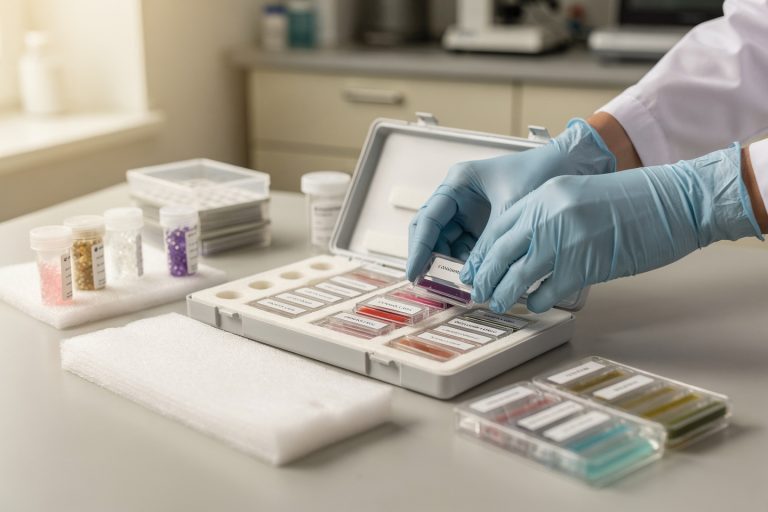
Instead, the same tissue that was originally collected is re-examined. This tissue is preserved on glass slides and sometimes in paraffin blocks, allowing another expert to look at the exact same material. The purpose is not to start over, but to confirm, clarify, or refine the original diagnosis.
A pathology second opinion is also closely connected to broader decision-making in cancer care, as discussed in personalized cancer treatment guidance, where small diagnostic details can significantly influence treatment direction.
How the Process Begins
The first step is deciding that you want another review. This may be recommended by your doctor, or it may be something you choose for your own peace of mind.
Once that decision is made, the next step is requesting your pathology materials. These are typically held by the lab that processed your biopsy. You or your doctor can request that the slides and report be sent to another institution or specialist.
This part of the process is more routine than most people expect. Labs handle these requests regularly, and there are established procedures in place to make sure materials are transferred safely.
What Gets Reviewed
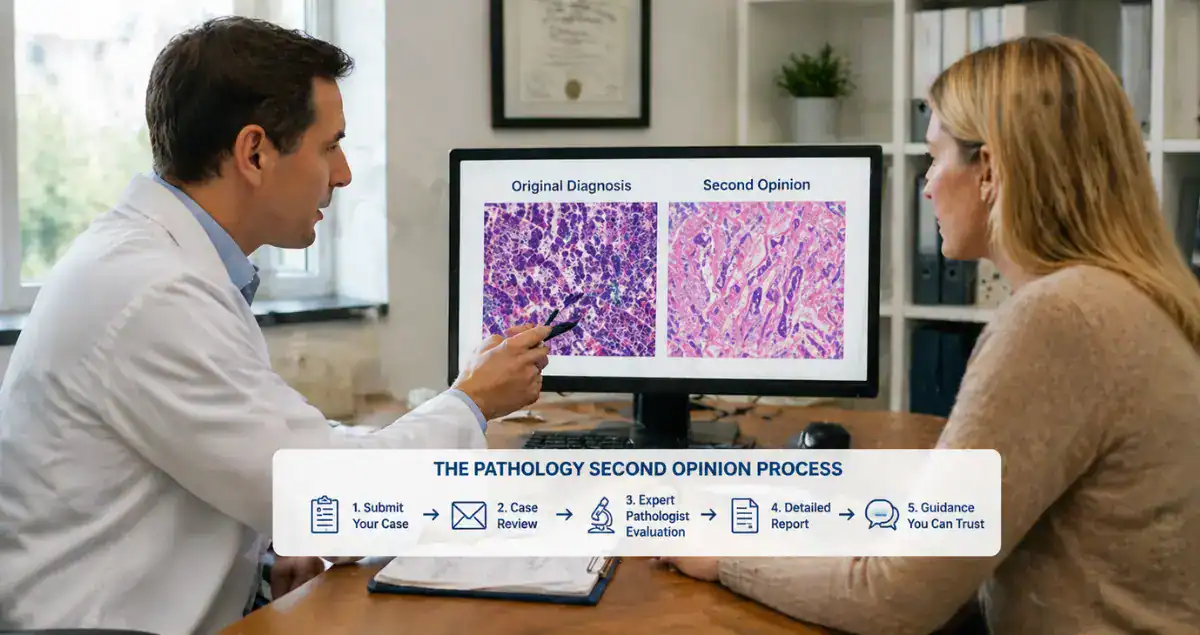
During a second opinion, the reviewing pathologist examines the same slides that were used to make the original diagnosis.
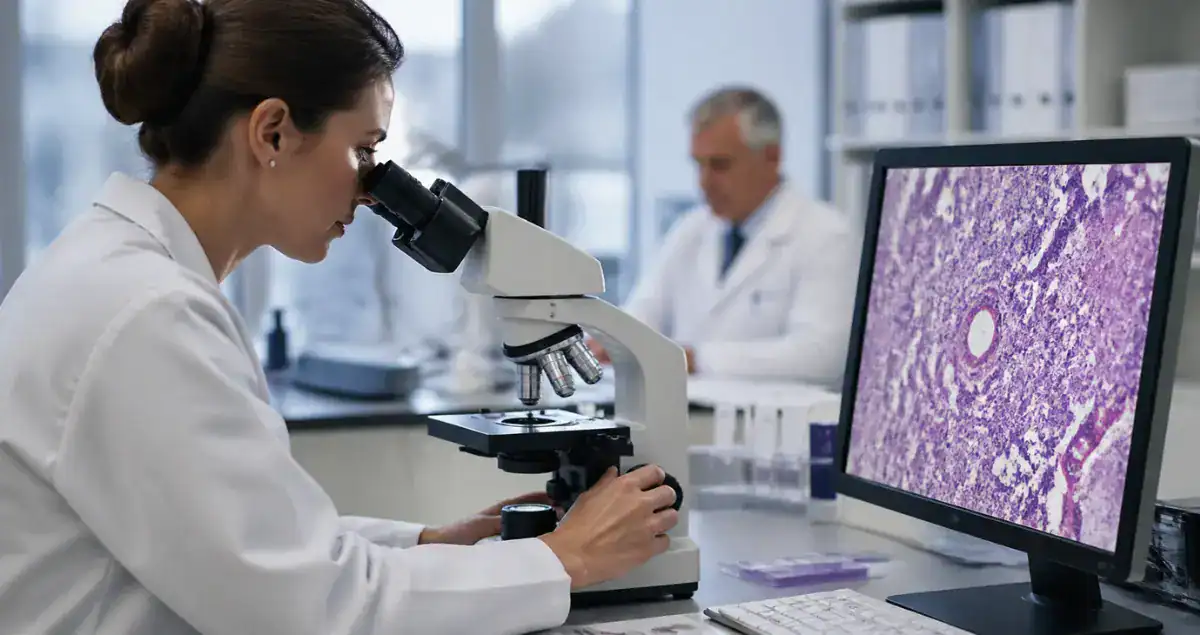
They will look at the tissue under the microscope, review the written report, and consider any additional clinical information provided. In some cases, they may recommend or perform additional tests to gather more detail.
The goal is to provide an independent assessment based on the same evidence.
What the Results Might Show
There are a few possible outcomes from a pathology second opinion.
In many cases, the second opinion confirms the original diagnosis. This can provide reassurance that the findings are accurate and that the treatment plan based on them is appropriate.
Sometimes, the second opinion adds more detail or refines certain aspects of the diagnosis. This might include clarifying tumor type, grade, or other features that influence care.
In less common situations, the second opinion may differ in a meaningful way. When this happens, your care team will review both interpretations to determine the best path forward.
How Long It Takes
The timeline for a second opinion can vary depending on the complexity of the case and whether additional testing is needed.
Some reviews are completed within a few days, while others may take longer. While waiting can be difficult, the process is designed to be thorough and careful.
In most cases, taking the time to confirm or clarify a diagnosis is well worth it.
Why the Process Can Feel Overwhelming
Even though the steps are straightforward, the experience can still feel complicated.
You may be coordinating between different labs or institutions, trying to track where your slides are, and waiting for results without a clear sense of timing. At the same time, you may be dealing with the emotional weight of your diagnosis.
On top of that, once the second opinion comes back, you may be faced with two reports that are difficult to compare or interpret on your own.
The Importance of Having Someone Walk You Through It
This is where many patients feel stuck—not in the process itself, but in understanding it.
Knowing what to request, what to expect, and how to interpret the results are all critical parts of the experience. Without guidance, it’s easy to feel uncertain at each step.
At Honest Pathology, we help patients navigate this process from start to finish through a personalized pathology consultation that includes understanding the original report, preparing for a second opinion, and reviewing the results once they come back.
Having someone walk you through it can turn a confusing process into a clear, manageable one.
The Questions Patients Are Really Asking
Most patients considering a second opinion are trying to answer a few key questions.
They want to know if it’s necessary, how to get started, and whether it will change anything. They want to understand what happens if the second opinion is different, and how that affects their care.
These are important questions, and they don’t always have simple answers. But they become much easier to navigate when you have a clear understanding of the process.
Moving Forward with Clarity and Confidence
A pathology second opinion is one of the most valuable tools available when you want to be sure about your diagnosis. It provides another perspective, additional detail, and often greater peace of mind.
But just as important as the second opinion itself is understanding what it means.
If you’re considering a second opinion—or are already in the process—consider scheduling a consultation with Honest Pathology. Being guided through each step and each report can help you feel informed, prepared, and confident as you move forward with your care.