Worried after seeing NIFTP thyroid cancer in a report? Learn what it means, why wording matters, and what to ask next.
NIFTP thyroid cancer is a confusing phrase because NIFTP is now considered a very low-risk thyroid tumor rather than an invasive thyroid cancer. The term usually appears after thyroid surgery, when a pathologist has examined the entire nodule under the microscope. For many patients, the report can feel contradictory: It may mention words that sound like cancer, while the final diagnosis says NIFTP.
That uncertainty can be deeply unsettling. A patient may have prepared emotionally for papillary thyroid carcinoma, then hear that the tumor has been renamed or reclassified. Clear pathology language matters because treatment decisions, follow-up plans, and peace of mind often depend on tiny details in the report. A careful reading of the thyroid pathology report can usually explain why the diagnosis was made and why it is different from conventional thyroid cancer.
NIFTP Thyroid Cancer — What It Actually Means
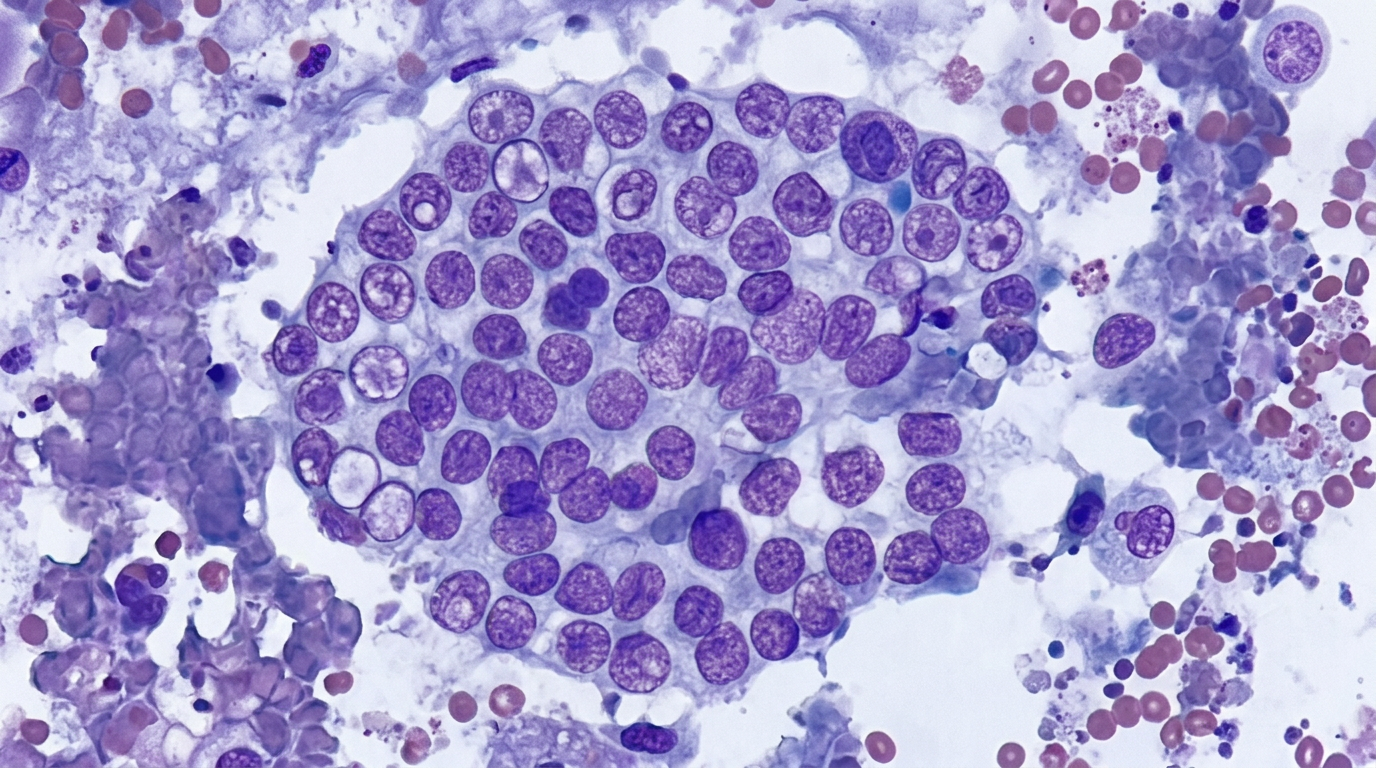
NIFTP stands for noninvasive follicular thyroid neoplasm with papillary-like nuclear features. In plain language, it describes a thyroid tumor that has some microscopic features resembling papillary thyroid carcinoma but does not invade through its capsule or into nearby blood vessels. That noninvasive behavior is the key reason NIFTP is no longer classified in the same way as conventional thyroid cancer. The phrase NIFTP thyroid cancer often appears in searches because patients are trying to connect the old cancer-like wording with the newer, lower-risk diagnosis.
A useful analogy is a fenced garden. The cells inside the nodule may look unusual, but the fence, meaning the tumor capsule, remains intact. Pathologists examine the edge of the tumor carefully to see whether cells have broken through that boundary. If the entire tumor is contained and meets strict criteria, the thyroid tumor diagnosis may be NIFTP rather than invasive papillary thyroid carcinoma.
This distinction is not casual or cosmetic. It reflects years of research showing that properly diagnosed NIFTP behaves in an extremely indolent way after complete removal. A thyroid pathology report may still include technical phrases such as follicular growth, papillary-like nuclear features, or encapsulated tumor. For patients trying to understand what a pathology report is, NIFTP is a good example of why the final diagnosis, microscopic description, margins, and invasion status all need to be read together. The words can sound frightening, but the biology is usually much less aggressive than the name may first suggest.
Why Your Report Shows This Finding
A report usually shows NIFTP after the thyroid nodule has been removed and submitted for microscopic examination. Fine needle aspiration can raise suspicion for a follicular-patterned thyroid tumor, but it often cannot prove NIFTP because the entire tumor capsule must be examined. The diagnosis depends on seeing an encapsulated or well-demarcated nodule with a follicular growth pattern. It also depends on confirming that invasion is absent.
The pathologist looks closely at the nuclear features of the tumor cells. In NIFTP, the nuclei can resemble those seen in papillary thyroid carcinoma, including enlargement, crowding, grooves, or clearing. At the same time, the tumor should lack true papillae, tumor necrosis, high mitotic activity, and other aggressive findings. The term follicular variant is often part of the background because NIFTP was historically linked to a noninvasive form of encapsulated follicular variant papillary thyroid carcinoma.
That history explains why the wording can feel so confusing. Older reports may have called the same pattern a type of papillary thyroid carcinoma, while modern criteria support the less alarming term NIFTP when strict requirements are met. The tumor capsule is central to this decision because invasion through the capsule changes the diagnosis and risk category. The thyroid pathology report may also describe margins, lymphovascular invasion, lymph nodes, and background thyroid disease, all of which help clinicians decide whether additional treatment is needed. In many cases, surgical pathology review is requested when the wording is uncertain, the capsule was difficult to evaluate, or the original diagnosis was made before the newer terminology became widely adopted.
How Serious Is NIFTP Thyroid Cancer?
NIFTP thyroid cancer is usually not treated as an aggressive cancer when the diagnosis is secure and the tumor has been completely removed. The most important word is noninvasive. If the tumor has not invaded the capsule, blood vessels, thyroid tissue outside the capsule, or lymph nodes, the expected behavior is extremely favorable. Many patients do not need radioactive iodine, aggressive staging, or the same long-term cancer surveillance used for higher-risk thyroid cancers.
The seriousness depends on whether the diagnosis truly meets all criteria. NIFTP thyroid cancer becomes a concern when the report describes invasion, positive lymph nodes, high-grade features, extensive papillary structures, or uncertainty about capsule evaluation. Those findings may point away from NIFTP and toward papillary thyroid carcinoma or another thyroid tumor diagnosis. This is where a detailed surgical pathology review can make a real difference, especially if treatment recommendations seem more aggressive than expected.
For a patient, the emotional seriousness can still be very real. Even a low-risk tumor can cause fear when cancer-related language appears in the report. A careful explanation can separate the microscopic appearance from the expected behavior. NIFTP thyroid cancer generally means that the tumor looked partly cancer-like under the microscope but did not show the invasive pattern that defines clinically meaningful malignancy. When the report is complete and the criteria are met, the outlook is usually excellent.
What Happens Next: Treatment and Monitoring
After a diagnosis of NIFTP, the next step is usually a discussion between the treating clinician, surgeon, endocrinologist, and patient. Treatment often depends on what surgery has already been done, such as lobectomy or total thyroidectomy. Many patients with NIFTP after lobectomy do not need completion thyroidectomy solely because of the NIFTP diagnosis. Radioactive iodine is typically not recommended for isolated, completely removed NIFTP.
Monitoring may include physical examination, neck ultrasound, and thyroid function blood tests, depending on the clinical setting. If a patient still has part of the thyroid gland, thyroid hormone levels may be followed to make sure the remaining thyroid tissue is functioning well. The thyroid pathology report helps guide how intense follow-up should be. A report that confirms clear margins, absence of invasion, and no lymph node involvement supports a less aggressive plan.
Some patients benefit from a second look at the slides, especially when the diagnosis was borderline or the original report uses older terminology. A second opinion is not a sign that something went wrong; it is a common safeguard when small microscopic distinctions affect treatment. Resources on when to get a second pathology opinion can help patients decide whether review is reasonable. A surgical pathology review can clarify whether NIFTP criteria were fully met, whether papillary thyroid carcinoma should still be considered, and whether the thyroid tumor diagnosis matches the clinical plan.
Questions to Ask Your Doctor or Pathologist
- Does the report confirm that the tumor was completely noninvasive?
- Was the entire tumor capsule examined carefully enough to support NIFTP?
- Are there any features in the thyroid pathology report that argue against NIFTP?
- Does the report mention lymphovascular invasion, positive margins, or lymph node involvement?
- Was this diagnosis previously called a follicular variant of papillary thyroid carcinoma?
- Is radioactive iodine being recommended, and if so, what finding supports that recommendation?
- Would a surgical pathology review change treatment or follow-up decisions?
These questions help turn an intimidating report into a practical conversation. They also focus attention on the specific findings that separate NIFTP from invasive thyroid cancer. For many patients, the most reassuring answer is not simply “low risk,” but a clear explanation of why the diagnosis is low risk.
If the report is difficult to interpret, a pathology-focused consultation can help translate the terminology into plain language. Honest Pathology consultations are designed to review the wording of the report, identify the key diagnostic features, and help patients prepare focused questions for the treating team. Guidance on understanding a pathology report may also make the next appointment feel more organized and less overwhelming.
Frequently Asked Questions
Is NIFTP thyroid cancer or not?
NIFTP is not considered invasive thyroid cancer when it meets strict diagnostic criteria. The phrase NIFTP thyroid cancer is common because the tumor has cancer-like nuclear features and was historically related to a form of papillary thyroid carcinoma. The critical point is that NIFTP is noninvasive, which gives it a very different risk profile. Patients should still review the report carefully to confirm there is no invasion, lymph node spread, or other higher-risk feature.
Can NIFTP spread to lymph nodes?
True NIFTP should not show lymph node metastasis. If lymph node spread is present, the diagnosis should be reconsidered because that finding is not compatible with a straightforward NIFTP diagnosis. In that situation, papillary thyroid carcinoma or another thyroid tumor diagnosis may be more appropriate. A surgical pathology review is often reasonable when the report mentions both NIFTP and nodal disease.
Do I need radioactive iodine for NIFTP?
Most patients with isolated, completely removed NIFTP do not need radioactive iodine. Treatment decisions depend on the full thyroid pathology report, the type of surgery performed, and whether any additional cancer is present. NIFTP thyroid cancer searches often reflect worry about aggressive treatment, but NIFTP alone usually supports a conservative approach. The treating endocrinologist can explain whether any separate finding changes that plan.
Can a biopsy diagnose NIFTP before surgery?
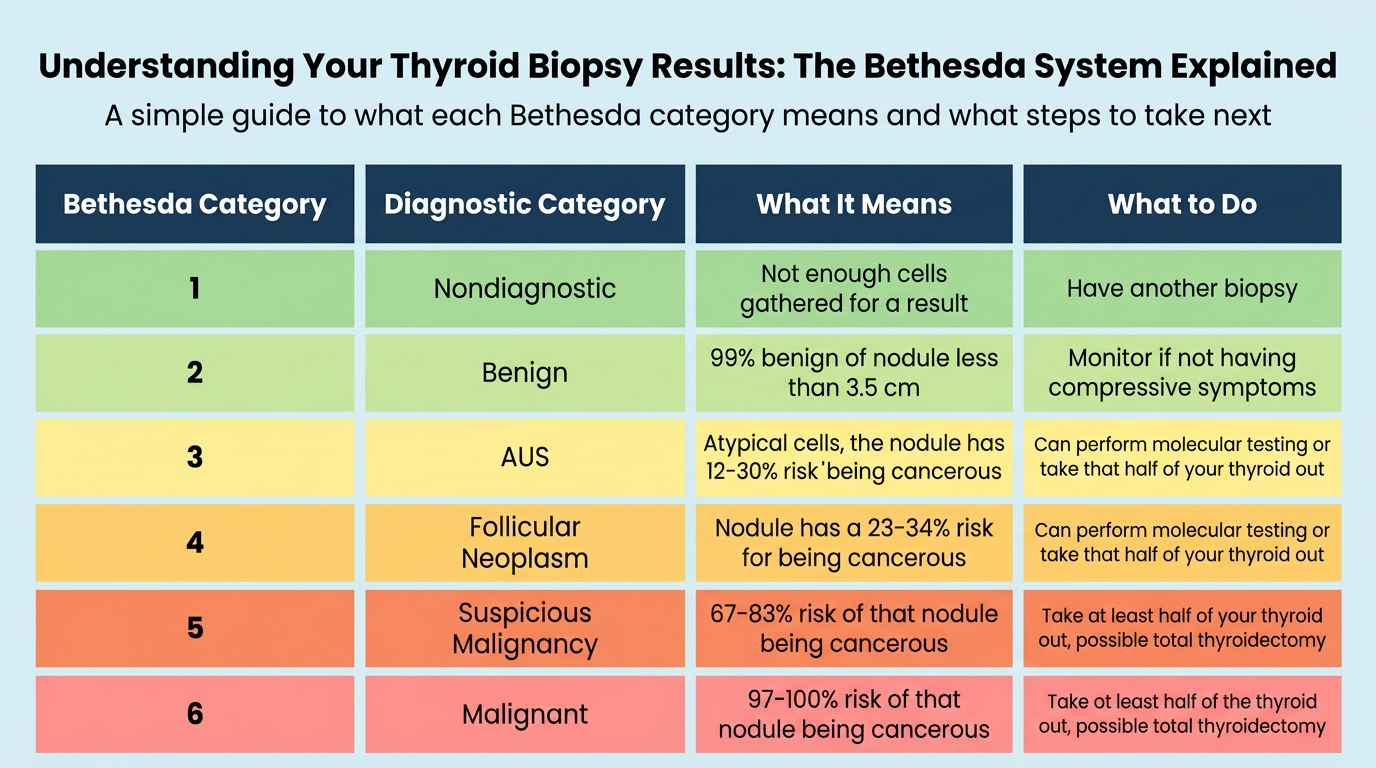
A needle biopsy can suggest a follicular-patterned thyroid lesion, but it usually cannot definitively diagnose NIFTP. The diagnosis requires evaluation of the tumor capsule, which is only possible after surgical removal of the nodule. Cytology may use terms such as suspicious for follicular neoplasm or suspicious for papillary thyroid carcinoma. The final diagnosis depends on the surgical specimen.
Should I get a second opinion on NIFTP?
A second opinion can be helpful when the report is unclear, the tumor is large, the capsule is difficult to assess, or treatment recommendations seem aggressive. It may also help when older terminology such as follicular variant papillary thyroid carcinoma appears in the record. NIFTP thyroid cancer is a diagnosis where small microscopic details matter. Information on how to get a second opinion on a pathology diagnosis can help patients gather slides, blocks, and reports efficiently.
A diagnosis of NIFTP can feel frightening at first, especially when the report uses words associated with cancer. In most properly diagnosed cases, the message is reassuring: The tumor was removed, it was noninvasive, and the expected behavior is very low risk. Honest Pathology consultations can help patients understand whether the report clearly supports NIFTP and what questions deserve attention before the next visit.
References:
National Cancer Institute — Pathology Reports Fact Sheet
National Cancer Institute — Definition of Pathologist
PubMed — Nomenclature Revision for Encapsulated Follicular Variant of Papillary Thyroid Carcinoma