1
A Sample Is Collected
Tissue or cells may be obtained through a biopsy, cytology procedure, lymph node sampling, or surgery.

Get a clearer explanation of your biopsy findings, cancer type, subtype, biomarkers, lymph node findings, margins, and any additional testing that may still be pending.
Not sure which service you need? Compare your options →This consultation provides educational support and a clearer explanation of an existing pathology report. It does not replace your treating physician, oncologist, or medical care team.
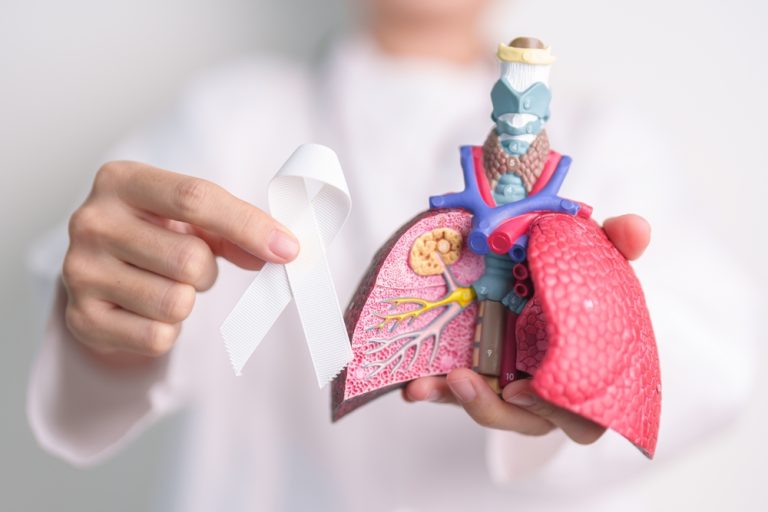
Imaging may identify an area that needs further investigation, but a tissue or cell sample is generally required to confirm a lung cancer diagnosis. The sample is examined by a pathologist, who may also request additional stains or laboratory testing.
Tissue or cells may be obtained through a biopsy, cytology procedure, lymph node sampling, or surgery.
The pathologist reviews the tissue or cells under a microscope and may request additional stains or tests.
The diagnosis, subtype, relevant features, and any pending or additional findings are documented in the pathology report.
The information available depends partly on the type and size of the sample. A small biopsy, cytology sample, lymph node sample, and surgical resection report may contain different levels of detail.
The report may identify small cell lung cancer or non-small cell lung cancer.
It may describe a subtype such as adenocarcinoma, squamous cell carcinoma, or another recognised pattern.
Where applicable, the report may describe how closely the tumour cells resemble normal cells.
A surgical report may document tumour size and whether it extends into nearby structures.
Sampled lymph nodes may be reported as involved or not involved by cancer.
After surgery, the report may describe whether tumour is present at or near a removed tissue edge.
Special stains may help the pathologist classify the cancer and distinguish it from other possible diagnoses.
The report may include explanatory comments, limitations, addenda, or tests that have not yet been completed.
Meet online with a pathologist for a clearer explanation of the cancer type, subtype, lymph node findings, margins, stains, comments, and pending items documented in your report.
Additional tests may help the treating team better understand the tumour and consider whether targeted therapy or immunotherapy may be relevant. Results may appear later in an addendum or separate report.
Molecular testing examines certain tumour characteristics that may provide additional information for the care team. The exact tests requested can depend on the diagnosis, sample, and clinical situation.
PD-L1 testing may provide information that the oncology team considers when assessing immunotherapy options. It must be interpreted alongside the diagnosis and wider clinical picture.
Testing can require additional laboratory work, enough viable tumour tissue, and time for review. A limited sample may affect which tests can be completed.
Get a patient-friendly explanation of biomarker, molecular-testing, and PD-L1 findings already documented in your report, including results that may still be pending.
An initial report may not answer every question. Some wording reflects a sample limitation, a finding that needs further testing, or the need to compare pathology with imaging and other clinical information.
HONEST Pathology helps patients understand the language and findings documented in an existing pathology report, so they can approach conversations with their care team with better context and more focused questions.
Provide the pathology report and any relevant documents requested for the consultation.
Discuss the report in a private virtual consultation and ask questions about the documented findings.
Receive a clearer explanation of the report and identify questions you may wish to discuss with your treating care team.
These services serve different purposes. The right option depends on whether you need an explanation of an existing report or an independent review of pathology materials.
These answers provide general educational information. Details can vary depending on the sample, report, testing, and wider clinical context.
A pathology report may identify whether the cancer is small cell or non-small cell lung cancer and may provide a more specific histologic subtype. The level of detail can depend on the type and amount of tissue available.
Additional stains or molecular tests may require more laboratory processing, specialist review, and enough suitable tumour tissue. Results may therefore appear later in an addendum or separate report.
Not always. Pathology may provide important information used in staging, but the complete stage can also depend on imaging, lymph node evaluation, surgical findings, and other clinical information.
It may mean that the sample did not contain enough suitable tissue or cells to answer every question, or that the findings were not definitive. The care team may consider additional testing or another procedure depending on the wider situation.
A pathology report consultation can focus on explaining the diagnosis, terminology, stains, biomarkers, margins, lymph nodes, comments, and pending items already documented in the report. It is not the same as independently reviewing the pathology slides.
A formal second opinion may be worth discussing when the diagnosis is complex, uncertain, unexpected, or when an independent review of the slides or tissue material may provide additional value. The appropriate next step depends on the individual case.
Understand the terminology, findings, biomarkers, limitations, and pending items documented in your report, so you can have a more informed conversation with your treating care team.
Educational support only. This service does not replace your treating physician, oncologist, or medical care team.