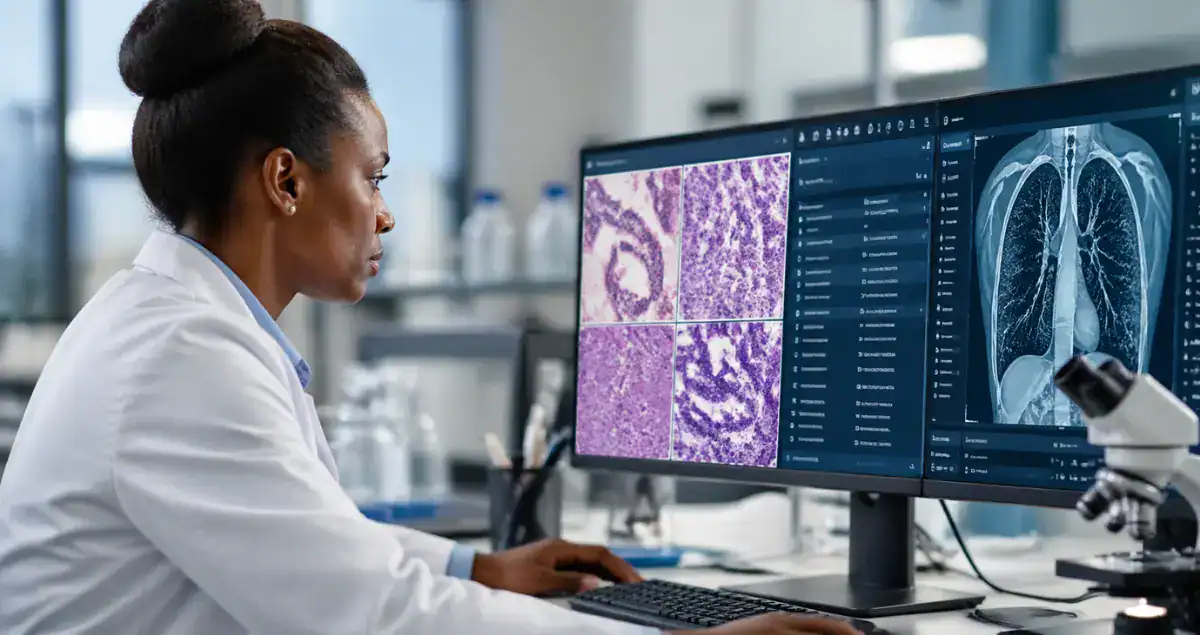
A pathology report is more than a diagnosis—it’s a roadmap. For patients with breast or lung cancer, it provides the detailed information that doctors use to design a treatment plan tailored specifically to the biology of the tumor and the needs of the individual.
At Honest Pathology, we often meet patients who have their report in hand but aren’t sure how it connects to the treatment decisions being recommended. Once you understand how these details guide care, the plan in front of you starts to make a lot more sense.
Why Pathology Is the Foundation of Treatment
Imaging can show where a tumor is and how big it appears. But pathology reveals what the tumor is.
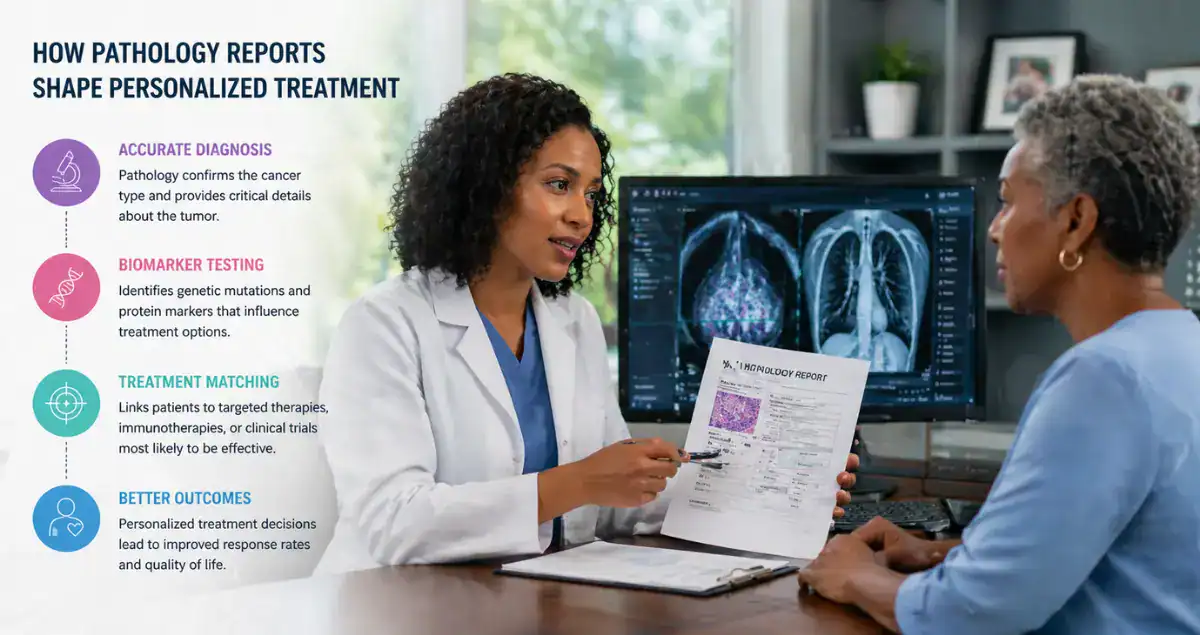
By examining the tissue under a microscope and performing specialized tests, pathologists identify the type of cancer, how aggressive it looks, and which biological features it has. These features are what allow treatment to be personalized rather than one-size-fits-all.
Two patients may have tumors in the same location, but their treatment plans can look very different based on what the pathology report shows.
Personalization in Breast Cancer
Breast cancer is one of the clearest examples of how pathology drives personalized care.
One of the most important parts of the report is hormone receptor status. This tells doctors whether the cancer cells respond to hormones like estrogen or progesterone. If they do, hormone-blocking therapies can be used as part of treatment.
Another key factor is HER2 status. Some breast cancers produce high levels of the HER2 protein, which can promote growth. When this is present, targeted therapies are available that specifically address this feature.
Tumor size and lymph node involvement also play a role in determining whether additional treatments like chemotherapy or radiation are recommended after surgery.
Even the grade of the tumor, which reflects how abnormal the cells look, helps guide decisions. Lower-grade tumors often behave more slowly, while higher-grade tumors may require more aggressive treatment.
All of these details come directly from the pathology report, and together they shape a plan that is tailored to the individual patient.
Personalization in Lung Cancer
Lung cancer treatment has become increasingly personalized, largely because of advances in pathology and molecular testing.
The first step is identifying the type of lung cancer, such as adenocarcinoma or squamous cell carcinoma. This distinction alone can influence which treatments are considered.
Beyond that, many lung cancers are now tested for specific genetic changes, often referred to as mutations or biomarkers. These can include alterations in genes that drive tumor growth.
If a specific mutation is found, targeted therapies may be available. These treatments are designed to act on that exact change, often with greater precision than traditional chemotherapy.
Immunotherapy is another area where pathology plays a role. Certain tests can help determine whether a tumor is likely to respond to treatments that stimulate the immune system.
Because of these advances, two patients with lung cancer may receive very different treatments based on the molecular features identified in their pathology report.
Why Small Details Make a Big Difference
To someone reading their report for the first time, many of these details can feel overwhelming or overly technical.
But each piece of information has a purpose. A single marker or measurement can influence whether a treatment is recommended, avoided, or prioritized.
This is why pathology reports are so detailed. They are not just describing the tumor—they are helping guide decisions that affect outcomes.
The Questions Patients Often Have
Many patients wonder why their treatment plan looks different from someone else’s, even if the diagnosis sounds similar.
The answer almost always lies in the pathology. Differences in receptor status, genetic mutations, tumor grade, or stage can all lead to different recommendations.
Patients also often ask whether all these tests are necessary. In most cases, they are what make personalized treatment possible, allowing doctors to choose therapies that are more likely to be effective and avoid those that are not.
Another common question is how certain these findings are. While pathology is a highly reliable tool, understanding the level of certainty and how results are interpreted can help you feel more confident in your plan.
Connecting the Report to Your Treatment Plan
One of the biggest challenges is bridging the gap between what’s written in the pathology report and what your doctor recommends next.
It’s not always obvious how a term or result translates into a specific treatment decision. Without that connection, it can feel like the plan is coming out of nowhere.
At Honest Pathology, we help patients review their reports through a personalized pathology consultation, in a way that makes these connections clear. When you understand how each finding influences your treatment options, you’re better prepared to have meaningful conversations with your care team.
Moving Forward with Confidence
Personalized medicine is one of the most important advances in cancer care, and pathology is at the center of it, as highlighted in personalized cancer treatment guidance.
Your treatment plan is not random. It’s built from the specific details of your tumor, carefully analyzed and interpreted to guide the best possible approach.
If you’ve received a breast or lung cancer pathology report and want to better understand how it shapes your treatment, consider scheduling a consultation with Honest Pathology. When you understand your report, you’re not just following a plan—you’re actively participating in it with clarity and confidence.