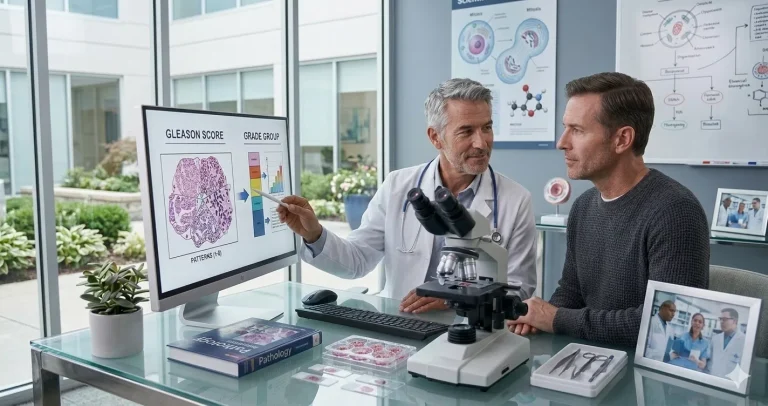
When someone is diagnosed with cancer, one of the first and most important steps in the journey is the pathology report. This document is more than just medical jargon. It’s the foundation upon which your treatment plan is built. Understanding what it says and how it influences your care can help you feel more confident and informed as you make crucial decisions.
At Honest Pathology™, we believe that every patient deserves to clearly understand their pathology report. Let’s break down what it means, why it’s so important, and how it directly shapes the treatment you receive.
What Is a Pathology Report
A pathology report is a detailed document prepared by a pathologist, a doctor who specializes in studying tissues, cells, and body fluids to diagnose disease. After a biopsy or surgery, the tissue sample is sent to a pathology lab. There, the pathologist examines it under a microscope, looking for signs of cancer or other abnormalities.
The report they create includes:
- The type of cancer (such as breast, lung, or colon cancer)
- The grade (how abnormal the cells look under the microscope)
- The stage (how advanced the cancer is and whether it has spread)
- Other key details like margins, lymph node involvement, and molecular test results
These findings aren’t just scientific descriptions, they tell your medical team exactly how aggressive the cancer is, how it behaves, and what treatments are most likely to help.
Why Pathology Reports Are So Important
Think of the pathology report as your cancer’s blueprint. Every decision your oncologist makes, whether it’s surgery, chemotherapy, radiation, or targeted therapy, starts with this report. For example, if your pathology report shows that the cancer is slow-growing, your doctor may recommend a less aggressive treatment plan or close monitoring.
If the cancer cells are high-grade and more likely to grow quickly, your team might suggest stronger treatments to prevent the disease from spreading. In some cases, specific molecular markers can qualify you for targeted therapies or immunotherapy designed for your cancer type. Without these details, your care team would be working in the dark. The pathology report ensures that your treatment is personalized to your unique diagnosis, not just based on a broad category of cancer.
Breaking Down the Key Sections of a Pathology Report
To understand how your report guides treatment, it helps to know what’s in it. Here are the main sections explained in simple terms:
1. Patient Information and Clinical History
This part lists your name, date of birth, and the reason for the biopsy (for example, “mass in left breast” or “colon polyp found during colonoscopy”). It gives context to the pathologist so they know what your doctor is concerned about.
2. Specimen Description
This describes what tissue was examined, such as “left lung nodule,” “right lymph node,” or “colon segment.” The pathologist notes its size, color, and texture before looking at it under the microscope.
3. Microscopic Description
This section contains the scientific details of what the pathologist saw under the microscope. While this part may seem overwhelming, it’s where the key clues come from, like how the cancer cells are arranged or whether they’ve invaded nearby tissue.
4. Diagnosis (Final Impression)
This is the most important part for patients. It names the exact type of cancer and provides a summary of all the findings in clear diagnostic terms. Example:
“Invasive ductal carcinoma, grade 2, estrogen receptor positive, HER2 negative.”
That short line carries enormous meaning, it determines your cancer’s behavior and which treatments will be most effective.
5. Margins and Lymph Nodes
If tissue was surgically removed, the pathologist checks the margins, or edges of the specimen, to see if any cancer cells remain. “Negative margins” mean the cancer was fully removed; “positive margins” mean more surgery or treatment may be needed.
Similarly, the report may describe whether any lymph nodes contain cancer cells. This helps determine how far the disease has spread (the stage) and guides whether chemotherapy or radiation is recommended.
6. Special or Molecular Tests
Modern cancer care often includes molecular testing. These tests look for genetic mutations or proteins that can predict which drugs will work best. For instance:
- HER2 status in breast cancer can identify candidates for targeted drugs like Herceptin.
- EGFR or ALK mutations in lung cancer can guide the use of targeted pills instead of chemotherapy.
These results turn a basic diagnosis into a precision treatment plan tailored just for you.
How Pathologists and Oncologists Work Together
Your oncologist and your pathologist are part of the same team. The pathologist provides the facts, and the oncologist turns those facts into action.
For example:
- The pathologist determines the stage and grade of the tumor.
- The oncologist decides whether to start with surgery, chemotherapy, or radiation based on those findings.
- If a pathology report shows a specific molecular marker, your oncologist may order a targeted therapy that blocks that mutation.
In short, the pathology report acts as the roadmap for every treatment decision. Without it, your medical team would lack the precise details they need to customize your care.
Examples of How Pathology Reports Shape Treatment Plans
Breast Cancer
In breast cancer, the report includes hormone receptor status (estrogen and progesterone) and HER2 results.
- If the tumor is estrogen-positive, you may receive hormone therapy like tamoxifen.
- If it’s HER2-positive, targeted therapy such as trastuzumab (Herceptin) might be added.
- If it’s triple-negative (lacking all three markers), chemotherapy is often the main approach.
Colon Cancer
The pathologist checks whether the cancer has invaded through the bowel wall and whether it’s spread to lymph nodes.
- Early-stage colon cancers may only need surgery.
- If lymph nodes are involved, chemotherapy is often added to prevent recurrence.
Lung Cancer
Molecular testing is especially critical here. Mutations like EGFR, ALK, or ROS1 can make patients eligible for oral targeted drugs that are much more effective than traditional chemotherapy.
Prostate Cancer
The Gleason score, found in the pathology report, shows how aggressive the cancer is.
- A low score (like 6) may mean active surveillance is safest.
- A higher score (like 8 or 9) could prompt surgery or radiation therapy.
In every case, the treatment path begins with, and depends on, the pathology findings.

Why Understanding Your Report Matters
Many patients never actually see their pathology report, or they receive it but find it too technical to understand. That can be frustrating and even frightening. But learning what it means helps you:
When you understand your pathology report, you’re able to ask clearer, more focused questions during appointments and participate confidently in shared decision-making. Instead of feeling confused or overwhelmed, you feel empowered and informed. You’re also more likely to notice errors or unclear results that may need review, ensuring your care stays on the right track. At Honest Pathology™, our mission is to bridge that gap. We help patients understand what their report says, in plain English, so they can make informed decisions alongside their medical team.
Getting a Second Opinion on Your Pathology Report
Because treatment depends so heavily on pathology, accuracy is essential. Even small differences in interpretation can change the treatment plan entirely. If something in your report seems unclear, or if you simply want reassurance, it’s reasonable to request a second opinion from another pathologist. This doesn’t mean you doubt your doctor; it’s about confirming that the diagnosis and details are completely accurate. Honest Pathology™ can help guide you through what a second opinion means, what parts of your report might benefit from review, and how to discuss this with your care team.
Common Questions Patients Ask About Pathology Reports
1. Why did it take so long to get my report?
Pathology takes time because the tissue must be processed, sliced into thin sections, stained, and carefully examined. Complex cases may require additional stains or molecular testing, which adds a few days.
2. Can I read my report online?
Most hospitals now upload reports to patient portals. It may look confusing at first, but it’s your right to read it, and resources like Honest Pathology™ can help translate it into everyday language.
3. What if I don’t understand a term?
Pathology reports are full of technical terms like “invasive,” “well-differentiated,” or “mitotic index.” These words describe how the cells look and behave. Honest Pathology™ specializes in explaining these phrases in clear, human terms.
4. Do all cancers get molecular testing?
Not always. Some cancers don’t yet have approved targeted therapies. But molecular testing is becoming more common each year, as precision medicine continues to expand.
The Pathology Report as a Living Document
Your pathology report isn’t static, it can evolve. If new information arises or additional tests are done, an addendum report may be added. Similarly, if you transfer care to a new hospital, your slides can be reviewed again, sometimes leading to updates in the diagnosis or stage.
This is why keeping a copy of your report is so valuable. It’s the key to your medical record and can save time if you seek treatment elsewhere or join a clinical trial.
How Honest Pathology™ Helps Patients Understand Their Reports
At Honest Pathology™, our mission is simple: to make sure no patient feels lost or confused when reading their pathology report. We provide educational consultations with board-certified pathologists who walk you through every detail, what it means, how it relates to your treatment, and what questions you might ask your oncologist.
Our services are educational only; we don’t diagnose or provide treatment and everything is handled through a HIPAA-secure, private process. Each consultation is designed for clarity and empowerment, because we believe knowledge is power. When you understand your pathology report, you’re better equipped to navigate your cancer journey with confidence and a greater sense of calm.
Final Thoughts: Knowledge Is Power in Cancer Care
Your pathology report isn’t just another document in your medical chart, it’s the heart of your diagnosis and the blueprint for your treatment plan. Every decision your doctors make depends on it. By understanding what it says, you take an active role in your own care.
At Honest Pathology™, we’re here to help you do just that. Whether you’re newly diagnosed or months into treatment, our goal is to ensure you understand your report in plain language, feel informed, and know what questions to ask next. Because when you understand your diagnosis, you can face your cancer journey, not with confusion, but with clarity, confidence, and hope.