Worried by HER2 IHC 2+ FISH pending on a breast cancer report? Learn what it means, why it happens, and what to ask next.
HER2 IHC 2+ FISH pending means the first HER2 test on a breast cancer sample was not clearly negative or clearly positive, so a more specific follow-up test is being performed.
This wording often appears on a pathology report after a breast biopsy or surgery. It can feel unsettling because HER2 status can affect treatment choices, especially whether certain anti-HER2 medicines may be useful.
Waiting for the FISH test can be emotionally difficult. Many patients read the phrase as a hidden warning, when it is usually a sign that the laboratory is following a careful, standard process rather than guessing. A result that is pending is not a final answer; it is a pause while the cancer’s biology is checked more precisely.
Pathology reports use compact language, and that language can sound colder than the clinical situation deserves. For patients trying to understand the full report, a clear overview of what a pathology report is can make this section feel less mysterious.
HER2 IHC 2+ FISH Pending — What It Actually Means
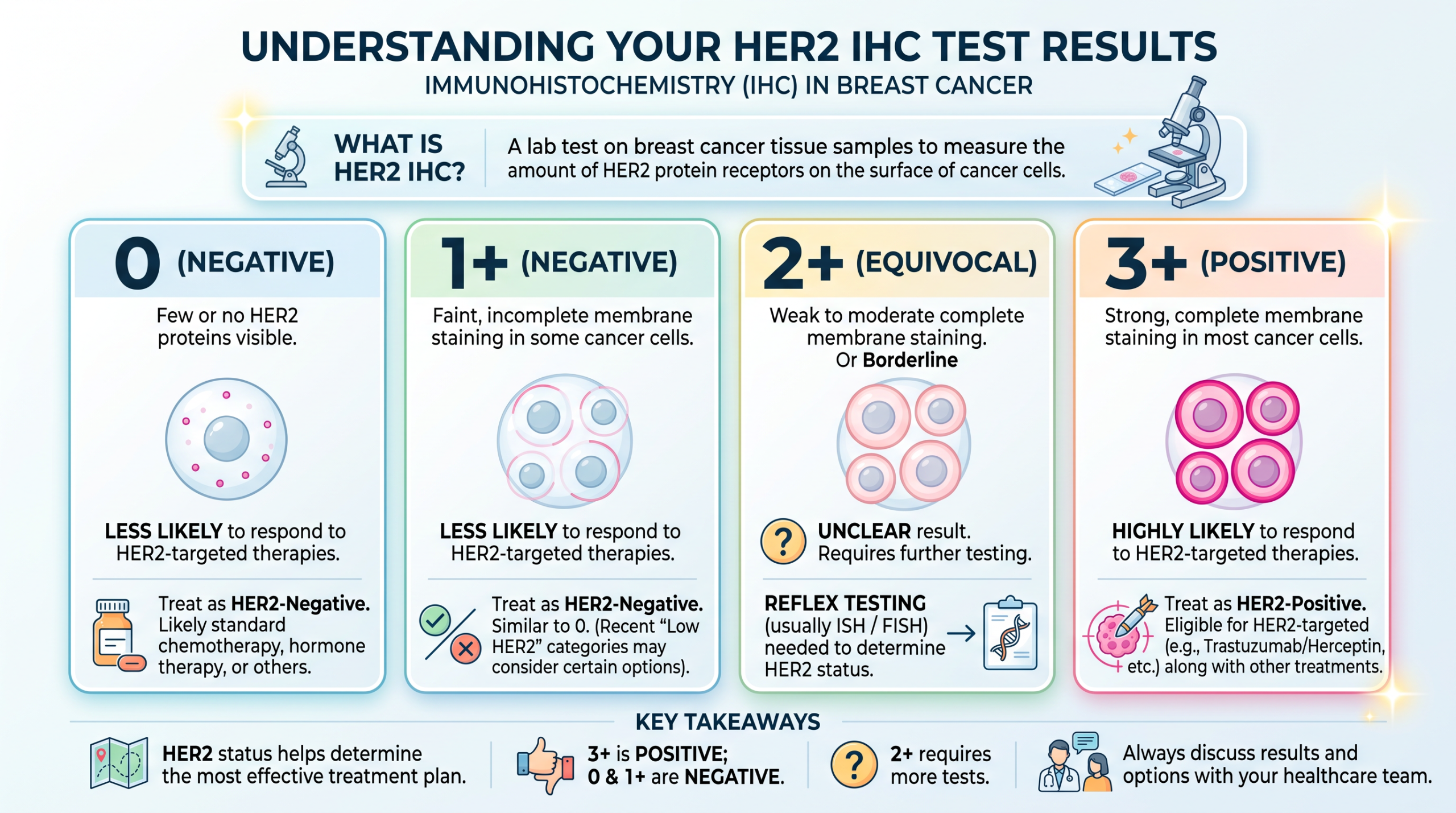
HER2 is a protein that can sit on the surface of breast cancer cells. Some breast cancers have extra HER2 activity, which can make the cancer grow more aggressively but can also make it treatable with targeted therapy. HER2 IHC 2+ FISH pending means the initial stain showed a moderate pattern, not low enough to call negative and not strong enough to call positive. In pathology language, that middle category is called an equivocal result.
The first test is usually immunohistochemistry staining, often shortened to IHC. This test uses a special stain to estimate how much HER2 protein is present on the cancer cell membranes. A score of 0 or 1+ is usually considered negative, and a score of 3+ is usually considered positive. A score of 2+ sits in the middle, like a traffic light stuck on yellow instead of green or red.
Because HER2 status can guide treatment, pathologists do not want to overcall or undercall it. The FISH test looks deeper by checking for HER2 gene amplification, meaning extra copies of the HER2 gene inside the cancer cells. If the FISH test shows amplification, the cancer is usually treated as HER2-positive. If it does not show amplification, the cancer is usually treated as HER2-negative for standard HER2-directed decisions.
Why Your Report Shows This Finding
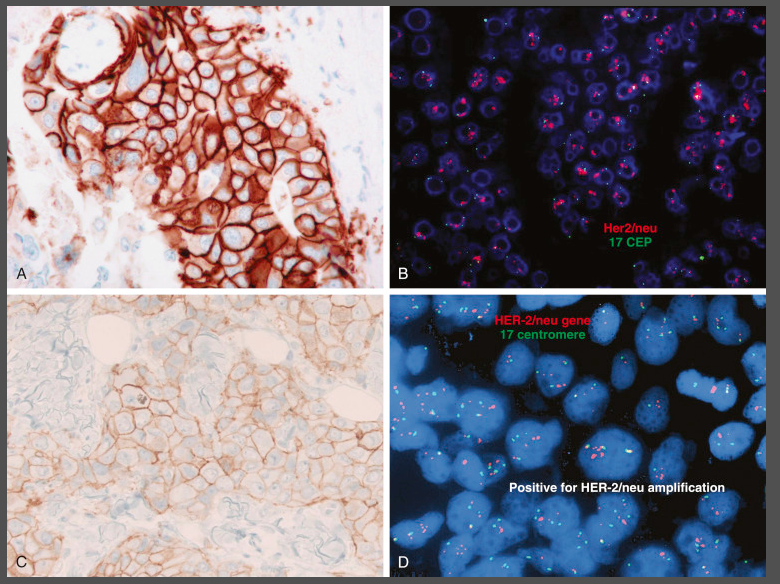
A report may show HER2 IHC 2+ FISH pending because the cancer cells had enough membrane staining to raise the question of HER2 positivity, but not enough to answer it confidently. This is common enough that breast cancer testing guidelines specifically address what to do next. The laboratory is not being vague; it is using a stepwise approach. The IHC result screens the tumor, and the FISH test clarifies the HER2 status.
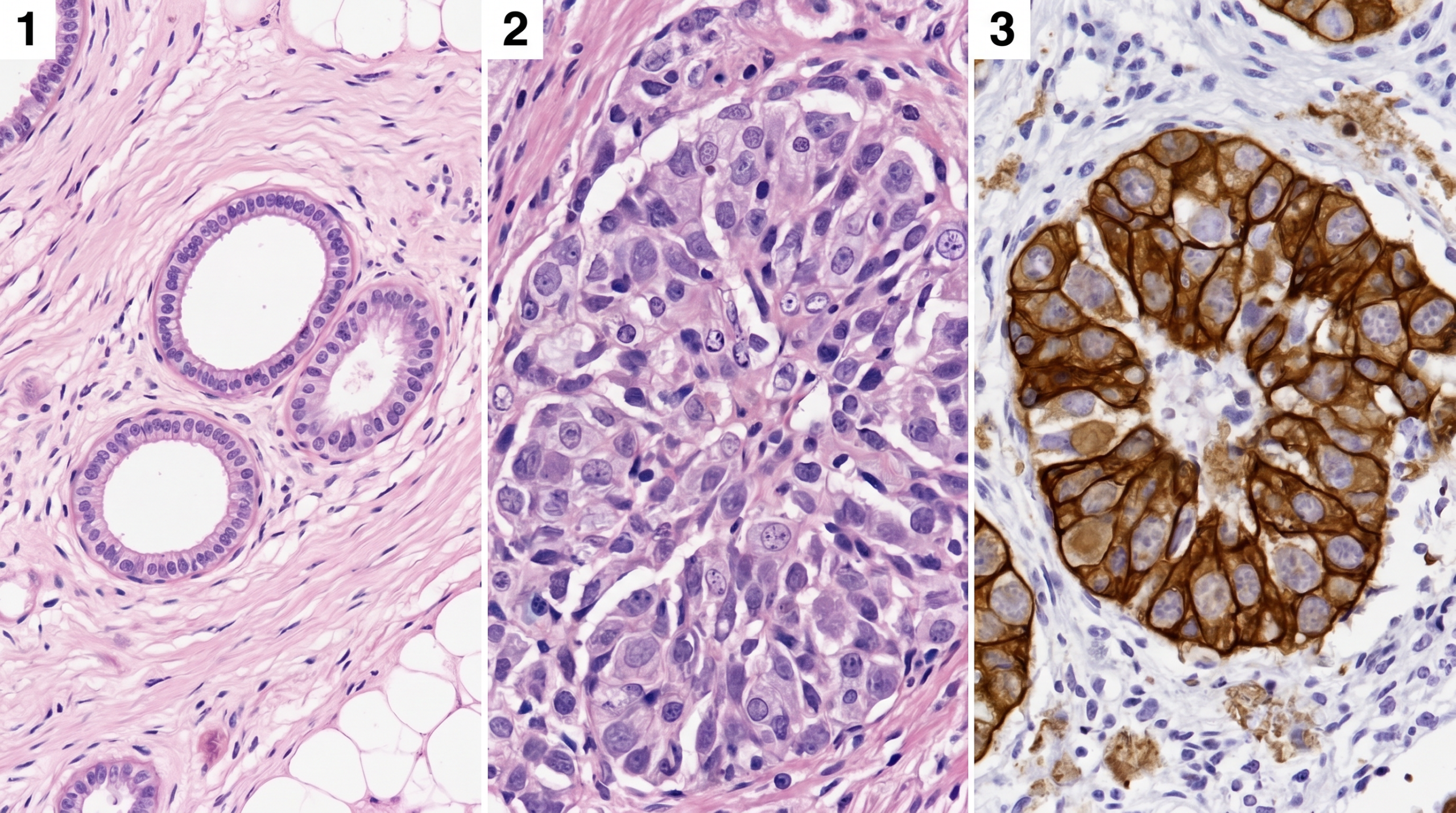
Several technical and biological factors can contribute to an equivocal result. Breast cancers are not always uniform from one area to another, and one part of a tumor may stain more strongly than another. Tissue handling, fixation time, and tumor type can also affect immunohistochemistry staining. Pathologists evaluate the staining pattern, the completeness of membrane staining, and the percentage of cells involved before assigning a score.
The FISH test adds a different type of information by evaluating gene amplification rather than protein staining alone. This distinction matters because breast cancer markers are interpreted together, not in isolation. Estrogen receptor, progesterone receptor, HER2, tumor grade, stage, and sometimes Ki-67 all help form the bigger clinical picture. When breast cancer markers seem confusing, resources such as understanding a pathology report with confidence can help patients prepare for a more focused discussion.
How Serious Is HER2 IHC 2+ FISH Pending?
HER2 IHC 2+ FISH pending is serious enough to deserve careful follow-up, but it is not, by itself, a final bad sign. The most honest answer is that the meaning depends on the FISH test result. If the FISH test is negative, the cancer is generally managed as HER2-negative in standard treatment planning. If the FISH test is positive, targeted therapy may become an important part of treatment.
The word “pending” often creates more fear than the result itself. Pending means the answer is not back yet, not that the answer is automatically dangerous. HER2 IHC 2+ FISH pending is like seeing a shadow on an image that needs a sharper view before anyone names it. The laboratory is slowing down because the decision matters.
In practical terms, the seriousness also depends on the cancer’s stage, grade, hormone receptor results, lymph node status, and overall health of the patient. HER2-positive breast cancers can behave differently from HER2-negative cancers, but modern targeted therapy has changed outcomes significantly for many patients. A positive FISH test may open the door to effective HER2-directed medicines rather than simply adding worry. A negative FISH test may narrow the plan toward hormone therapy, chemotherapy, radiation therapy, surgery, or combinations based on the rest of the case.
For some patients, the report may also include Ki-67 or other breast cancer markers that raise separate questions about growth rate. The meaning of Ki-67 is different from HER2, but the results are often reviewed together by the oncology team. A related explanation of what Ki-67 means may help place the HER2 status into context. No single marker should be treated as the entire story.
What Happens Next: Treatment and Monitoring
After HER2 IHC 2+ FISH pending appears on a report, the next step is usually waiting for the FISH test result from the pathology laboratory. Turnaround time varies by institution, but many results return within several business days. The oncology team may hold final treatment recommendations until HER2 status is complete. This waiting period can feel frustrating, but it prevents decisions from being made with incomplete information.
If the FISH test confirms gene amplification, the cancer is typically considered HER2-positive. In that setting, targeted therapy may be discussed, often alongside chemotherapy, surgery, radiation therapy, or hormone therapy depending on the full diagnosis. If the FISH test does not show gene amplification, the cancer is generally considered HER2-negative for standard HER2 treatment decisions. The same biopsy may still provide other important information, including hormone receptor status and tumor grade.
Monitoring depends on the final treatment plan rather than the IHC 2+ result alone. Patients may have additional imaging, surgical planning, medical oncology consultation, radiation oncology consultation, or genomic testing depending on the case. When HER2 IHC 2+ FISH pending remains unclear, a second pathology review may sometimes help confirm that the IHC score and FISH interpretation match the tissue findings. Guidance on when to get a second pathology opinion can be useful when results are unexpected, delayed, or difficult to reconcile.
Questions to Ask Your Doctor or Pathologist
- What was the final HER2 status after the FISH test was completed?
- Did the FISH test show HER2 gene amplification or no amplification?
- Was the IHC 2+ score based on strong staining in part of the tumor or moderate staining throughout the tumor?
- Are the estrogen receptor and progesterone receptor results positive or negative?
- How do the breast cancer markers fit with the tumor grade, stage, and lymph node findings?
- Would targeted therapy be recommended if the FISH test is positive?
- Would a second pathology opinion change treatment planning in this specific case?
These questions help turn a frightening phrase into a practical conversation. HER2 IHC 2+ FISH pending is not meant to leave patients in limbo; it is meant to identify the right final category before treatment begins. A written list can help patients stay grounded during appointments, especially when emotions make it hard to remember every detail.
A second opinion is most helpful when the result affects treatment, when the report has conflicting information, or when the diagnosis was made at an outside facility and care is moving to a new center. Patients considering that step can review how to get a second opinion on a pathology diagnosis. The goal is not to create doubt; the goal is to make sure the treatment plan rests on the clearest possible diagnosis.
Frequently Asked Questions
Is HER2 IHC 2+ FISH pending cancer positive?
HER2 IHC 2+ FISH pending does not mean the cancer is definitely HER2-positive. It means the first HER2 test was equivocal and needs confirmation by the FISH test. The final HER2 status depends on whether the FISH test shows gene amplification. Treatment decisions usually wait for that final result.
How long does HER2 FISH testing take?
The FISH test often takes several business days, although timing varies by laboratory, specimen type, and whether the test is performed in-house or sent out. Delays do not automatically mean something is wrong. The test requires careful processing, analysis, and review. The oncology team can usually provide the expected turnaround time for that specific facility.
What happens if HER2 FISH is positive?
If HER2 FISH is positive, the tumor usually has HER2 gene amplification and is classified as HER2-positive. This may make targeted therapy part of the treatment plan. The exact plan depends on cancer stage, hormone receptor status, surgery timing, and the patient’s overall health. A positive result can be clinically meaningful because HER2-directed treatments are well-established in many breast cancer settings.
What happens if HER2 FISH is negative?
If the FISH test is negative, HER2 IHC 2+ FISH pending usually resolves into a HER2-negative final interpretation. In that situation, standard HER2-targeted therapy is often not used, although treatment still depends on the complete case. Hormone receptors, grade, stage, lymph nodes, and other breast cancer markers remain important. The result should be reviewed with the oncology team before any conclusions are made.
Can HER2 results change after surgery?
HER2 results can sometimes be repeated or reassessed on the surgical specimen, especially if the biopsy was small, technically limited, or showed mixed staining. Most results remain consistent, but differences can occur because a larger tissue sample may show more of the tumor. Pathologists compare the biopsy and surgery findings when needed. If the HER2 status is unexpected, a second pathology review may be reasonable.
HER2 IHC 2+ FISH pending is a waiting point, not a final verdict. The purpose of the additional test is to protect patients from treatment decisions based on an uncertain middle result. Honest Pathology consultations can help patients and families understand the wording of a report, the meaning of the HER2 results, and whether a second review may be helpful.
References:
National Cancer Institute — Pathology Reports Fact Sheet
National Cancer Institute — Breast Cancer Treatment
National Cancer Institute — HER2 Definition