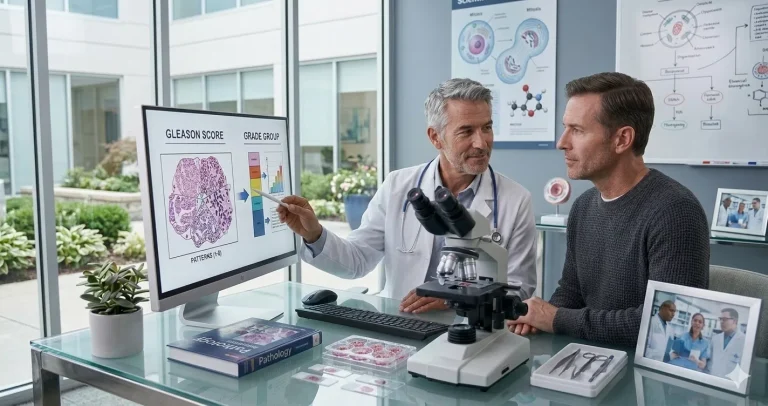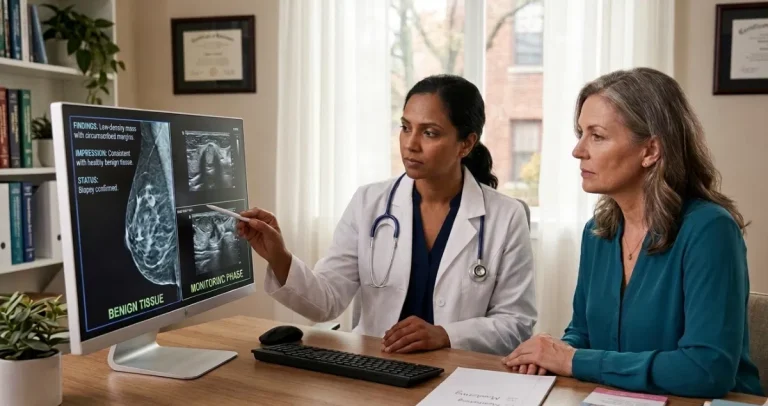
Receiving a biopsy result can be one of the most stressful moments in a patient’s life. Many people expect that once a tissue sample is taken and examined under a microscope, the answer will be clear, final, and indisputable. So when patients learn that two pathologists can look at the same biopsy and reach different conclusions, it can feel confusing, alarming, or even frightening.
This situation is far more common than most people realize, and it does not mean someone made a mistake or that your care is compromised. Understanding why differences in pathology opinions happen, what they mean for your diagnosis, and how they can affect treatment decisions can help you feel more confident and in control during a very uncertain time.
Pathology Is Both Science and Expert Interpretation
Pathology is a medical specialty grounded in science, training, and established diagnostic criteria, but it is not purely mechanical. Unlike a blood test that generates a numerical value, a biopsy is a visual and interpretive assessment of tissue architecture, cellular features, and subtle patterns of abnormality.
Pathologists evaluate how cells are shaped, how large their nuclei appear, how they are arranged, and how they interact with surrounding tissue. These features exist along a spectrum rather than in sharp, black-and-white categories. One pathologist may see changes that lean toward a benign process, while another may feel those same changes cross a threshold into precancerous or malignant territory.
This interpretive aspect is one of the most important reasons why two expert pathologists can reasonably disagree while both practicing good medicine.
Small Samples Can Tell an Incomplete Story
A biopsy represents only a tiny fraction of the tissue inside the body. Even when performed carefully, it is still a sample, not the entire lesion or organ. Some diseases are unevenly distributed, meaning abnormal areas may sit right next to more normal tissue.
One pathologist may focus on a particularly atypical area within the sample, while another may weigh the overall pattern more heavily. Both perspectives can be valid, especially when the tissue shows borderline or evolving changes. This is especially common in breast biopsies, prostate biopsies, skin lesions, gastrointestinal biopsies, and gynecologic specimens.
Patients often search online wondering how a biopsy can be wrong. In most cases, it is not wrong so much as limited by the amount of tissue available.
Diagnostic Criteria Often Include Gray Zones
Medical textbooks and professional guidelines define diagnostic categories, but many include gray zones by design. Terms such as atypical, suspicious, indeterminate, borderline, or cannot rule out are not signs of uncertainty due to lack of knowledge. They reflect the biological reality that disease does not always develop in neat steps.
Two pathologists may interpret the same gray-zone findings differently based on their experience, training, and threshold for assigning a more serious diagnosis. One may lean conservative to avoid overtreatment, while another may lean cautious to avoid missing something clinically significant. Neither approach is inherently wrong, but they can lead to different reports.
This is one reason patients often ask whether pathology is subjective. The answer is that it is standardized but not absolute.
Experience and Subspecialty Training Matter
Not all pathologists practice the same way or see the same volume of specific cases. A general pathologist may review a wide range of specimens, while a subspecialty pathologist may focus almost exclusively on breast, dermatopathology, gastrointestinal pathology, hematopathology, or urologic pathology.
Subspecialists often develop a sharper eye for subtle patterns within their focus area. This can lead to differences in interpretation, especially in complex or borderline cases. When patients wonder whether getting a second pathology opinion is worth it, the answer is often yes, particularly if the diagnosis will significantly affect treatment decisions.

Different Diagnoses Can Mean Different Treatments
One of the most important reasons pathology disagreements matter is that diagnoses guide treatment. A finding labeled benign may require no further action, while a diagnosis of precancer or cancer can lead to surgery, chemotherapy, radiation, or long-term surveillance.
When two pathologists disagree, it does not mean one treatment is automatically wrong. It means the case deserves careful review, additional context, and sometimes further testing. Immunohistochemical stains, molecular studies, or additional tissue sampling may help clarify the diagnosis.
Patients frequently ask whether a second opinion can change their treatment plan. The answer is yes, and in some cases it can dramatically alter the course of care.
Why Second Opinions Are Common in Pathology
Second opinions in pathology are not rare, unusual, or a sign of distrust. In many academic centers, they are routine for certain diagnoses. Difficult or high-stakes cases are often reviewed by multiple pathologists before a final diagnosis is issued.
For patients, seeking a second opinion can provide reassurance, confirm a serious diagnosis, or occasionally reveal that a lesion is less aggressive than initially thought. It can also help clarify ambiguous language in a pathology report that leaves patients searching the internet late at night for answers.
What a Difference in Opinion Does Not Mean
When patients hear that two pathologists disagree, they sometimes worry that pathology is unreliable or that no one really knows what is happening. This is not true. Most pathology diagnoses are straightforward and highly reproducible. Disagreements tend to arise in a small subset of cases that fall near diagnostic boundaries.
A difference in opinion does not mean your biopsy was mishandled, that your doctor failed you, or that you are being experimented on. It means your tissue shows complex features that deserve thoughtful evaluation.
How Patients Should Respond to Conflicting Reports
If you receive differing pathology opinions, the most important thing is not to panic. Instead, ask questions and seek clarity. Understanding exactly where the disagreement lies can be more helpful than focusing on the disagreement itself.
Sometimes the difference is semantic rather than clinical, meaning the wording differs but the management recommendations are similar. In other cases, the disagreement may genuinely affect treatment choices, which is when additional review becomes especially valuable.
Patients often wonder if insurance covers pathology second opinions. Many do, particularly when the diagnosis affects major treatment decisions, though coverage varies and is worth checking.
The Emotional Impact of Diagnostic Uncertainty
Waiting for answers is emotionally exhausting. Conflicting pathology reports can intensify fear, anger, and frustration. It is normal to feel unsettled when experts do not immediately agree on something as personal as your own tissue.
Acknowledging this emotional toll is important. Clear communication, transparent explanations, and access to expert review can significantly reduce stress and help patients feel more grounded during an uncertain time.
Why Transparency in Pathology Matters
Pathology reports are often written for clinicians, not patients, and can be difficult to understand. When diagnoses are complex or borderline, clear explanations matter even more. Patients deserve to know not just what the diagnosis is, but how confident it is and what alternative interpretations exist.
This transparency helps patients participate more meaningfully in shared decision-making with their healthcare team.
Getting Expert Review When It Matters Most
When a diagnosis will influence major medical decisions, an expert pathology review can be invaluable. Independent review can confirm a diagnosis, refine it, or occasionally change it in ways that meaningfully affect care.
If you are facing uncertainty, conflicting opinions, or simply want reassurance that your diagnosis has been carefully and thoughtfully evaluated, a dedicated pathology consultation can provide clarity and peace of mind.
A Final Word for Patients
Two pathologists giving different opinions on the same biopsy does not mean something has gone wrong. It reflects the complexity of human biology and the careful judgment required to interpret it. What matters most is that you understand your diagnosis, feel confident in the expertise behind it, and have access to clear answers when questions arise.
If you are seeking clarity, reassurance, or an expert second opinion on a pathology diagnosis, consider reaching out to Honest Pathology. Our focus is on thoughtful, transparent, patient-centered pathology review, helping you understand what your biopsy truly means so you can move forward with confidence.