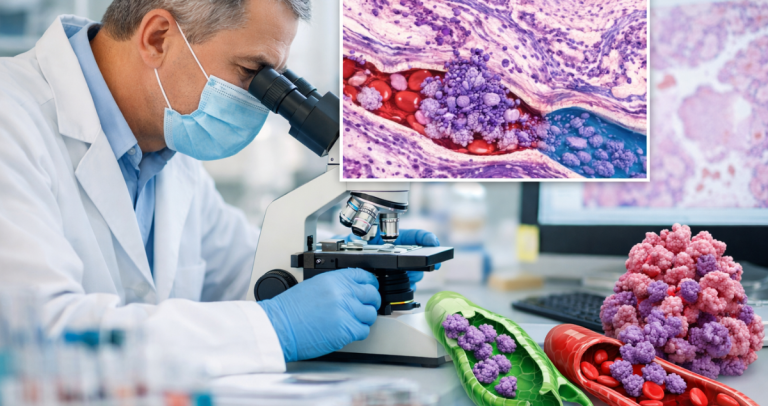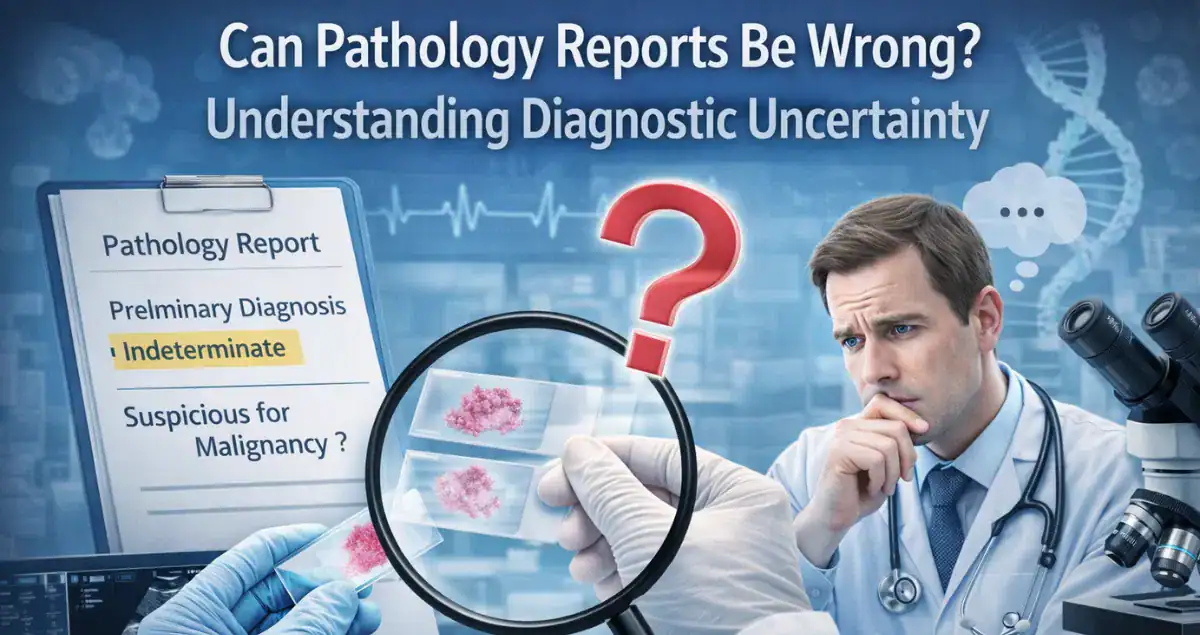
Pathology reports carry enormous weight. A few lines of text can change treatment plans, alter life trajectories, and reshape how someone understands their own body. Because of that authority, many patients quietly ask a difficult question: can a pathology report ever be wrong? The honest answer is yes, but not in the way people often fear. Understanding how and why pathology can be incorrect, incomplete, or revised helps patients make informed decisions without losing trust in the system.
Pathology is not guesswork. It is evidence-based medicine. But like all medical disciplines, it operates within real-world limits.
What a Pathology Report Represents
A pathology report reflects a pathologist’s best interpretation of the tissue provided, using the information available at the time. It is not an abstract opinion. It is a conclusion drawn from microscopic examination, clinical context, and, when appropriate, specialized testing.
Because pathology relies on sampling, preparation, and interpretation, it is both powerful and constrained. Reports are definitive within the boundaries of the specimen examined.
How Pathology Errors Actually Occur
Most pathology discrepancies are not dramatic misreads. They are subtle differences in interpretation, sampling limitations, or evolving understanding as additional information becomes available.
A specimen may not include the most diagnostic area of a lesion. Tissue quality may be compromised by crush artifact, cautery, or fragmentation. Some diseases exist along a spectrum, where the line between benign and malignant is genuinely narrow.
In these situations, different pathologists may reasonably arrive at different conclusions based on the same material. This reflects complexity, not carelessness.
Interpretation Versus Mistake
There is an important difference between interpretation and error. Interpretation involves judgment, pattern recognition, and experience. Two qualified pathologists may disagree without either being wrong.
True errors, such as specimen mislabeling or overlooked diagnostic features, are rare but possible. Pathology departments have multiple safeguards in place to prevent them, including peer review, quality control processes, and standardized workflows.
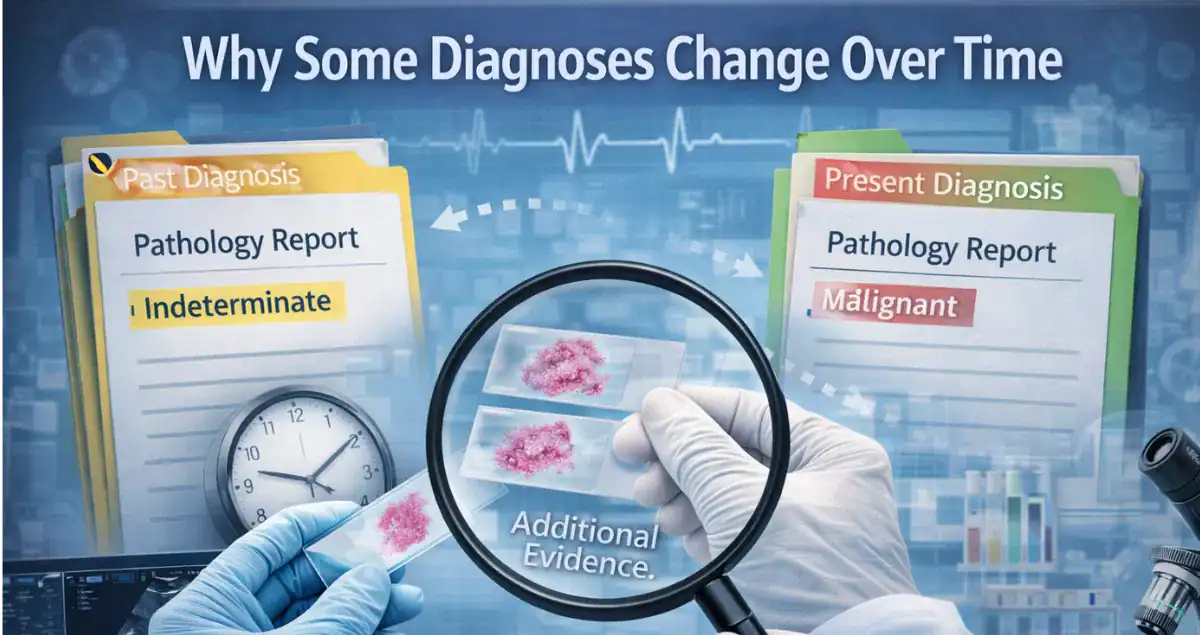 Why Some Diagnoses Change Over Time
A pathology diagnosis may evolve as additional tissue, deeper sections, or ancillary studies become available. What begins as a borderline or indeterminate finding may later be clarified.
This evolution does not mean the original report was reckless. It means the diagnosis matured as evidence accumulated. Medicine advances by revision, not rigidity.
Why Patients Rarely Hear About Pathology Uncertainty
Pathology reports are written conservatively and precisely. Language is chosen to avoid unnecessary alarm, but this can sometimes obscure the nuance of uncertainty.
Patients may receive a final diagnosis without fully appreciating how narrow or broad the diagnostic margin is. Understanding that pathology exists on a spectrum helps explain why disagreement or revision can occur.
When a Pathology Report Should Be Revisited
A pathology report deserves renewed discussion when clinical findings, imaging, or disease behavior do not align with the diagnosis. Persistent symptoms, unexpected progression, or response to treatment that does not fit the diagnosis can all signal the need for deeper explanation.
Revisiting a report is not about assigning blame. It is about aligning information.
The Emotional Impact of Diagnostic Uncertainty
Learning that a diagnosis may be uncertain or revised can be deeply unsettling. Many patients fear that something was missed or overlooked.
Clear, honest communication helps restore trust. Most diagnostic uncertainty is managed through careful follow-up and thoughtful explanation rather than dramatic correction.
Why Accuracy Matters So Much
Pathology diagnoses guide surgery, chemotherapy, radiation, and long-term surveillance. Accuracy is not academic. It directly affects lives. That is why caution, consultation, and clear documentation are built into pathology practice.
A willingness to acknowledge uncertainty is part of responsible medicine.
Conclusion and Call to Action
Pathology reports are powerful, but they are not infallible. Most are accurate, some evolve, and a small number may be limited by sampling or interpretation. What matters is that patients are not left in the dark about what their report does and does not say.
If you have a pathology report that feels confusing, overwhelming, or difficult to interpret, you deserve clear, plain-language explanations. Honest Pathology exists to help patients understand pathology reports, diagnostic uncertainty, and medical language, so you can engage in your care with confidence rather than confusion.