A pancreatic report can feel frightening. IPMN high grade dysplasia means a serious precancerous change; learn what to ask next.
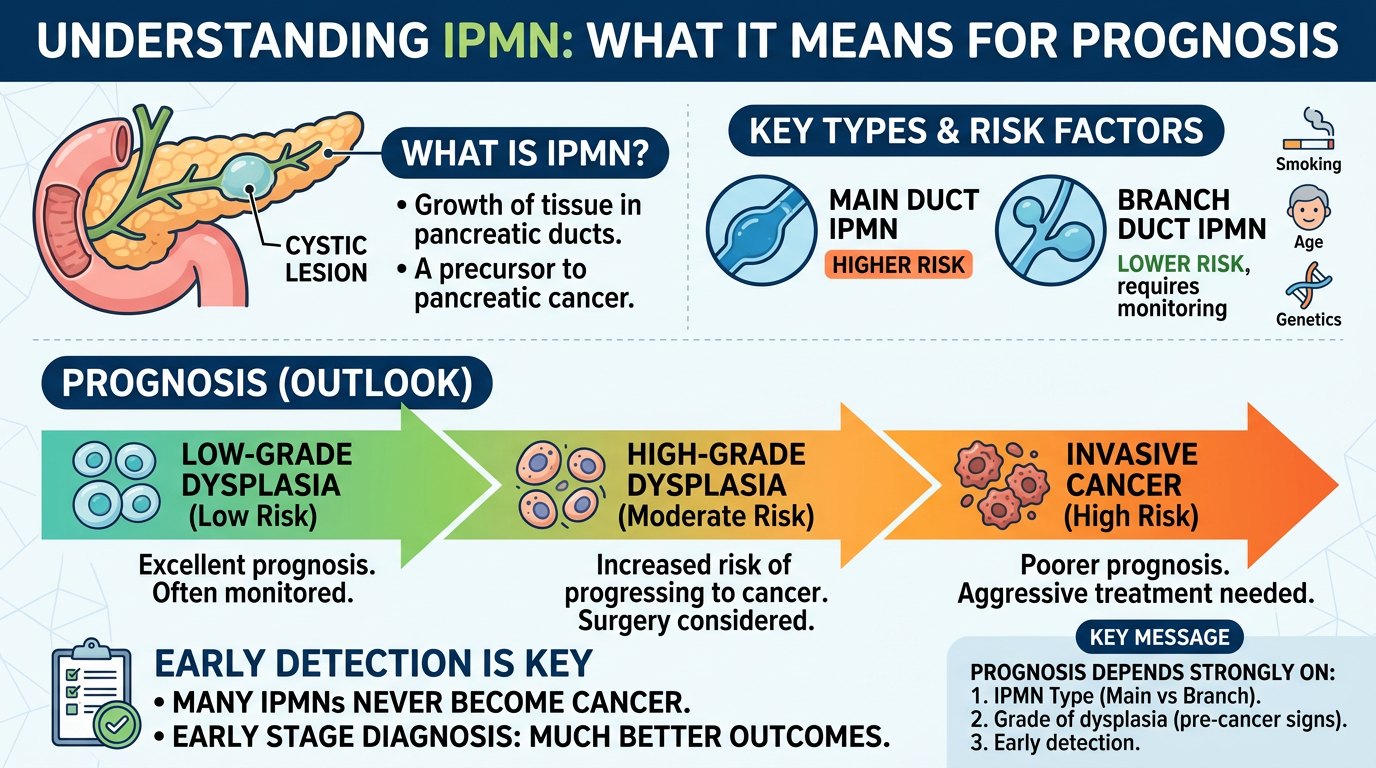
IPMN high grade dysplasia means that a pancreatic cyst called an IPMN contains advanced precancerous cell changes, but the wording does not automatically mean invasive cancer is present. This diagnosis is usually made by a pathologist after examining tissue from pancreatic surgery, a biopsy, or sometimes fluid and cells from a cyst procedure. The finding matters because high-grade dysplasia is close to the point where abnormal cells can become invasive.
Seeing this phrase in a pathology report can feel overwhelming, especially because the pancreas is associated with frightening diagnoses. Clear language can reduce some of that fear. The key is understanding exactly what was found, whether invasive cancer was identified, whether the lesion was fully removed, and what follow-up is expected.
For patients trying to understand the basic structure of a report, a plain-language overview such as What Is a Pathology Report? can make the terminology easier to place in context.
IPMN High Grade Dysplasia — What It Actually Means
IPMN stands for intraductal papillary mucinous neoplasm, a growth that begins in the pancreatic duct system and often produces thick mucus. In everyday terms, it can be thought of as an abnormal lining inside a plumbing tube of the pancreas. A pancreatic cyst from an IPMN is not just a simple fluid bubble; it is a cystic growth lined by cells that can change over time. When a pathology report says IPMN high grade dysplasia, the pathologist is describing cells that look very abnormal under the microscope but have not necessarily broken through into surrounding tissue.
Dysplasia means abnormal cell growth. Low-grade dysplasia is milder, while high-grade dysplasia shows more severe abnormalities in cell size, shape, organization, and behavior. The pathologist looks for crowded cells, enlarged nuclei, loss of normal cell polarity, and complex papillary growth patterns. These microscopic details help separate a concerning precancerous lesion from invasive cancer. The phrase IPMN high grade dysplasia is therefore serious, but it is also precise.
The distinction matters because treatment decisions depend on whether abnormal cells are still confined to the duct lining. A pancreatic cyst with high-grade dysplasia may have been removed before invasion developed, which can be very different from finding established pancreatic cancer. A pathology report may also describe the subtype of the IPMN, such as intestinal, gastric, pancreatobiliary, or oncocytic type. These details help the clinical team understand risk, but the most urgent questions usually involve invasion, margins, lymph nodes, and the main duct.
Why the Report Shows This Finding
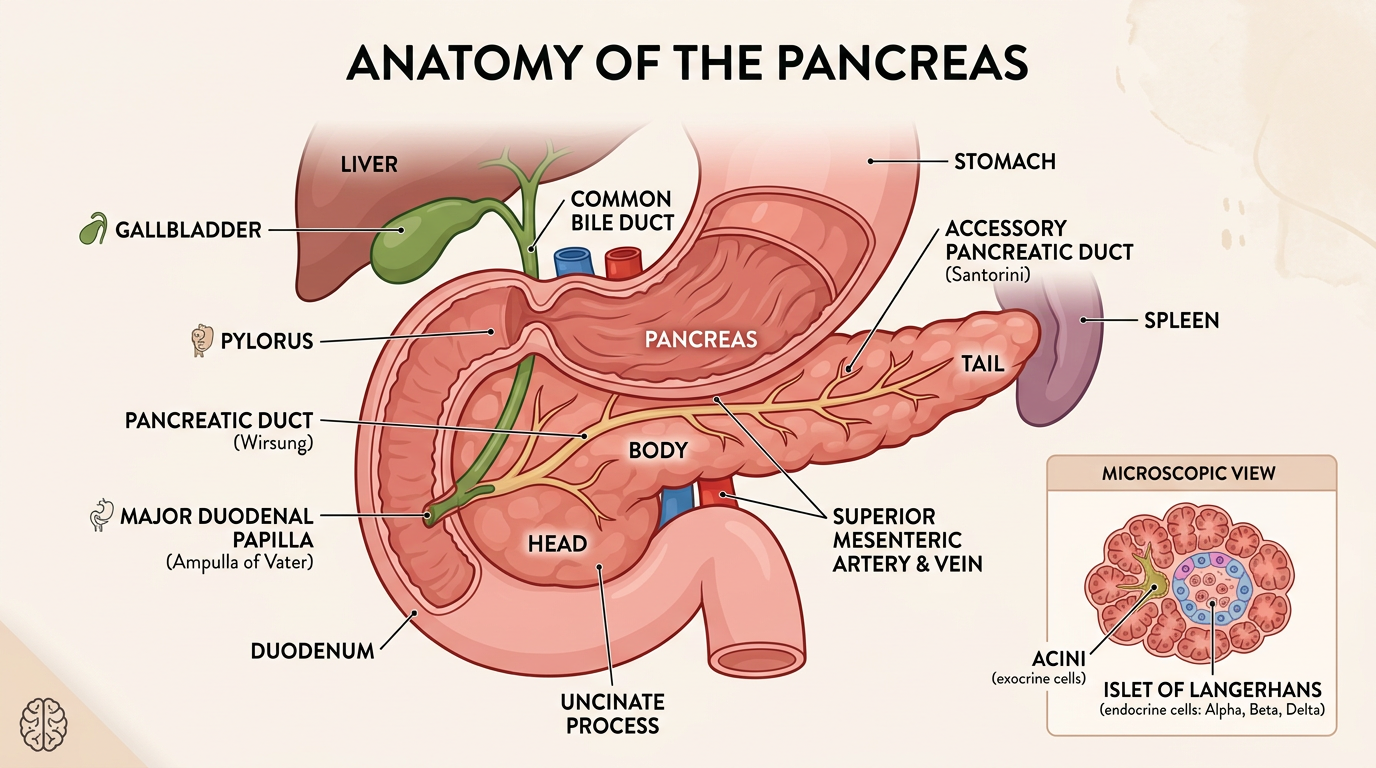
An IPMN develops when the cells lining the pancreatic duct begin growing in an abnormal, mucus-producing pattern. Some IPMNs remain low risk for years, while others progress through increasing grades of dysplasia. A pancreatic cyst may be followed with imaging for some time before surgery is recommended. Features such as growth, a mural nodule, main duct involvement, symptoms, jaundice, or concerning fluid studies may prompt removal or closer evaluation.
Under the microscope, the pathologist determines whether the lesion is an intraductal papillary mucinous neoplasm and then grades the dysplasia. The report may describe whether the IPMN involves a branch duct, the main duct, or both. Main duct involvement can carry a higher risk than many small branch-duct lesions, although the entire clinical picture matters. The pathology report may also mention chronic pancreatitis, inflammation, fibrosis, or nearby changes caused by duct blockage.
The central task is to look carefully for invasive cancer. Invasion means abnormal cells have moved beyond the duct lining and entered the pancreatic tissue around the duct. That step changes staging, prognosis, and often treatment. The pathologist also evaluates the surgical margin, which is the cut edge of the removed tissue, to see whether dysplasia or cancer reaches the edge. For a pancreatic resection, margin status can affect whether additional treatment, additional surgery, or close surveillance is discussed.
How Serious Is IPMN High Grade Dysplasia?
IPMN high grade dysplasia is a serious finding because it represents an advanced precancerous change in the pancreas. It is more concerning than low-grade dysplasia and usually explains why surgery or close specialist management was recommended. However, the seriousness depends heavily on what else the pathology report says. The most important line is whether invasive cancer is absent or present.
When IPMN high grade dysplasia is found without invasive cancer, the lesion may have been removed at a stage before it became pancreatic cancer. That can be reassuring, although follow-up is still needed because the remaining pancreas may be at risk for additional IPMN changes. If invasive cancer is present, the report should describe tumor size, grade, lymphovascular invasion, perineural invasion, lymph node status, and margins. Those findings shift the discussion from a precancerous lesion to cancer staging and treatment planning.
Another key factor is the surgical margin. If high-grade dysplasia is present at a surgical margin, the clinical team may discuss whether residual abnormal duct lining could remain. If the margin is negative, that means the examined cut edge does not show the lesion at that edge. A positive surgical margin does not always mean invasive cancer remains, but it raises a specific question for the surgeon, gastroenterologist, and pathologist. The safest interpretation comes from reviewing the full pathology report together with operative notes and imaging.
For many patients, the words sound more frightening than the actual meaning once separated into parts. IPMN describes the type of lesion, high grade dysplasia describes how abnormal the lining cells look, and invasive cancer describes whether the cells have spread beyond where they started. Those are related but not identical ideas. A report that says IPMN high grade dysplasia without invasion is not the same as a report diagnosing pancreatic ductal adenocarcinoma. That distinction is one reason an expert pathology review can be valuable when wording is unclear.
What Happens Next: Treatment and Monitoring
Next steps depend on the procedure already performed. If the IPMN was removed in a pancreaticoduodenectomy, distal pancreatectomy, or other pancreatic surgery, the care team reviews the final pathology report, imaging, and recovery status. The report usually guides whether surveillance alone is appropriate or whether oncology consultation is needed. If invasive cancer is absent, many patients move into imaging surveillance rather than chemotherapy.
If the pancreatic cyst has not been removed and high-grade dysplasia is suspected from cytology or biopsy, surgeons and gastroenterologists may discuss whether resection is appropriate. Cytology samples can be limited because they examine cells, not the whole lesion. A pathology report from surgery is usually more definitive because it allows the pathologist to evaluate the entire cyst, pancreatic duct, surrounding tissue, lymph nodes, and surgical margin. This difference explains why a preoperative diagnosis may be phrased as suspicious or concerning rather than final.
Monitoring commonly includes MRI, MRCP, CT, endoscopic ultrasound, or a combination of these tools, depending on the remaining pancreas and the patient’s overall health. The frequency varies based on margin status, duct involvement, family history, genetic risk, and whether invasive cancer was found. Patients who want help translating report language may benefit from Understanding a Pathology Report before the next appointment. A clear list of findings makes it easier to ask focused questions rather than feeling trapped by unfamiliar terminology.
Questions to Ask the Doctor or Pathologist
- Does the pathology report say there is invasive cancer, or only IPMN high grade dysplasia?
- Was the IPMN in a branch duct, the main duct, or both?
- Were the surgical margin results negative, positive, or close?
- Did the pathologist examine lymph nodes, and were any involved?
- What subtype of intraductal papillary mucinous neoplasm was identified?
- Does the remaining pancreas contain any other pancreatic cyst or duct abnormality?
- What surveillance schedule is recommended after this diagnosis?
These questions help separate the most important clinical issues from the most frightening words. The phrase IPMN high grade dysplasia should prompt careful discussion, but the full meaning comes from the complete report. Margin status, invasion status, lymph node status, and duct involvement carry major weight.
A second review may be especially helpful if the report language is complicated, if treatment decisions depend on whether invasion is present, or if the diagnosis was made from limited biopsy or cytology material. Guidance on timing and reasons for review is available in When Should You Get a Second Pathology Opinion?. A pancreatic pathology second opinion can confirm the diagnosis, clarify margins, and make the next consultation more productive.
Frequently Asked Questions
Is IPMN high grade dysplasia cancer?
IPMN high grade dysplasia is generally considered a high-risk precancerous diagnosis, not the same thing as invasive cancer by itself. The critical question is whether the pathology report also says invasive carcinoma, invasive adenocarcinoma, or invasive cancer. If invasion is absent, the abnormal cells are described as confined to the duct lining. If invasion is present, staging and cancer treatment discussions become necessary.
Can IPMN high grade dysplasia come back after surgery?
IPMN high grade dysplasia can be completely removed, especially when margins are negative and no invasive cancer is found. However, the remaining pancreas can still develop new or residual IPMN-related changes over time. This is why surveillance imaging is often recommended even after successful surgery. Follow-up is based on the original findings, margin status, and the patient’s overall risk factors.
What does a positive margin mean in an IPMN report?
A positive surgical margin means abnormal cells are seen at the cut edge of the removed tissue. In an IPMN report, the margin may show low-grade dysplasia, high-grade dysplasia, or invasive cancer, and each has a different meaning. A margin involved by high-grade dysplasia raises concern for residual abnormal duct lining. The surgeon and pathology team interpret this together with imaging and the location of the margin.
Does every pancreatic cyst with IPMN need surgery?
Not every pancreatic cyst with IPMN requires surgery. Many small branch-duct IPMNs without concerning features are monitored with imaging. Surgery is more likely when there are high-risk features such as main duct dilation, a solid component, jaundice, rapid growth, or strong suspicion for high-grade dysplasia. Decisions also depend on age, other medical conditions, and surgical risk.
Should a patient get a second opinion for IPMN high grade dysplasia?
A second opinion can be very reasonable for IPMN high grade dysplasia because the distinction between high-grade dysplasia and early invasive cancer can affect management. Expert review may also clarify the subtype, surgical margin, and whether all concerning areas were sampled. This is most useful before major treatment decisions or when the wording feels uncertain. Practical steps are explained in How to Get a Second Opinion on a Pathology Diagnosis.
A diagnosis involving the pancreas can feel heavy, but careful pathology language often provides a map rather than only a warning. The most helpful next step is to confirm whether invasion is present, whether margins are clear, and what surveillance is recommended. Honest Pathology consultations can help patients and families understand the report before meeting with the treating team.
References:
National Cancer Institute — Intraductal Papillary Mucinous Neoplasm
National Cancer Institute — Pathology Reports Fact Sheet
NCBI Bookshelf — Medical Reference Resources