Seeing visceral pleural invasion can feel frightening. Learn what PL1 or PL2 means, how it affects staging, and what to ask next.
Visceral pleural invasion means a lung cancer has reached or crossed the thin lining that covers the lung, which can affect lung cancer stage and treatment planning. This finding is usually reported after a pathologist examines the removed tumor under a microscope. Terms such as PL1 or PL2 can look technical and intimidating, but they describe how far the tumor extends into the pleural surface.
For many patients and families, this phrase appears suddenly in a pathology report after surgery, when emotions are already stretched thin. The words may sound like the cancer has spread widely, but visceral pleural invasion does not mean the same thing as distant metastasis. It is a local tumor feature, and its meaning depends on tumor size, lymph node status, margin status, and the overall clinical picture.
A pathology report often contains several separate pieces of information that fit together like parts of a map. For patients trying to understand the broader structure of the report, what a pathology report is can provide helpful context before focusing on one specific term.
Visceral Pleural Invasion — What It Actually Means
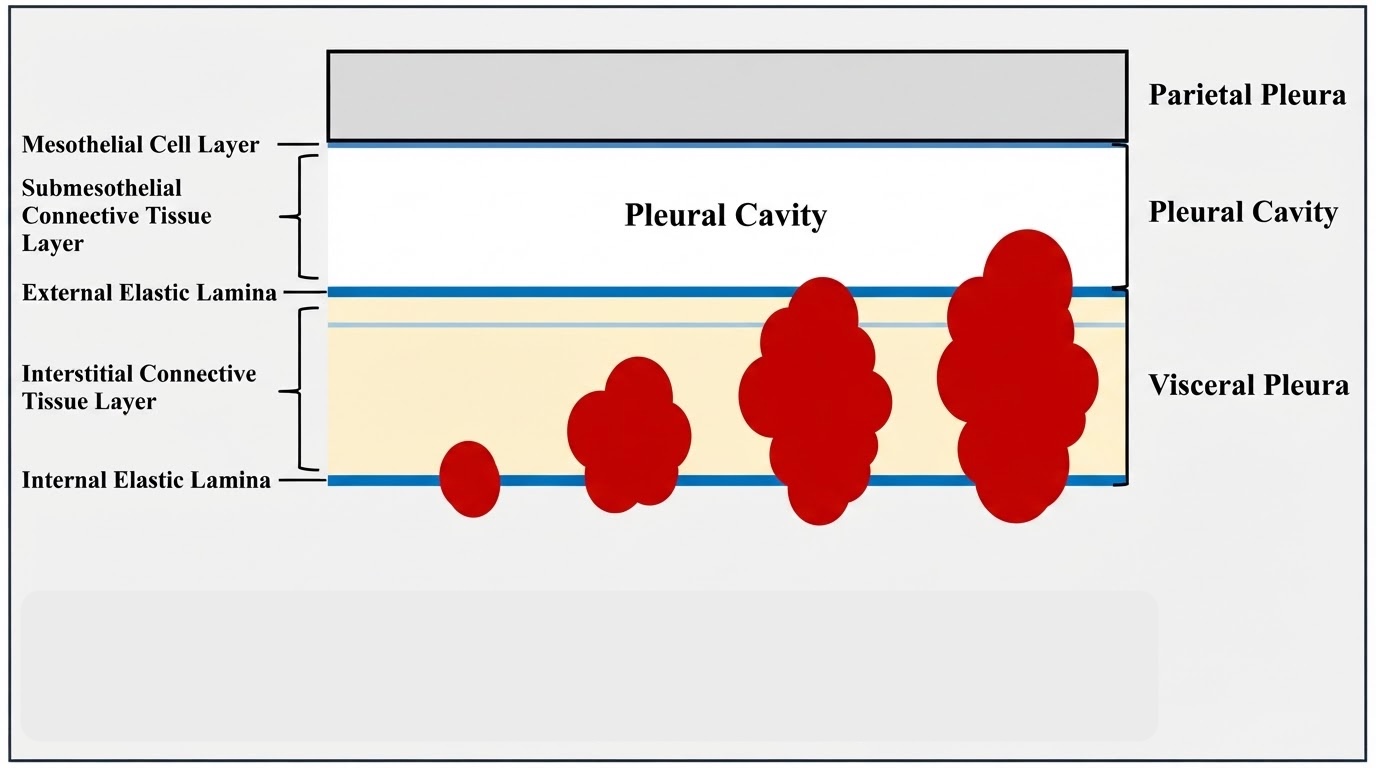
The lungs are covered by a delicate membrane called the visceral pleura. It can be imagined as a very thin protective wrap sitting directly on the lung surface. When lung cancer grows close to this surface, the pathologist checks whether the tumor has reached that lining. Visceral pleural invasion is the phrase used when cancer extends into or beyond specific layers of that covering.
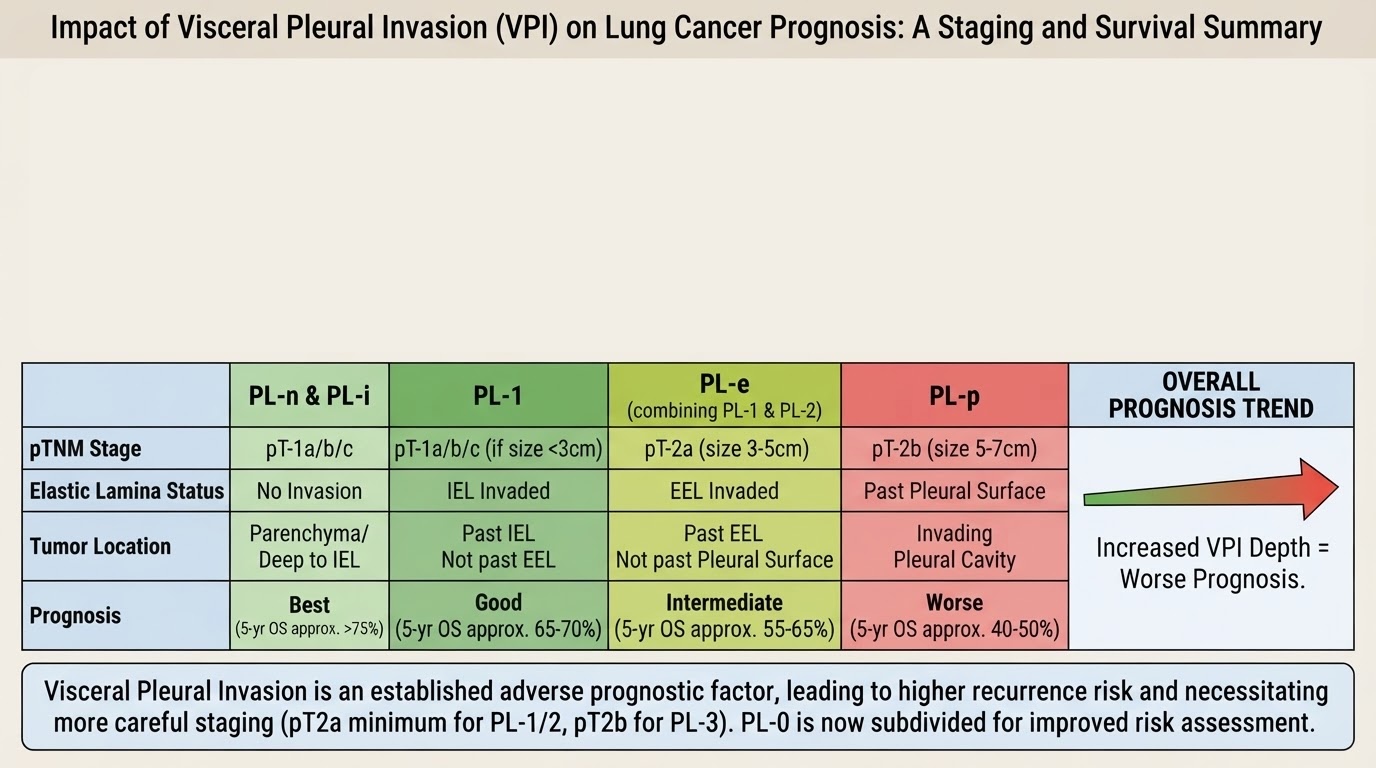
The terms PL0, PL1, PL2, and PL3 describe different levels of pleural invasion. PL0 means no visceral pleural invasion is identified. PL1 means the tumor has passed beyond the elastic layer of the visceral pleura but has not reached the pleural surface. PL2 means the tumor has reached the pleural surface. PL3 means the tumor invades the parietal pleura or nearby chest wall structures, which is a different and usually more advanced category.
This distinction matters because pleural invasion can change tumor staging, especially in early non-small cell lung cancer. A small tumor with visceral pleural invasion may be staged higher than a similar-sized tumor without pleural invasion. In practical terms, the finding tells the treatment team that the tumor has shown a more outward growth pattern. A clear explanation of each part of a pathology report can make this type of staging language easier to follow.
Why The Report Shows PL1 Or PL2
A report shows PL1 or PL2 because the pathologist found the tumor close enough to the pleural lining to require microscopic assessment. Sometimes the relationship is obvious on routine slides. Other times, the tumor is near the lung surface, but the exact boundary is difficult to see. In those cases, an elastic stain may be used to highlight the elastic layer in the pleura.
The elastic stain acts like a highlighter for a structure that can be hard to see on a standard microscope slide. If tumor cells cross beyond that elastic layer, the finding may be classified as PL1. If tumor cells extend all the way to the outer pleural surface, it may be classified as PL2. The phrase PL1 PL2 often appears in staging discussions because both patterns represent visceral pleural invasion, although PL2 reaches farther.
This finding can occur in several types of lung cancer, including lung adenocarcinoma, squamous cell carcinoma, and other non-small cell lung cancers. It is commonly evaluated when a tumor is near the periphery of the lung. Pleural invasion is not decided from imaging alone, although a CT scan may suggest that the tumor is close to the lung surface. The final classification usually depends on direct microscopic review of the surgical specimen.
How Serious Is Visceral Pleural Invasion In Lung Cancer?
Visceral pleural invasion is clinically meaningful, but it should not be interpreted in isolation. It is one factor among several that help determine lung cancer stage. A tumor with visceral pleural invasion may have a higher risk profile than a similar tumor without it. However, seriousness depends on the full pattern: Tumor size, lymph node involvement, surgical margins, grade, spread through air spaces, and molecular test results may all matter.
For example, a small lung adenocarcinoma with PL1 and no lymph node involvement is very different from a larger tumor with positive lymph nodes. In some staging systems, visceral pleural invasion can move certain tumors into a higher T category. That change may influence whether additional treatment, such as chemotherapy or immunotherapy, is discussed after surgery. The phrase does not automatically mean the cancer is incurable or that treatment has failed.
The difference between PL1 and PL2 can feel especially confusing. Both describe visceral pleural invasion, but PL2 means the tumor reaches the surface of the visceral pleura, while PL1 means it has crossed the elastic layer without reaching the surface. Many clinical decisions consider both PL1 and PL2 as evidence of pleural involvement. The oncology team usually interprets PL1 PL2 categories alongside all other staging information rather than using the term alone.
What Happens Next: Treatment And Monitoring
After visceral pleural invasion is reported, the next step is usually a staging discussion rather than an immediate change based on that term alone. The surgeon, oncologist, and pathologist correlate the microscopic findings with imaging and lymph node results. Tumor staging combines the T category, lymph node status, and evidence of distant spread. The final lung cancer stage then helps guide whether surgery alone is enough or whether additional treatment should be considered.
In early-stage non-small cell lung cancer, pleural invasion may be one reason an oncologist discusses adjuvant therapy. Adjuvant therapy means treatment given after surgery to reduce the risk of recurrence. The decision may also depend on tumor size, patient health, biomarkers, and whether all cancer was removed with clear margins. A pathology report that includes margin status, lymph node results, and molecular testing gives the treatment team a more complete foundation.
Monitoring after treatment usually includes scheduled visits and imaging studies. The exact plan varies by cancer type, stage, surgery type, and institutional practice. Patients may hear the term surveillance, which means planned follow-up to look for recurrence or new lung tumors. Pleural invasion may shape the level of concern, but follow-up is always based on the entire diagnosis, not on a single line in the report.
Questions To Ask Your Doctor Or Pathologist
Specific questions can turn a frightening report into a clearer conversation. The goal is not to memorize every staging rule, but to understand how the finding affects the individual diagnosis. These questions can help patients and caregivers prepare for a visit with the oncology team:
- Was the pleural invasion classified as PL1, PL2, or PL3?
- Did the finding change the T category or overall lung cancer stage?
- Was an elastic stain used to confirm the pleural involvement?
- Were lymph nodes examined, and were any positive for cancer?
- Were the surgical margins clear of tumor?
- Does this pathology report suggest a need for chemotherapy, immunotherapy, targeted therapy, or radiation?
- Would a second pathology opinion be helpful before final treatment decisions are made?
A second review can be helpful when staging details are complex, when PL1 versus PL2 is unclear, or when treatment decisions depend heavily on the finding. A second pathology opinion is a focused review of the slides and report by another pathologist, often with special experience in lung tumors. Information about when to get a second pathology opinion may help patients decide whether that step is reasonable.
When a second review is pursued, the original slides, tissue blocks if needed, and full pathology report are usually requested. The reviewing pathologist may confirm the original interpretation or clarify borderline features such as pleural invasion. Practical steps for obtaining records and slides are outlined in how to get a second opinion on a pathology diagnosis.
Frequently Asked Questions
What does visceral pleural invasion mean in lung cancer?
Visceral pleural invasion means tumor cells have grown into specific layers of the pleura, the thin lining covering the lung. It is a local feature seen under the microscope, not the same as distant metastatic spread. The finding can affect tumor staging and may influence treatment planning. The full meaning depends on the rest of the pathology report.
Is PL1 worse than PL2?
PL2 generally describes deeper pleural involvement than PL1 because the tumor reaches the pleural surface. PL1 means the tumor has crossed beyond the elastic layer but has not reached the surface. Both PL1 and PL2 are forms of visceral pleural invasion. Treatment decisions usually depend on the total lung cancer stage rather than PL1 or PL2 alone.
Can visceral pleural invasion change my stage?
Yes, visceral pleural invasion can change the T category in lung cancer staging, especially for smaller tumors. A tumor that might otherwise be placed in a lower category may be staged higher if pleural invasion is present. This does not automatically mean the cancer has spread to lymph nodes or distant organs. The oncology team combines this finding with imaging, lymph node results, and margin status.
Does pleural invasion mean the cancer has spread?
Pleural invasion means the cancer has extended locally into the lung covering. It does not mean the cancer has spread throughout the body. Distant spread is assessed separately through imaging, lymph node evaluation, and sometimes additional tests. The distinction is important because local extension and metastasis have different treatment implications.
Should I get a second opinion for PL1 or PL2?
A second opinion may be reasonable if the diagnosis is unexpected, the staging seems unclear, or treatment decisions depend on the PL1 or PL2 classification. Visceral pleural invasion can sometimes require careful slide review and special stains. A second pathologist may confirm the finding or provide more detail about how it was determined. This can give patients and families more confidence before major treatment decisions.
Visceral pleural invasion is a significant pathology finding, but it is only one part of the lung cancer picture. Clear answers usually come from placing PL1 or PL2 alongside tumor size, lymph nodes, margins, and molecular results. Honest Pathology consultations can help patients and caregivers understand what the report says, what it does not say, and which questions deserve attention next.
References:
National Cancer Institute — Pathology Reports
National Cancer Institute — Pathologist Definition
National Cancer Institute — Non-Small Cell Lung Cancer Definition